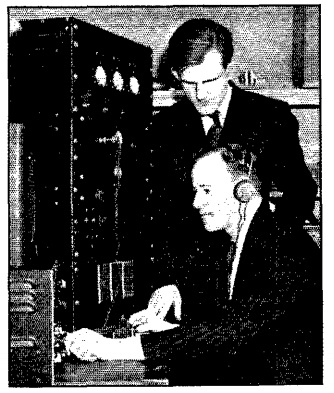
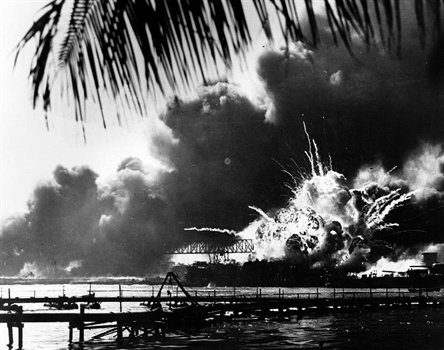
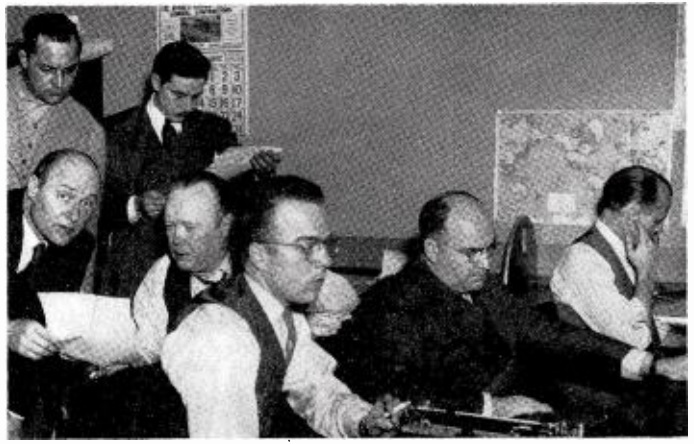
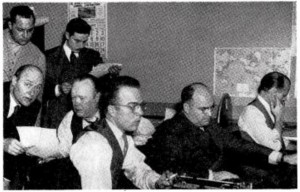
 Today marks the 75th Anniversary of the Japanese attack on Pearl Harbor, December 7, 1941. Most Americans learned of the attack by radio, and the story of that coverage featured prominently in the December 15 issue of Broadcasting magazine, the first to go to press after the attack. The photo at the left shows the news staff of stations WLW and WSAI, Cincinnati, huddled shortly after the first news of the attack broke.
According to the magazine, the first broadcast of the attack came at 2:26 Eastern Time, when WOR New York broke into a Dodger-Giant football game to read the United Press flash. Two minutes later, the news was broadcast nationwide over the NBC Red and Blue Networks.
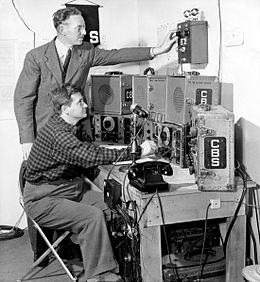
CBS carried the announcement during its 2:30 station break. The afternoon news program was quickly reorganized. CBS newsman John Daly had spoken by telephone with KGMB Honolulu, and news of the attack on Manila, Philipine Islands, was carried live by a telephone hookup with KGMB, that signal being cut mid-broadcast.
Newsrooms came to life as staff were summoned in on an otherwise slow Sunday afternoon. At 2:45, the NBC network rang four chimes, instead of the customary three, to alert staff to report to work.
One NBC executive phoned KGU Honolulu for an immediate report. The voice from Honolulu reported that he was a station executive and did not have a microphone available. The NBC executive told him to keep talking to keep the line open as he raced to the network control room, and the call was eventually patched through live over the air. He was on the air by 4:06 PM with the live report, until a long distance operator broke in to report that the line was needed by the military. A recording of that broadcast is available at this link. Another six minute call was aired later that hour.
Starting on Monday, December 8, West Coast stations were on a wartime basis. In compliance with an army order, stations in California, Washington, Oregon, and Idaho went off the air. In Washington, KIRO‘s 50 kilowatt signal remained on the air for Army and Navy use only.
During the blackout, which lasted until the next morning, only five minute news flashes were permitted every half hour. More organization was apparent by Thursday and Friday, when staggered schedules were followed.
The nation’s shortwave stations went on a 24 hour schedule, with broadcasts in multiple languages. CBS carried reports in ten languages to Europe, and three to Latin America. It noted that both networks were following a policy of objectivity in news, following FDR’s pronouncement that more than ever, there was a need for truth in the news.
The East Coast shortwave stations were assigned staff from the Office of Coordinator of Information to review material for any that might give aid or comfort to the enemy. In San Francisco, the Navy served a similar function for GE shortwave station KGEI.
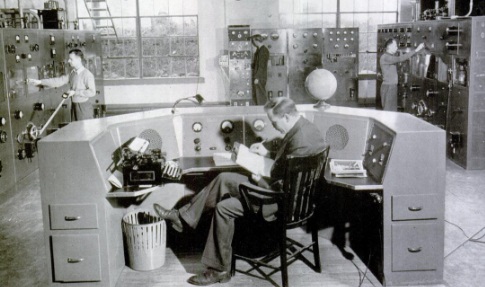
The CBS and NBC shortwave listening stations were operating on a 24-hour schedule, making material available for the networks, press, and Government.
More information on radio broadcasting in the aftermath of the attack can be found at this post and this post.
Television had newly come on the air commercially in New York, and the magazine reported that the new medium developed a new presentation as the events swiftly unfolded. WCBW came on the air at 8:45 PM until 10:00, the first time the station had been on the air on Sunday. Throughout the week, it presented several news programs daily. It covered President Roosevelt’s Monday speech, with a waving flag transmitted over the visual channel.
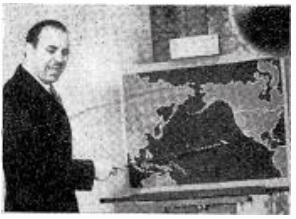
NBC commentator Sam Cuff uses map to show WNBT viewers strategic location of Hawaii.
WNBT moved an AP teletype into the studios, with the camera focused on the incoming wire. In the weeks preceeding the attack, WNBT had devoted much of its programming to civilian defense training, a role which continued during the war.
Sales of battery operated radios were said to have skyrocketed on December 8.