Category Archives: Phonograph History

1941 Phono Oscillator

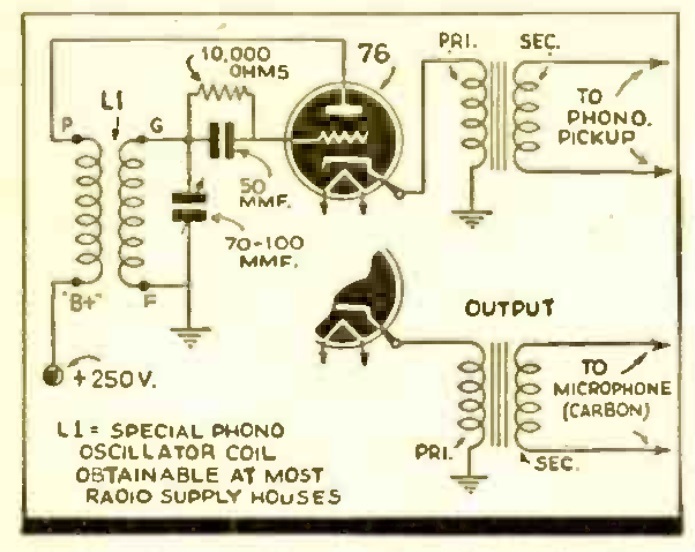
Eighty-five years ago this month, the May 1941 issue of Radio Craft carried this circuit for a simple phono oscillator. It had been sent in to the magazine by one Eugene Simpson of Naperville, IL, who pointed out that there had been a lot of interest recently in phono oscillators, and many enthusiasts were looking for a simple circuit. He recommended tuning the coil to the high end of the broadcast band, and cautioned not to use an antenna, as “The F.C.C. doesn’t like people who do otherwise!”


1941 Portables

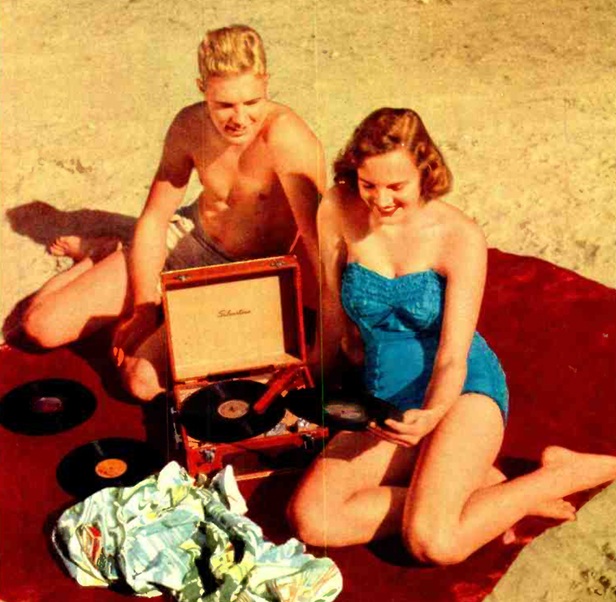
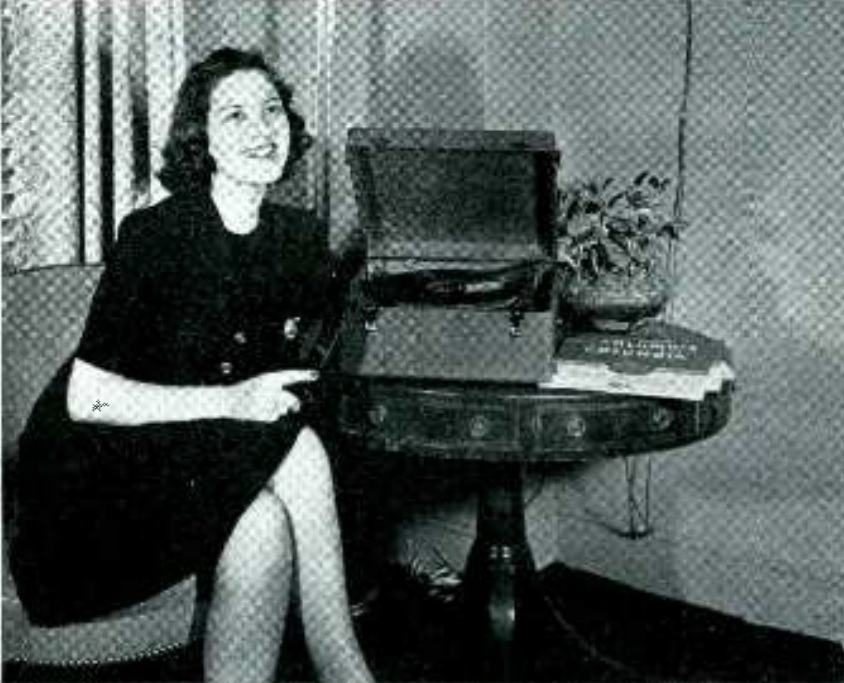
Eighty-five years ago, this young woman is enjoying a favorite song from her portable phonograph. Hers was an electrical model, but there were many options for portable music, as detailed in the April 1941 issue of Radio Retailing.

The magazine noted that it was the perfect time of year to start marketing portables. Since April marked the beginning of the warm weather season, portables would get their greatest natural play. It also pointed out that since portables were still owned by relatively few people, they had a novelty factor that would help build store traffic.

Options included both radios and phonographs. While the unit shown above is electric, there were still many purely mechanical record players available, and the magazine provided an extensive directory of spring machines with no tubes. The least expensive was the Model 11 from Favorite Manufacturing Co., 105 E. 12th Street, New York, with a list price of $8.39.


1956 Custom Hi-Fi

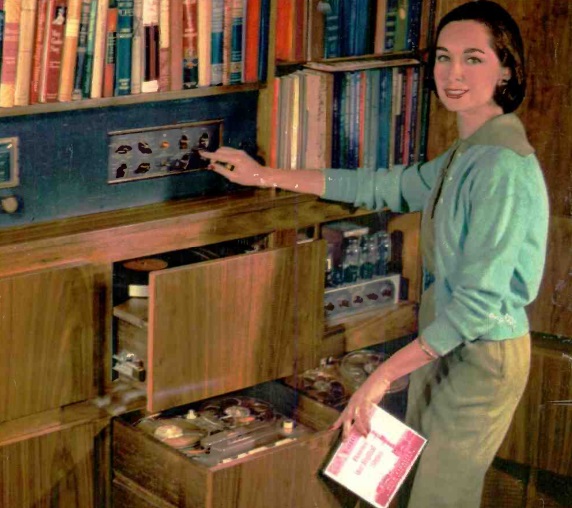
Seventy years ago this month, this high fidelity enthusiast was making adjustments to the H. H. Scott control panel of a custom installation, put together by Custom Sound Systems of Orange, New Jersey.  The two lower drawers contained a De Jur tape recorder and Audiosphere stereophonic tape player.  The upper drawers contained a Rek-O-Kut record player and an Altec amplifier.

This deluxe setup is in the home of one Robert Ossorio of New York City.  But while this young woman appears at ease with the equipment, she’s actually a model, Mona McHenry, hired for the photo shoot.  The photographer is by Dan Rubin, and the photo appeared on the cover of the April 1956 issue of Radio-Electronics.


1946 Philco Radio-Phonos

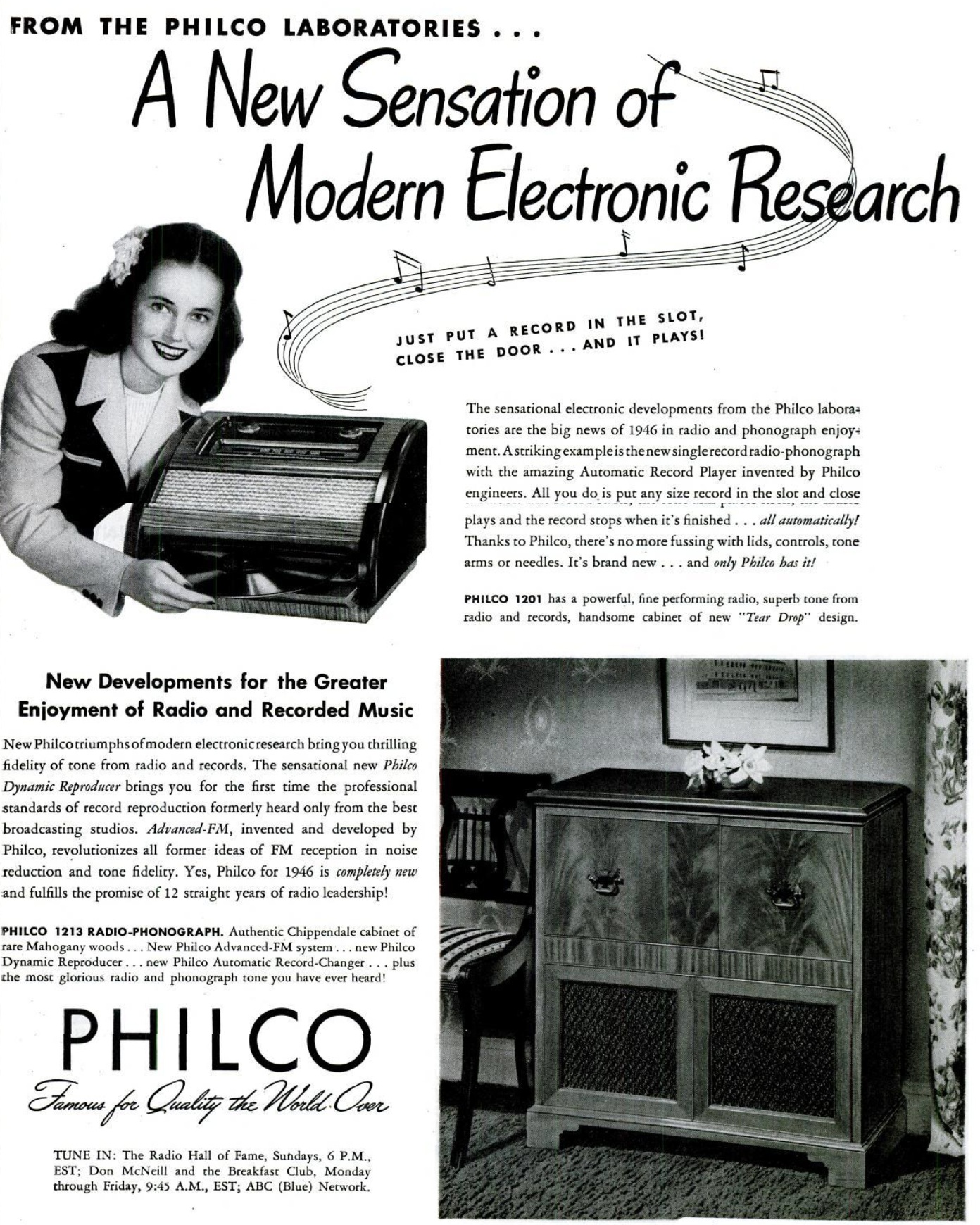
Eighty years ago today, the February 18, 1946, issue of Life magazine carried this ad for two of Philco’s latest offerings.  The model 1213 was a console radio-phonograph.  The ad mentions that the radio tunes both AM and FM (the new postwar band).  But it also covered 9.3 through 14.5 MHz shortwave.

But the model 1201 was revolutionary, having just been invented by Philco engineers.  There was no more fussing with lids, controls, tone arms, or needles.  You simply inserted the record (of any size), closed the cover, and the record would play itself.


1941 Home Recorder

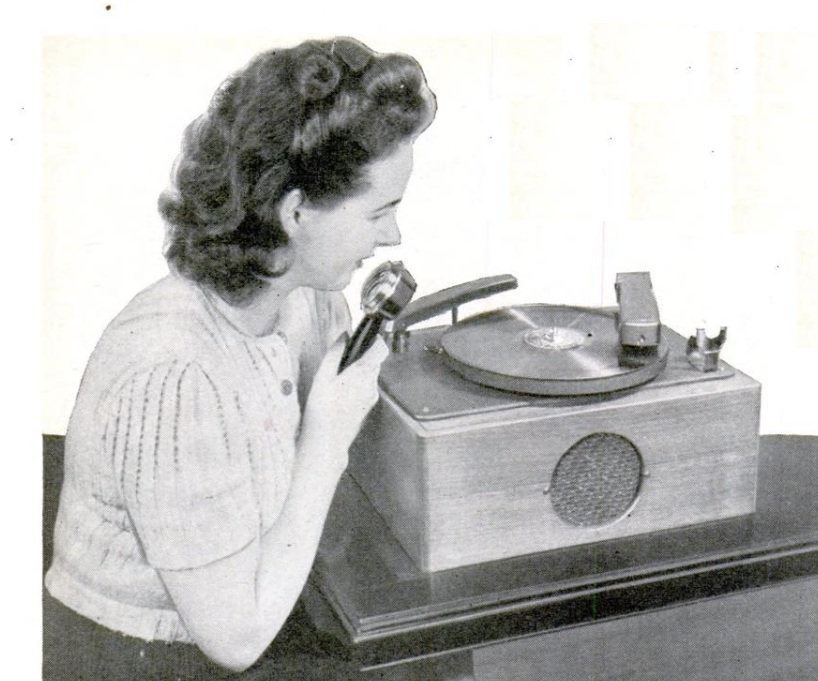
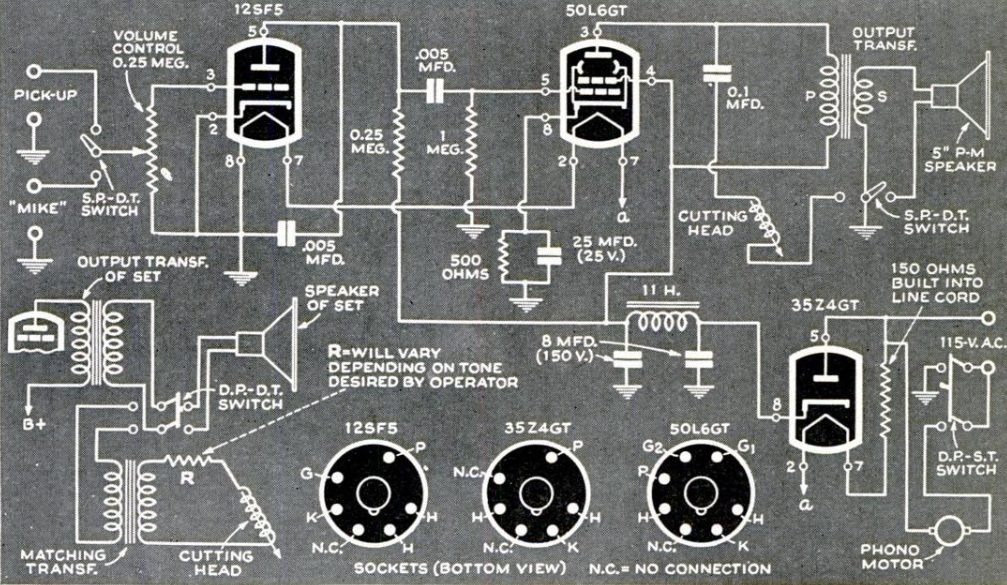
Eighty-five years ago this month, the February 1941 issue of Popular Science showed how to put together this home recorder, which also doubled as a phonograph. The two-tube (plus rectifier) circuit could be connected to a microphone, or it could tap into the family radio to record programs. In that function, it could also serve the boost the volume of a weak station to play through the speaker.

The only part, of course, which is unobtainium today (along with the blank records) is the recording head.


1951 Muntz TV

If you were looking for a home entertainment system 75 years ago, you couldn’t go wrong with this 19 inch Muntz TV, AM-FM radio, and phonograph combination, for only $399.95, which could be paid over 15 months.

The ad appeared in the January 28, 1951, issue of the Washington Evening Star.


1941 Teen Girls: Swing More Important then Vitamins

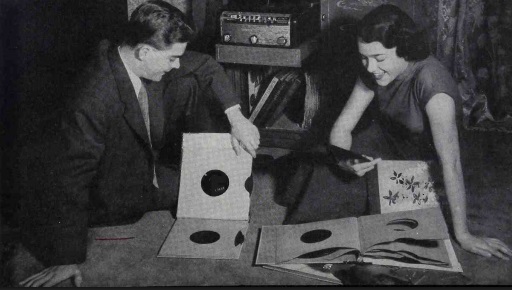
Eighty-five years ago, the January 27, 1941, issue of Life magazine showed these teen girls listening to records. The magazine noted that for these “subdebutantes”, swing was more important than vitamins.  The magazine identifies only two of the girls shown, Edith Seyburn, at the phonograph, and her sister Isabel, standing at the right.


1956 Home Hi Fi

This gentleman and his canine companion are relaxing seventy years ago to music from a state-of-the-art Hi Fi system. The photo appears on the cover of Radio News, January 1956, which notes that some of the equipment was bought assembled, while other parts were put together from kits.


Custom TV Installation, 1951

Seventy-five years ago, it was a red letter day for this housewife when the man in the white lab coat showed up at her door to do the custome installation of what would later be called a home theater. This particular installation included a Radio Craftsman Model RC 101 16″ television and model R-10 AM-FM radio. The record player came from Milwaukee Stamping Co., and the speakers were from Jensen. Atop the extra cabinet unit was a Talk-A-Phone “Chief” intercom, and there was a storage compartment that could later be used for a tape recorder.

The picture appeared on the cover of Radio News, January 1951. The accompanying article noted that custom installation was once considered a novelty, but was rapidly becoming an important factor in the trade.

This unit was a free-standing cabinet, but the article noted the many options for built-in equipment. Architects, interior decorators, and home designers were said to be having a field day with the new options. The magazine traced the evolution of home heating. It began with open fireplaces, then stoves, then fancy baseburners, and finally a furnace hiddn away in the basement or utility room. It predicted a similar progression for home electronics.


1926 Guarantee Portable Phonograph

If you were a retailer a hundred years ago and wanted to sell portable phonographs, you couldn’t go wrong with this model from the Guarantee Talking Machine Co., 109 North Tenth Street, Philadelphia. Your cost was $11.50, and it retailed for $25. This ad appeared in the January 1926 issue of Talking Machine World.