Category Archives: Television History

Television 1946

Eighty years ago, there were about 10,000 families in the United States with television, but it was rapidly growing. They would soon be guaranteed four hours per day of programming, as the FCC was about to adopt rules conditioning licenses on providing 28 hours per week.

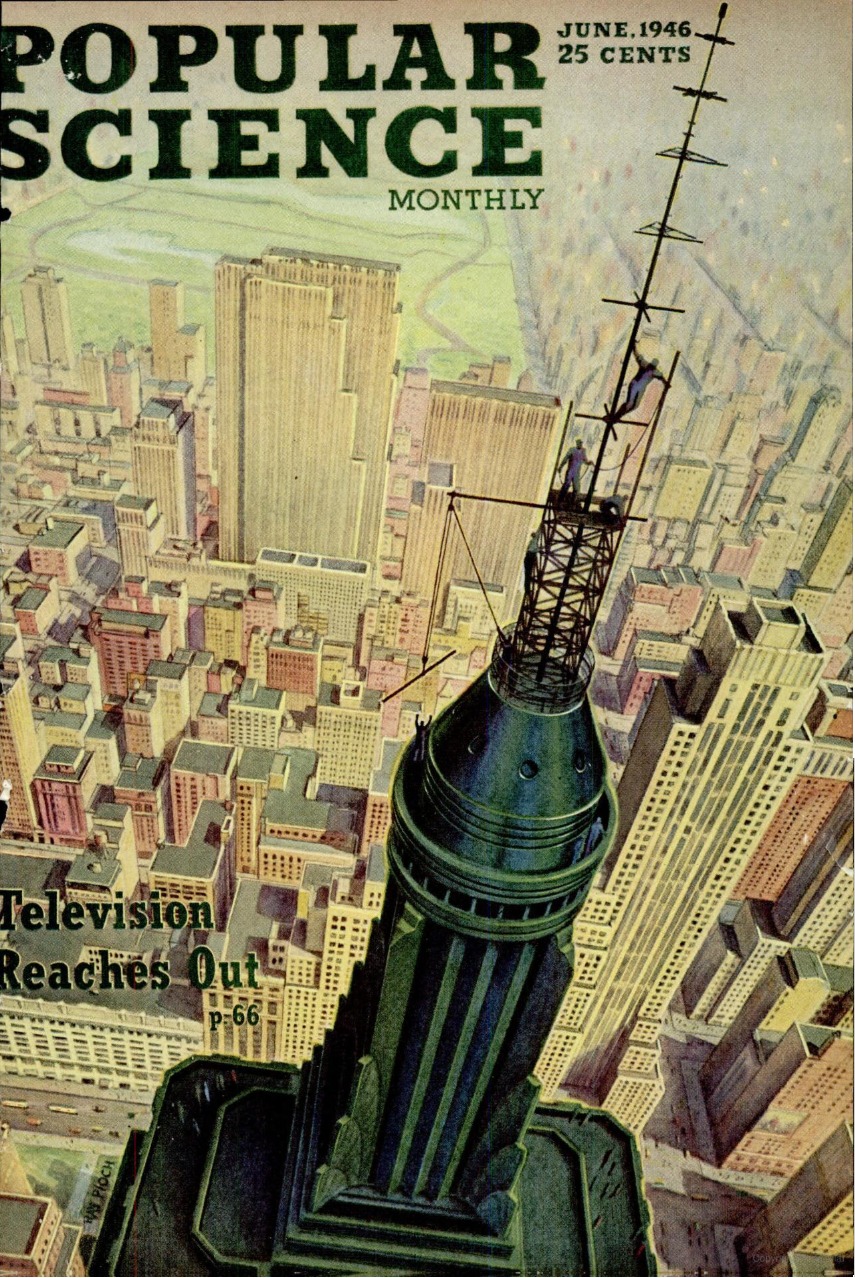
The June 1946 issue of Popular Science reported on the state of television in the United States, and the cover picture showed the transmitting towers of WNBT atop the Empire State Building. Thirty feet had been added to the building, and with gain antennas, the station boasted a range of 60-70 miles. The next big event was said to be the Louis-Conn fight on June 19, which was to be telecast.


“The Chimps” 1951 Television Films

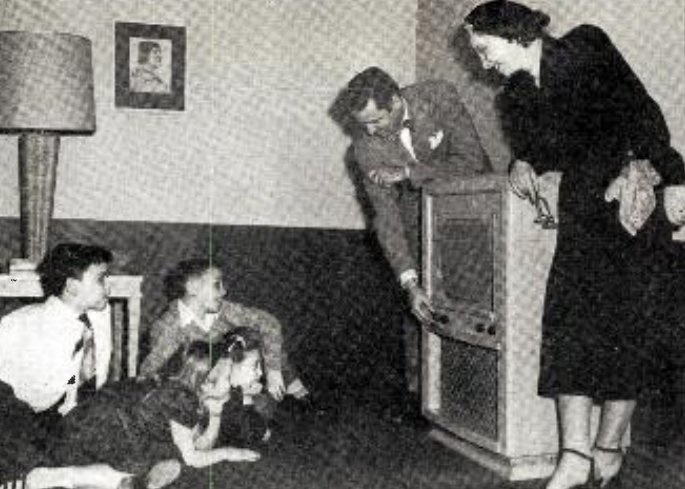
The youngsters in this picture are now octogenarians, but 75 years ago, they were the test audience for “The Chimps.” They are shown in the April 23, 1951, issue of Broadcasting, which explains that the series of 13 15-minute films had been produced by Bing Crosby Enterprises, and featured chimpanzees in “western and whodunit dramas.”

Try as we may, we have been unable to find much information about this early television program. We’ll keep looking, but if anyone has any information, we would be most interested in learning. And, of course, we would really love to watch an episode or two.


1946 Japanese Production of “Abraham Lincoln”

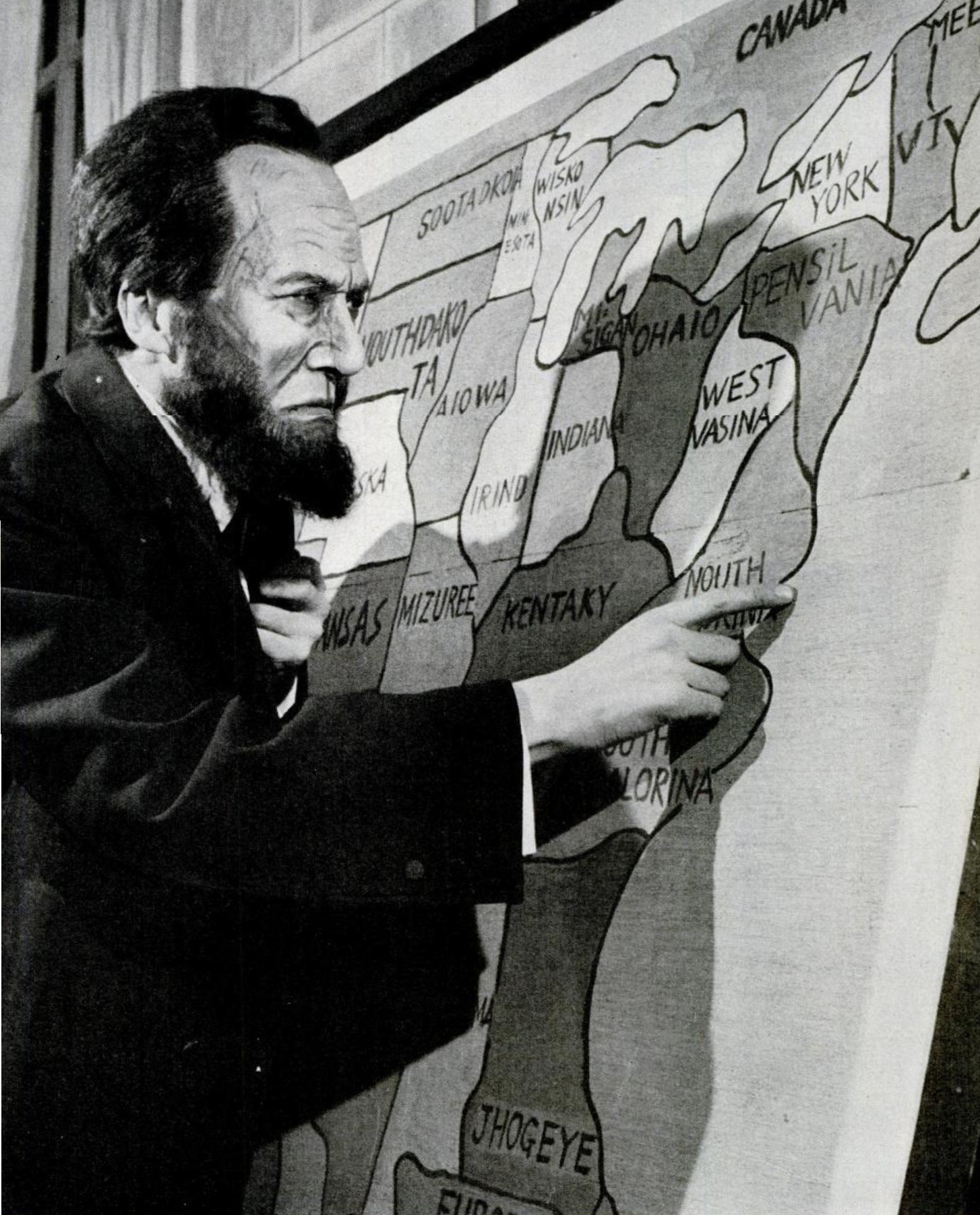
At first glance, this appears to be a picture of Abe Lincoln upset by being provided with a map produced by AI hallucinations, as he points accusingly at Nouth Calorina. He probably hasn’t even noticed that the Dakotas are there, despite not being admitted to the Union until a quarter century after that fateful night at Ford’s Theater.

But the map is actually the result of artistic license by the producers of the Japanese production of John Drinkwater‘s play Abraham Lincoln. And that’s not Honest Abe; it’s actually actor Chojuro Kawarasaki playing the role. The photo appeared in the April 8, 1946, issue of Life Magazine, which notes that this was the first such production since long before the war, at Tokyo’s Imperial Theater. The play was “very carefully tailored for Japanese playgoers’ consumption,” and the theater was off limits for American GIs. Despite wearing elevator shoes, the 5 foot 7 actor was unable to get up to Lincoln’s 6’4″.

The magazine noted that “many Japanese, including Emperor Hirohito, have recently been professing themselves great admirers” of the Great Emancipator. Audiences were reportedly “large but not house-packing.”

While we don’t have a video of the Japanese production, the 1952 CBS-TV Studio One production can be viewed at the following link:


1966 Tube Testers

In the 1960’s, tube testers were common fixtures in many retail stores. In my case, if I had a tube to test, I would take it to the neighborhood drug store. And I generally treated the results as gospel. But the machine was there for one reason, and that reason was to sell tubes. So they tended to err on the side of caution, and caution meant giving a slightly pessimistic evaluation. Maybe the tube would still function OK in its circuit, but the tester said it was time to replace it.

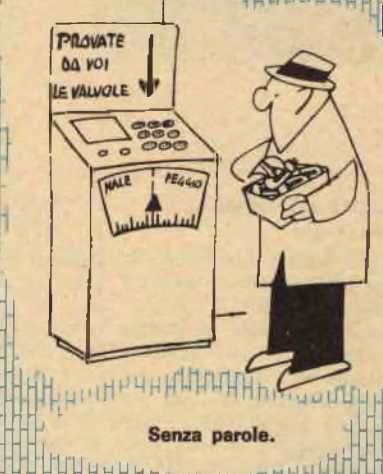
Apparently, this was also the state of affairs in Italy, as shown by this cartoon in the March 1966 issue of Radiorama. In this case, the meter on the tester is calibrated “bad” and “worse”. The caption reads merely, “speechless.”


1951 TV Listings

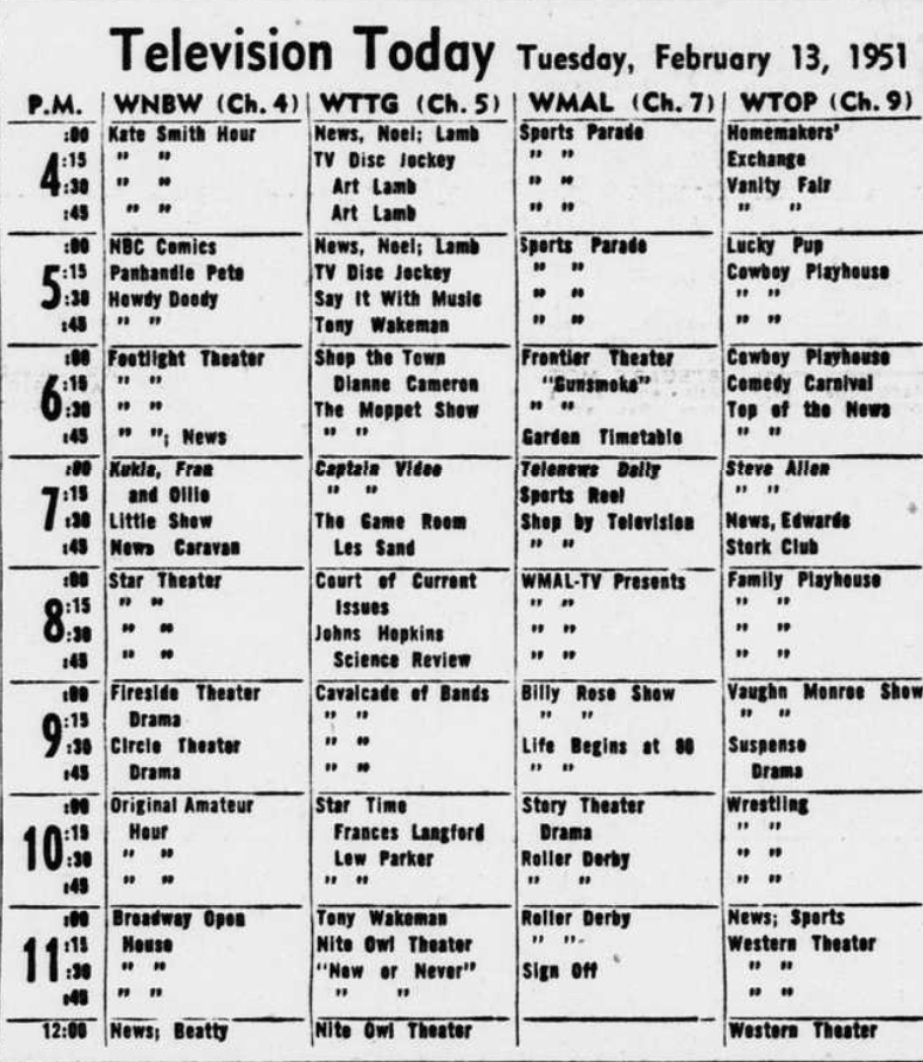
If you were in Washington 75 years ago tonight, here’s what you could expect to watch. There are a few familiar names here, such as Kate Smith, Steve Allen, and Kukla Fran and Ollie. There are also some staples of early television, such as wrestling and roller derby. “Western Theater” on channel 9 doesn’t specify what movie they are showing, but it looks like channel 5 is showing the 1935 crime film “Now or Never” at 11:15 PM.

These listings appeared in the February 13, 1951, edition of the Washington Evening Star.


Adding an FM Tuner to Your TV: 1951

Seventy-five years ago, if you wanted to upgrade your television, you could add FM reception, as detailed in the January 1951 issue of Popular Mechanics. As we’ve noted previously, it wasn’t unheard of to swap out the front end of the set and put in a rebuilt tuner.  Thanks to Dumont, you could buy a tuner that included, nestled in between channels 6 and 7, the FM broadcast band.  As an added bonus, you would probably get a better picture, since the tuner exhibited more gain, especially on the upper channels.

The article explained which models were candidates for the swap.


1951 Muntz TV

If you were looking for a home entertainment system 75 years ago, you couldn’t go wrong with this 19 inch Muntz TV, AM-FM radio, and phonograph combination, for only $399.95, which could be paid over 15 months.

The ad appeared in the January 28, 1951, issue of the Washington Evening Star.


Custom TV Installation, 1951

Seventy-five years ago, it was a red letter day for this housewife when the man in the white lab coat showed up at her door to do the custome installation of what would later be called a home theater. This particular installation included a Radio Craftsman Model RC 101 16″ television and model R-10 AM-FM radio. The record player came from Milwaukee Stamping Co., and the speakers were from Jensen. Atop the extra cabinet unit was a Talk-A-Phone “Chief” intercom, and there was a storage compartment that could later be used for a tape recorder.

The picture appeared on the cover of Radio News, January 1951. The accompanying article noted that custom installation was once considered a novelty, but was rapidly becoming an important factor in the trade.

This unit was a free-standing cabinet, but the article noted the many options for built-in equipment. Architects, interior decorators, and home designers were said to be having a field day with the new options. The magazine traced the evolution of home heating. It began with open fireplaces, then stoves, then fancy baseburners, and finally a furnace hiddn away in the basement or utility room. It predicted a similar progression for home electronics.


1950 Television Excise Tax

If you were thinking of being an early adopter and getting a television 75 years ago, it might behoove you to act fast, since Congress had just enacted a 10% excise tax.  But if you acted fast, you could get one without the tax, as reminded by this ad in the November 18, 1950, issue of the Pittsburgh Post-Gazette from the Hahn Furniture store.

This handsome Philco 17-inch set also featured a three-speed phonograph, all for $379.95.


Silent TV for the Kids, 1955

These young men have been collecting Social Security for over a decade now, but 70 years ago, they were watching television while their mother and a friend chatted in the same room, undisturbed by the noisy program. You could do it yourself by following the instructions in the August 1955 issue of Popular Mechanics. You installed a remote listening device, similar to the one we recently highlighted, which allowed you to switch off the speaker and route the audio to headphones.

But according to the article, you could “make a big hit with the kids” by installing the headphones inside space helmets, available at toy stores.