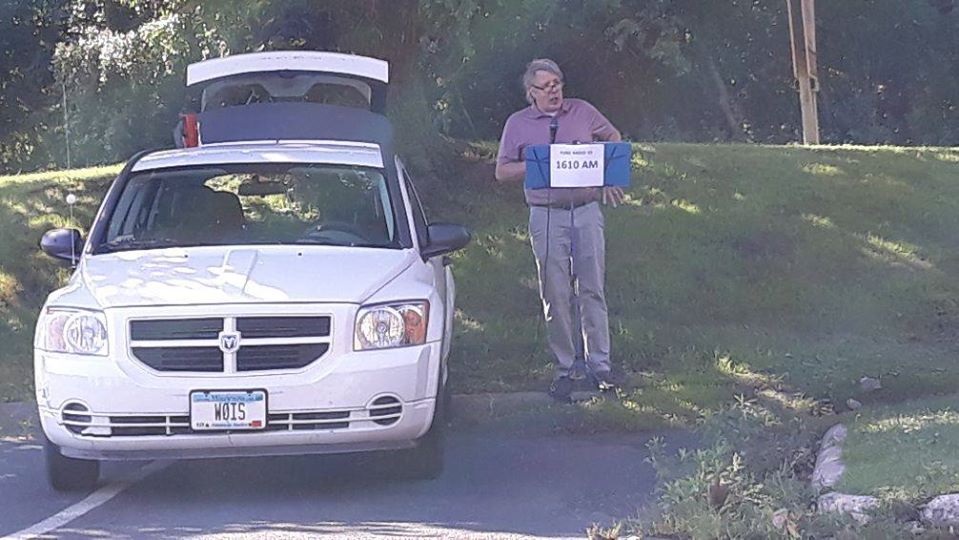
 I’ve previously written about why I believe outdoor spaces should be utilized for learning and other group activities during the COVID-19 emergency. Since I’m in the business of providing continuing education programs for attorneys, a few weeks ago, I presented an outdoor program at a city park.
The weather for that program was excellent, and everyone enjoyed the opportunity to be outside. However, the weather can be unpredictable, and it won’t always work to be outside. For that reason, today, I presented a live drive-in program in a parking lot. The attendees watched from their car, and listened on their car radio. If there had been questions or feedback, they could have phoned me at any time.
Why a Drive-In Program?
It was a bit more work, and it would actually have been more pleasant to just get out of our cars and do it outside, as with the previous program. But a drive-in program is a very viable option for any group that needs to be meet in person, since the weather won’t always cooperate completely.


My transmitter was the InfOspot Talking House transmitter, which I previously reviewed. As expected, my transmitter easily covered the parking lot. I parked near a tree, and tied the end of the 10 foot antenna to a convenient branch. I should have tested everything, since the audio quality wasn’t quite as good as I had expected. In most of my tests at home, I fed the transmitter with an MP3 player, and the audio quality was absolutely astounding. Today’s audio quality was quite good–certainly good enough for a lecture. But if the transmitter was used for any kind of musical presentation, it wouldn’t have been quite good enough. I’ll need to experiment with a different mike, or possibly run the existing mike through a preamp and feed the auxiliary input rather than the mike input. (The audio quality through the line-in jack is excellent, so if you’re broadcasting from a location where another PA system is in use, that’s the best option, but you will need an inexpensive isolation transformer to prevent 60-cycle hum.)
Caveat Emptor: The Importance of a Legal Transmitter
When buying a transmitter, it’s important to buy a transmitter that is legal. Unfortunately, most of the transmitters in use for drive-in events these days don’t appear to be legal. In particular, it would be very difficult to use a legal FM transmitter for an event such as this, because FCC rules (section 15.239) limit the transmitted signal to an extremely low level. Amazon and eBay are full of FM transmitters that claim to be legal for unlicensed use, but even a cursory examination of their specifications reveal that their power level is many times what is allowed. On the other hand, the rules governing AM transmitters (section 15.219) are much less restrictive. The Talking House transmitter is certified as complying with this section of the rules, and has a very good range for this type of use. It is, therefore, the transmitter that I recommend for this application. Chances are, nobody will complain to the FCC. But if they do, and especially if there is interference with aircraft communications, which are near the FM band, the fines are typically in the range of $10,000. It’s best to use a transmitter that you know is legal, and the Talking House is.
Here’s another writer who agrees with me that most FM transmitters used for this purpose are illegal. As he puts it, they are all lying when they say on eBay or Amazon that they are legal. And in my experience, as both a lawyer and a licensed radio engineer, he’s right. Some of the listings claim that the transmitters are FCC certified. In some cases, the certification appears to be for use by a licensed radio station. In one case, the transmitter appeared to be certified for unlicensed use. I checked the FCC website, and sure enough, there was a report from a Chinese lab certifying that the transmitter was compliant. The report even contained test results showing compliance with some of the requirements. But noticeably absent was any report showing that the transmitted field strength was compliant. It couldn’t have been, because the transmitter was using hundreds or thousands more times power than allowed. It appears than an overworked FCC simply failed to notice that this critical measurement was missing from the report. Let the buyer beware. Just because an eBay listing says that a product is legal doesn’t mean it’s legal.
A Good Way to Conduct In Person Meetings
As with my previous program, we could have just as easily done it over the phone, or via Zoom. But some activities are best done in person, and after a long quarantine where everything has been done remotely, it’s refreshing to interact with others in person, even if they are six feet away and/or on the other side of a windshield. Creatively making use of outdoor locations, whether it’s for business, education, or worship will serve an important role until things get back to normal. And history tells us that yes, eventually, things will get back to normal.
Some links on this page are affiliate links, meaning that this site earns a small commission if you make a purchase after clicking on the link.


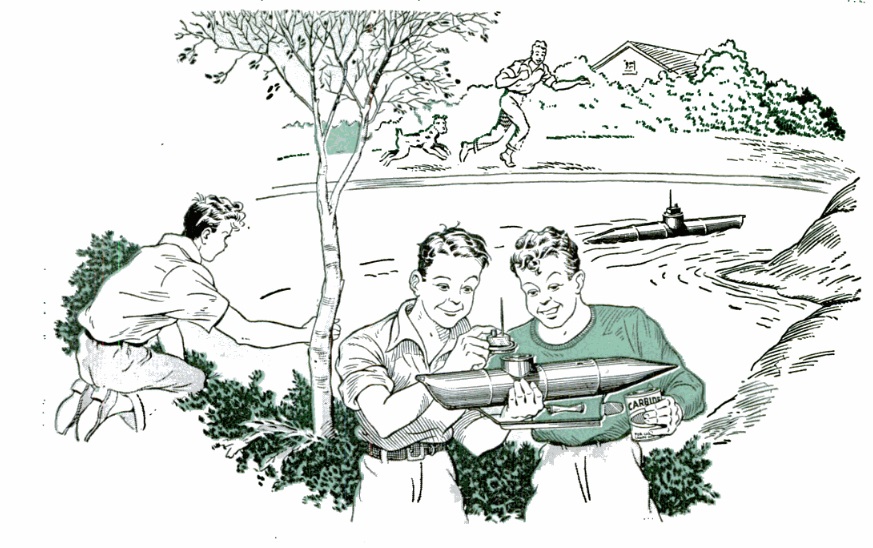

 When released in the local pond, the submarine repeatedly submerges and surfaces, all the time moving forward in the water. The secret of all of this is a small amount of calcium carbide, the same chemical used in old-fashioned miner’s lamps. When the chemical is exposed to water, it generates a high pressure gas, which is used to propel the vessel and provide buoyancy. The chemical is readily