Category Archives: Science fair ideas

Winding Your Own Transformers.

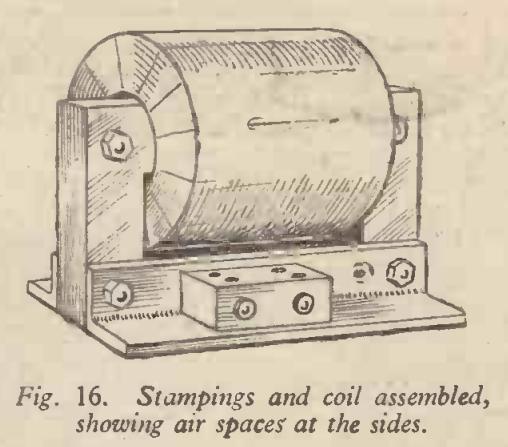
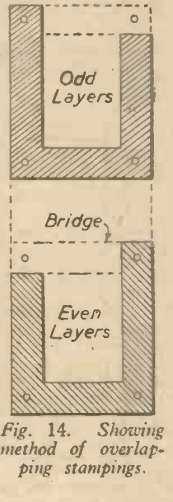
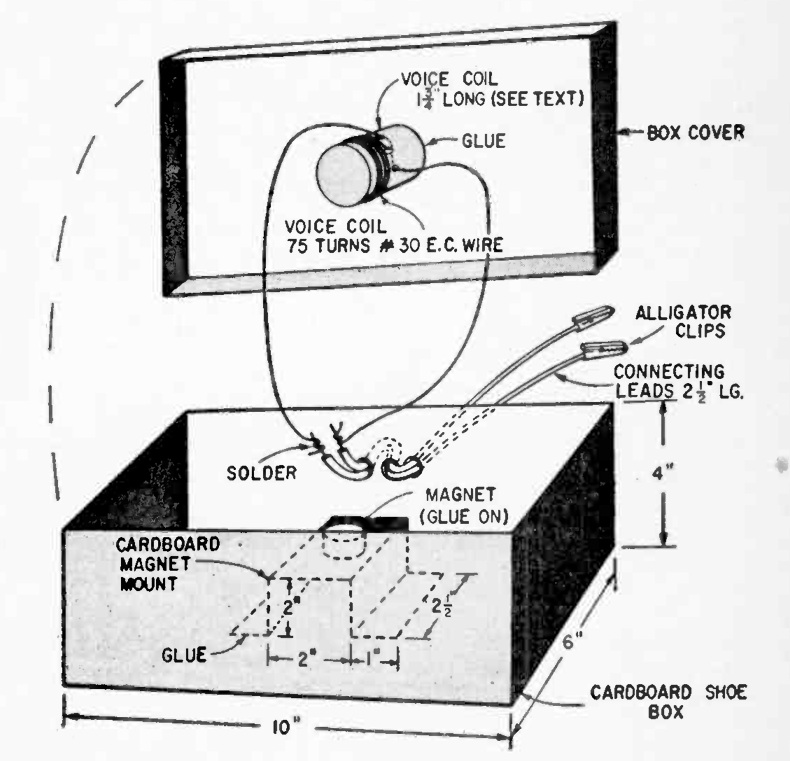
If you are in need of an unobtainium transformer, you can always just make your own! As the elementary student of electricity has learned, a transformer consists of nothing more than two coils of wire wound on a suitable core. In practice, it’s a bit more complicated than that, but not much more. The hardest part is probably coming up with a suitable core, but that is explained in the diagram at left.  The finished product is shown above.  If you need complete instructions, they were published 85 years ago in the April and May 1941 issues of the British magazine Practical Mechanics.

For a student looking for a unique science fair project, this series of articles will give many ideas.


Happy Arbor Day!

The official date for Arbor Day can vary from country to country, and even state to state. So for a website of international scope, we must decide on a date, and we’ve decided to go with Nebraska, which proudly proclaims that it is the home of Arbor Day, and where Arbor Day is a civic holiday. So today, the last Friday of April, we wish you a Happy Arbor Day!

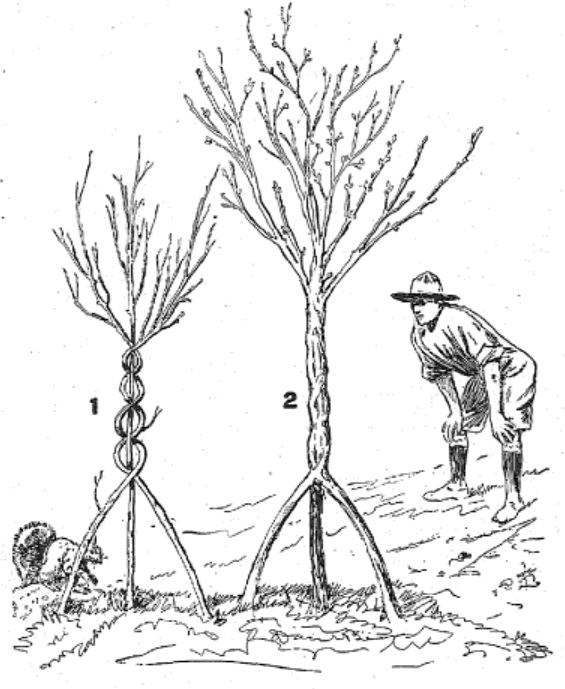
The illustration above is from Boys’ Life, April 1926, and is in the column of Dan Beard. Beard first discusses the possibility of every patrol in the country planting a walnut tree with a walnut from the grave of Theodore Roosevelt, and Beard had distributed thousands of such walnuts, ready for planting. The BSA was also working with the proper authorities to procure walnuts from the grave of George Washington, so that those could be planted as well. There are trees around the United States from walnuts from Mount Vernon, so with some inquiries, this project would probably be quite possible today. For those desiring faster satisfaction, you can purchase a number of heirloom flower seeds directly from the estate.

The other idea shown in Beard’s article is shown above. It’s rather self-explanatory, and involves weaving the trunks of small trees together. Beard recommends species with smooth bark, such as beech, willow, or soft maple. He had some success with chestnuts, but he noted that was the boundary, as species with a rougher bark would not cooperate. For students with a long timeframe, it might make a good science fair project, but “it only takes a few years to get results.” (Emphasis added.) The process is known scientifically as insoculation.


Science Fair Idea: Cloud Chamber

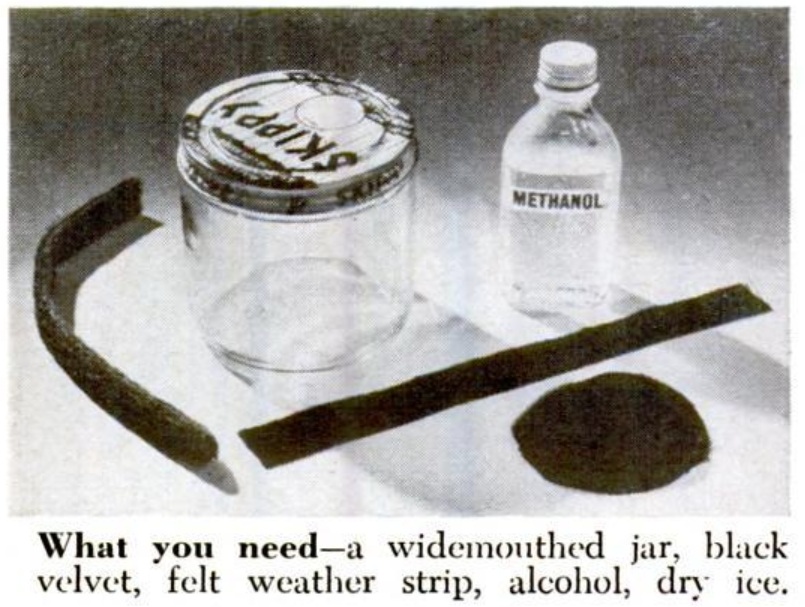
Seventy-five years ago this month, the March 1951 issue of Popular Science  showed how to put together a science fair project that was, for many years, quite popular.  You can make your own cloud chamber, which allows you to watch cosmic rays and the decay of atomic particles.  It’s rather easy to make.  You make a supersaturated layer of alcohol vapor, which is done with the use of dry ice.  The only other materials needed can be found around the house.

The alcohol can be ethyl, methyl, or isopropyl.  If Junior is taking it to school, it’s probably best to avoid ethyl alcohol.  In addition, that kind (in the form of “Everclear” most likely) is more expensive than isopropyl, which can be had at any drug store.

Dry Ice can be found at the better convenience stores in your area.  Of course, use caution when handling it.  Actually, you shouldn’t handle it at all.  Bring an insulated container to the store and have them place it in there.


1976 Light Communications

We’ve previously reported on projects involving light-beam communication. It’s relatively simple to modulate an electric light, and receive it at a distance.

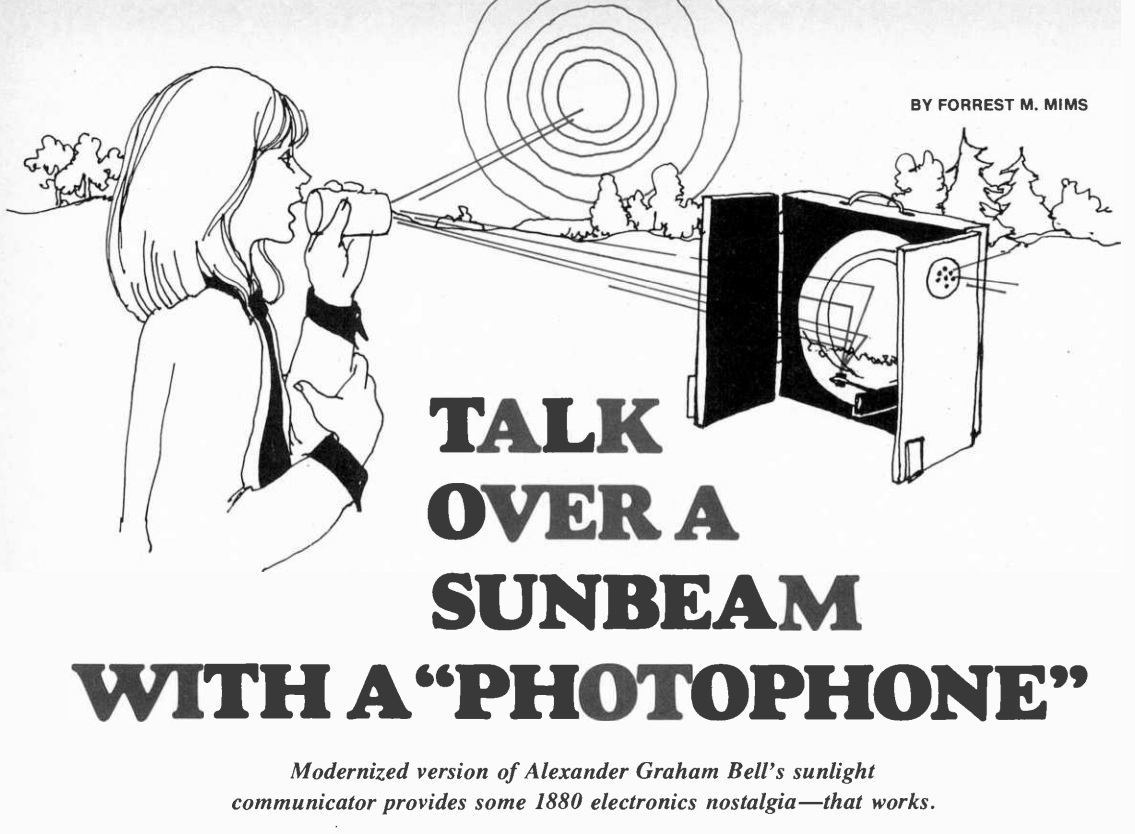
Fifty years ago, the February 1976 issue of Popular Electronics carried an interesting article by Forest Mims on the same general subject. But this project recreates the work of Alexander Graham Bell in 1880, the photophone. Bell was the first to communicate a voice wirelessly, but his transmitter (and the one shown in this article) is powered only be the sun. It consists of a mirror, to which is glued a short tube into which one can speak. The mirror is mechanically vibrated by the sound.

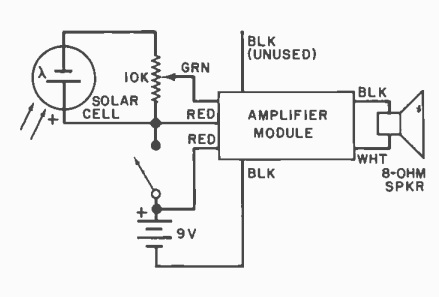
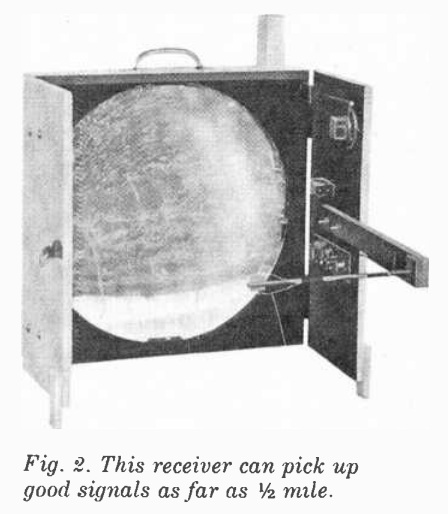
The receiver is essentially identical to the ones we’ve shown in the past. It consists of a photocell fed into an audio amplifier. With the use of a parabolic mirror at the receiver, or a Fresnel lens, ranges of hundreds or even thousands of feet can be achieved.

Students looking for an interesting science fair project couldn’t go wrong duplicating Bell’s early accomplishment.


15 Circuits with 8 Conductors

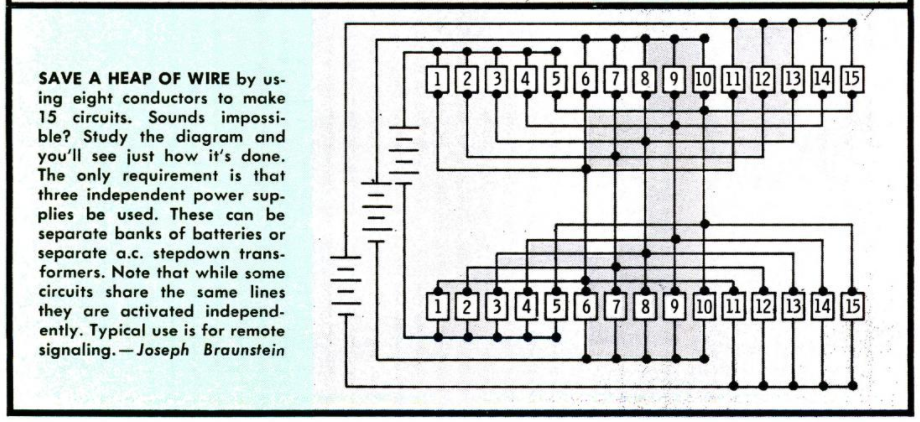
Sixty years ago this month, the August 1965 issue of Popular Mechanics showed how to use only eight conductors to control 15 different circuits. The trick was using three independent power sources. This way, 5+3 wires could be used to make 5×3 circuits. The magazine noted that the most common application would be for signaling.

Advanced students could use this as a science fair project.  The top components could be switches, and the bottom ones could be lamps.  For another way of making wires do double duty, see our earlier post about a mystery device.


Last-Minute Science Fair Ideas

1960NovEE5You are probably on this page because you, or your child, have a science fair project that’s due tomorrow, and you haven’t even started! We feel your pain! Listed below are some of our earlier science fair projects that can be done in a very short amount of time, and with materials that you probably already have around the house.  (You won’t have time to make the Jacob’s Ladder shown above, but you still have a chance to take home the blue ribbon.)

If you have more time, you might want to browse through our entire category of science fair projects. But most of those ideas require too much time, and/or require things that you don’t have.

The projects shown on this page can be done immediately, and your teacher won’t know that you waited until the last minute!  Listed below are the projects, along with a list of materials.

Most of these projects are adaptable to various grade levels, so look them over and find what’s appropriate.  Follow your teacher’s instructions, as the project will also include a display board, writing a question that the experiment answers, and other requirements.  But with one of these projects, an acceptable experiment can be done in less than an hour with materials you already have.


Science Fair Idea: Molecular Theory of Magnetism

1945MarPSIf Junior is looking for a fast science fair project for the deadline tomorrow, this one (and others) involving magnetism appeared 80 years ago this month in the March 1945 issue of Popular Science.

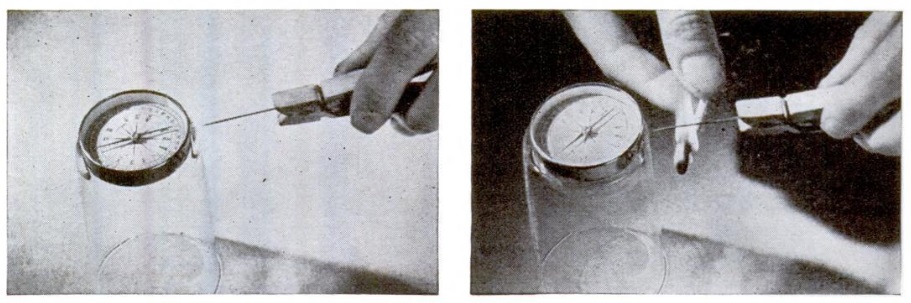
You’ll need a magnet, a compass, a needle, a clothespin (or some similar object to hold the needle) and some method of generating fire, such as a lighter.

Magnetize the needle by rubbing it on the magnet. After doing so, hold it near the compass, and the compass needle will point toward it. To demonstrate the molecular theory of magnetism, then heat the needle up to red hot. Hold it toward the compass again, and it will have no effect, or only a weak effect.

This is because the needle became magnetized because all of the molecules within became magnetized in the same direction. When the needle is heated, the atoms can move more freely, and are aligned in random directions.


Some links on this site are affiliate links, meaning that this site earns a small commission if you make a purchase after using the link.

1965 Light Beam Communicator

Screenshot 2025-02-13 11.35.20 AMThe young man in this drawing is now a senior citizen, but in 1965, he was taking part in the school science fair, using a project shown in the Winter 1965 issue of Elementary Electronics. He was communicating with a light beam, with a rudimentary setup consisting of two audio amplifiers. The output of one of them was hooked directly to a light bulb (in series with a 3 volt battery), and the input of the other one was hooked to a photocell.

According to the article, this unit was good for demonstration purposes only, and was only capable of a couple of feet. I’m surprised that they are so conservative in their estimate, since I made virtually the same setup when I was a kid, and it traversed the length of the house without much difficulty.

The only difference in my version was the addition of a transformer to the output of the first amplifier. The primary was hooked to the amp, and the secondary was wired in series with the battery. I used a flashlight, and just sandwiched two pieces of foil, insulated by cardboard, between the lamp and the battery terminal. I suspect my use of a flashlight, complete with its parabolic reflector, was probably an important factor in my success.

Screenshot 2025-02-13 11.37.27 AM


Science Fair Ideas: Refining Gasoline at Home

1940FebPSIf Junior is looking for the perfect science fair project to secure the coveted blue ribbon, then the February 1940 issue of Popular Science is where to find it. Following the simple instructions there, you can replicate the processes of a modern oil refinery and cook up some gasoline in the lab.

And for an added bonus, you can make the latest in food material science, namely, hydrogenated vegetable oil, also affectionately known as trans fats.


1925 Emergency Foot Bridge

1925FebSciInvBridgeA hundred years ago this month, the February 1925 issue of Science and Invention gave these self-explanatory plans for constructing an emergency foot bridge. It had the advantage of being able to use it as you constructed it, since you pushed each new section into place.

Each support was a pair of jumping poles. You would form them into an “X” shape, and then push them out ahead. Perhaps some student will be inspired to turn this into a science fair project. Or perhaps a scout looking for a good pioneering project might be inspired. (If the water below is deeper than ankle-deep, then the current Guide to Safe Scouting calls for participants to wear a life jacket.)


Some links on this site are affiliate links, meaning that this site earns a small commission if you make a purchase after using the link.