1952 One-Tube ARRL Handbook Receiver

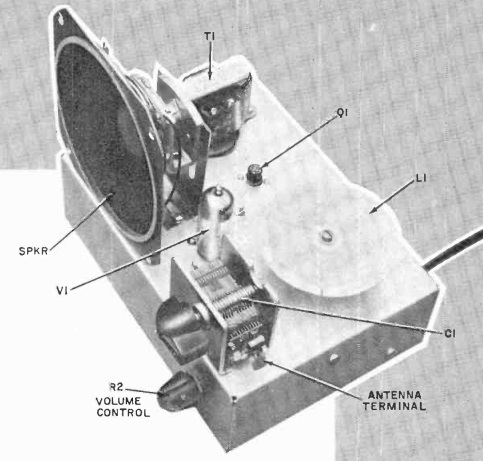
1952HB1Seventy years ago, the 1952 edition of the ARRL Handbook carried the plans for this handsome one-tube regenerative receiver. The set used a single 6SN7 dual triode, half of which served as detector, with the other half serving as audio amplifier. According to the book, the set was close to the minimum for a useful shortwave receiver, but under suitable conditions, it would pull in signals from many foreign countries. It was described as being excellent for the beginner, due to ease of construction and low cost.

With four plug-in coils, the receiver would tune 2.8 through 40 MHz, covering six ham bands, including the 11 meter band. Interestingly, the then-new 21 MHz band was called the “14 meter” band at the time. At some point soon thereafter, the name 15 meters was adopted, probably to avoid confusion with the 14 MHz band.

An accompanying power supply was also shown, built on a wooden-slat chassis.

1952HB2


中文圣经

For the time being, anyway, this website is apparently not blocked in China. We decided to take advantage of that fact and post the entire text of the Bible in Chinese. This text is in the public domain, and you can find the original at this link. To download the Bible, click this link, which is a ZIP folder. Find the file “index.html” and start from there. The following is an automated translation of this paragraph:
就目前而言,无论如何,这个网站在中国显然没有被屏蔽。我们决定利用这一事实,用中文发布整本圣经。此文本属于公共领域,您可以在上面的第一个链接中的英文描述中找到原文。要下载圣经,请单击上面的第二个链接,这是一个 ZIP 文件夹。找到文件“index.html”并从那里开始。

World Does Not End on Feb. 3, 1962

1962Feb9LifeSixty years ago today, the February 9, 1962, issue of Life Magazine reported that the world had not come to an end six days earlier, on February 3.  As discussed in the magazine and in this article, millions of people were apparently disappointed on February 4 when the Earth was still around.

The biggest frenzy apparently took place in India, where millions reportedly gathered in Bombay in anticipation of the disaster.  An alignment of planets was said to be the cause of the non-event.


1942: Modifying Enemy Alien Shortwave Sets

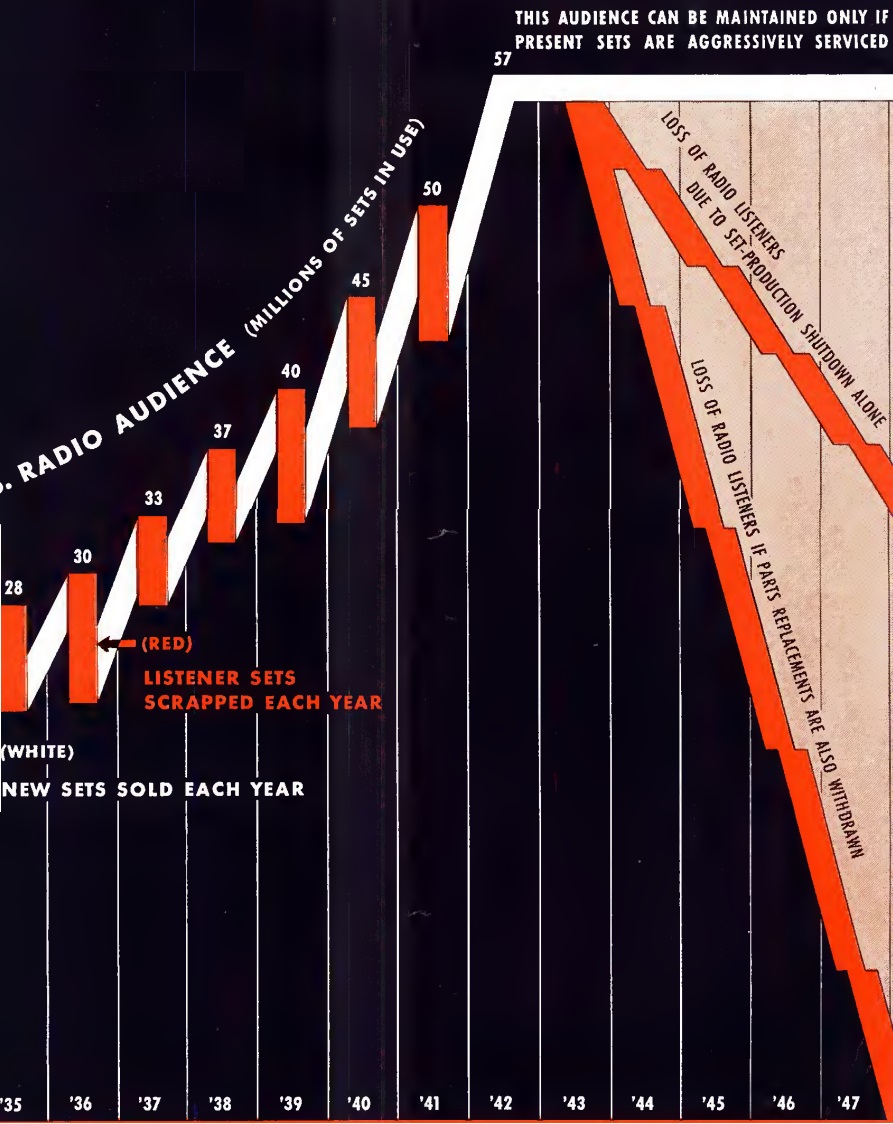
1942FebRadioServDealerAs we previously reported, as of January 5, 1942, enemy aliens (that is, citizens of Japan, Germany, or Italy) were prohibited from possessing cameras, firearms, or shortwave radios. They were required to surrender them at the police station, where they would be issued a receipt.

The February 1942 issue of Radio Service Dealer reminded its readers that the majority of such aliens were friendly to the country and should be accorded fair treatment. It was essential to keep in mind, however, that not all of them were. The magazine also pointed out that there was no intent to deprive enemy aliens of the opportunity of listening to American broadcast stations. Therefore, the regulations permitted persons to reclaim their receivers if it was made inoperative on the shortwave bands. Hence, there was a demand for technicians to perform the necessary task of disabling shortwave reception on multi-band sets.

The magazine stressed the need of doing so in a manner that could not be easily converted back. Therefore, simple modifications such as cutting a lead to a band switch, or shorting out oscillator coils, was insufficient. The magazine provided the technical details for various kinds of sets. Some sets, for example, used a single oscillator coil for both broadcast and shortwave, with the coil tapped for shortwave reception. These sets might require replacement of the oscillator coil. Other sets used separate coils for the different bands, and these were generally an easier job of simply removing the shortwave coils.

After the job was done, there was still a need for caution:

Remember that there is always the possibility that some enemy alien in your locality may try to pull a fast one. Dealers, jobbers and servicemen, and radio amateurs, too, should be suspicious of any person who may be presumed to be an enemy alien, when attempts to purchase radio parts, borrow test equipment, or seek your service in any alignment work outside of  the broadcast band.

On the other hand don’t let your imagination get the better of you. Be reasonably sure of your suspicions before reporting any case to the local police or the FBI.

The magazine contained the full text of the regulations:

Short-Wave Radio Receiving Sets

(a) No alien enemy shall use, or operate or possess, or have under his custody or control at any time or place any short-wave radio receiving set. For this purpose the words ‘short-wave radio receiving set’ are to be construed as including any apparatus designed to be used or capable of being used for the purpose of receiving signals, messages or communications of any nature whatsoever which signals, messages or communications are transmitted by means of radio waves of a frequency of 1750 kilocycles or greater, or of a frequency of 540 kilocycles or less.

(b) A short-wave radio receiving set as defined in paragraph (a) hereof which set is also capable of receiving long-wave radio communications is deemed to be within the class of shortwave radio receiving sets prohibited unless the set is so altered or modified that short-wave radio communications or messages cannot be received by the said set, and further, unless the set is so altered or modified that it is impossible without the addition of more parts and the substantial rebuilding of the set to modify the set so that it will be capable of receiving short-wave radio communications.

( c) No alien enemy who is found in possession of any short-wave radio receiving set will be excused in any manner on the ground that he did not know that the set was a short-wave radio receiving set or that the set could be readily converted into a short-wave radio receiving set. It shall be the duty of any alien enemy to ascertain whether or not any radio in his possession is prohibited; and any alien enemy having in his possession any radio receiving set whatsoever shall be held responsible for knowing whether or not such set is a short-wave radio receiving set.

1942FebRadioServDealer2The magazine apparently needed an appropriate photo for the cover to illustrate this important story, and it settled on this image of an SWL, apparently pulling in an English station. The caption noted that this activity was one now reserved to citizens only.

It’s not uncommon for radio collectors to come upon a prewar set whose shortwave bands have been disabled. For those with such a set, we hope this article provides some insight into the modification that had been made in early 1942.


1952 One Tube Loudspeaker Set

1956FebRadioElecSeventy years ago this month, the February 1952 issue of Radio Electronics showed how to put together this one-tube loudspeaker set for the broadcast band. The magazine noted that such a circuit had long been a favorite sport of the advanced constructor, but it was tricky, since much more gain and power was needed to drive a speaker.

The author actually used two circuits, shown below, and noted that the 1D8GT circuit performed best. In both cases, the tube was reflexed, meaning that it provided both RF and AF gain, and the RF stage used regeneration. The detector was the then relatively new 1N34 diode.

The circuit used permeability tuning, but noted that a variable capacitor would work equally well.  A hinged cabinet was used, with the electronics in one half and the speaker and battery in the other.

1956FebRadioElec2


Potassium Iodide for Nuclear Emergencies

Terrorism Section Content Nuclear Blast 1.3.0.0Do not take any medicine unless directed to do so by a physician or public health authorities.

If you are reading this at the time of a nuclear emergency, then there are probably other priorities that are much higher than obtaining potassium iodide.  Take care of those other priorities first.  The following resources will provide you with useful information, and we recommend that you download them as soon as possible:

The author of this website is totally incompetent to offer any type of medical advice. Therefore, please do not take any pills that are recommended by this website, or any other website for that matter. You should only take pills that are recommended by your doctor, or other competent health authorities.

But there could be some emergency situations where doctors or competent health authorities recommend that you take some particular kind of medicine. If you are unable to get that medicine because of the emergency, the medical advice won’t do you any good. Therefore, there are some medicines that it might be advisable to purchase before the emergency.

Can you think of a time when doctors were recommending a medicine, but that medicine was not available for purchase? Maybe some of our readers can think of an example.

In any event, it is possible that there could be a time when doctors recommend a particular medicine, but that medicine is not available. If that medicine is inexpensive now, then it would be prudent to buy some now. If your doctor tells you to take it at some later time, you can do so immediately. If you have extra medicine, you can give it to your friends and neighbors, if their doctor recommends it for then.

Potassium Iodide for Nuclear Emergencies

Potassium iodide (KI) is one medicine that your doctor might recommend in the event of certain nuclear emergencies. These could include a nuclear attack in your area, or even a nuclear attack in another part of the world.  It could also include a Chernobyl-style nuclear accident or an attack against a nuclear reactor.

Nuclear radiation can, of course, cause many health problems, up to and including death.  Potassium iodide can protect against only one hazard, namely exposure of your thyroid to radiation. In the big scheme of things, getting thyroid cancer many years later is a relatively small concern. If you’re old enough, you don’t have to worry at all, since you will die of old age before you get it.  So if exposure to radiation is a possibility, then take precautions against the more serious risks before worrying too much about the future of your thyroid.

Thyroid. NIH image.

Thyroid. NIH image.

On the other hand, it is extremely simple to eliminate the risk of damage to your thyroid. If you flood your body with iodine before you are exposed to radioactive iodine, then the radioactive iodine will pass through your body harmlessly. But if you do not flood your body with iodine, then the radioactive iodine will collect in your thyroid, and you will potentially get cancer years later.  So one concern during a nuclear emergency, albeit a rather minor concern in comparison to what’s going on, is flooding your thyroid with iodine.

Therefore, it is possible that some day, due to a nuclear disaster of some type, your doctor or public health authorities will recommend that you take 130 milligrams of Potassium Iodide. For example, according to the New York Department of Health, “if there is an emergency, you will hear an announcement from your local or state health officials. Your local health department will tell you when you should start taking KI and they will also tell you when you can stop taking it.” According to that site, the recommended dose for adults is 130 mg. Doses for children range from 16 to 130 mg, depending on age and weight.

You can read similar advice from the Nuclear Regulatory Commission, the Centers for Disease Control, the Food & Drug Administration, the Department of Health & Human Services, and the World Health Organization.  You can also find a good discussion at Nuclear War Survival Skills, and in this article written by a physician for laypersons.

VA image.

What a well-organized government distribution might look like. VA image.

After  a disaster in which your local and state health authorities tell you to take potassium iodide, the hope is that your Government will spring into action and distribute the potassium iodide to the public. For it to do any good, you need to take it before being exposed to the radiation. So you need to hope that your Government will spring into action very fast. They might, but it’s probably not something you can count on. And even if they spring into action fast enough, they might not have enough for everyone. So if you get yours from the Government, that might mean that some other person won’t get any. Therefore, it would be very wise to purchase it before the emergency. Fortunately, the cost of potassium iodide is low, and like everything else, you can buy it on Amazon:


Keep in mind that the adult dose is 130 mg, and if you are buying for only adults, that’s probably the most convenient size. If you need smaller doses, you can cut up pills, but it might be more convenient to buy smaller dose pills. Prices can vary, so shop around the various options to find the best option for you. You can probably buy potassium iodide from your local pharmacy. I don’t believe a prescription is required, but it’s probably up to the discretion of your pharmacist. But since it’s readily available on Amazon and other online sources, I would use one of them.

All of these products are available, and are intended for human consumption. It seems to me that it’s cheap insurance to buy it now, just in case your doctor or public health authorities tell you to take it. (Note: some health food stores sell potassium iodide supplements, but some of these have doses in the microgram range, which is much too low for radiation protection. Also, the amount of potassium iodide in iodized salt is much too low to provide any protection.)

A Consideration for Those With Small Children

Potassium iodide (KI) has a very bitter taste.  This is generally not a problem, as long as someone is able to swallow a pill.  For very young children, however, it might be necessary to cut a pill into small parts, and/or mix it with a liquid for them to drink.  Because of the taste, it is possible that they will not be able to take the medicine.  Therefore, if you anticipate this as a problem, you might consider purchasing potassium iodate (KIO3), which does not have a strong taste and can be mixed with food or beverages.  For more information, see this site.

Update:  Apparently, the FDA is not allowing sale of potassium iodate.  For more information, see this sitePage 99 of Nuclear War Survival Skills contains some tips on making potassium iodide more palatable in case you need to cut up one of the pills and feed it to young children.

An Even Cheaper Alternative

There is an even cheaper option that we should mention:  You can buy the materials you need to whip up a batch in your kitchen. As outlined in Nuclear War Survival Skills, you can purchase reagent quality potassium iodide. In fact, the local high school chemistry lab might have a large bottle, since it is used in a popular experiment to make elephant toothpaste.

One bottle is sufficient to make thousands of doses. However, the contents of the bottle must be diluted many times to make them safe for human consumption in the proper dose. Your doctor or public health authorities might be reluctant to tell you to take something you whipped up in the kitchen using materials from the chemistry set. But if you’re willing to take that chance, and potentially help hundreds of your friends and neighbors, you can purchase the reagent grade potassium iodide at Amazon. Be sure to download the instructions for making it safe for human use and the information at this site.  You can order from the following Amazon links:

Using Iodine Transdermally

Warning:  You must never drink elemental iodine, sometimes known as tincture of iodine, sold under the brand name Betadine.  It is used as an antiseptic to apply to your skin.  In an emergency, you can use this product to protect your thyroid–again, not be drinking it– but by painting it on your skin.  For more information, see this site.  I suspect that in the case of a radiation emergency, even if this product was available, pharmacies might refuse to sell it because they would believe, possibly correctly, that some patients would drink it.  However, if you are faced with a nuclear emergency and you are otherwise unprepared, it’s possible that you might have this product in your medicine cabinet.

The following websites also contain information about potassium iodide, and have it available for sale:  ki4u.com and nukepills.com.


Some links on this site are affiliate links, meaning that this site earns a small commission if you make a purchase after clicking the link.

1922 Horse Mobile

1922FebRadioNewsShown here is the horseback radio station of an unnamed Western radio enthusiast. The one-tube set was powered by batteries and used a very short aerial. The illustration was on the cover of the February 1922 issue of Radio News, and according to the magazine (which also carried a photograph), the set operated on a wavelength of 80 meters, and provided good telephonic communication over short ranges with the ranch house.

For the ground connection, one wire was run to the horseshoe, and this was found to be satisfactory. The article did not state whether the horse was positive ground or negative ground.


Joseph J. Pekot, Nanticoke, PA, 1952

1952FebNRNShown here 70 years ago is Joseph J. Pekot of Nanticoke, PA, on the cover of the February 1952 issue of National Radio News.  Pekot had always driven a coal truck, but after being discharged from the army, he wanted to enter a field of study that would always be expanding. Since electricity and radio had always interested him, he enrolled in the National Radio Institute correspondence course, and kept his job while he studied at home. He graduated in 1948 and did complete service work in his part-time shop. He reported many satisfied customers.

Pekot, who fought at Normandy and the Battle of the Bulge, earning five Bronze Stars, died in 2001 at the age of 84.


1947 Crystal Sets

1947FebPS1RadioPhonoSeventy-five years ago this month, the February 1947 issue of Popular Science carried plans for a number of crystal sets under the heading “Crystal Sets: The First Word in Radio.” The science of radio had made great strides in one generation, but the magazine noted that the generation of engineers and technicians had all grown up on crystals.

Despite those advances, the humble crystal set had never passed out of the radio picture.1947FebPS3portable Beginners and those who like doing a lot with a little found the circuits inviting. The example shown above was a radio-phonograph, and the magazine noted that a (piezoelectric) crystal phono pickup could drive a set of headphones just as well as a crystal set. While the design shown here used an electric motor, a clockwork turntable could replace it, making a radio-phonograph independent of any power source.

1947FebPS2selectiveThe set shown at left was said to be superselective, and the one at the right was an ideal portable. For use while camping, it needed only a long spool of wire and a stake for the ground. Finally, the set below added one tube for a stage of audio amplification.

1947FebPS4OneTube


Minerva Radios, 1947

1947JanRadioNews2MinervaFrom 75 years ago this month, in the January 1947 issue of Radio News, here are the latest radio offerings from Minerva Corporation of America, located at 238 William Street, New York, close to the Manhattan approach to the Brooklyn Bridge.  The site appears to be very close to the current location of Spruce Street School and the New York by Gehry apartments.