Category Archives: Emergency Preparedness

SNAP Challenge 2015: The Final Day

Leftover staple items.

Leftover staple items.

Today marks the seventh and final day of my 2015 SNAP Challenge, where I’ve eaten for a week on less than $31.50, the average amount received by recipients of SNAP benefits, formerly known as food stamps. My actual expenditures were $27.99, which was up a bit from last year, but still well within the guidelines. As an added challenge this year, I concentrated mostly on foods that are suitable for emergency food storage.

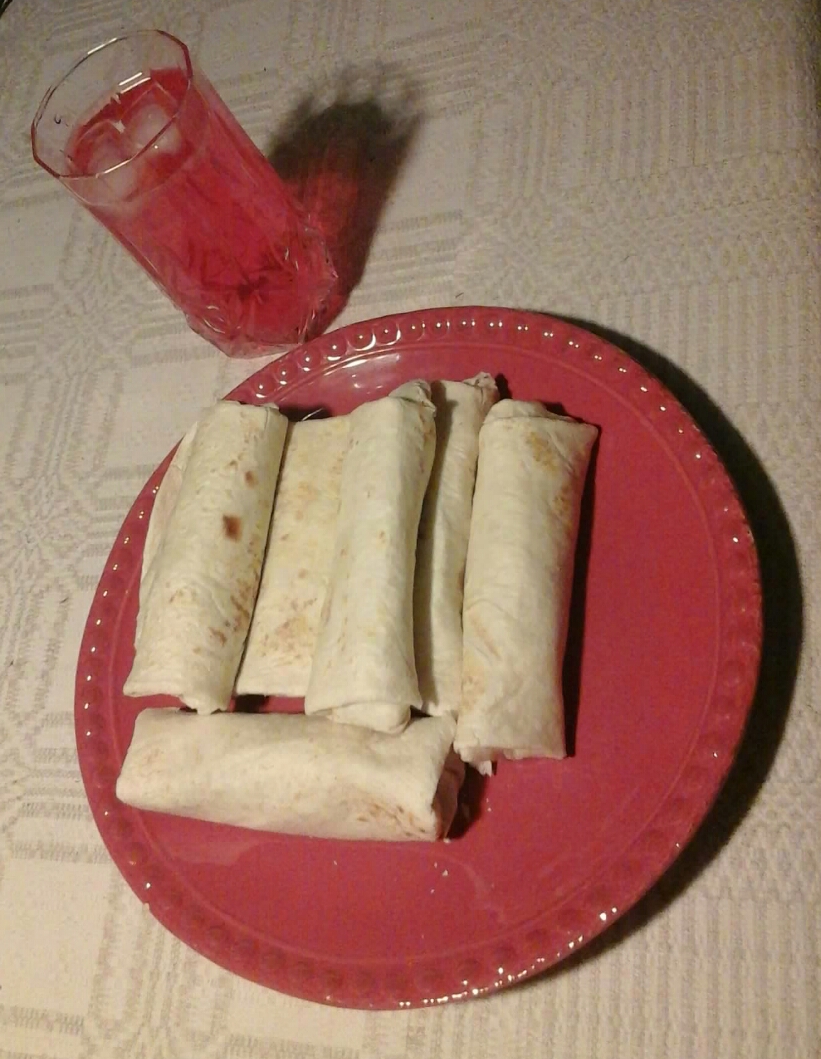
20150124_180632Breakfast today consisted of oatmeal. For lunch, I finished the nachos and had another serving of biscuits and gravy.  Supper, shown here, consisted of the remaining burritos, and a quesadilla made with the remaining cheese sauce and tortilla.

Most of my leftover food is shown above. I still have at least a pound each of the flour and sugar, half a pint of the cooking oil, and half a pound of margarine. So I could easily subsist a few more days on what I have. But since the challenge ends at midnight, I’ll just rotate those remaining items back into our normal household pantry, and think about what I can do for future challenges.

20150124_180008As I did last year, I celebrated the end of the Challenge by baking a cake, shown here, using  this recipe.  About the time I was supposed to take it out of the oven, I realized that I had forgotten to include the margarine called for in the recipe.  Even though the cake wasn’t as good as last year, it was surprisingly good despite this omission.

I should note that the recipe called for two eggs, and I only had one.  Over the last year, there has apparently been inflation in the price of eggs.  Last year, a dollar bought eight, but this year, I only had six eggs.  Therefore, I had to include one egg from the normal household supply.  But I’ll be sharing more than half the cake with the rest of the family.

I have five hours to go, but there’s no question that I’ll survive.  I still have about a dozen cookies to tide me over, as well as several biscuits.  I also have about a fourth of my can of coffee remaining.  In normal use, my 10.5 ounce can wouldn’t have lasted the week, but with a bit of rationing, I had plenty.

I’ll probably have some concluding thoughts in a few days, but this concludes my SNAP Challenge for the year.  Tomorrow, we’ll resume our normal programming, and look at why a Boy Scout a hundred years ago took it upon himself to have a Merit Badge requirement changed.

Click Here For Today’s Ripley’s Believe It Or Not Cartoon


SNAP Challenge 2015: Day 5

20150122_160043I didn’t really have breakfast this morning, other than coffee.  Lunch consisted of leftover Ramen noodles, with some of the mixed vegetables mixed in, along with the leftover pig in blanket from a couple of nights ago.

Since I didn’t have much of a lunch, I also had an afternoon snack consisting of the nachos shown above.  I’m concentrating on storage food for my challenge this week, and the chips aren’t a particularly good long-term storage item.  But they do have a reasonably long shelf life, and they’re the kind of thing one might find around the house in an emergency.  For long-term storage, they could, of course, be made with stored ingredients.  Yesterday, I discussed how tortillas could be made from Maseca and water.  The tortillas can be cut into chips and deep fried to make tortilla chips.

Canned cheese sauce.

The  canned cheese sauce, on the other hand, is an excellent storage item.  A few days ago, I used it to make a passable pizza.  It wasn’t intended for that purpose, and although it made a fairly good pizza, the result was unusual looking.  But today, I was using the sauce for its intended purpose, and it made a very good snack.

The cheese sauce is relatively expensive (about $2.50 per can), so it’s probably not an economical option if you plan to use it regularly on a long-term basis.  However, having a few cans in your pantry can allow you to make some good comfort food in case of emergency.

For long-term storage, a very good option for some of your dairy needs is Honeyville powdered cheese.  This product appears to be very similar to the cheese powder that comes with boxed macaroni and cheese.  For about $21, you get a lot of this powdery substance, a can containing 41 servings of 140 calories each.  It can be used for things such as macaroni and cheese (although the boxes of macaroni and cheese are probably cheaper), and also makes a quite good cheese sauce.  I’ve found that the consistency is thicker than cheese sauce, so it actually makes a better dip.

According to the instructions on the can, you simply add hot water.  It’s not salted, so you will want to add salt.  And I’ve found that the final result is better if you add a little bit of milk and butter or margarine.

A few cans of the  cheese sauce are certainly helpful for emergency storage.  But over the long term, the Honeyville powdered cheese would allow you to augment your dairy storage with something with an essentially infinite shelf life.

20150122_180510

Supper is shown above.  I made another batch of biscuits and had biscuits and gravy, using the gravy mixicon and water.  I also had some of the canned vegetablesicon and a couple of slices of the Armour Treet.  I washed it down with coffee and Kool-Aid.  I am very full after this dinner which consisted entirely of canned and dried ingredients.

I also have plenty of leftovers, such that I don’t think I’ll need to do much cooking for the final two days of the SNAP Challenge.  I have leftover burritos, pizza, and biscuits and gravy in the refrigerator, but I also have additional ingredients in case I want to try something else.  I’ve almost finished my second batch of cookies, so I’ll probably make one more batch.  The largest downfall for most SNAP Challenge participants seems to be the failure to recognize the people often eat between meals.  And having the cookies available makes the challenge much more manageable. icon


Click Here For Today’s Ripley’s Believe It Or Not Cartoon


SNAP Challenge 2015: Day 4

20150121_172924(1)

My 25 cent oatmeal.

For breakfast this morning, I departed somewhat from my previous shopping list. Instead of using the groceries I purchased this weekend, I had some oatmeal. Oatmeal is a good storage item, and it’s certainly within my budget, so I don’t consider this to be “cheating.” The particular oatmeal I ate was Quaker Pumpkin Spice Instant Oatmeal . I had it in the house, and had actually purchased the 8 pack about a month ago at WalMart as a closeout item for only 25 cents. So my total expenditure for the two envelopes as 6-1/4 cents.

But since I didn’t buy the oatmeal during the SNAP Challenge period, it’s not fair to use 25 cents as the price. Instead, I’ll treat it as an expenditure of $1, since oatmeal (both instant and regular) is always available at the Dollar Store. Therefore, my total expenditures are now up to $27.99.

For lunch, I finished the chili from yesterday.

For supper, I used the tortillas and can of refried beans for burritos. I made seven, four of which I saved for later. After viewing my unusual looking food, my wife took pity on me and prepared the burritos. I could have done it, but they wouldn’t have looked nearly this good. As you can see, I finished up the blue Kool-Aid and am now working on the pink Kool-Aid.

The canned beans and prepared tortillas are certainly suitable items for medium-term storage, since the tortillas had an expiration date a few months away. So they’re both good items to keep around the house. But for long-term storage, there are even better options.

First of all, normal dry beans are cheap and will keep basically forever if properly stored. The disadvantage, of course, is that they require a fair amount of preparation and actual cooking. Another excellent option is the Honeyville refried bean flakes. These are dehydrated refried beans. You simply add hot water, and the result is refried beans which are indistinguishable from (or even better than) the canned variety. The cost is basically comprable to canned beans.

While tortillas will last a long time, the basic ingredient for corn tortillas, Maseca, will last basically forever if stored properly. The only other ingredient necessary to make tortillas is water, so this is a good choice for emergency food storage. It should be available in most Supermarkets, including WalMart.
icon


Of course, one must know how to make tortillas. It’s not particularly difficult, but it does require some practice. And it’s made much easier by having the proper tool, namely a tortilla press such as the one shown here. They’re available at Amazon, WalMarticon, and many other places. If you can’t find one locally, you can order at WalMart online and pick it up at your local store.

Click Here For Today’s Ripley’s Believe It Or Not Cartoon


SNAP Challenge 2015: Day 3

20150120_180358

I have to admit that this year’s SNAP Challenge is proving to be a bit more challenging than last year, since I’m relying this year on food that is suitable for long-term storage (or, to put it another way, the so-called “non-perishable” items that people are asked to donate to food banks).  My menu is about the same as last year, but I don’t have any bread, hot dogs, sausage, or hamburger.  The overall cost is about the same, but the substitutes aren’t quite as good.  In particular, the canned meat is starting to get old.

For breakfast this morning, I had pancakes and some of the Armour Treet.icon  For lunch and supper, I made chili, using some of the Treet, one can of Chili beans, and one can of tomatoes.  I’ve been grazing on the peanut butter cookies, so I made another batch.  (I forgot to flatten them with a fork, but they taste OK.)  Both are shown above.icon  I had one biscuit for lunch, but I’m starting to tire of them, so I had cookies with my chili for supper.


Click Here For Today’s Ripley’s Believe It Or Not Cartoon


SNAP Challenge 2015: Day 2

Tonight's Supper.

Tonight’s Supper.

Day 2 of the SNAP Challenge was again uneventful.  I’m subsisting this week on less than $31.50 in groceries, and I’m concentrating on items that are easily storable.

After my initial failure with pancake syrup, I tried again last night and was somewhat more successful.  Since I don’t have any brown sugar to work with, I used two parts sugar and one part water and let it simmer until it was the right consistency.  Last year, my syrup was too watery, so I tried simmering it longer, taking care not to set off the smoke alarm as happened a couple of nights ago.  I still don’t have the knack, since it was excessively crystallized.  But I managed to get enough for my pancakes this morning, and for a couple more meals.

For lunch, I finished the tuna salad from yesterday, and had a couple of biscuits.

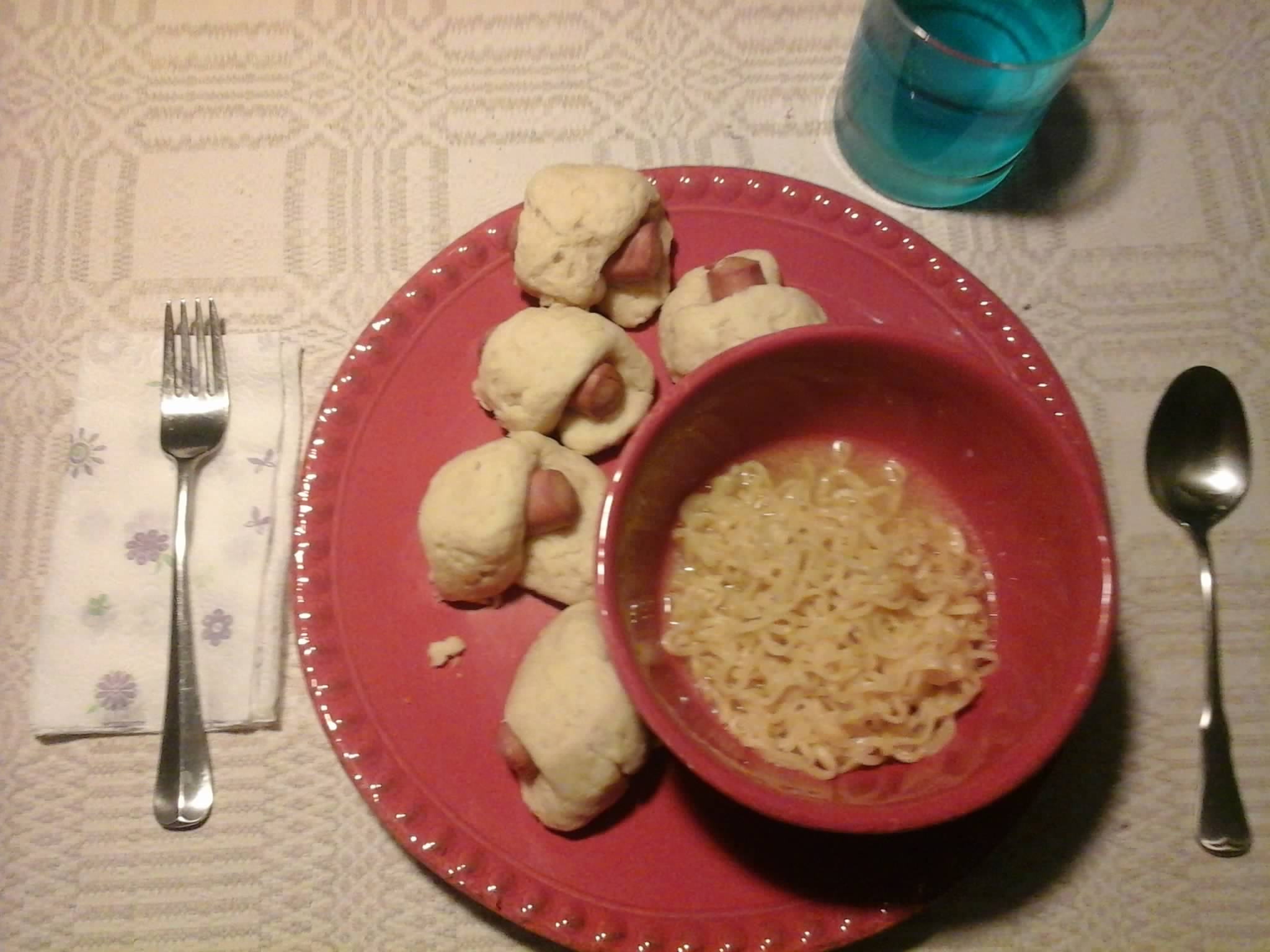
Supper consisted of the experimental pigs in blankets shown above.  I simply made the biscuit dough, wrapped it around the remaining Vienna Sausagesicon, and baked for about 15 minutes.  I also made one package of the Ramen noodles.  I washed it down with windshield washer fluid–er, I mean blue Kool-Aid.

With the exception of a couple of pats of margarine that I put on the pancakes, everything I consumed today is suitable for long-term storage.

Click Here For Today’s Ripley’s Believe It Or Not Cartoon


SNAP Challenge 2015 Day 0: Cooking

I plan to start the seven-day SNAP challenge tomorrow.  I did the shopping yesterday.  I spent a total of $26.99 on groceries that should last me the week.  Most people who take the SNAP challenge seem to go hungry since they don’t think about their basic caloric needs, which for most people is in the ballpark of 2000 calories per day.

Most of my caloric needs are taken care of with $4.94 of my purchase money, in the form of the following, which make up a total of 17,510 calories, more than enough for seven days:  Five pounds of flouricon , four pounds of sugaricon, and 16 ounces of  cooking oilicon.  Those items are not, by themselves, particularly edible.  Therefore, my mission for today was to change some of those ingredients, along with a few others, into actual food.  Since this process takes about the same amount of time regardless of the quantity, I made enough for the next few days and put them in the freezer.

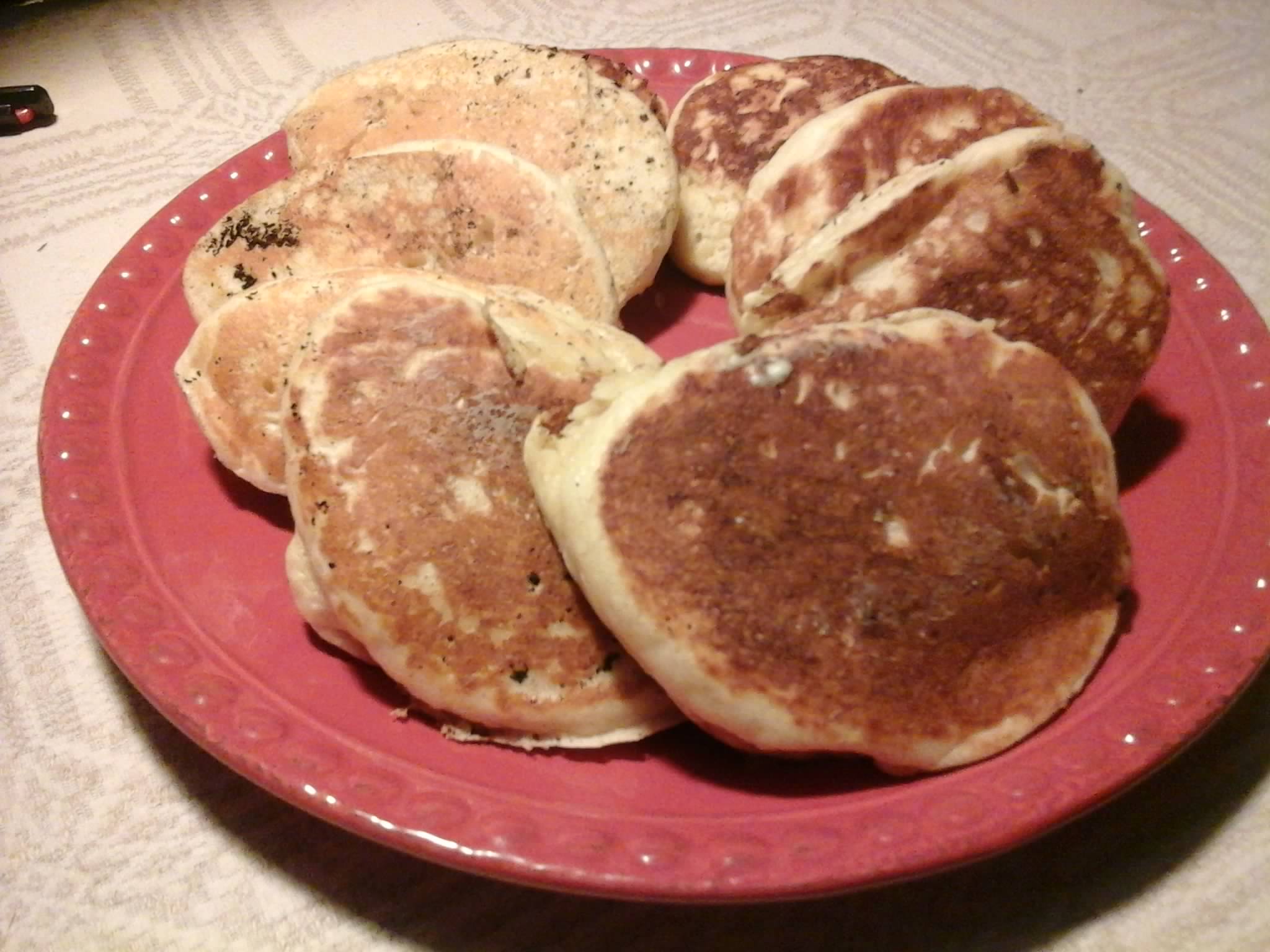
20150117_200705I started by making the pancakes shown here.  They are now in the freezer and can quickly be warmed up in the toaster or microwave for a fast breakfast or snack.  I used the same recipe as last year, except I used cooking oil instead of margarine, in keeping with my theme this year of using ingredients that can be stored for emergency use.

And since my use of storage food items precludes the luxury of 20150117_203434-1having bread, I’ll be relying more on the pancakes and biscuits.  I also made my first batch of biscuits, which are shown here.  I again used the same recipe as last year, but used cooking oil in place of the sausage grease or margarine that I used previously.

I also made a batch of peanut butter cookies.  The downfall of many SNAP challenge participants seems to be the lack of snack items.  The 18 cookies I baked should tide me over between meals for the next couple of days.  I used the same recipe as last year, but since I had more peanut butter to work with this year, I was slightly more generous.  I went ahead and used the margarine for these cookies, although I think the cooking oil would have worked just as well.

I also prepared two other items, or at least tried to do so.  Envelopes of Kool-Aidicon cost 20 cents, considerably less than the pre-sweetened variety.   It’s easier to prepare it by the glass, so I made my own pre-sweetened Kool-Aid by adding one envelope to a cup of sugar.  My first failure so far was with pancake syrup.  I mixed two parts sugar and one part water (equal parts of white and brown sugar work better, but I don’t have brown sugar) and left them to simmer on the stove.  I was reminded of this when the smoke detector went off, since I neglected to keep an eye on it.  Perhaps I’ll try again tonight, but I’ll probably just clean up the mess and leave my syrup making for another day.  In any event, I lost one cup of sugar, which was burnt to a crisp rather than delivering any food value.  But last year, I had more than a pound of sugar left at the end of the SNAP challenge, so I won’t go hungry as a result of my carelessness.


Click Here For Today’s Ripley’s Believe It Or Not Cartoon


SNAP Challenge 2015: Testing Storage Food

20150116_215600


As I did in 2013, I will once again be taking the SNAP Challenge, starting in the next couple of days.  I explained it in more detail when I originally took it, but the general idea is to subsist for seven days on $31.50 in food, which represents the average amount received by recipients of the SNAP program, formerly known as Food Stamps.

There seem to be two categories of people who take the challenge.  The first group is made up of those who view the challenge as being extraordinarily trivial.  Occasionally, one of them will announce that he or she is participating and go out and buy $31.50 worth of food.  They often put little thought into what they buy, and they usually aren’t heard of after a few days.  This is probably due to the fact that they failed.

The other group of people usually make it through the full seven days, but only after enduring a great deal of suffering.  Like the other group, they usually make poor buying decisions by buying apparently “healthy” but expensive food.  They usually suffer through the seven days, but are hungry most of the time.

I’m in the middle group.  Last year, I discovered that the challenge was not trivial.  But I also discovered that with a little bit of planning, I could eat quite well over the course of the seven days.  This year, I’m doing it again, but with a new twist.  One of the focuses of this blog is emergency preparedness, and I learned last year that the challenge also taught lessons for disaster planning.

On my website, I have a number of pages discussing emergency food storage.  Since I don’t own any camouflage clothing, I’m not much of a “survivalist.”  But even for those who are not contemplating a complete apocalypse, I believe that it is important to make preparations to be reasonably self-sufficient in emergencies.  And having a reasonable amount of food in the house is one important preparation.  In most cases, this “emergency food” is just part of the groceries we would normally buy.  Therefore, the SNAP challenge is a good way to test these emergency supplies.  Last year, my SNAP purchases included quite a few refrigerated items, such as hot dogs and ground beef. These would not be a good choice for emergency storage.  This year, I made a point to store items that are similar to the kinds of things that can be stored for an emergency.

This is not a perfect test, because I also needed to stay under the $31.50 budget.  Some of the storage food I would normally buy comes in larger quantities.  Therefore, I have made a few substitutions:

I did buy six fresh eggs, which should stay in the refrigerator (although it’s relatively safe to store eggs at room temperature for a few days).  For emergency storage, I would recommend Honeyville powdered eggs. Despite any bad reputation that powdered eggs might have, the Honeyville eggs are actually excellent, and indistinguishable from fresh eggs in cooking or baking. They can even be used for scrambled eggs, which taste almost as good as normal eggs. In a real emergency, I would use the Honeyville eggs. But for purposes of this test, they would be out of my budget. A large can costs almost $20. While they are economical, the can is much more than I need for one week. Therefore, I’m substituting fresh eggs, which cost me $1 for a half dozen.

I also purchased a pound of margarine.  Margarine will keep outside of the refrigerator, but not for long-term use.  In an actual emergency, there are other options.  One option is canned butter (ghee), which is fairly expensive. Another more economical option is Honeyville Powdered Butter, which I have not actually tried, but seems to have excellent reviews.  Another surprisingly good option is Butter Flavor Crisco, which can be stored.  Last year, I didn’t purchase any cooking oil. This time, to help allay any concerns that I’m “cheating”, I did purchase vegetable oil, which I’ll use for most cooking. Therefore, my use of the margarine should be farily minimal.

My shopping list for the challenge does include a couple of items that have fairly long shelf lives, but not what one might consider “long term.” I have one package of tortillas, and one bag of tortilla chips. Both of these have an expiration date a few months out, so it’s not unreasonable to believe that they would be in a normal cupboard in time of emergency.

Finally, as I did last year, the main staple of my diet will be my five-pound bag of self-rising flouricon. The bag I just purchased has an expiration date of December 2015, meaning that it can be stored for almost a year. For actual emergency storage, I would recommend normal flour, since the “self-rising” flour is nothing more than normal flour with baking powder already added. But for the SNAP challenge, the self-rising flour is easier on the budget. The smallest can of baking powder, which would last months, was over a dollar. For emergency use, it would be better to purchase regular flour along with a can or two of baking powder.

My focus on shelf-stable food means two big changes from last year’s challenge. First of all, I used two pounds of bread last year, and I don’t have the same luxury this year. But I had flour left over last year, so I’ll need to use the flour to make a substitute. Last year, I did have meat, in the form of hamburger, hot dogs, and sausages. This year, I’ll need to get by on canned meats. That will make things more challenging.

Finally, I should say a word about milk. I’ll be using shelf-stable milkicon. It’s always available at the dollar store for a dollar a quart, it has a shelf life of about a year, and it tastes just like any other milk. It’s a good choice for emergency storage, although since most of my uses are for cooking, powdered milk would be adequate. More information is available on my milk page.

As I did last year, I’ll spend a few hours the day before the challenge begins preparing some food.  I’ll eat well during my week, but it does require advance preparation.  And it’s more efficient to do most of the preparation all at once.

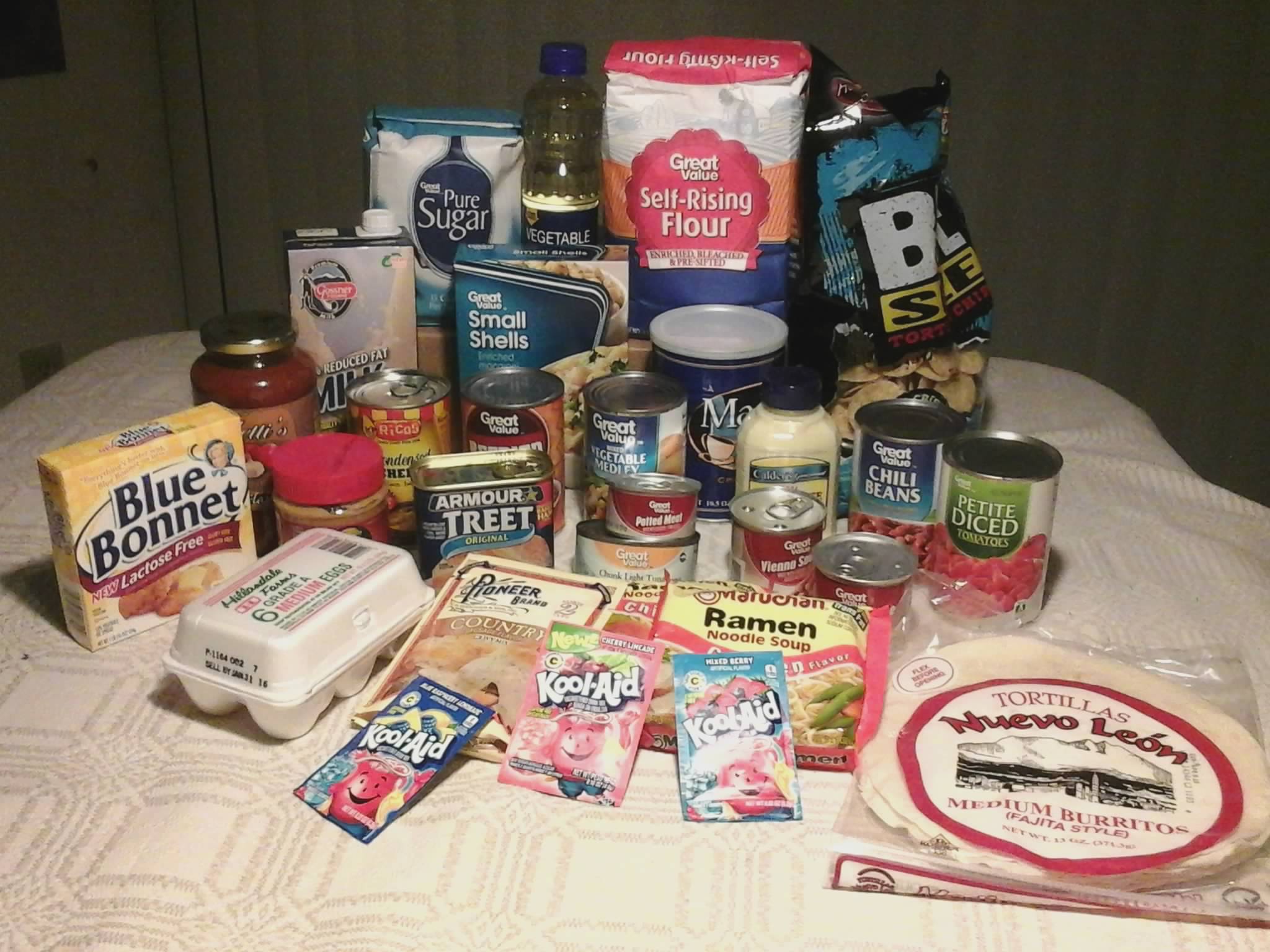
Today, I purchased the food shown above.  My total expenditure was $26.99.  I bought all of the food at either Walmart or Dollar Tree.  The complete shopping list is shown below, along with the prices I paid.  You can click on the links to see the exact items I purchased.  (In a few cases, I couldn’t find the same brand online, in which case the link goes to an identical product of a different brand or size.)


Click Here For Today’s Ripley’s Believe It Or Not Cartoon



Fallout Shelter Occupancy Experiment, 1964

ChicagoFalloutShelterTestFifty years ago today, January 12, 1964, 26 Chicago-area volunteers, most of them in their 50’s and 60’s, were locked in the basement of the Lombard Village Hall as part of a fallout shelter test. Under the scenario, a nuclear bomb had detonated in Keokuk, Iowa, and the prevailing winds were delivering the fallout over the Chicago area. The test was covered by that day’s Chicago Tribune, from which this photo was taken.

After settling into a routine and singing the National Anthem while facing a 48-star flag found in the basement, the group played a game to get acquainted. A Catholic priest served as a medic, and treated a man found to have entered the shelter with an overdose of radioactivity. The group eagerly lined up for their first meal of survival crackers, but after tasting them, the enthusiasm for the second meal was clearly dampened. One prudent woman brought with her a thermos of coffee, undoubtedly to the great envy of other participants.

The group elected an advisory council, and various jobs were assigned. In charge of handing out the rations was a 54 year old man who had previously served as an air raid warden during World War 2 in Mannheim, Germany. The veteran of Allied air raids opined that he knew how important it was to be prepared.

The only contact that the group had with the outside world was in the form of simulated radio broadcasts, in which they were informed that retaliatory strikes had been carried out.

The Priest/Medic was to say Mass on Sunday morning, and shortly thereafter, the experiment was to come to an end.  The next day’s paper reported on the volunteers’ emergence from the shelter.  It also reported that the latecomer’s condition proved fatal.  Interestingly, while the priest was serving a medical officer, a chiropractor was serving as religious officer.  The priest summoned the chiropractor to administer last rites to the unfortunate gentleman.

For another fallout shelter occupancy experiment, see my earlier post.

Click Here For Today’s Ripley’s Believe It Or Not Cartoon


1965 Emergency Crystal Set from Boys’ Life

BL1965XtalSet

In an earlier post, we looked at a one-transistor CONELRAD receiver featured in Boys’ Life magazine in 1956.  And today, we look at a simpler variation on the same theme, this time from 50 years ago this month, in Boys’ Life magazine January 1965.

Once again, the Scout’s obligation to Be Prepared is inspiration for this electronic construction article.  It’s a basic crystal set, but the focus is on being prepared, under the title EMERGENCY COMMUNICATIONS.

A terrified family, clad in pajamas, is apparently confronting rising flood waters. The text warns that “in an emergency, communication is important and communications preparedness should be a part of your ‘family alert’ plan.” It goes on to warn that if electric power is out, a crystal set may be the only way to keep in touch with latest news, disaster reports, and emergency instructions.

The page details how to build the radio using a galena detector with either a safety pin or piece of coiled wire. It acknowledges that a germanium diode can also be used but “isn’t as much fun” because it lacks the thrill of finding a sensitive spot on the crystal.

No author is listed, and the construction details are a bit lacking in detail. (In particular, no mention is made that the insulation has to be removed from the top of the coil in order to contact the slider.)

If you were a Scout 50 years ago, you were prepared. And a flood was nothing. You needed the additional thrill of finding the sweet spot on the crystal.

All of the parts for this set are readily obtainable.  If you’re having trouble finding any, you can find them on my crystal set parts page.


1956 Boys’ Life CONELRAD Receiver

BLConelradRadio

In the mid-1950’s, a transistor radio was an expensive luxury. This presented a problem for an impecunious Boy Scout who wanted to Be Prepared for anything. In the words of Boys’ Life magazine for January 1956, “in case of enemy attack, it is assumed that power lines will be down, and battery-operated radios would be a necessity. But batteries wear out. So what you need for Conelrad service is a receiver that doesn’t use B batteries, yet will produce a usable signal when needed.”

The article pointed out that a crystal set might be pressed into service, but wouldn’t produce very loud signals. Fortunately, Boys’ Life had a solution to the problem, in the form of this one transistor set that was well within the construction abilities and budget of a Scout. The set shown here would run on two penlight cells with clear headphone volume for well over a thousand hours. And in a dire emergency, since the set consisted of a crystal detector with one-transistor audio amplifier, the article gave instructions on how to bypass the amplifier and simply use it as a crystal set with reduced volume.

The set is build on a board, with instructions to mount it in a cigar box (painted black, according to the directions), which left ample room for storing the antenna wire, ground lead, and headphones. Since the set was designed for CONELRAD use, the article instructed to find the local broadcast stations closest to 640 and 1240 on the dial, tune them in, and then mark the dial position for future emergency use.

The circuit calls for a FS2500A transistor, which is a general purpose NPN transistor, apparently manufactured by Bogue, also known Germanium Products Corporation.  (See the substitution guide in the 1957 RCA Transistors and Semiconductor Diodes.)

The article was reprinted for a number of years in the Boys’ Life Radio and Signaling reprint booklet. Occasionally, the “Hobby Hows” column of Boys’ Life would answer a letter from a Scout asking where to find the plans for the receiver, who was directed to the reprint booklet. Therefore, I suspect more than a few scouts built one of these receivers, and I’m sure they were put to good use for entertainment purposes. The builders of these sets were undoubtedly the first kids on their block to own a transistor radio. Fortunately, none ever had to be used for the intended purpose of tuning in to CONELRAD alerts.

The author of the article was Howard G. McEntee, W2SI. McEntee was the author of the Radio Control Handbook, published by Gernsback Publications in 1955 and updated over the years.