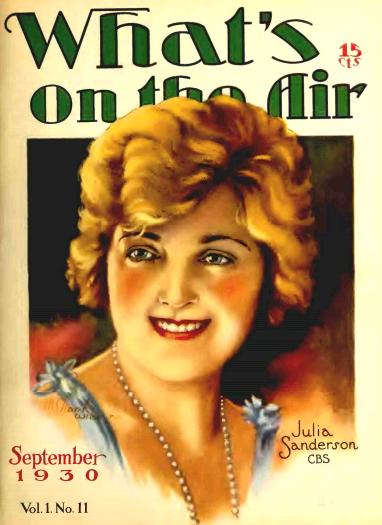
Author Archives: clem.law@usa.net

Hurricane Betsy, 1965

Hurricane Betsy satellite image, 4 Sept 1965. Wikipedia photo.

Hurricane Betsy satellite image, 4 Sept 1965. Wikipedia photo.

Fifty years ago today, Hurricane Betsy started bearing down on the United States. On August 27, 1965, the storm formed as a tropical depression off the coast of French Guiana and started moving northwesterly. It caused only minimal damage to the Leeward Islands before heading over open waters for several days. It achieved hurricane intensity on August 30. On September 5, 1965, the hurricane stalled over the Bahamas, where it inflicted the worst damage since 1929, before resuming a westward track. It made its initial landfall in Key Largo, Florida, before reemerging in the warm waters of the Gulf of Mexico, where it continued to gain strength.

Flooding in New Orleans. Wikipedia photo.

Flooding in New Orleans. Wikipedia photo.

On early September 10, it made landfall again near Houma and Grand Isle, Louisiana, with winds of 155 mph. The eyewall was in the New Orleans area for over eight hours, with winds in the range of 120 mph. It caused a strom surge into Lake Pontchartrain and considerable flooding and levee breaches in New Orleans, lasting ten days. Near Baton Rouge, the storm caused the sinking of a barge loaded with enough chlorine to kill 40,000 people, necessitating mass evacuations in the harbor area.  In New Orleans, most antennas were down, and 90% of the city was without power.

The November, 1965, issue of QST reported on how Radio Amateurs responded to the storm. K5AOE set up on the 8th floor of City Hall, where considerable traffic was handled on 75 meters. This included health and welfare traffic, and also a dedicated medical net. Fifteen mobile stations, each assigned to a doctor, were set up at shelters, and there was constant traffic as conditions were reported and medical supplies requested. The FCC declared a communications emergency for the duration.

The Hurricane Watch Net was formed informally during Hurricane Betsy as stations came on the air to provide communications to and from affected areas. Since then, the net has continued to operate with a more formal structure any time a hurricane is within 300 miles of projecte landfall or otherwise threatening any populated area.


Click Here For Today’s Ripley’s Believe It Or Not Cartoon


Don Wallace, W6AM, and WCCO Radio

DonWallace1925I always knew that reknowned Amateur Radio operator Don Wallace, W6AM, had a background in Minnesota radio history. For example, I knew that he was involved with the University of Minnesota Amateur Radio Club, and I knew that he was involved with the Minnesota Wireless Association, whose antenna was a prominent feature on Minneapolis City Hall in 1915.

But I never knew the role that he played in the founding of WCCO radio. His role is detailed in a profile of WCCO which appeared in the September 1925 issue of Radio in the Home.

An earlier post recounts how WCCO first came on the air in October 1924. Its predecessor, WLAG, first came on the air in 1922. One of the problems encountered by WLAG before its demise was the transmitter location. The 500 watt transmitter was located in the city. When it was on the air, it made listening to more distant stations impossible. But when it was off the air, the listeners with crystal sets weren’t able to get anything. When a major investor in WLAG pulled its support, the station was off the air.

A group called the “Northwest Radio Trade Association” took the lead in getting a new station on the air. Obviously, the lack of a radio station put a dent in radio sales. In particular, without a local station, crystal set owners were left with nothing to listen to.

By this time, Wallace was employed by General Electric. As he recounted in a 1984 interview, when offered a position right out of college, he was offered a salary of $100 per month. He noted that his wife made more than that as a teacher, and that he could make more working as a telegrapher. GE was unwilling to budge very much, but they upped the offer to $125, and also offered him 1% of his department’s sales. Within a few months, he was making more than the company’s president.

Wallace was also the president of the Northwest Radio Trade Association in 1924, and took the lead in organizing a new station for the Twin Cities. Along with the group’s secretary, H.H. Cory, he proposed a more powerful 5000 watt station about 20 miles away from the Twin Cities. This would result in a signal powerful enough for the crystal set owners, but far enough away so as to allow owners of more powerful sets to pick up distant stations.

The plan met with some initial skepticism, as local businessmen noted that the area couldn’t support 500 watt WLAG, and they were hesitant about investing in a 5000 watt station. But eventually, Washburn-Crosby pledged to buy the station, provided that additional subscriptions of $50,000 per year from both Minneapolis and St. Paul could be secured.

WCCO transmitter site in about 1930.

WCCO transmitter site in about 1930.

As proposed by Wallace, the transmitter was located away from both Minneapolis and St. Paul, at its current site in Anoka. Studios were located in both Minneapolis and St. Paul, and to avoid any rivalries, announcers alternated announcing the location as “Minneapolis-St. Paul” and “St. Paul-Minneapolis.”

WCCO Minneapolis studio, Nicollet Hotel, 1925.

WCCO Minneapolis studio, Nicollet Hotel, 1925.

Wallace graduated from high school in 1912. He first became involved in amateur radio in 1910, prior to licensing, and got his first license in about 1912. He is listed in the 1913 call book as 6OC at 1431 Linden Avenue, Long Beach, California.

He served as a radio operator during World War I, and after the war, was assigned to serve as the radio operator for President Wilson at Versailles. He came to Minnesota after the war to attend the University of Minnesota. In Minnesota, he was licensed as 9XAX and 9ZT. In the 1922 call book, he is also listed as 9DR at 1830 Stevens Avenue in Minneapolis.

Read More at Amazon

Click Here For Today’s Ripley’s Believe It Or Not Cartoon
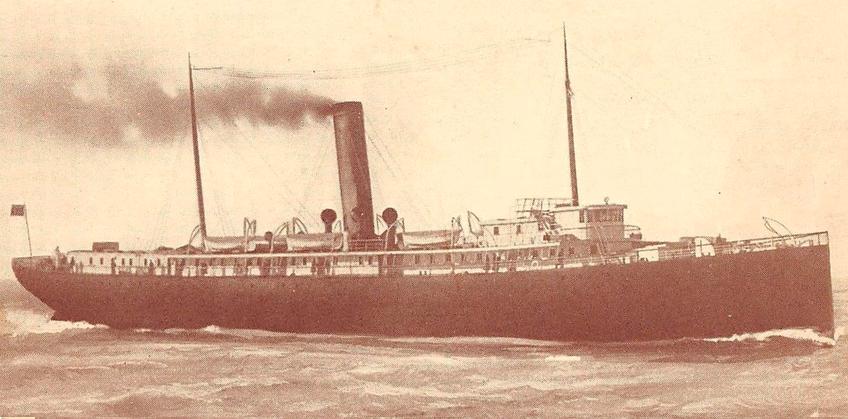


1945 “Tom Thumb” Crystal Set

1945SeptPMXtalSetSeventy years ago, the September 1945 issue of Popular Mechanics carried the plans for this “Tom Thumb” crystal set, about the size of a match box. The circuit was very basic, with no variable condenser, instead using a simple slider across the coil to tune. The coil was flattened, and wound on a 5/8 by 1-9/16 by 2-5/8 inch block of wood. It notes that this block is recessed at one end to take a small fixed detector. For a modern replication, a diode could easily be used, with many sources for obtaining it noted on my crystal set parts page.

1945SeptPMXtalSet2The article notes that the block should be baked in a moderate oven before winding the coil, presumably to drive out moisture. The slider is made of a partially flattened Fahnestock clip, and the “cabinet” is constructed of cardboard. The outside contains four more Fahnestock clips for the antenna, ground, and headphones. The article notes that in areas with a strong station, about 20 feet of wire tossed on the floor should give adequate reception, with a spring clip attached to a convenient ground.

Click Here For Today’s Ripley’s Believe It Or Not Cartoon
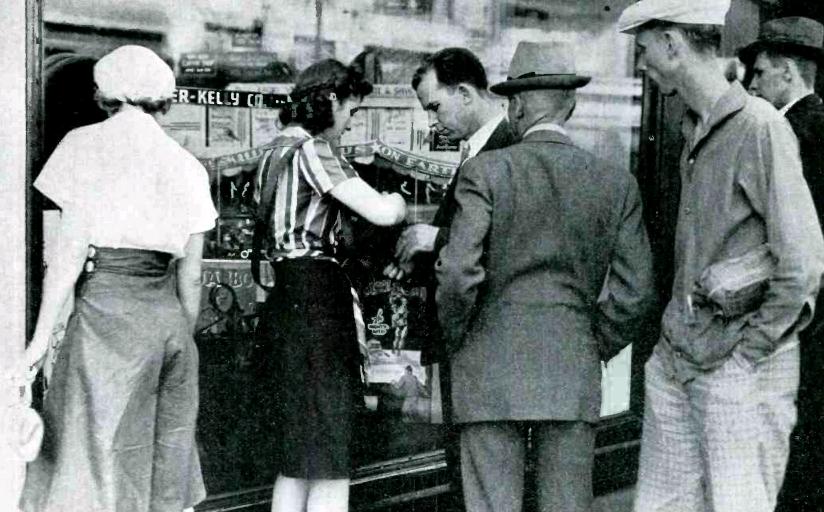


WOI, Ames, Iowa, 1925

WOI operating room, 1925.

WOI operating room, 1925.

Ninety years ago, the September 1925 issue of Radio Age carried a profile of radio station WOI, at Iowa State College (now Iowa State University) in Ames, Iowa. In 1925, the station’s focus was clearly on the farmer, and the article notes that the station was “maintained for the farmer by men who have practical farm experience.” The station began operating as WOI in May 1922. Programming included market reports, seasonal lectures of interest to farmers, and weather reports. Entertainment programs included both classical and popular music.

Even prior to the station being licensed as WOI, Iowa State College was a hotbed of radio activity. Even before World War I, weather reports had been broadcast by station 9YI, the predecessor of W0YI, the University’s Amateur Radio club station.

The article notes that the college offered an annual course in radio construction “which has enabled the farmer and especially the boys and girls on the farm to build their own sets.” At one such course, held annually in April, more than 500, from Iowa, Minnesota, Illinois, and Nebraska, descended on the campus to take part in the free course. In addition to the construction of broadcast sets, there was instruction in Amateur Radio, offered by students connected with Amateur station 9LC.

The station then operated on 270 meters (1111 kHz) with a power of 500 watts. The antenna consisted of wire aerials connected to a water tank and massive smoke stack 150 yards apart.

WOI is currently the flagship station of the Iowa Public Radio network. It’s 640 kHz signal (5000 watts daytime, 1000 watts nighttime) covers most of the state of Iowa during daylight hours, as well as good portions of adjoining states.

Click Here For Today’s Ripley’s Believe It Or Not Cartoon


Minnesota State Fair

Welcome to OneTubeRadio.com. This blog covers a variety of subjects, including radio history, Minnesota history, World War I, World War II, and scouting.

MinnStateFair1915

Minnesota State Fair, 1915.


Today, we offer these images of the Minnesota State Fair as it appeared a hundred years ago in 1915. The scene above is the bandstand. Visible in the background  is the dome of the Agriculture Building.  A closer images of this building is also shown here, from the fair’s 1915 annual report.agriculturebldg

1922 Aeronautical Wedding

Bride, groom, and pilot at 1922 aeronautical wedding at grandstand.

Bride, groom, and pilot at 1922 aeronautical wedding at grandstand.

The grandstand, in the 1915 postcard shown below, is immediately recognizable to a modern visitor.  As previously reported here, in 1922, the grandstand served as the wedding venue of Edwin Moline and Zelma Olson, who were married aboard an airplane flying above the grandstand.  The presiding minister, Rev. E.A. Jordan, at 220 pounds, was too heavy to fit inside the airplane along with the pilot, bride, and groom.  Therefore, he officiated from a pagoda within the grandstand, receiving the couple’s vows by a radio which was carried aboard the plane.

grandstand1915

Ye Old Mill at 100 Years

Ye Old Mill, 2008. Photo, placeography.org, Licensed under the Creative Commons Attribution-ShareAlike License v. 3.0:

Ye Old Mill, 2008. Photo, placeography.org, Licensed under the Creative Commons
Attribution-ShareAlike License v. 3.0.

This year, the “Ye Old Mill” attraction at the Minnesota State Fair celebrates its 100th Anniversary. Many visitors are surprised to learn the nearly identical attractions with the same name at the Iowa State Fair (dating to 1921) and Kansas State Fair (also dating to 1915).

Radio at the Minnesota State Fair

Radio has a long tradition at the Minnesota State Fair. Indeed, the photo of the grandstand shows on the field what certainly appears to be a wireless antenna of some sort, although I don’t have any details of the old image. In 1914, the fair’s governing board considered a proposition made by one Philip Edelman of St. Paul for the installation of a wireless station at an esimated cost of $200. The board decided to continue discussions with Edelman as to whether such an exhibit could be made in a future year at less cost.

The Minneapolis sign of Sterling Electric Company, 1920 state fair exhibitor. Google books.

The Minneapolis sign of Sterling Electric Company, 1920 state fair exhibitor. Google books.

One of the earliest references I could find to radio at the State Fair was the December 1920 issue of Electrical Contractor Dealer, which detailed the experiences of the Sterling Electric Company of Minneapolis. At the 1920 Fair, the company had a large booth in the Electrical Building which included a wireless station that sent and received messages daily. The company followed up with a Saturday morning class in wireless telegraphy, in which there was considerable interest.

Shortly thereafter, the company, along with the Journal Printing Company, was the licensee of one of the area’s first broadcast stations, WBAD. That license was issued on April 25, 1922, according to the May 1922 issue of Radio World.  It is likely, therefore, that the honors for being the first radio station at the fair go to WBAD.  Since then, of course, local broadcasters have a long history of broadcasting from the fair.  The image below from a WCCO promotional item shows the station’s then location in the Agriculture-Horticulture building.

wcco1952statefairmap

Read More at Amazon


Click Here For Today’s Ripley’s Believe It Or Not Cartoon
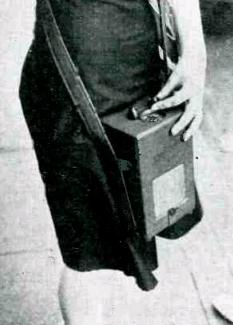


Aero Spacelines Super Guppy, 1965

The unusual aircraft shown here first flew 50 years ago today, August 31, 1965.

It is tail number N940NS (formerly N1038V), the first of seven Aero Spacelines Super Guppy aircraft. It was built from the fuselage of a C-97J Turbo Stratocruiser, the military version of the Boeing 377 Stratocruiser. The fuselage had a length of 141 feet, with a maximum load of 52,500 pounds.

Today, six of the seven planes are mothballed or in static displays. A single one is still in service, with tail number N941NA. It is used by NASA as a transport aircraft and is based in El Paso, Texas. It was acquired by NASA from the European Space Agency, where it bore tail number F-GEAI.

Click Here For Today’s Ripley’s Believe It Or Not Cartoon


MacArthur Arrives in Japan, August 30, 1945

ChiTrib083045

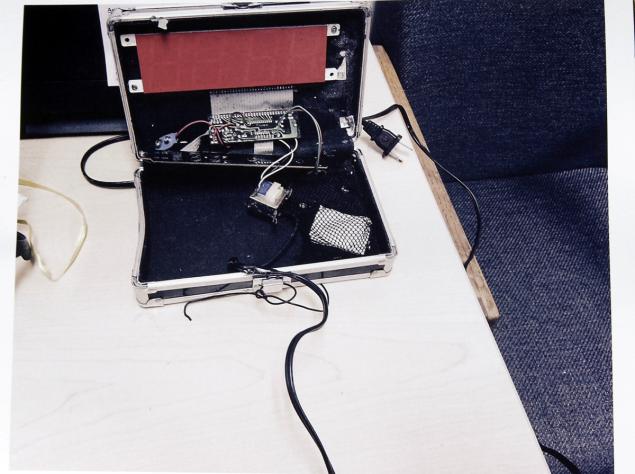
Seventy years ago today, August 30, 1945, the Japanese naval base at Yokohama surrendered to General Douglas MacArthur, who arrived there in anticipation of the formal surrender ceremony a few days later.  The headline here is from that day’s Chicago Tribune.

Click Here For Today’s Ripley’s Believe It Or Not Cartoon


Boy Scout Civilian Defense Volunteers in WW2

Boy+Scout+CD+7-26-15+001

Photo courtesy of W8KBF, Yahoo War Emergency Radio Service group.

During World War II, Boy Scouts in both America and Britain were called upon to serve as volunteers in civil defense. In the July 1942 issue of Boys’ Life, BSA Chief Scout Executive James E. West wrote an editorial encouraging Scouts to volunteer in the Messenger Service of the Citizens Defense Corps. The Office of Civilian Defense recommended that six messengers and two adult leaders be recruited for each 1000 persons in a community. Even though others were eligible to join, both the BSA and the Office of Civilian Defense believed that Scouts, due to their training and qualifications, would be ideal. The editorial stressed that during an emergency, other means of communications could be disrupted, and that written messages might be the only means of communication. West concludes:

This is one of the most important national service projects that has been requested of the Boy Scouts of America. It requires the utmost effort on the part of our organization to fulfill the responsibility which has been assumed. Let us face resolutely whatever the enemy has in store for us, and BE PREPARED to do what we are asked to do to the best of our ability.

Franklin County, Ohio, identification card for Boy Scout CD messenger.  worthingtonmemory.org photo.

Franklin County, Ohio, identification card for Boy Scout CD messenger. worthingtonmemory.org photo.

British Scouts Tour America

Visiting British scouts with James E. West and BSA foreign relations chairman Thomas J. Watson.

Visiting British scouts with James E. West and BSA foreign relations chairman Thomas J. Watson.

A few months later, a group of British Scouts who had served in civilian defense roles during the Battle of Britain made a tour of Canada and the United States, including a meeting with West, and their heroic tales were written up in the magazine’s September 1942 issue.   These Scouts represented four towns that had been heavily hit by bombing. Scout Stanley Newton of London explained:

Our Troop went through six months of heavy bombing in London. I cannot say that we came off unharmed. Our two Troop headquarters were wiped out, one was burned down and the other was blown to pieces. Several of the boys lost their parents and their homes and two of the younger boys were killed in those raids. But we were glad that we could go through them and do something to use our training as Scouts in helping some way or another.

Another of the Scouts, John Bethell of Birkenhead, describes the work the messengers did during the Blitz:

When a bomb drops one of the first people on the spot is either the head warden or one of the senior wardens. He always has a messenger with him; one of us Scouts. What he does as soon as he gets there is to make out a report on what has happened, give it to that messenger and the messenger rides down to the post, which we call the pill box.

Inside the pill box there is a telephone. That is the only telephone we are allowed to use during an air raid. But sometimes the telephone lines get broken when a bomb hits the road. Then instead of just having to ride to the post and telephoning, we messengers have got to ride down to the control center. Sometimes it is a long way and sometimes it isn’t. In my case it is three miles; that’s three miles there and three miles back, maybe ten times in one night. Not only do we send one messenger but three minutes after the first messenger is gone we always send another one so if the first one gets bumped off the second one may get through.

Derrick Belfall (1926-1940):  I Have Delivered My Message

Derric Belfall.  Photo courtesy of Mrs. Rita McInnes.

Derrick Belfall. Photo courtesy of Mrs. Rita McInnes.

Indeed, one of those Scouts, Derrick Belfall, was “bumped off” in the course of his duties as a civilian defense messenger.  Fourteen year old Belfall lived at 109 Bishop Rd, Bishopston, Bristol.   He was the only son of Cecil Ernest and Mary (née Miller) Belfall, who died in 1983 and 1964, respectively.

The official minimum age for messenger service was sixteen, but due to his insistence, Derrick was allowed to join the service.  On the night of December 2, 1940, he was dispatched with a message.  He delivered it successfully, and upon returning to his post, he found a house beginning to burn and he stopped to put out the fire.  He then heard cries from another house where he rushed in to save an injured baby. Shortly after effecting these rescues, the air raid still underway, Derrick was injured by an exploding bomb and taken to the hospital with injuries that proved fatal. As one of the visiting Scouts confirmed, his last words at the hospital were: “Messenger Belfall reporting.  I have delivered my message.”

Defused German parachute mine.  Wikipedia photo.

Defused German parachute mine. Wikipedia photo.

A Narrow Escape

Bethell, one of the British Scouts touring America, also recounted his own tale of being thirty yards away from an exploding parachute mine which killed two other civil defense workers:

A warden and I were riding along the streets on our bikes and saw a couple of parachutes coming down. Well, first we thought they were German airmen bailing out and we were just going to run towards them and give them something like what we would like to give Mr. Hitler–a kick in the pants or something like that–and then we realized that they were what are known as parachute mines…. We started to ride towards them to see if we could help in the rescue work we knew would follow….

We saw a couple of chaps running up in front of us also going on the same job. Just then we heard something flapping. It was only very faint but we realized that it was another parachute with a mine coming down. We knew if we were able to hear that flapping we must be pretty close to it. We got down on the ground and shouted to the other two chaps. But unfortunately they didn’t hear us. The roar of anti-aircraft fire drowned out our shouts. They went on. The mine went off just thirty yards ahead of us. We were just blown across the street but otherwise all right. But those other two chaps standing up under the full blast–it got them right in the chest and blew their lungs out and killed them.

American Scouts In Action

ScoutCD1943

The American Scouts shown here in the February 1943 issue of Boys’ Life are participating in a civil defense exercise.  The display shown at the top of the page is the uniform of a Scout as he would have appeared in 1943 as a civil defense messenger in Mercer County, Pennsylvania.  It was put together by W8KBF of the Yahoo War Emergency Radio Service group.

While American Scouts and other civilians escaped the harrowing experiences of their British counterparts, it is clear that they lived up to the Scout Motto to Be Prepared.   And as the British Scouts proved, a scout is brave.

As Scout Executive West wrote, these Scouts “were not specialists but were equipped only with such knowledge as is normally given to Scouts through our Advancement Program. Yet how nobly these Scouts lived up to our Scout Motto ‘Be Prepared.’ We, too, have a job to do!”

Acknowlegments

DerrickI would like to thank Mrs. Rita McInnes, a neighbor of the Belfall family, for providing the photograph of Derrick Belfall.  This photograph hung for many years in the Belfall home as part of the illuminated photo shown here containing Derrick’s last words. (Click on the small image to view the full image.)

I would also like to thank Sam Hevener, W8KBF of the Yahoo War Emergency Radio Service group for allowing me to use the photo of the American Scout messenger’s uniform at the top of the page.

Additional References

Read More at Amazon


1915 Receiver

1915AugustBLOne hundred years ago, a Boy Scout interested in wireless could get this complete receiving station for only $2.85, as advertised in the August 1915 issue of Boys’ Life.  It’s unclear whether the headphone was included for that price. While a headphone is shown in the picture, it’s not mentioned in the description, which leads me to suspect that a few Scouts might have learned the disappointing phrase “sold separately” after placing the order.

In any event, the set was probably capable of picking up the time and weather signals of NAA, at least for those within a few hundred miles of Arlington, Virginia. The set is described as consisting of “bare wire wound double slide tuner, our new two cup triple action cat whisker detector, tubular fixed condenser, buzzer and switch to tell if your detector is working, a silk wire wound high 6-capacity loading coil that allows you to get Arlington, Va., and the long wave stations.”

In addition to the possibly missing headphones, the owner of the set would need to come up with some wire for an antenna and ground connection. But the set appears to be capable of picking up NAA and other stations. As the ad mentions, the test buzzer would be helpful in making sure the cat whisker was set to a “sweet spot” on the crystal. A battery would also be necessary to operate the test buzzer.

The set was offered by the Handel Electric Company of 138-140 Centre Street, New York.

Click Here For Today’s Ripley’s Believe It Or Not Cartoon


1915 Car Powered Ferry

1915CarFerry

The prototype car barge shown here was reportedly built for less than $100 and in use by a motorist in Aberdeen, Washington, to cross a bay 20 miles wide. It is shown on the cover of Popular Mechanics a hundred years ago this month, August 1915.

Each paddle wheel is connected to a hardwood wheel, which is strapped with leather straps to the spokes of the car’s wheels. The rear of the car is jacked up off the floor, and the craft is ready to cross the bay. It reportedly took about eight minutes to load the car aboard and make it seaworthy.

Click Here For Today’s Ripley’s Believe It Or Not Cartoon