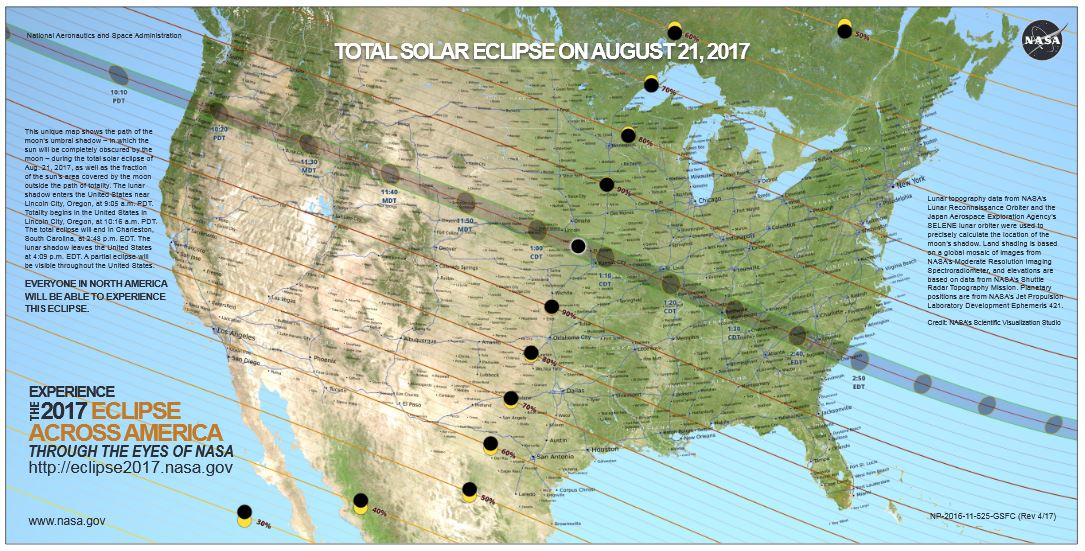
Path of Totality. NASA image.
If you recently decided to travel to view the eclipse on August 21, you might have first checked to see if there were any hotels inside or close to the area of totality. When you did, you probably discovered that there are none, or they would cost hundreds or thousands of dollars. In many areas, the only option, if you need to stay overnight, is to camp. Fortunately, many temporary campgrounds, some with very reasonable prices, have sprung up from Oregon to South Carolina. I have a listing of many of these campsites. Wherever you will be viewing the eclipse, it’s likely that you will be able to reserve a campsite in advance, and knowing that you have a safe place to stay Sunday night will relieve much of the stress.
Quick Links
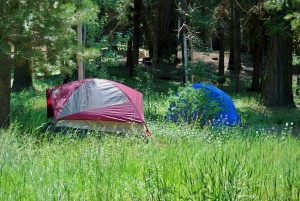 If you have experience camping, then you probably won’t learn anything new from this page. This page is devoted to the newbie who has never been camping before. You’re going camping this time only because you have no other options. There’s nothing wrong with that, and with a little bit of preparation, you’ll have a pleasant experience Sunday night, and you’ll get a good night’s sleep the night before the eclipse. I’m an Eagle Scout, and my family regularly goes camping, so I might be considered an “expert.” But it’s not necessary to be an expert to enjoy a short camping experience. On this page, I show the preparations that are necessary for the newbie to have a pleasant camping experience.
In many of the areas I’ve checked,it will be possible to get a hotel room on Monday night, the night after the eclipse. By then, most chasers will be headed home. So even if you need to stay a second night at your eclipse viewing location, or stay overnight on the drive home, you’ll probably only need to camp one night, Sunday night. On the other hand, some areas might be so congested that it will be best to arrive Saturday and wait until Tuesday before starting home. Even if you need to camp two or three nights, the advice on this page should get you through the adventure.
You will need to go out and buy some stuff. If you walk into your local outdoor store and tell them that you need to outfit yourself for camping for the first time, the salesperson will see dollar signs and offer to sell you expensive deluxe equipment. While it would be nice to spend hundreds or thousands of dollars for the best equipment, it’s not necessary. On this page, I have some recommendations of some of the things you might need. Nothing on this page is the deluxe version. Most of these recommendations are for the bare minimum cheap version of the various products. But for one or two nights, they will prove adequate. In many cases, the expensive versions are more durable and will last many years. But for one use, the cheap versions will usually be just as good.
Tents

 The first consideration is to decide whether you will actually need a tent. Depending on what kind of car you have, it might work just as well to sleep in your car. Trying to sleep while sitting on one of the seats, even if it reclines, usually doesn’t work very well. There’s a reason why humans lie down to sleep, and they’ve done this for millions of years. But if your vehicle has a flat surface long enough for you to lie down, then sleeping in the car might be the best option. If your vehicle is wide enough, you might be able to stretch out on the back seat. In a van or SUV, there might be enough room on the floor. In a hatchback, if the back seats fold down, then you can sleep in the back. The only way to find out for sure is to crawl in there and see if you can lie down.
If you do decide to sleep in your car, remember that it will get hot in there, so you’ll need to roll down some or all of the windows. Therefore, you will need some kind of screen to cover them to keep the bugs out.
If you can’t find a large enough flat surface in your car, then you probably want to get a tent, and this will be your first purchase. The most important advice about tents is: Practice setting it up at home! Most tents are relatively easy to set up, but there’s always a learning curve. And every tent is different. While you’re still at home, you want to make sure you know how to set it up, and that no parts are missing. In campgrounds, I’ve witnessed many unhappy couples taking out a brand new tent and then realizing to their horror that they don’t know how to set it up. If they had practiced a couple of times at home, they would have saved themselves a huge amount of frustration and stress.
When shopping for a tent, you will see that they are marked with how many persons they sleep. However, almost without fail, these numbers are the absolutely maximum number of people you could possibly squeeze in. So for a “two person” tent, yes, you could cram in two people if you really had to. But it would be a lot more comfortable with just one person. So if you really have two people, then you would probably be better off with a three or four person tent, even for just one night.
Normally, I have an important piece of advice when shopping for a tent. That advice is to get a tent that you can stand up in. If you’re going to be camping regularly, this is extremely important. At home, when you get out of bed, you stand up. Right before you get in bed, you are standing up. When you change your clothes, you stand up. You don’t normally notice it, but the sleeping process involves a lot of standing. So normally, I recommend getting a tent that allows you to stand up. It really makes camping a lot more pleasant.
Unfortunately, however, the cost of tents gets exponentially higher when you get one big enough to stand up in. If you’re really getting a tent that you’re only going to use once, you’ll save a lot of money by getting a smaller one. And the smaller tent will also be a lot easier to set up. So in this case, I’ll modify my normal advice. It’s annoying having to crawl around on the ground while you get in bed. It’s annoying having to change your clothes while crawling around. But it’s also only one night, and you want to save money.

 With that in mind, a tent similar to the one shown here is my recommendation for one person. Two people could probably squeeze in, but it wouldn’t be particularly comfortable. The primary advantage of this tent, the Stansport Scout Backpack Tent, is that it is cheap. It is also lightweight and won’t take up much space in your car.
The other big advantage, though, is that it’s easy to set up. As you can see, the A-frame style of this kind of tent is very “old school.” It doesn’t look futuristic like many of the dome tents that you see. However, in my experience, the dome tents are harder to set up, and they often require two people. (Dome tents, however, have the advantage of not needing stakes in the ground, although they are usually highly recommended. With the inexpensive A-frame tent shown here, the stakes are absolutely necessary.) Dome tents are harder to set up because the poles have to go in just the right spot. Also, the poles need to be just the right size and shape. If you break one of the poles for a dome tent, it’s usually easiest just to throw the tent away. With this type of tent, if you break a pole, you can improvise and just use a stick of about the right size.
Setting up this kind of tent is very easy. First, you just pound in a stake in each corner to hold the floor tight to the ground. (It’s a good idea to bring along a hammer for this purpose.) Then, you pound in a stake about 3 feet in front, and about 3 feet behind. You put in the poles, and then you run a rope from the top of the pole to the stake. Finally, you put in two more stakes on the side, and run ropes to hold the side walls out. It really only takes about 5 minutes.

 If you have more than two people, then you really do need to move into the “dome” tent category and get something like the one shown here, the “three person” Wenzel Alpine Tent. Even though it’s billed as “three person,” it’s really only suitable for two. It’s still quite inexpensive. It is harder to set up, and you’ll definitely want to practice at home. The setup really requires two people, since it’s usually necessary to have one person hold a pole in place while the other person inserts it in the correct spot. Poles have to be put up in a certain order, and you will need to read the directions. It’s not particularly difficult, but you will need to practice at home.
The “six person” tent shown here, Coleman Evanston Screened Tent, is still relatively inexpensive, and would be a good choice for two adults and two or three children. An 8-person version is also available. At this point, the tent is getting large enough so that you can stand up in it. Even if you have to stoop over a little bit, being able to stand makes it a much more pleasant experience. This larger tent is also more complicated to set up, so you’ll definitely want to practice at home.
Sleeping Pads
The ground is hard! The floor of your car is hard! Your camping experience will be infinitely more comfortable if you have something soft to sleep on. You have a number of choices.

 If you’re getting a large tent, then you might consider getting a cot to sleep on. A cot is infinitely more comfortable than the ground. If there’s room and it’s in your budget, then you might consider getting one like the one shown here. But if you have a smaller tent, or want to economize, then the other option is to get some kind of soft object to sleep on. You can chose between some kind of foam pad, or an air mattress.
Foam pads are somewhat more convenient, but they are mostly designed to insulate you from the ground. While they are softer than the ground, they’re not particularly comfortable to sleep on. Therefore, my personal preference is an air mattress.

 If you know for sure that this will be your only time camping, then you might want to simply get a cheap air mattress like the one shown here. These are most commonly used at a swimming pool, but there’s no reason why you can’t sleep on one. Eventually, it will spring a leak, but in the meantime, it will make your sleep more comfortable. These also have the advantage of being inflated with lung power, so you won’t need to buy a special pump.


You can also get an air mattress designed for sleeping, such as the one shown on the right. These are very comfortable, and it will feel like sleeping on a normal bed. They are relatively inexpensive, but they do require a pump to fill them up. You can get a pump that is battery operated or one that plugs into your car. (Note: even If you have a compressor for putting air in your car tires, it will not work for filling the air mattress.)
Sleeping Bag

 The eclipse will take place on August 21, and whether you are in Oregon or South Carolina, it will probably be hot. So you don’t need to worry much about a sleeping bag. In fact, you might want to just bring normal sheets and blankets from home. But if you do want one, a cheap sleeping bag like the one shown here will be more than adequate.
One thing to keep in mind about cheap sleeping bags is that there’s a possibility that they won’t survive one washing. Washing them might result in the insulating layer getting messed up. They’re great until the first washing, though. Therefore, resist the temptation to wash the sleeping bag before using it, not that it would be necessary. When you get home, you can take your chances and throw it in the washing machine. If it survives, great. If it doesn’t, you already have your money’s worth from it.
Cooking and Eating

 If you’re going to be camping out West, then there’s a major fire danger, and it’s likely that you will not be able to have a fire or even a charcoal grill. You might consider buying a propane stove, but you’ll only be camping for one or two days. I would recommend just getting a cheap cooler. You can buy disposable styrofoam coolers like the one shown here at most supermarkets. Just fill it with ice and pack food that you can eat without cooking.
Whatever kind of cooler you use, you will find that it’s very helpful to have a large supply of Ziploc bags. The ice will melt, and no matter how careful you are, the items inside will be floating in water. If you pack everything in sealed plastic bags, then you won’t have to worry about it.
Don’t forget to bring utensils, paper plates, cups, napkins, etc. There’s no need to purchase special “camping” versions of these items, since the ones you have at home will work perfectly well. Buying a large assortment of plastic silverware will mean that you don’t have to worry about washing dishes. And don’t forget garbage bags. It’s possible that the dumpster of your temporary campground will be overflowing, in which case you might need to take home your own trash. Having good trash bags with you will make the process much more pleasant.
Portable Toilets

 Normally, if you go camping to a state park or private campground, you don’t have to worry about where to go to the bathroom. There will be a restroom within convenient walking distance of your site. However, for the eclipse, thousands of people will be camping in temporary campsites. Hopefully, the owners have rented enough toilets to accommodate everyone. But there’s a distinct possibility that some of them have underestimated the need. And if you’re stuck in traffic, or parked at a remote location waiting for the eclipse, there might not be a restroom nearby. Fortunately, you can bring your own from home!
Shown here is the Passport Potty from Sanitation Equipment. It’s relatively inexpensive, but when you need it, it’s worth its weight in gold. It would fit inside a family-size tent. And unless you a driving a compact car, there’s probably enough floor space in most vehicles to have it there. A very similar model available at Walmart at this link . You can order online, and then pick it up at the store the same day.
To use it, you go as you would with any other toilet. To “flush,” you open a valve at the bottom, and rinse the bowl with the built-in water pump. You then close the valve, and the contents are hermetically sealed into the compartment below. Spray a shot of Febreeze into the air, and the crisis is over! Especially if you have young kids, owning one of these can be a lifesaver. No eclipse chasing vehicle is complete without one!
If you buy one of these, you will need to buy some of the chemical to put in the tank, which is quite inexpensive. I prefer the pouches of dry chemical, but it’s less expensive to buy a bottle of the liquid chemical, since you only need a very small amount. Of course, you will also need toilet paper. While not absolutely necessary, it’s best to use the special RV toilet paper, since it breaks down faster and makes the emptying process easier. You can also buy the toilet chemicals and toilet paper at Walmart. You can order online, and then pick them up at the store the same day.
When you get home, or when you get to the first flush toilet of your voyage home, it’s a relatively simple matter to empty the toilet. However, this is one area where it’s best to practice at home. Fill the toilet with clean water and practice emptying it a few times. After a few tries, you will be able to do it confidently and without spilling. While you are camping, hand washing facilities might not be available. So it’s a good idea to pack some hand sanitizer.
Flashlights


In order for there to be an eclipse, there needs to be a new moon. And if you’ve been careful picking out your eclipse camping spot, you picked a spot without street lights. This means that the night before the eclipse, it’s going to be dark. When the sun goes down, you won’t be able to see anything. You can probably fumble around with your cell phone and get a little bit of light, or you can even annoy your camping neighbors by turning on your headlights. But life will be a lot easier if you bring along some flashlights. The flashlights shown here are inexpensive, they’re durable, and they work well. Bring along a few more than you need, along with plenty of extra batteries.

 There’s also a good possibility that you won’t have cell service or that the network will be overloaded. Therefore, it’s a good idea to also bring a good portable radio for receiving weather and traffic information. One good option would be this radio, which pulls in NOAA weather broadcasts in addition to normal AM and FM stations. It also features a hand crank, which means that you can continue listening to it even if the batteries go dead.
If you have the basics listed above, you’ll survive your camping adventure and actually enjoy it! Since local stores and restaurants won’t be able to keep up with the demand, bring your own food and water from home. Enjoy your adventure!

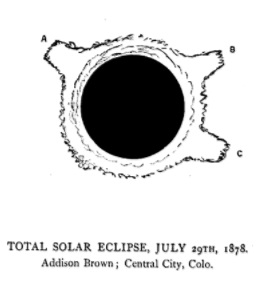 We are now beginning our final preparations to activate the
  During the eclipse, we plan to transmit radio signals that you can monitor in real time at home. I’ll try to repost it before Monday, but you will be able to follow in real time at
 This contest how now ended. We are running a Facebook contest, and two lucky winners will receive a free pair of eclipse glasses. The glasses are similar to the ones shown here, and are ISO and CE certified as safe for direct viewing of the sun. They are made in the USA by American Paper Optics. (I purchased them directly from American Paper Optics, and they were shipped to me directly, so there’s no chance that these are counterfeits.)
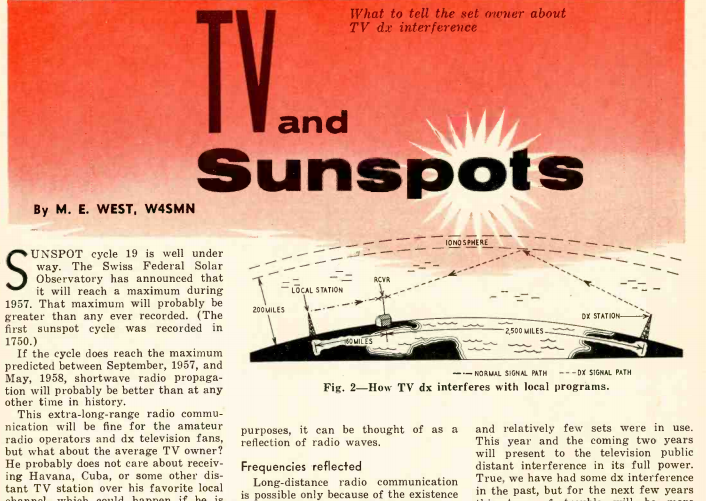 Sixty years ago, solar activity was at an all-time high, and the sun was plastered with sunspots. This was good news for hams, who depend on this solar activity for ideal radio communications on the high frequency bands. But in addition to being literal dark spots, this was, figuratively a dark time for the hapless TV repairman in fringe areas, because it fell upon him to explain to his customers that their interference woes weren’t his fault, but were instead caused by blotches on the sun.
 This page last updated Thursday, August 17. It is now too late to get the glasses, but I list a number of alternatives that will work better.

 Other projection methods provide a view that is better than the eclipse glasses. One extremely simple method uses binoculars or a small telescope or monocular. (Use cheap binoculars, since the sun might overheat and damage them. Even toy binoculars like the ones shown here should work just fine.) You do not look through the binoculars. Instead, you point one end at the sun, and the other end at a white screen, or even the wall of a building. You will see a very detailed image of the sun on the screen. It’s amazingly simple, and you will see a much better view than you would with eclipse glasses. It is described at
 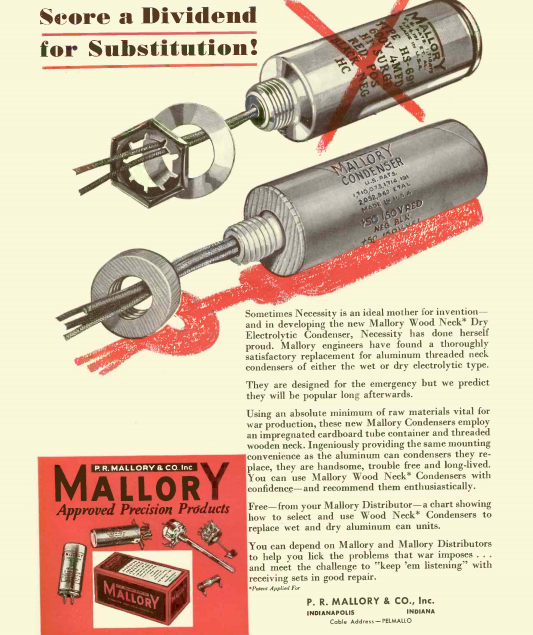 With wartime material shortages, replacement radio parts were hard to come by. And even when parts were available, the manufacturers had to adapt to wartime conditions.