Author Archives: clem.law@usa.net

1944 Emergency Supplies for Downed Flyers

1944AprPSSeventy five years ago this month, the April 1944 issue of Popular Science showed this illustration of the survival items that could be dropped to airmen who were forced to make an emergency landing in the Arctic.

For a larger image, click twice on the image above from most browsers.


1934 One Tube Regen

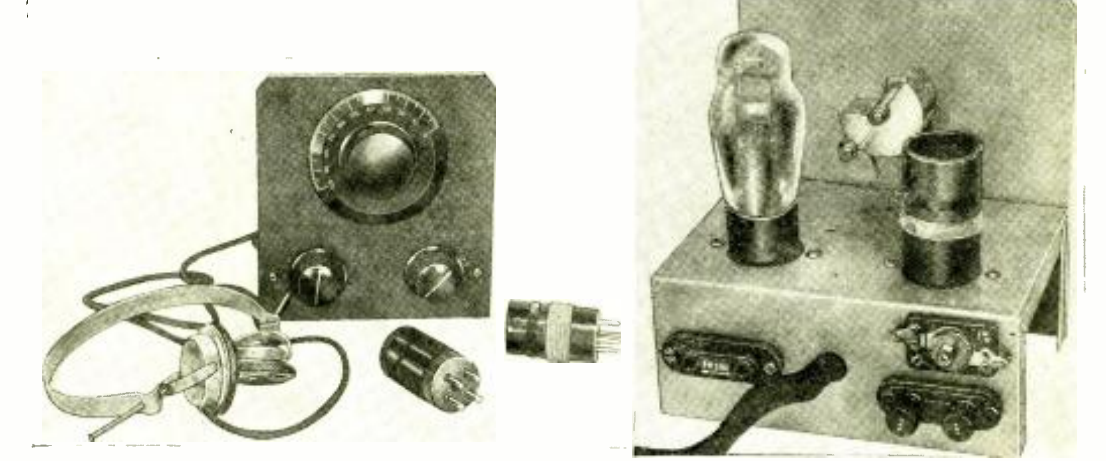
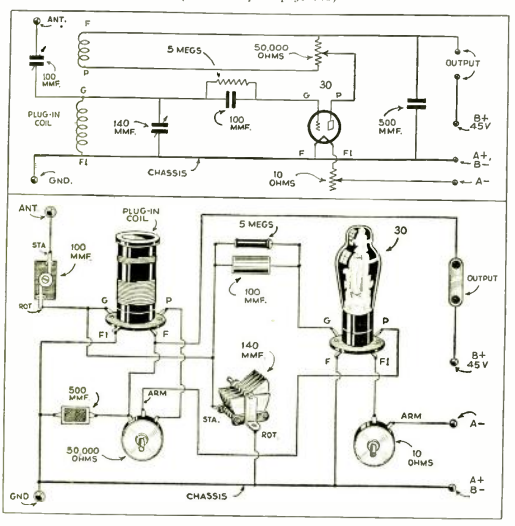
1934AprSWcraft2The plans for this handsome one-tube shortwave receiver appeared 85 years ago this month in the April 1934 issue of Short Wave Craft.  The set employed a single type 30 tube as its regenerative detector. The magazine recommended putting together one of these simple sets for those just becoming acquainted with the short waves, in order to acquaint themselves thoroughly with the operating and handling of a shortwave set.  Plug-in coils would allow tuning 16-200 meters.

An antenna of 30-100 feet was said to be adequate, in conjunction with a good ground. But the magazine advised keeping the antenna as high as possible.

1934AprSWcraft3


Signal Corps Recruiting Women, 1944

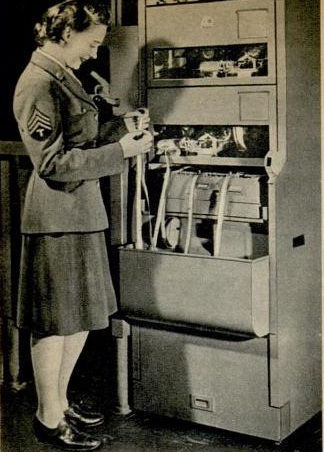
1944Apr23MilJourSeventy-five years ago today, the April 23, 1944, issue of the Milwaukee Journal carried this article noting that recruiters from the Signal Corps were in Milwaukee looking for women to take jobs in Arlington, Virginia.

It’s likely that the women thus employed were part of the operations of radio station WAR, such as the operator shown below.


1959 Two Transistor Regen

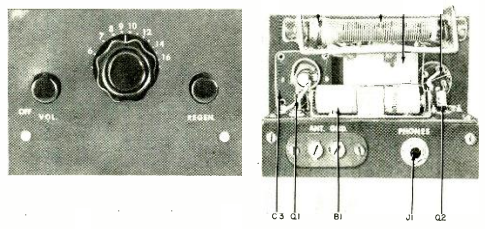
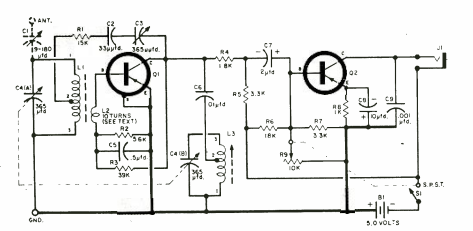
1959AprPEregenSixty years ago this month, the April 1959 issue of Popular Electronics contained this project, a two-transistor regenerative receiver for the broadcast band. The circuit used a 2N247 (or 2N274) transistor as regenerative detector, with a 2N109 (or 2N217) serving as audio amplifier to drive headphones. A built-in ferrite loopstick served as antenna for portable use, although there were terminals for external antenna and ground to pull in more distant stations.

1959AprPEregenSchematic


Easter Sunday, 1939

1939Apr15RadioGuideOn Easter Sunday, 1939, a sunrise Easter service was held at the Hollywood Bowl and carried live over the Mutual Broadcasting System. The photo here (presumably of the 1938 service) appeared in the April 15, 1939, issue of Radio Guide.  The magazine noted that Mutual would carry not only the service from the Hollywood Bowl, but also from Mt. Rubidoux in Riverside, Cal., and from the steps of the state capitol in Olympia, Wash.

Was it a morning like this?


Emergency Lantern

1949AprPM3This simple emergency lamp was shown in the the April 1949 issue of Popular Mechanics.  It consists of nothing more than a glass, a cork, and a piece of string.  Cooking oil is used as the fuel.

Slightly more elaborate designs can be found in Nuclear War Survival Skills, which reports that such a lamp consumes only an ounce of fuel in eight hours, yet provides enough light for reading.  Some strategically placed aluminum foil will assist with the light output.

Good Friday 2019

Down the Via Dolorosa called the way of suffering
Like a lamb came the Messiah Christ the King
But He chose to walk that road out of His love for you and me
Down the Via Dolorosa all the way to Calvary.

https://www.youtube.com/watch?v=zMdNqG3TV6c


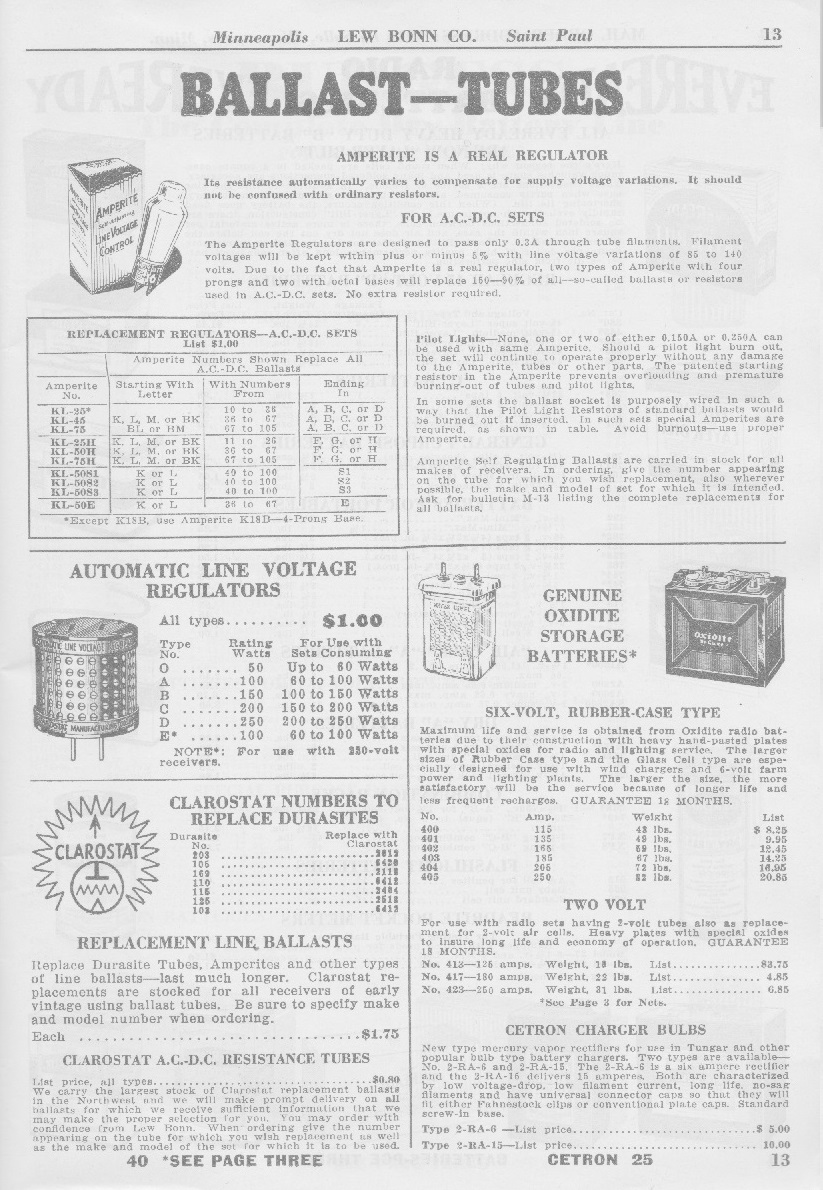
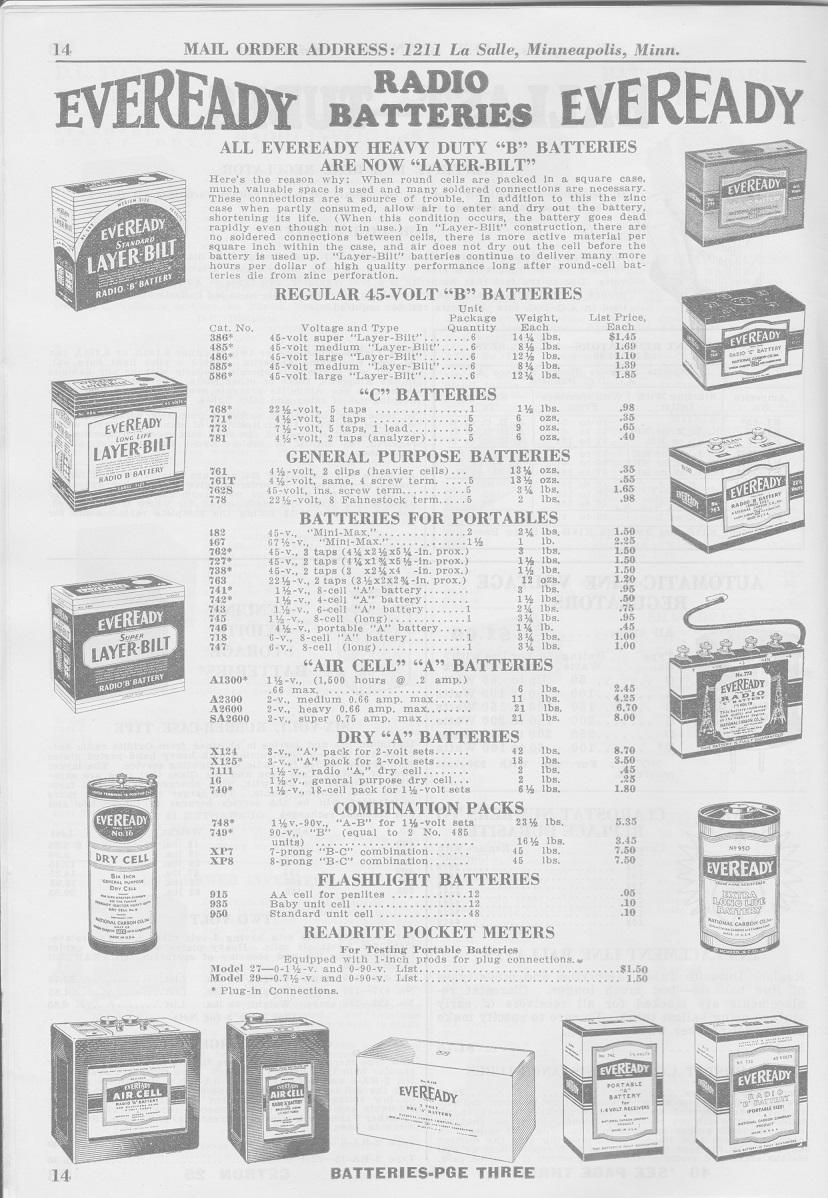
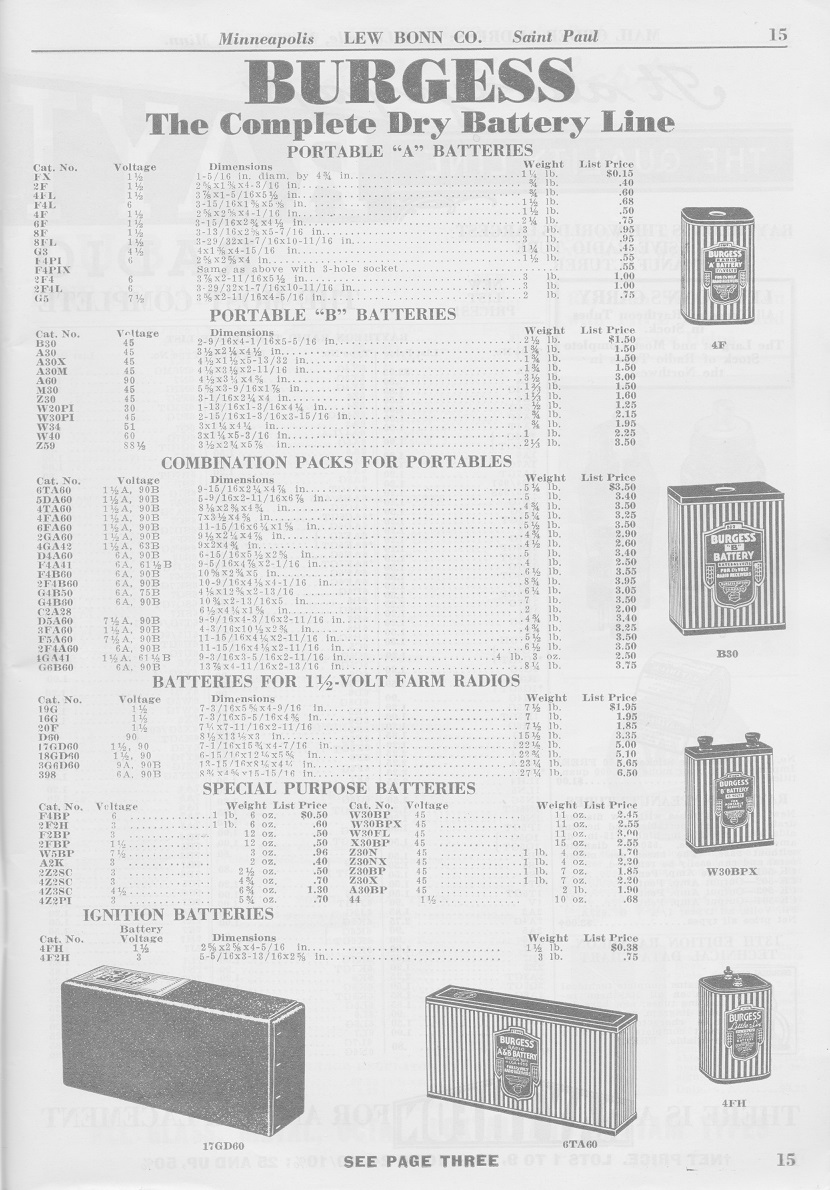
1941 Lew Bonn Catalog: Batteries & Tubes

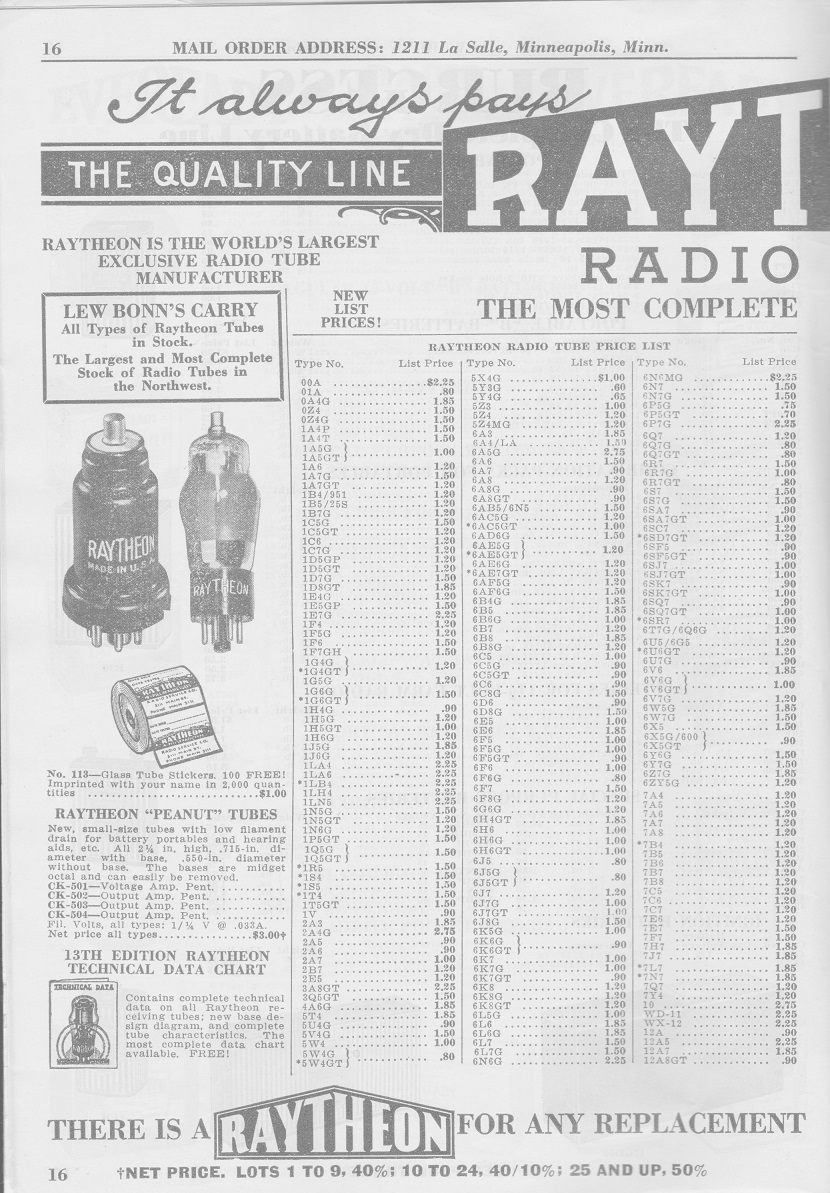
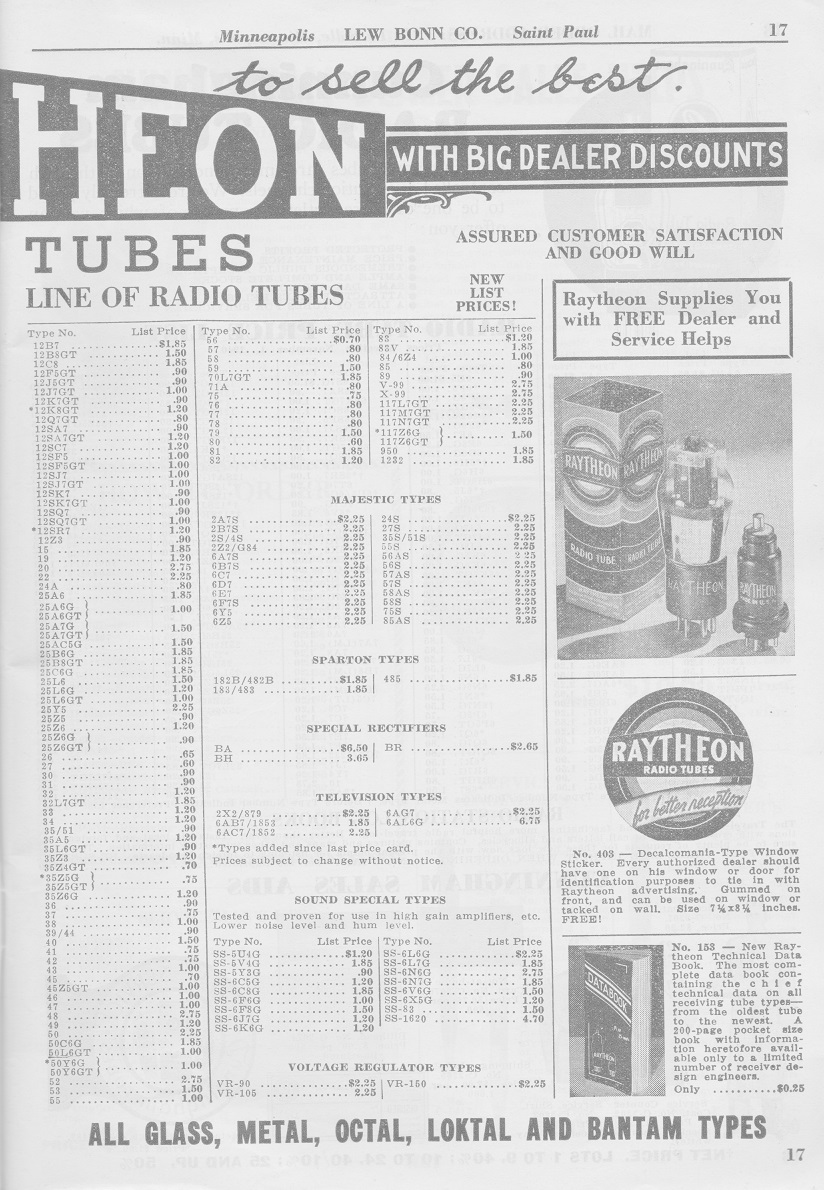
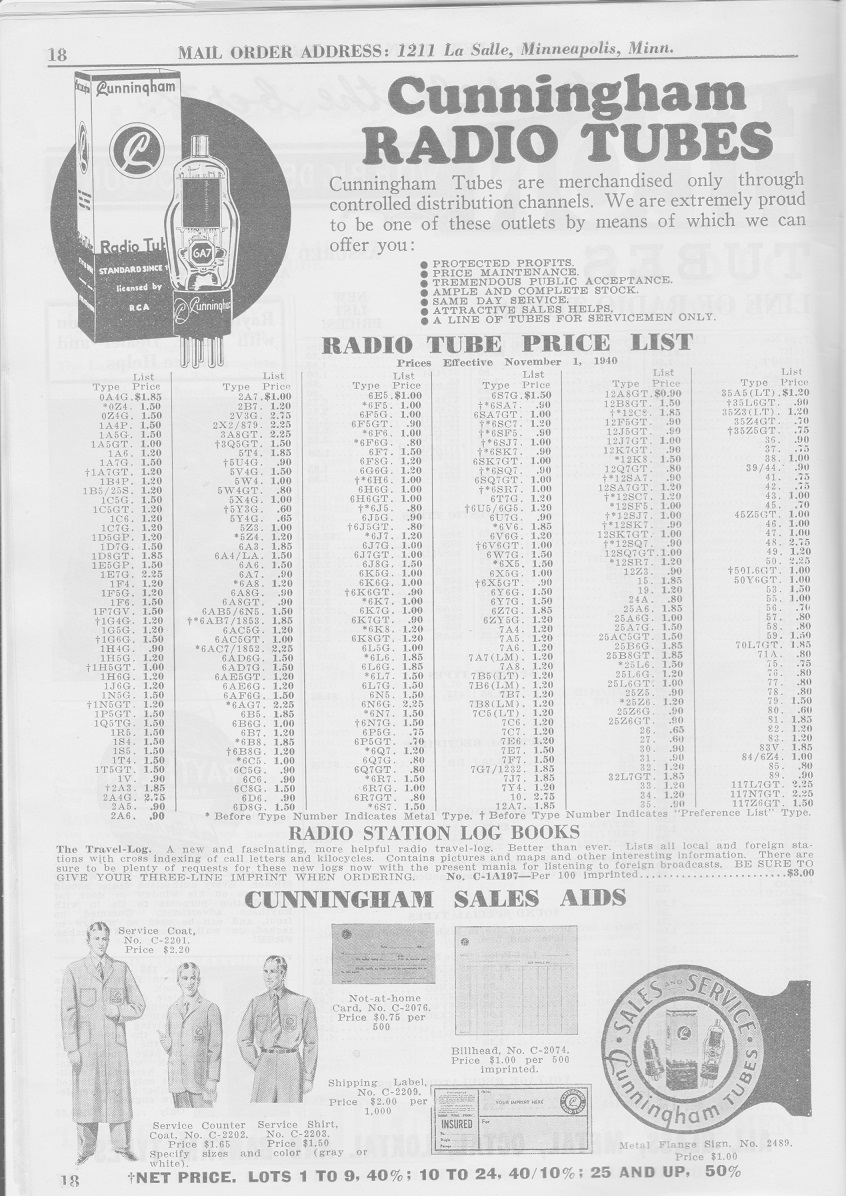
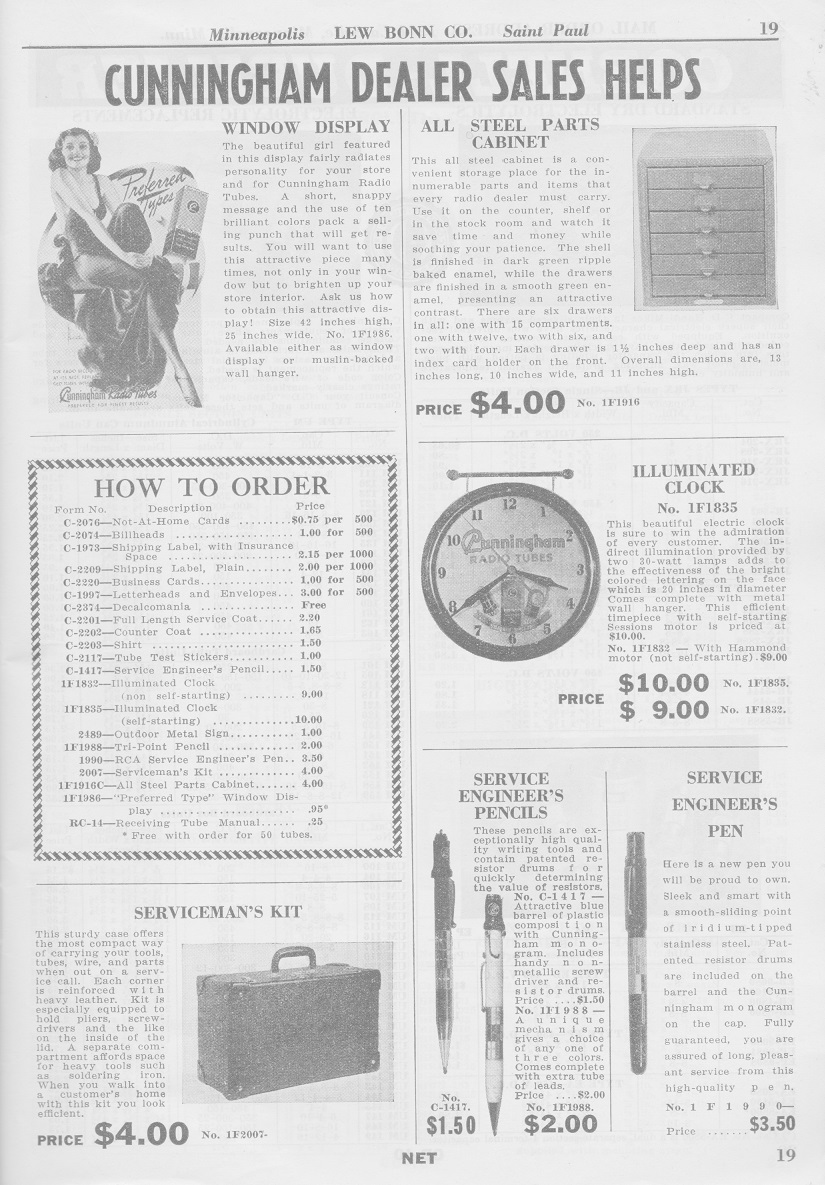
We previously posted pages 1-12 of a catalog from Minneapolis radio distributor Lew Bonn Co. from about 1941.  Here are pages 13-19, and we’ll post more pages in the future.  Click on any page to see the full image.  And in most browsers, click a second time for the enlarged version.

Today’s section covers mostly tubes and batteries.  Eventually, we’ll post the full 168 page catalog.

LewBonnCatalog013


LewBonnCatalog014

LewBonnCatalog015

LewBonnCatalog016

LewBonnCatalog017

LewBonnCatalog018

LewBonnCatalog019


1939 Four Tube Regen

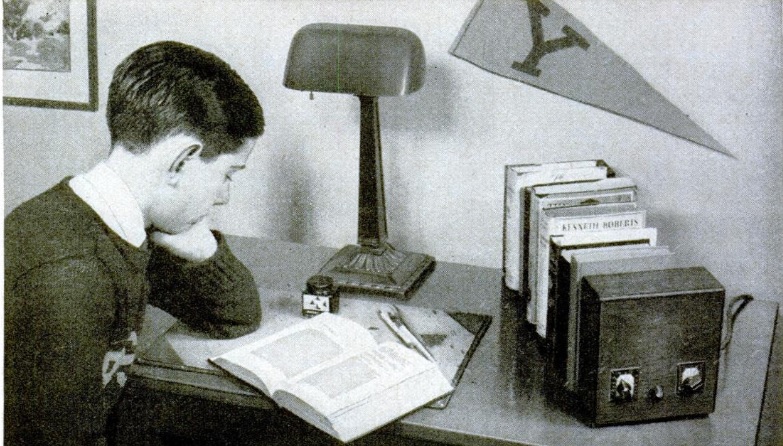
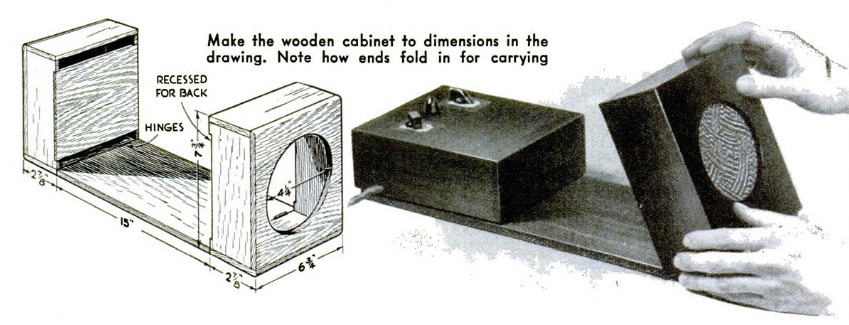
1939AprPS1The young man shown here is diligently hitting the books, but he’s also entertaining himself, thanks to the combination radio-bookends described 80 years ago this month in the April 1939 issue of Popular Science. The radio is built into one bookend, and the speaker into the other. The two ends can fold down for easy transport, as shown below.
1939AprPS2

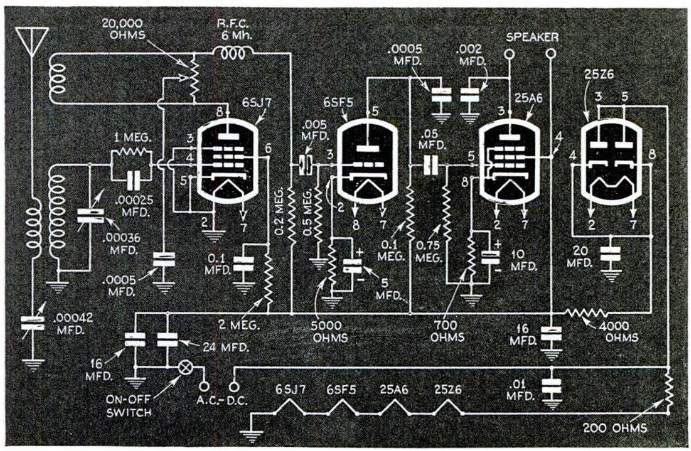
The circuit itself contains four tubes. A 6SJ7 pentode serves as regenerative detector, with a 6SF5 and 25A6 as audio amplifier. A 25Z6 full-wave rectifier rounds out the tube compliment. According to the text, the antenna is built in, although the schematic shows connections for external antenna and ground for pulling in the distant stations.

1939AprPS3