Category Archives: Iowa History

Solar Eclipse of August 7, 1869

1869EclipseSpectrumToday marks the 150th anniversary of the total solar eclipse of August 7, 1869.  The path of totality started in Asiatic Russia, and covered a tiny swath of China and much of Siberia before crossing the Bering Strait into Alaska and Yukon, and then through parts of the present day provinces and states of British Columbia, Alberta, Saskatchewan, Montana, the Dakotas, Minnesota, Iowa, Nebraska, Missouri, Illinois, Kentucky, Tennessee, Virginia, West Virginia, and the Carolinas.

The eclipse wasn’t the first to be photographed.  Those honors go to the eclipse of July 28, 1851, which, according to Wikipedia, produced the first scientifically usable photograph.  It does have the distinction of being the first to provide detailed spectroscopic images of the corona, which revealed an element believe for many years to be “coronium“.  It took 70 years to realize that the spectrographic line was not a new element, but instead iron at over a million degrees Kelvin.  The image shown above left was prepared by Prof. Charles Augustus Young of Dartmouth College, who was part of a team at Burlington, Iowa.  The same team produced the photo shown below:

1869EclipseBurlingtonPhoto

1869EclipseOttumwaPhotoAnother team left Burlington for Ottumwa, Iowa, but was beset by problems.  They had forgotten their chronometer in Burlington, and the telescope clockwork was damaged in transit.  Notwithstanding these difficulties, they managed 34 photographs, including four of totality, one of which is shown at left.

Another team was headed by Prof. William Harkness of the U.S. Naval Observatory. This team constructed a temporary observatory at the northwest corner of Second and Short Streets in Des Moines. Harkness reported that this vacant property on the west bank of the Des Moines River had a horizon almost devoid of obstructions.  “Short Street”  no longer exists, but according to the 1869 Des Moines city directory, it ran from the Des Moines River to Third Street (only a little more than a block, hence the name).  From the description of the observatory being on the west bank, it would appear that the building was near the current site of Wells Fargo Arena.1869EclipseDSMobservatory

A local contractor, one F.T. Nelson was retained to build the structure, shown at right.  This team also obtained multiple photographs and spectrograms.   The sketch below is the eclipse as seen through their four inch telescope.

Carptenter F.T. Nelson's listing in the 1869 city directory.

Carptenter F.T. Nelson’s listing in the 1869 city directory.

1869EclipseDSMsketch

The August 13, 1869, issue of the Cedar Falls (IA) Gazette carried this account of the eclipse. Those of us who witnessed the 2017 eclipse concur in the accuracy of this report. Indeed, from our viewing point in Hastings, Nebraska, we also had the added tension that “the forenoon was slightly hazy, but it cleared away and left no obstruction while the eclipse was passing.”

THE TOTAL ECLIPSE

Its Appearance in Cedar Falls

Government Observations.

Report of the Party, &c., &c.

It is not often that an opportunity is offered to witness so wonderful an exhibition of nature as the eclipse of Saturday last. Those who witnessed this extraordinary spectacle intelligently, will never forget its impression. It excites the most lively feelings of awe and wonder, and a breathless intensity takes possession of one as he gazes upon this grand movement in the heavens. The sight certainly gives one, a clearer view of the infinite majesty and power of the Great Being, and seems to speak directly to us of His greatness. The day was favorable, the forenoon was slightly hazy, but it cleared away and left no obstruction while the eclipse was passing.

The parties of observations were quite successful. Cedar Falls was made one of the points of observation by the Government, and will hereafter be one of the points from wliich calculations will be made. The party sent out by the Government to take observations iu this city were Ed. W. Horr, son of Dr. Horr of the Smithsonian Institute, and Wm. I. Anderson and W. W. Wormood, of Dubuque.

1869CedarFallsGazette

References


6 June 1944

Today marks the 75th anniversary of D-Day, June 6, 1944, the beginning of the Allied invasion of Europe during World War II.  On the day of the invasion, 4414 Allied servicemen were confirmed dead.  Germans suffered between 4000 and 9000 casualties.

CareySaltWhen I think of D-Day, my first thought is of a little salt container like the one shown here.

Some time in the late 1960s or early 1970s, my family and I were coming home from somewhere and were passing through Ossian, Iowa, where we stopped for a picnic lunch at a small park across the highway from a gas station.

As we were getting set up, a gregarious gentleman came over and told us that he just got a call that we had forgotten the salt, so he was giving us the container shown here.  He was the owner of the gas station, and it turns out that his name was Carey.  He handed out little shakers of Carey salt as his business card.  I guess it worked, since I remembered his name almost fifty years later.

His full name was James R. “Bob” Carey, Jr. Or more specifically, he was Sgt. Carey. He proudly let us know that he had served at D-Day, and to make sure there was no question about it, he pulled out a copy of The Longest Day and showed us his name as one of the servicemen interviewed by the author.

Sure enough, on page 285 of the book, his name is still there:

“Carey, James R. Jr., Sgt. [8th AF]  Carey’s West Side Service, Ossian, Iowa.”

Carey1

Carey at his roadside park.  Waterloo (IA) Sunday Courier, 22 Oct. 1972.

The park where we were picnicking was built by Carey at his own expense as his way of showing gratitude. It later became a city parkCarey described the park in 1972, probably about the same time we had passed through Ossian:

My name is James R. Carey. I own and operate a service station on U.S. 52 at Ossian, Iowa. I moved there in 1951.

Some time between 1945 and 1947 the highway commission relocated a short piece of U.S. 52 outside Ossian, and by doing this left a small piece of land on the south side of the highway in the shape of a piece of pie. When I moved into my station on the opposite side of the road, this piece of land was full of weeds and stumps and high grass. There were two holes, probably wells or old cisterns, which were mostly hidden and dangerous for children to play there.

This was an eyesore, and so I started to clean it up a little at a time when I could do it, and my family helped. First we mowed a strip along the highway, and then we mowed the whole thing; then we filled in the holes and did some more leveling, and started to take care of the trees. Then we discovered that people who stopped at our service station seemed to like to go over into this little piece of ground to have a picnic, or maybe just to stretch and relax a while before going on again. It cost us some money and time to do this, and nobody paid us for it; but we felt repaid by the nice things that people said about it when they stopped there. It meant something to have people say these things, and to see that the) really enjoyed stopping there.

Looking back over some 20 years now, we feel we’ve been repaid many times over for our efforts because this project has brought us together with our neighbors in doing something together that gave us all satisfaction. Some helped with the maintenance of the park: others contributed a tree or a shrub. I recall a man 10 miles away gave us a tree, and we went over and hauled it to the park in our truck.

We built a little shelter for the picnic tables. Then I thought we should put in a gas stove. I had the stove, and my neighbor Vern Meyer said he would donate the pipes and labor. And he did. Another neighbor, Elmer Rosa, said, “I’ll give you the roof boards for the shelter.” There was about $100 worth of roofboards and poles and rafters. The Fort Atkinson Nursery donated a flowering crab tree, and we put in flood lights to light it up in the spring when the blossoms came out. Then one day Fred Doan said we ought to have a little neon sign on the shelter. I said I couldn’t afford one. and he said, “I’ll donate it.” And he did. So we had a sign on the shelter that said “Careys Park & Camp.” We keep that sign on day and night.

The town of Ossian boundary line is just a few feet away from the camp, and we asked if they would put in a drinking fountain on the outside of the shelter. By that time we also had built another building for toilets, and we needed water for that. Everything in the park is open 24 hours a day.

I don’t remember anything in particular that Carey said about his service at D-Day.  I only remember (and this is probably all he told us) that he was there and that he was proud of it.  He did his part to liberate Europe, and then he came home.  He started a gas station and did his part to offer rest to weary American travelers.

Sgt. Carey, thanks for a place to rest; thanks for the salt; and thank you for liberating Europe.  The world is better because of you.

Carey2

For more information about Carey, see His Legend Lives On in Northeast Iowa.  Carey died in 1977 at the age of 57 and is buried at St. Francis de Sales Cemetery, Winneshiek County, Iowa.

Please see our earlier posts regarding the D-Day invasion:

The first link contains links to the NBC and CBS broadcast days for June 6, and are well worth listening to.


Midwest Blizzard of 1949

As I write this, snow is once again forecast for my region. Since the calendar says that it’s the first day of spring, it’s likely that the snow will be little more than a temporary inconvenience.

But I was recently reminded that a snowstorm wasn’t always just a minor inconvenience, and I learned about one of the Midwest’s largest winter storms ever, the blizzard of January 2-5, 1949.

Ida McNeil, KGFX.

Ida McNeil, KGFX.

I don’t think I had ever heard about this storm until I had a comment on my post about KGFX, a one-woman broadcast station run out of the home of Ida McNeil in Pierre, SD.  As I mentioned in the previous post, Mrs. McNeil did take commercial advertising, but she viewed the station mostly as a public service.  And this is borne out from the story of the 1949 blizzard shared by reader Dwight Small:

I well remember her broadcasting during the blizzard of 1949. We were completely snowbound on the former Hugh Jaynes ranch 15 miles NNW of Pierre. She was our only window to the outside world for at least a couple of weeks. We had no electricity but the battery powered radio lasted sustained our spirits. We learned from her that there were hundreds of others in the same boat.

I did some research about the storm, and it appears that many were, indeed, in the same boat.  The winter of 1948-49 was severe in many respects, but it delivered it’s biggest punch to the northern plains in the early days of January, 1949.

The April, 1949, issue of QST describes its entry to South Dakota:

Things began on the morning of January 3rd in South Dakota, when KOTA, Rapid City’s broadcaster, let loose with the first hint that the impending storm was to be of record-breaking proportions. Unfortunately many ranchers, traveling people and others failed to hear the broadcast warnings and were totally unprepared for what was to come. It started coming down on the 3rd, and continued until about noon on the 5th. The actual snowfall was not of record-breaking proportions, but high winds, sometimes in gusts of 65 to 70 miles per hour, piled the snow into mountainous drifts, oftentimes 30 to 50 feet deep.

Many others found themselves isolated by the storm.    In 2013, the Rapid City Journal carried the reminiscence of schoolteacher Grace Roberts, who was stranded at her post in Creighton, a small town about 25 miles north of Wall. She and her four-year-old daughter made it to school, but then found themselves trapped there for 38 days. The road to the school was plowed a few times, but was quickly covered over with snow.

She reminisced in 2013 that she ate a lot of canned soup, but managed due to the kindness of neighbors, the closest of whom was a mile away. The neighbor would ride over on horseback, “and when his wife baked bread he’d bring us some bread or when he milked a cow, he would bring some milk.”

The school had a small bed, and was well stocked with coal. They also had a battery radio, and would listen occasionally, but mostly passed the time by talking and reading.

Another survivor, Everett Follette of Sturgis, like many South Dakotans, had a phone line that kept working through the storm and served as the lifeline. Interestingly, though, Follette recounted in 2009 that the family also had a battery-powered radio, “but the only station they could tune in came from Bismarck, N.D.”

Battery radio of the era, a Philco 41-841.

Battery radio of the era, a Philco 41-841.

The family used as much milk and cream as they could from their dairy farm, but with roads impassible, they had to dump the excess. Eventually, the Sturgis creamery called about the availability of milk, and made a deal to follow a military snowblower. When neighbors learned that the truck was coming, they quickly phoned the grocery store in Sturgis to have groceries delivered.

As might be expected, hams sprang to action to deal with the communications needs of the region, as detailed in the April 1949 issue of QST. In South Dakota, when the snow first started coming down, W0ADJ and W0CZQ made arrangments with the Air Force base to maintain contact with the base at Colorado Springs, “just in case.” Hams also played a role in coordinating the massive air operations after the storm had passed. Planes were used to search for survivors and drop supplies for both humans and livestock.

Broadcast stations advised incommunicado ranchers of which marks to make in the snow to request drops of feed and other supplies.

The railroad plow which bored through on the North Western line from Pierre east of Rapid City after dynamite as used to loosen ice-encrusted snow. Photo courtesy of the Rapid City Journal.

One of the most dramatic uses of amateur radio took place in Ogallala, NE, a town of about 3000 in western Nebraska. A train was stalled in the snow west of town, and a major transcontinental highway was blocked. State snowplows managed to break through, and led a mile-long convoy of cars into town. Suddenly, the town of 3000 was pressed into service to shelter, feed, and supply communications for an additional 2000 people.

The communications duties fell upon W0LOD, the town’s only ham, whose station was limited to running 50 watts with a single 807, and only on 40 meters. Despite his modest station, “all around W0LOD–north, south, east and west–were hams with sensitive receivers, and perhaps greater power, and, as the skip ebbed and flowed he was able to sit at his operating position handling emergency traffic in unbelievable quantity much as he had been accustomed to handle routine traffic night after night. It was a 48-hour session at the key, but no heroics, no frantic ‘QRRR’–just a traffic man doing that which he likes best.”

The April 1949 QST article tells of other storms that winter, many of which overlapped each other. For example, when railroad telegraph lines went down, hams were called upon to assist the railroads in keeping te trains running. In Kansas, W0EQD didn’t even realize that his town had been cut off from the outside world. The power was out, so he got his station running on the emergency generator and checked into the Kansas Phone Net, which had traffic waiting for the phone company. As soon as he delivered the message and local officials found out he was on the air, he was kept busy for the next 48 hours as his town’s only communications facility.

Missouri was hard hit by an ice storm on January 11, and many commercial telegraph lines were down. Western Union called on hams to deliver both company and weather bureau messages. The cartoon below appeared in the Springfield (Mo.) News & Leader, and was reprinted in QST. It shows a ham being scoffed for spending so much time and money to take part in a “kid’s hobby” only to talk to people he didn’t even know. But in the next panel, after the ice hits, the same man is begging the ham to get news of his mother who was cut off from the outside world.

1949AprilQSTCartoon


References

It’s ‘Going Down in History”: The Blizzards of 1949. South Dakota History Vol. 29, p. 263 (1999).

Albert E. Hayes, Jr., W1IIN, Deep Freeze, QST, Apr. 1949, p. 35.


1958 WRL Ham Shack

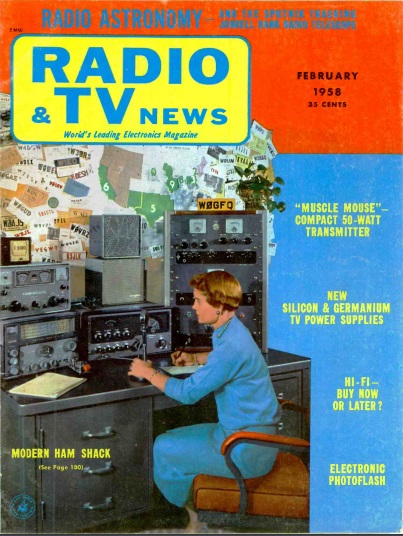
1958FebRadioTVNewsShown here on the cover of the February 1958 issue of Radio & TV News is Dorothy Hicks, K0BRZ, of Omaha, Nebraska, at the controls of the demonstration ham shack of World Radio Laboratories (WRL) in neighboring Council Bluffs, Iowa. The store maintained the station to showcase available products, both its own and those of other manufacturers, which were rotated through the station on a regular basis. The station was made available to hams passing through who might need to maintain a schedule, as well as to new novices.

Advertisement:


Try Audible and Get Two Free Audiobooks

Dorothy’s home station was more modest, with a Viking Ranger transmitter, National NC-300 receiver, and WRL tri-band beam. She typically did about three hours a day of ragchewing, usually on 10 and 15 meter phone.

Dorothy’s husband was Curt Hicks, K0AMM, the president of the Ak-Sar-Ben Radio Club. Their son Paul received his novice ticket at age 11, with the call KN0GZJ.

Shown at the WRL station is an Astatic D-104 microphone, Hallicrafters HT-32 transmitter, and Vibroplex bug for CW operation. The output of the HT-32 exciter fed a WRL Globe King 500 B transmitter, capable of 720 watts PEP input. Either the Hallicrafters or WRL could be used individually as transmitter.

Two receivers are shown, a Hammarlund HQ-110 and a National NC-109.


1942 September Snowstorm

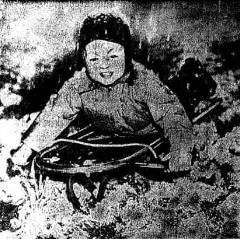
1942Sept26ChiTribThe young man shown here, David Hamilton, then two years old, of 18309 Riegel Road, Homewood, Illinois, got his picture in the Chicago Tribune on August 26, 1942, courtesy of an early snowstorm that covered much of the Midwest, starting 75 years ago today on August 24.

While there was enough snow to keep young Mr. Hamilton amused in the Land of Lincoln, the heaviest snow of the storm was in Minnesota. Numerous overhead wire systems were damaged by the wet snow, with the damage estimated at $25,000 in the state. The heaviest snows were reported in Bird Island, with 8 inches, and Sauk Centre with 9. New records for September snowfall were set throughout the southern half of the state, with a few such records also being set in northern Minnesota.

Since the snow was accompanied by cold temperatures, there was crop damage throughout the state. Many Friday night football games were cancelled, and phone service was out between Minneapolis and Rochester.

Snow was reported from in the Dakotas, Minnesota, Iowa, Wisconsin, Illinois, Missouri, and Indiana during the three day storm.

References


Archie Banks, 9AGD, Radio Amateur & Beekeeper

1917 Archie Banks 9AGD

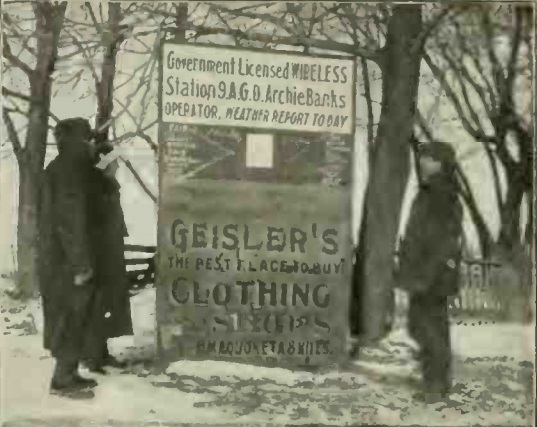
A hundred years ago, American amateur radio operators were off the air for the duration of the war. All stations, both receiving and transmitting, had to be dismantled, and antennas lowered to the ground. But the July 1917 issue of Electrical Experimenter detailed the activities of 24 year old Archie Banks of rural Delmar, Iowa. Banks lived on a farm about a mile out of town, and when he was sixteen, he developed an interest in electricity. He had the house wired with electric lights powered by batteries, and within two years, he was dabbling in wireless. He reported that his first set didn’t work well, and he could only communicate the one mile to Delmar.

But his second station was considerably more successful. He was licensed as 9AGD, and among other things was able to reliably copy the twice daily news and weather reports sent by the stations at the Illinois State Agricultural College in Springfield, and the Iowa State Agricultural College at Ames.

Rather than keep these important bulletins to himself, Banks took it upon himself to share the information with neighbors. Initially, he shared the information with anyone who desired to phone him, and the service was popular. Area farmers had access to immediate weather reports, rather than having to wait for the daily nespaper to be delivered by the R.F.D. carrier.

But Banks decided to carry it a step further, as shown by the sign here. In addition to his labor on the family farm, Banks had a side business consisting of about a hundred hives which he used to raise honey. The honey was advertised by a roadside sign. He added this sign, encouraging passers by to stop and read the news and weather reports. Initially, the sign was placed as a public service. But Banks soon noticed that those stopping to read the weather would be in a good position to buy some honey.

Banks had his beekeeping-wireless enterprise in operation as early as 1913. In that year, he had a paper read at the state bee convention, published in the Report of the State Bee Inspector, an essay entitled, “The Art of Selling Honey From a Producer’s and Retailer’s Point of View.” This paper reveals that the wireless was but one advertising mechanism he employed. He recommended advertising which included a few recipes. “This will make the housewife anxious to try them out just the same as one is to try a new car.” He recommended giving out samples, since they “create an appetite for more and the neighbor or friend will probably purchase a case or more the next time he sees you.”

His main sign (not shown in the Electrical Experimenter article” was eight feet by two feet and “hung across the road,” which was a main highway. It read, in large red letters, “Eat Honey,” with the phrase “for sale here by the section or wagon load” in large black letters. He states that he also had “a large signboard on which is printed the weather report which I receive daily by wireless. Passerby stopping to read this report get a view of the honey sign also–thus killing two birds with one stone.”

Banks is also described in an article in this 1917 issue of The Country Gentleman.

According to this link, Banks was born in 1892, the son of B.D. Banks and Hannah E. Banks. According to this 2016 obituary of his son Harlan Banks, he later married Edna Bowman and had multiple children. At some point, he moved to California, since the son’s obituary shows him graduating from high school in Santa Barbara.
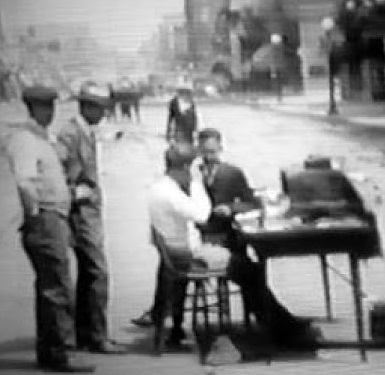
Archie Banks Santa BarbaraAccording to this site, in 1925, Banks was one of five hams in Santa Barbara when an earthquake struck the town on June 29, 1925. The city was completely cut off from the outside world, prompting the hams to patch together a CW station to send out an SOS. Help was summoned when an operator aboard a Standard Oil Tanker heard the SoS and summoned help. This photo, appearing in a Russian language book, shows Banks operating from Santa Barbara after the earthquake.

According to the Social Security Death Index, Banks died in October 1984 in Santa Barbara. According to his gravestone, he served in the U.S. Navy both World War I and World War II.

Banks is listed as 9AGD in the 1916 callbook with an address of R.F.D. 2, Delmar, Iowa. He doesn’t appear to have a listing, either in California or Iowa, in the 1922 call book.
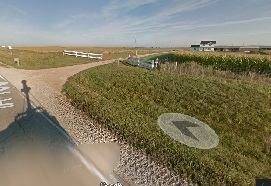
DelmarIowaStreetViewInterestingly, I think I found the location of Banks’ 1917 honey sign, which would be this Google street view.  According to the Electrical Experimenter article, Banks’ station was about one mile from Delmar and eight miles from Maquoketa.  This farm house is about that distance from the two towns, and seems to match the house shown in the article, assuming the magazine photo below was taken from the rear of the house.  The location is on Iowa Highway 136, just west of US Highway 61.
1917JulyElectExp


Highland Park College, Des Moines, IA

1917MarElecExp

A hundred years ago, magazines devoted to electricity or mechanics were full of ads for learning radio.  A large number of these focused on training ship wireless operators.  There were other exceptions, but most such schools were located near the sea, in locations such as New York.

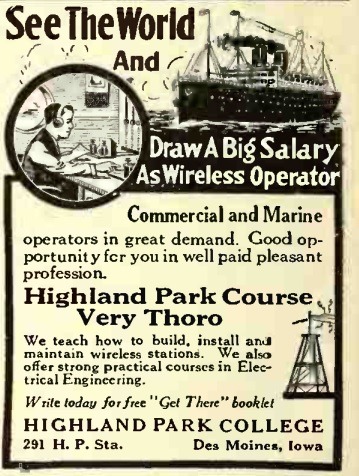
One of the exceptions that caught my eye was this ad for the “very thoro” wireless training program offered by Highland Park College in Des Moines, Iowa, shown here as it appeared in the March 1917 issue of Electrical Experimenter.

The ad promised the opportunity to see the world and draw a big salary as a wireless operator.  And the first stop in seeing the world was Des Moines.  This is actually not surprising, since the Hawkeye State was a hotbed of early wireless activity, with more than its fair share of amateur operators, and later, broadcast stations and companies involved in radio.

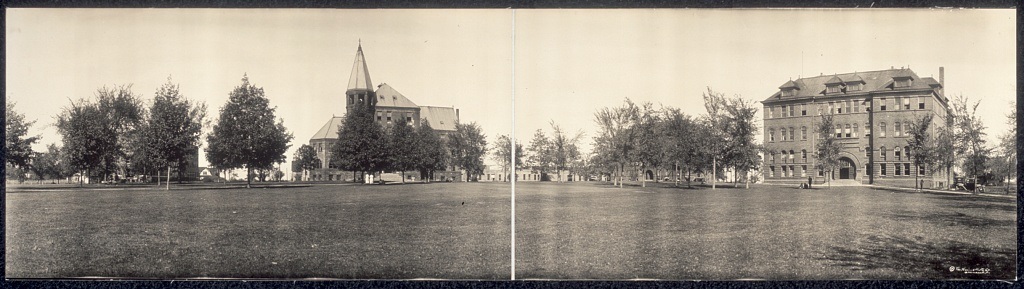
The college offering this course, Highland Park College, is no longer in existence, but had its own colorful history.  The school’s Wireless Building, apparently the location where students would be trained to see the world, is pictured here in the school’s 1914 yearbook.

According to the yearbook, the college had a wireless club which had been organized in April 1913, and had a complete sending and receiving set. The book boasted that the station’s large aerial allowed reception of the Arlington, VA, and Key West, FL, stations on a regular basis.

HighlandParkWirelessBuilding

The college was established in 1889 and operated under that name until 1918.  It was apparently independent when founded, and in 1911 was transferred to the Presbyterian church.

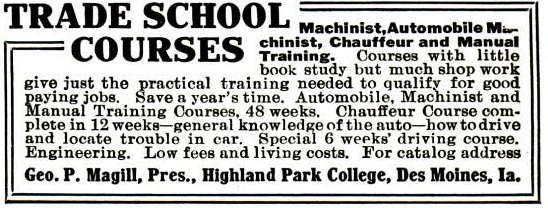
1915MarPMWireless telegraphy was only one trade that could be acquired at Highland Park College, as shown by this ad in the March 1915 issue of Popular Mechanics.  The school also offered courses in machinist, automobile machinist, and chauffeur.  The machinist courses ran 48 weeks, whereas the chauffeur course of study could be completed in 12 weeks.  The school also offered a “special 6 weeks driving course.”

In 1918, the college was acquired by the Baptist church and renamed Des Moines University. Things went smoothly until 1927 when a fundamentalist wing known as the Baptist Bible Union of North America, the forerunner of the General Association of Regular Baptist Churches, took control. The faculty were required to subscribe to eighteen articles of faith. At that time, the University’s school of pharmacy was apparently the strongest department, and the faculty apparently had doctrinal differences to the point where they refused to sign the eighteen articles of faith. They departed and formed the Des Moines College of Pharmacy in downtown Des Moines. All but two of the pharmacy students left to enroll in the new school.

In addition to the doctrinal requirements imposed on the faculty, the students were facing restrictions. Three girls were disciplined for doing cartwheels during a vaudeville skit.

By 1929, the administration had enough, and fired the entire faculty. A riot broke out, and angry students stormed the administration building during a meeting of the board of trustees. Eggs and rocks were thrown, and the angry students attempted to break down the door of the room where the board members were hiding. Police were called, but the school formally closed down in September 1929.

The buildings sat vacant until 1943, when professional baseball player and aviation pioneer Alfred W. Lawson bought the property and founded the Des Moines University of Lawsonomy, Lawsonomy being billed as “the study of everything.” As might be expected for the study of everything, a degree was not something that could be earned quickly. According to Lawson, the students (men only) would need to study for 30 years to get their degree of Knowledgian.”

Enrollment peaked at a hundred students, but dwindled to 20 when the school closed in 1954 (presumably, with none of the students earning the coveted Knowledgian degree).

The property was sold, two weeks before Lawson’s death, and became the site of the Park Fair Shopping Mall.

Highland Park College in 1914. Library of Congress.

Highland Park College in 1914. Library of Congress.

ParkFairStreetView

The school’s location today. Google Maps.

References


Dutch Reagan, WHO 1936

1936nov14radioguide

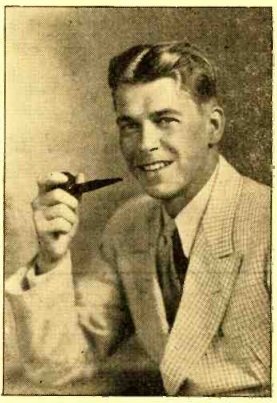
Eighty years ago today, the November 14, 1936 issue of Radio Guide carried a profile of the man who would, 44 years later, be elected President of the United States, Dutch Reagan.

As recounted by the magazine, Ronald Reagan walked into WOC radio in Davenport, Iowa, in 1932, looking for a job. The station was at the time synchronized with WHO Des Moines. The program director, Peter MacArthur, asked if he knew anything about football. When Reagan answered in the affirmative, MacArthur told him to stand by a microphone and imagine that he was at a game. The program director listened amazed for fifteen minutes before telling Reagan, “you’re broadcasting the Iowa-Minnesota game!”

When WOC and WHO split in 1932, Reagan went with WHO, where he broadcast the Chicago games by telegraphic report.

The article describes the future president:

He is over six feet tall with the pro- verbial Greek -god physique: broad – shouldered, slim-waisted and a face that would make Venus look twice before running to her man Zeus! And then he can talk, too.  Dutch has a smooth -running “gift o’ gab” which never seems to falter, never is at loss for the right word. In short, he has quick wit and a nimble vocabulary, and large, too.

It noted that during his days at Eureka College, where he lettered in several sports, he never allowed anyone to call him Ronald, even though it was his name.  The magazine also seemed to think that the young announcer had a future:

But there are new things beckoning. One is a career with the networks.
Like any ambitious announcer, Dutch, who never uses quotation marks about his name, has high hopes toward becoming the Husing or the McNamee of the airwaves, 1937 style. Watch him; he’s stream-lined. He might do it.


NPOTA: Lewis & Clark National Historic Trail

dsc01378

Preparing to send RF ‘cross the wide Missouri.

During the 2016  ARRL National Parks On The Air (NPOTA) event,  Amateur Radio operators are celebrating the 100th anniversary of the National Park Service (NPS) by setting up their equipment in NPS units  to make contact with other Amateurs around the world.  Since the beginning of the year, the event has been extremely popular, with over 13,000 activations from 450 different different units of the NPS and over 700,000 individual two-way contacts.  As I’ve reported in other posts, I’ve made contact with 281 different parks and operated multiple times from six parks in Minnesota and Wisconsin.

One of the event’s successes has been encouraging visits to the parks.  Until recently, my activations have been confined to the NPS units in Minnesota and Wisconsin.  Last week, I had to be in Sioux City, Iowa, for one of my continuing legal education programs.  The city lies along the path taken by Lewis and Clark as the traveled from St. Louis to the Pacific Ocean, and is therefore part of an NPS unit, the Lewis and Clark National Historic Trail.  Because the trail’s sheer length, and because it passes through so many other notable sites, it is the NPOTA’s most popular activation site, with over 13,000 individual contacts made.  Since my son had recently been studying Lewis and Clark in school, I decided to bring him along.

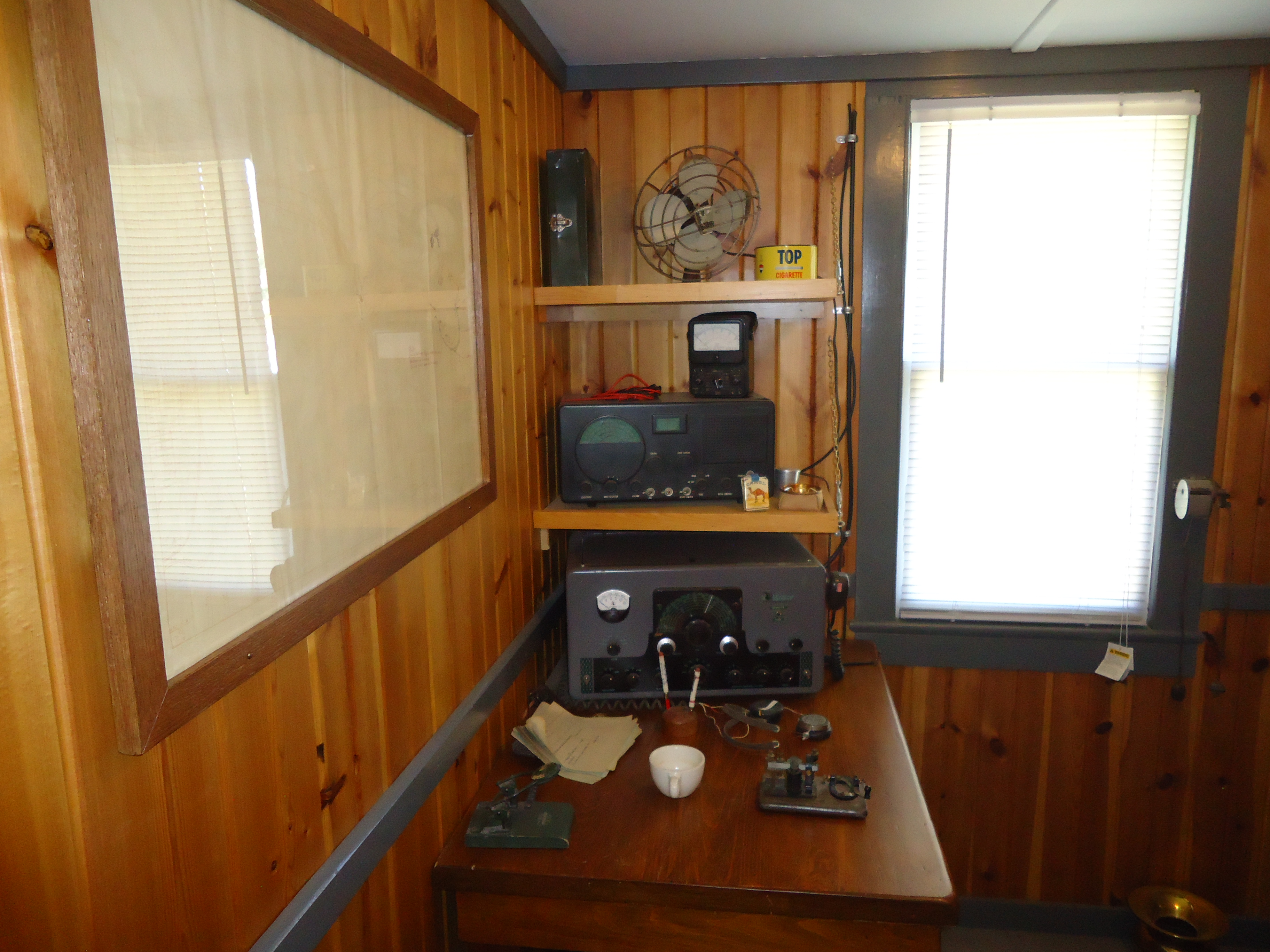
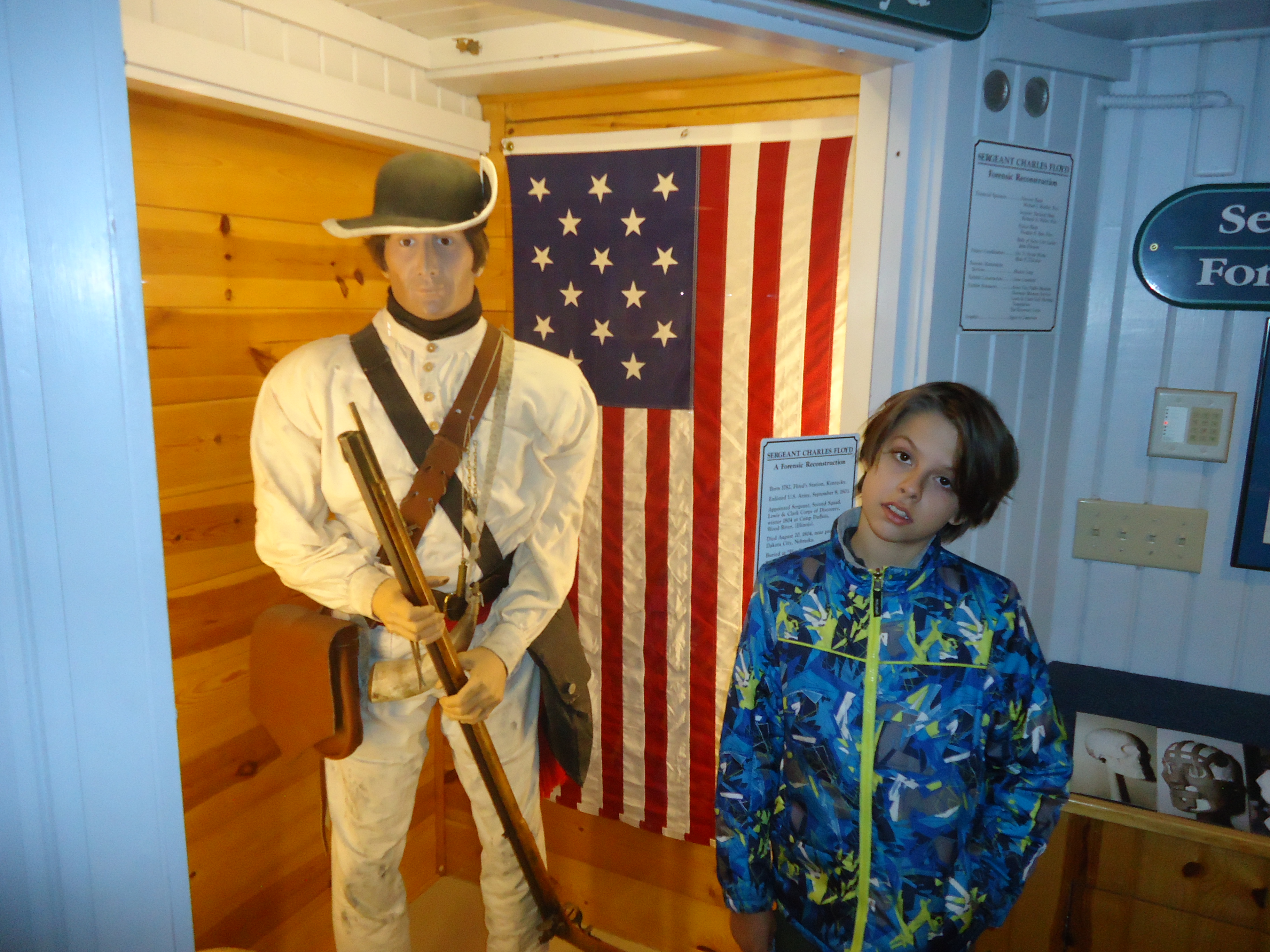
Sioux City marks the point where the only death during the 1804-06 Corps of Discovery’s expedition took place.  Sgt. Charles Floyd is buried under a prominent obelisk on a bluff overlooking the river.  The Sioux City riverfront contains two museums devoted to Lewis and Clark’s journey.  The first is in a drydocked former riverboat, the M/V Sergeant Floyd.  The ship was an Army Corps of Engineers Inspection Vessel.  Interestingly, the ship contains a ham station, although it’s supposed to be a recreation of the ship’s radio room.  As you can see from the photo below, the radio room is equipped with an E.F. Johnson Viking Valiant and a Hallicrafters S-40.  Even though these amateur rigs appear to be out of place, it was interesting to see this inadvertent ham station set up.

dsc01372

dsc01371The museum also contains the forensic reconstruction of Sgt. Floyd shown here, created from a plaster cast of his skull.

The second museum on the riverfront is the Sioux City Lewis & Clark Interpretive Center, which includes animatronic versions of Lewis, Clark, President Jefferson. and “Seaman,” the expedition’s Newfoundland dog.

Conditions were relatively poor the day I visited the site, and my initial attempt with a mobile antenna was unsuccessful.  Since the day was nice, I returned and set up a dipole at a picnic shelter overlooking the river and made ten contacts on 20 meter CW.

Read More at Amazon


“America Asks, Germany Answers,” 1941

19410628RadioGuide

Seventy-five years ago, while it was clearly gearing up for war, the United States was still neutral, and the Nazis wanted to keep it that way. this date’s issue of Radio Guide, June 28, 1941, carried an interesting look at one of the propaganda programs being broadcast to North America by Berlin stations DJB and DJD on 11.77 and 15.20 MHz. The program was “America Asks, Germany Answers.”

Bundesarchiv Bild 183-1989-0821-502, Joseph Goebbels.jpg

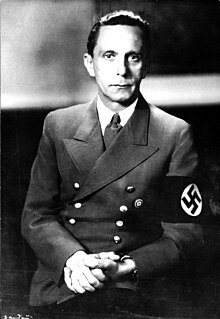
Goebbels. Wikipedia photo.

As early as 1933, Propaganda Minister Paul Josef Goebbels had set up a North American Service of the German Radio, staffed largely by expatriate American “foreign correspondents.” In February 1941, the station requested American listeners to forward reception reports and questions about Germany by means of collect telegrams of up to 25 words. By the end of February, over 10,000 telegrams had been received, despite criticism in the American press and deliberate attempts to clog the German end of the circuit. In March, the “America Asks, Germany Answers” program was on the air to answer these questions.

Among the American reporters was Frederick W. Kaltenbach (1895-1945), who had formerly been an Iowa teacher. In 1935, while teaching in Dubuque, he had started the “Militant Order of Spartan Knights,” a club for boys based on the Hitler Youth. Concerned parents saw to it that his teaching contract was terminated, and he left for Germany. He worked as a freelance writer and translator until landing his radio job in 1940. Many of his broadcasts began with “Greetings to my old friend, Harry in Iowa.” He was indicted for treason in 1943, but was arrested by Soviet troops and died in a detention camp in October 1945.

The “America Asks, Germany Answers” program was read by two announcers, “Democ” and “Nazi.” Democ would pose questions from American listeners, and Nazi would provide the answers.

According to the Radio Guide editor, the cost of these telegrams (about $10,000) amounted to “the cheapest imaginable form of advertising for the station, since the whole proposition was widely publicized in the American press and thousands of listeners who were only dimly aware of even the existence of a German short-wave station found themselves listening to it nightly, at first to see if their cables would be answered over the air, subsequently because, once the habit of listening to a certain program is formed, it is not easily discarded. Thus by a clever artifice the German short-wave station gained thousands of new listeners not only to the comparitively innocent program, “America Asks, Germany Answers,” but to the more deadly blasts from Goebbels’ master propagandists in their nightly bombardments on the democratic way of life.”

The magazine did note that a certain number of questions were sympathetic to the Nazi cause, and “quite likely, the names and addresses of these pro-Nazis were promptly garnered by the secret police, who in turn passed them along to the American Nazi organization for investigation so that eventually the fifth column in this country will receive additional recruits.”

However, as might be expected, most questioners were anything but sympathetic, but Democ and Nazi were still eager to tackle them, often by dismissing them with humor.

For example, one Harry Hoffman of Brooklyn asked in his cable, “how do you like your diet of horse meat and dog meat in Berlin these days?” Nazi answered, “my dear Hoffman, we like our diet just fine. It’s excellent. In fact, it’s good. Since we can no longer get giraffe tails or nightingale tongues, we must now be content with veal cutlets, lamb chops or T-bone steaks.” He then added sarcastically, “I suppose you also believe German tanks are made of paper.”

A more serious reply came in response to the question of one Mr. Fletcher of New York who asked about German plans for expansion in the western hemisphere.” Nazi replied that “Germany has NO plans whatsoever against any part of South, Central, or North America. Our campaign is directed solely against England.”

The only question which provoked some showing of anger was that of one Mr. Lehe of New York who opined that “neither England nor Germany but America will win the war.” To this, Mr. Nazi bitterly replied, “this is England’s war, not yours. It’s absolutely none of your business and America should keep its nose out of the affairs that do not concern it in the least.”

References

Read More at Amazon


Click Here For Today’s Ripley’s Believe It Or Not Cartoon