Category Archives: World War 2

1941 Soviet Crystal Set

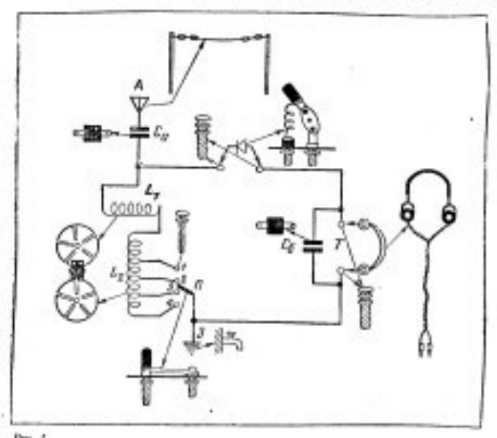
1941AugRadioFrontIn August 1941, the Germans were busy invading the Soviet Union, but they would have realize the futility if they had known that the Soviets were quite undaunted, and were busy putting together crystal sets. As you can see from the August 1941 issue of Радиофронт (Radio Front) magazine, that is exactly what they were doing. The diagram shown above is clearly a crystal set, and most of the parts appear to be homemade. Despite what the Germans could throw at them, the Soviets were still able to pull in the stronger stations thanks to simple receivers such as this one.

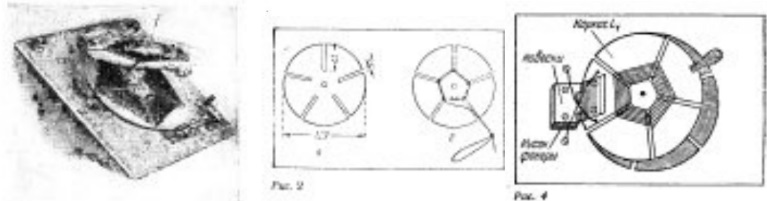
As you can see from the diagrams below, the tuning was accomplished with a variometer, using two spiderweb-style coils hinged together. And as long as they could find a suitable mineral, the Soviets could easily put together the detector shown below.

1941AugRadioFront21941AugRadioFront3


1946 Two Meter Transceiver

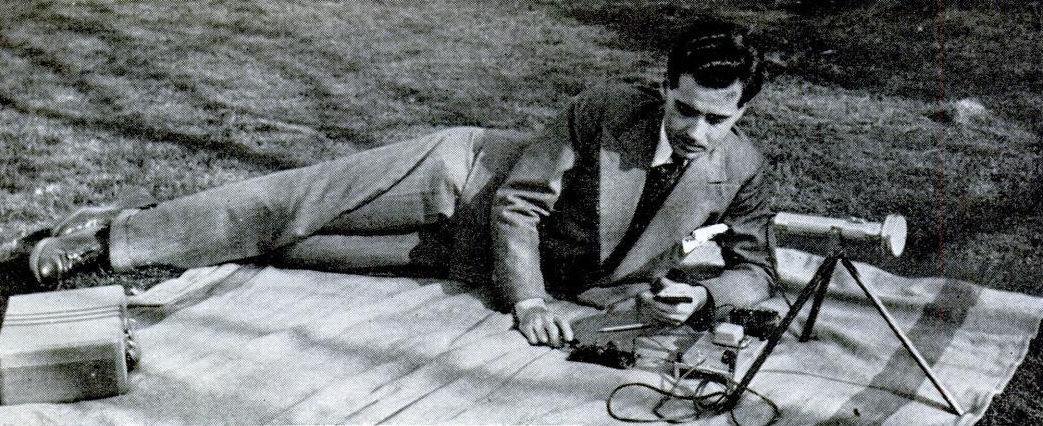
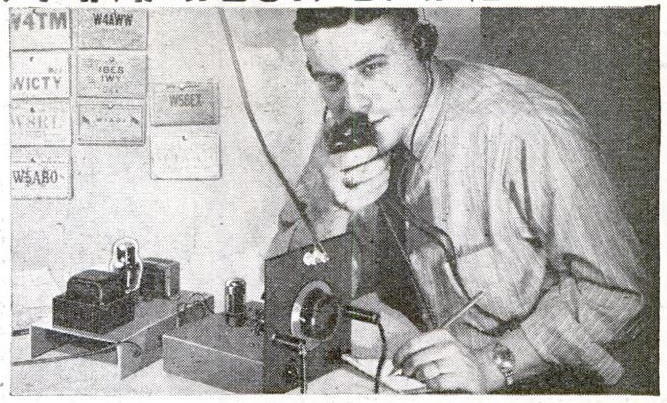
1946JunePMSeventy-five years ago, this ham was just getting back on the air after a wartime hiatus, thanks to a two-tube two meter transmitter described in the June 1946 issue of Popular Mechanics. The magazine noted that for the ham licensed prior to Pearl Harbor, as well as the newly licensed, the simple set would provide an efficient way of getting on the air for local contacts while the big rig was still under construction.

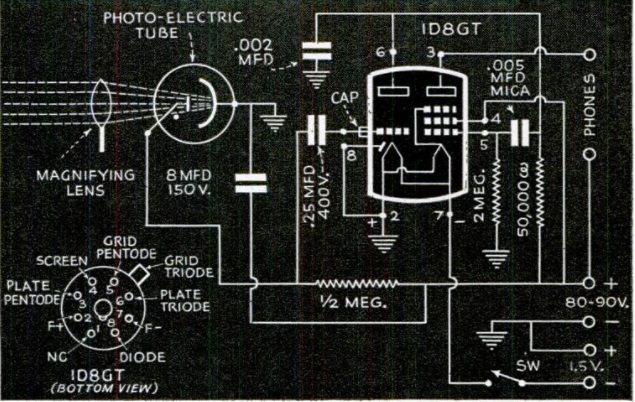
The set used a 6N4 to serve as oscillator, with a 7C5 modulating. On receive, the 6N4 became a superregenerative detector, with the 7C5 serving as audio amplifier. Also shown above is a 300 volt power supply, although another supply, such as a vibrator supply in a car, could be used to power the rig. The recommended antenna was a folded diple constructed of 300 ohm twin lead.

1946JunePM2


1946 Portables

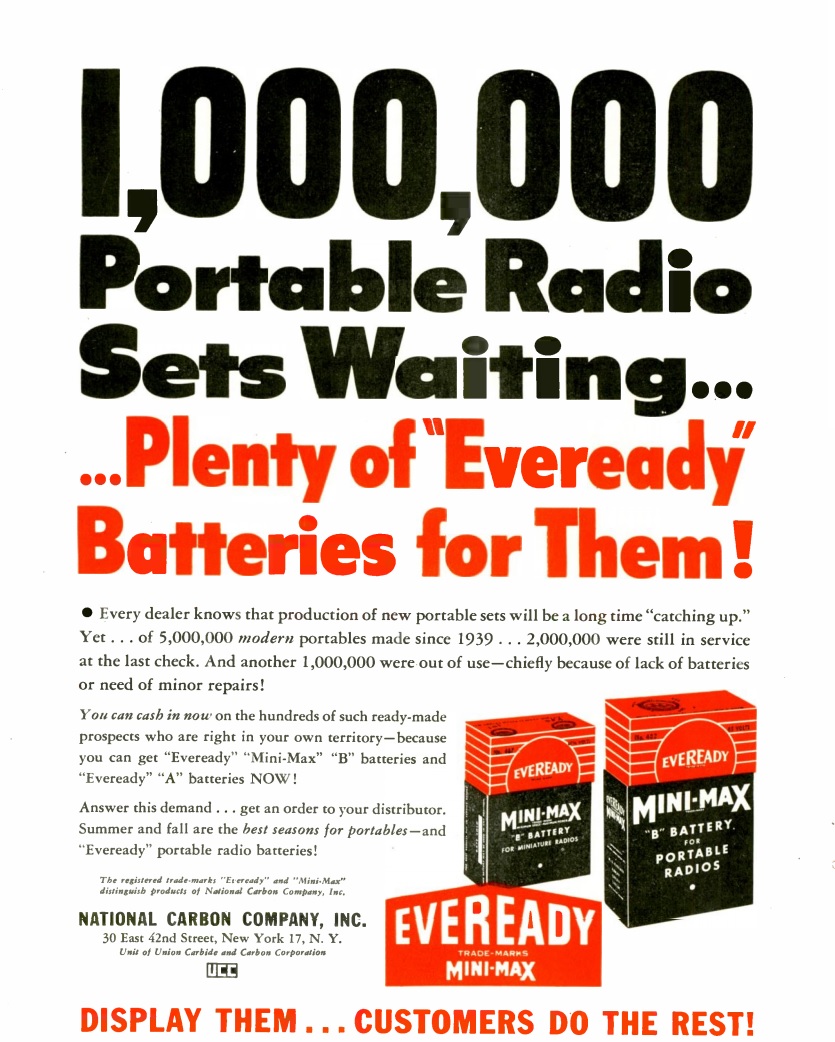
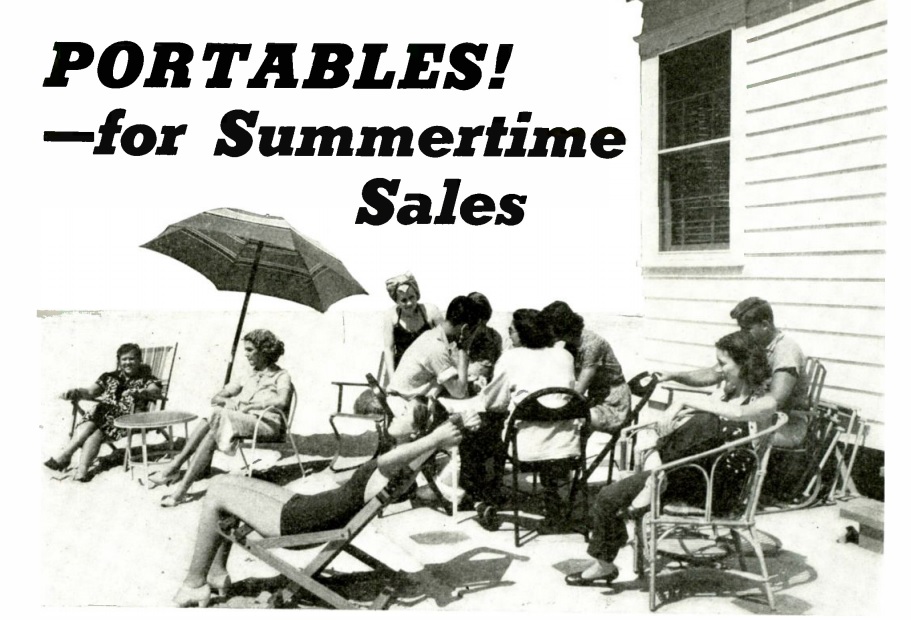
1946JuneRadioRetailingSeventy-five years ago, the summer of 1946 was the first summer after the war, and Americans were ready to enjoy some leisure. The June 1946 issue of Radio Retailing reminded its readers that this meant there would be a big demand for portables, and manufacturers were in the process of delivering the first new sets.  The season would last through fall, and dealers were advised to stock up.

There were currently 24 models on the market.  Some of these included a record player, with a maximum price of $149.50.  Of the 16 straight portables, the average price was $35.43, with the lowest being $17.50.

The magazine noted that only half of the new receivers were from old-name manufacturers.  The remainder came from postwar startups.


1946 General Electric Radios

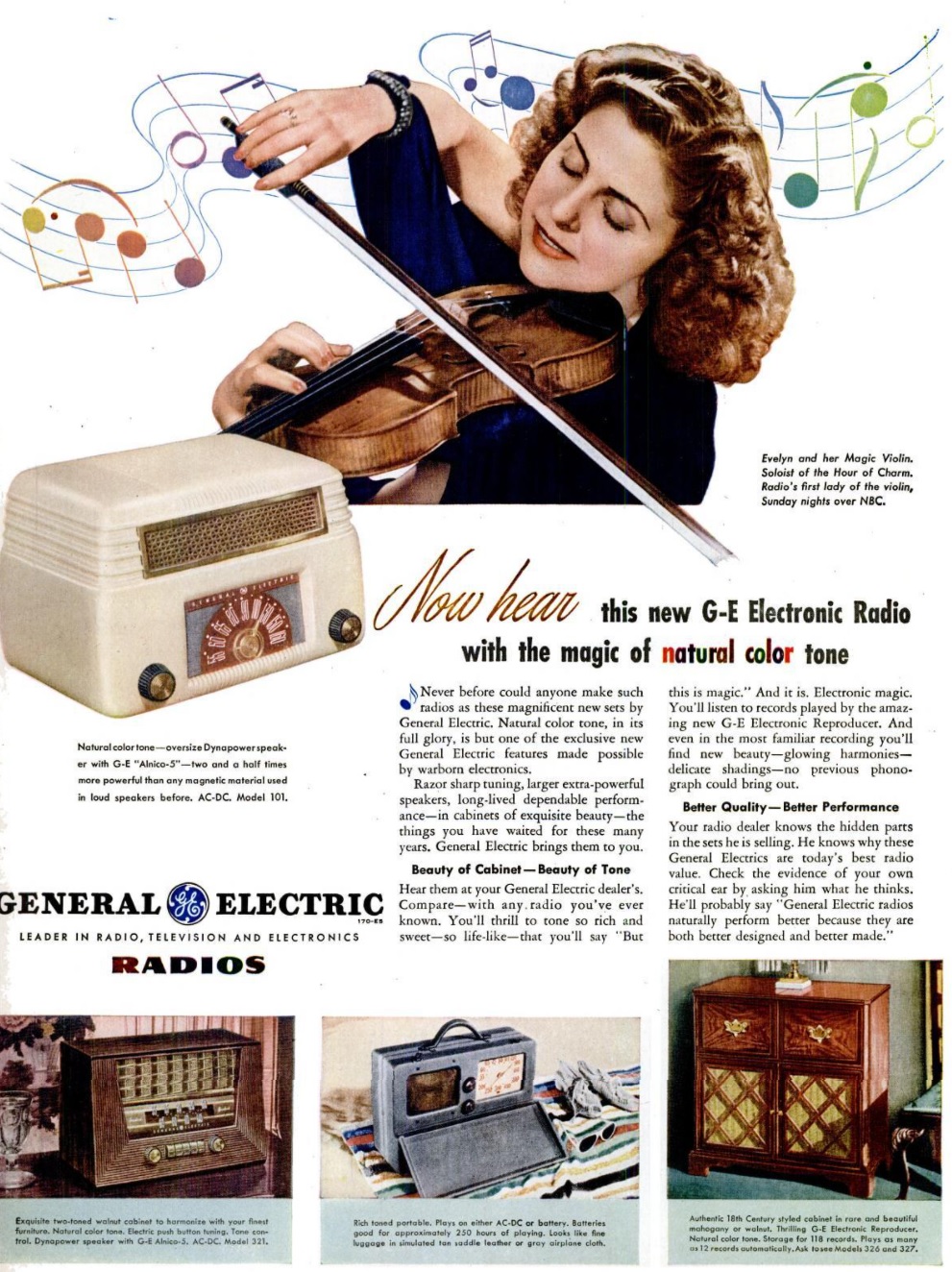
1946May20LifeSeventy-five years ago today, the May 20, 1946, issue of Life magazine carried this General Electric ad featuring the company’s postwar sets, and Evelyn Kaye.  The magazine didn’t even need to give her full name–she was just Evelyn and Her Magic Violin, and everyone knew who they were talking about, thanks to her appearance every Sunday night on NBC’s Hour of Charm broadcast. You can see her perform at the video below.

The GE radios featured in the ad were no less magical, with exclusive new features made possible by warborn electronics. In particular, the ad notes that the speaker of the Model 101 contained an alnico magnet, 2-1/2 times more powerful than any other magnet. The set was an “All-American Five,” with the familiar tube lineup of 12SA7, 12SG7, 12SQ7, 50L6GT, and 35Z5GT.

Also featured in the ad are the six-tube model 321, featuring pushbutton tuning, and the model 326 or 327 console, which also tuned shortwave. The model number for the portable shown at the bottom is not shown.


1941 Sussex, England, SWL Shack

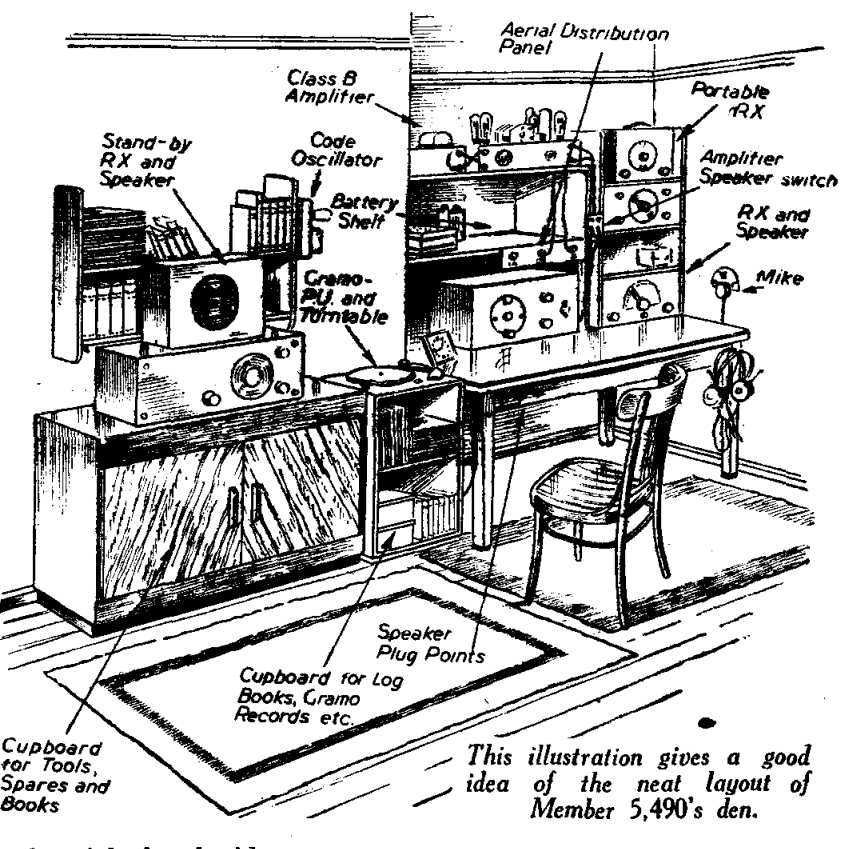
1941MayPracWirEighty years ago, this handsome listening post was located in Sussex, England and was owned by a member of the British Long-Distance Listeners’ Club. Due, undoubtedly, to wartime security needs, the owner was identified only as Member 5490, who had sent the sketch and description for inclusion in the May, 1941, issue of Practical Wireless.

The main receiver was an Eddystone All World Two.  You can read more about that receiver at this link.  The member also had three other homemade receivers as well as amplified speakers. He reported that for light entertainment, he could drive one of the sets with the gramophone pickup and get an output which was quite sufficient for a fair-sized shack. At times when reception was not good, he got quite a bit of fun with home broadcasting, using not only the turntable but the microphone as well.

The member reported that he was waiting for his call up from the Royal Navy as a telegraphist. His normal speed was 32 WPM, but he “managed to take down a couple of pages of French at 42 WPM.” At times, he had managed 53 WPM, but only for one minute.

He reported having 112 QSL cards, covering 83 countries and all continents.


1941 Radiola Ad

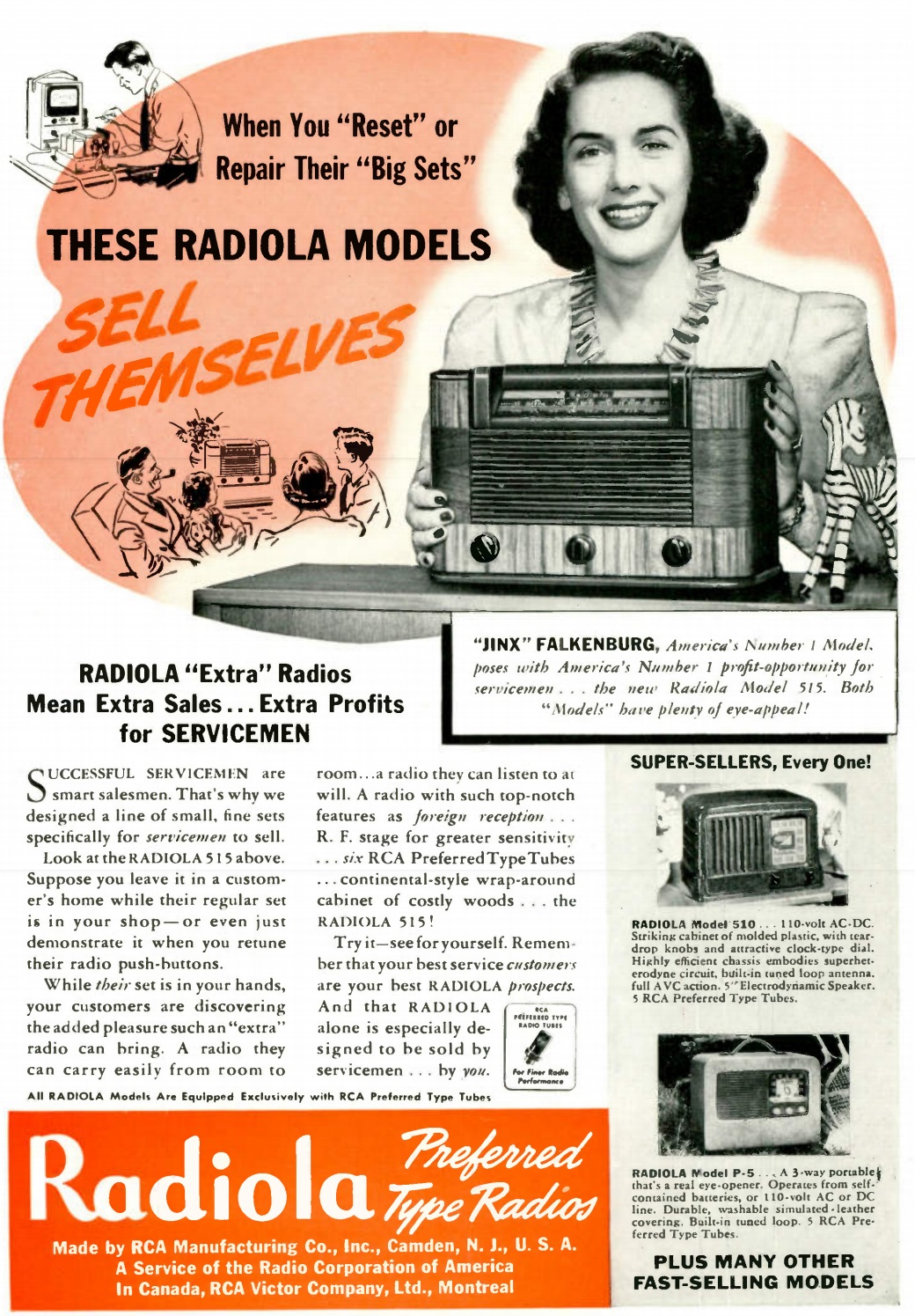
1941AprilRSDEighty years ago this month, the April 1941 issue of Radio Service Dealer carried this ad from RCA reminding servicemen that Radio radios could sell themselves. It suggested, for example, that when bringing a set into the shop, they could leave behind a model such as the Radiola 515, a six-tube set retailing for $24.95. While it was there, customers would discover the convenience of a second set that they could easily carry from room to room. And, of course, since the set pulled in the shortwaves, the customers would be able to listen to the latest war news direct from Europe.

Also shown was the Model 510 in striking molded plastic, and the model P-5 three-way portable. The multiband set is being shown off by Eugenia Lincoln “Jinx” Falkenburg, America’s number 1 model, who went on to have a radio show with her husband Tex, undoubtedly heard over many Radiolas, after the war.

The ad mentions that the serviceman might be in the customer’s home to set the pushbuttons on the radio. This is because on March 29, 1941, most North American radio stations changed frequency. Sets with pushbutton tuning would need the buttons reset to the new frequencies.


High School, 1946

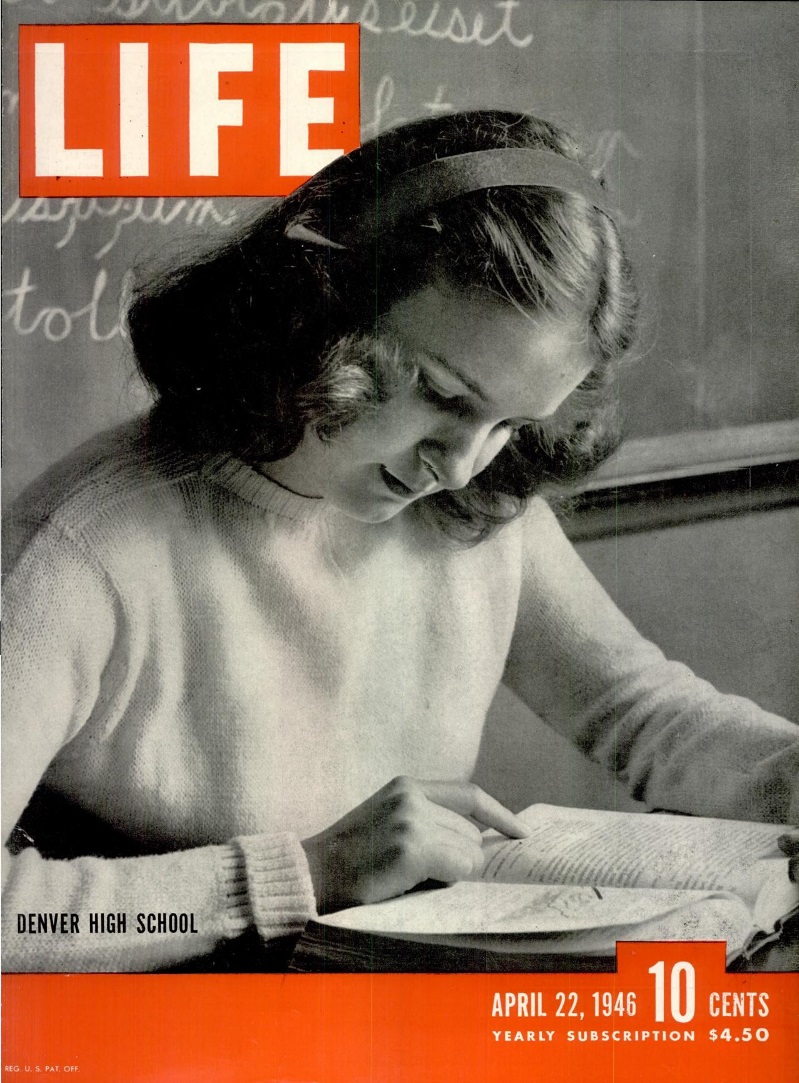
1946Apr22LifeShown on the cover of Life Magazine 75 years ago today, April 22, 1946, is Marilyn Rights, a junior at Denver East High School, in her Latin class. She would have been in seventh grade for Pearl Harbor, and most of her high school career took place during the war. The magazine profiled the school, and also took a look at the tension between two competing points of view.
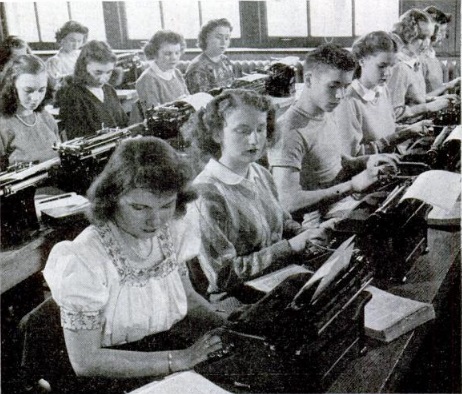
1946Apr22LifeTyping One view, championed by the National Education Association, called for more practical program for high school. Harvard University, on the other hand, called for more emphasis on cultural and academic subjects. The magazine’s focus was on how well the school was measuring up under the two competing plans. Harvard would be pleased to see Miss Rights’ studious attack of Latin, whereas the NEA would probably be pleased with the typing class shown here. The magazine noted that the class was one of the most popular at the school. While it was originally intended for “commercial students,” it was open to other students who learned typing in order to prepare neater homework.
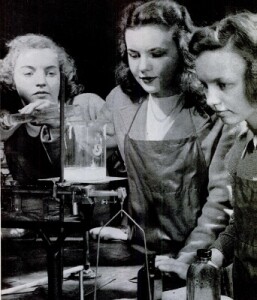
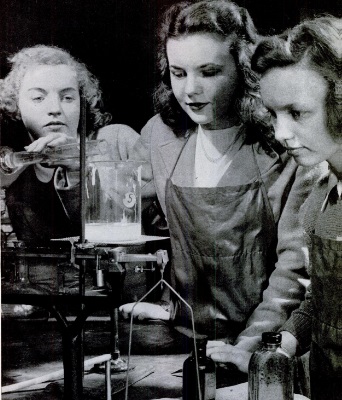
1946Apr22LifeColdCreamAt least one of the courses, practical chemistry, allowed students to learn about cosmetics by manufacturing their own cold cream, probably with a formula such as this one involving borax.

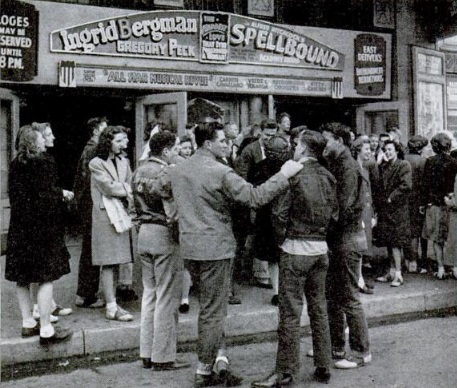
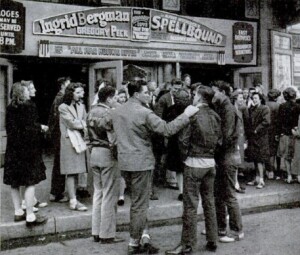
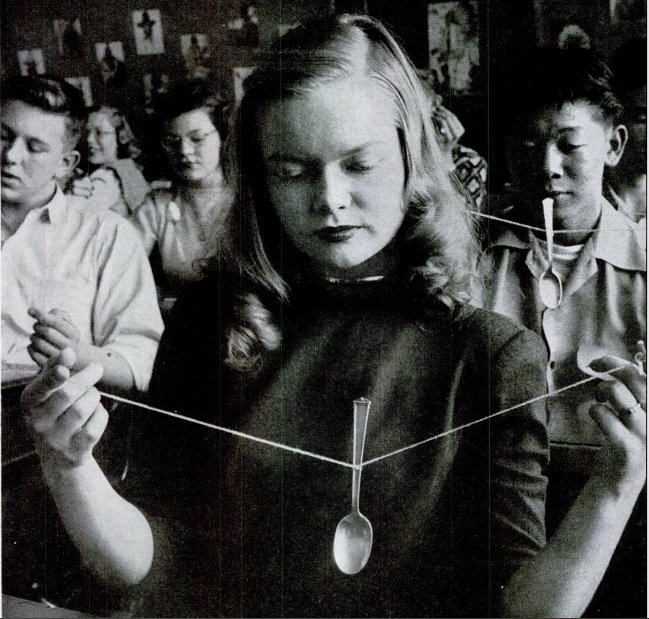
The psychology class appears to be much more interesting than the one I took in college. Here, we1946Apr22LifeMovie see the class on a field trip to see Ingrid Bergman in Spellbound, which deals with psychiatry. They discussed the film in class, and were critical of its superficial psychiatric approach. Those same students were also engrossed in the simple science experiment shown below, demonstrating how sound is transmitted to the ear. The spoon was tapped to the desk to make it vibrate, and the string held to the ear to demonstrate how the vibrations traveled through the string. In fact, elementary students looking for a simple experiment for the science fair can conduct this experiment, which you can see described at this site.
1946Apr22LifeSpoon

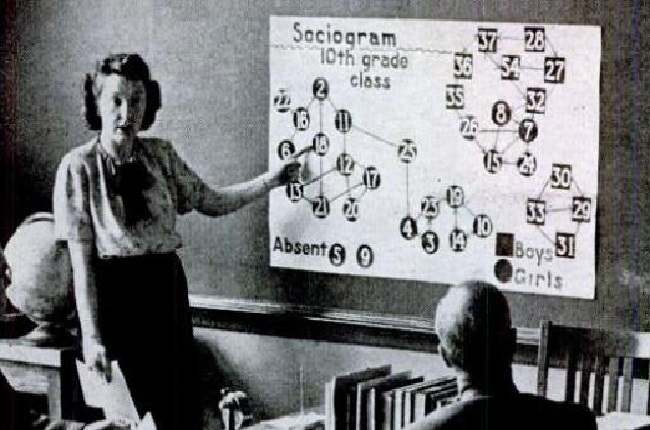
Another interesting activity in the psychology class is shown in the sociogram of the class below. Each student was asked to name their two best friends in the class, and these links were plotted on the chart. This revealed that the class consisted of four distinct “cliques,” which were largely independent. Girls 12 and 15 were revealed to be the most popular, with four students each identifying them as a friend. Interestingly, each was member of a separate clique. Girl 25 is identified as a “typical lonely student,” who chose students 4 and 11 as her best friends, but was herself chosen as best friend by no other student. Interestingly, though, she is the only student who links two cliques. One of her friends, 11, is a member of the clique at the left, and her other friend, 4, is a member of the lower clique.

1946Apr22LifeSociogram


1941 Prices: Western Auto

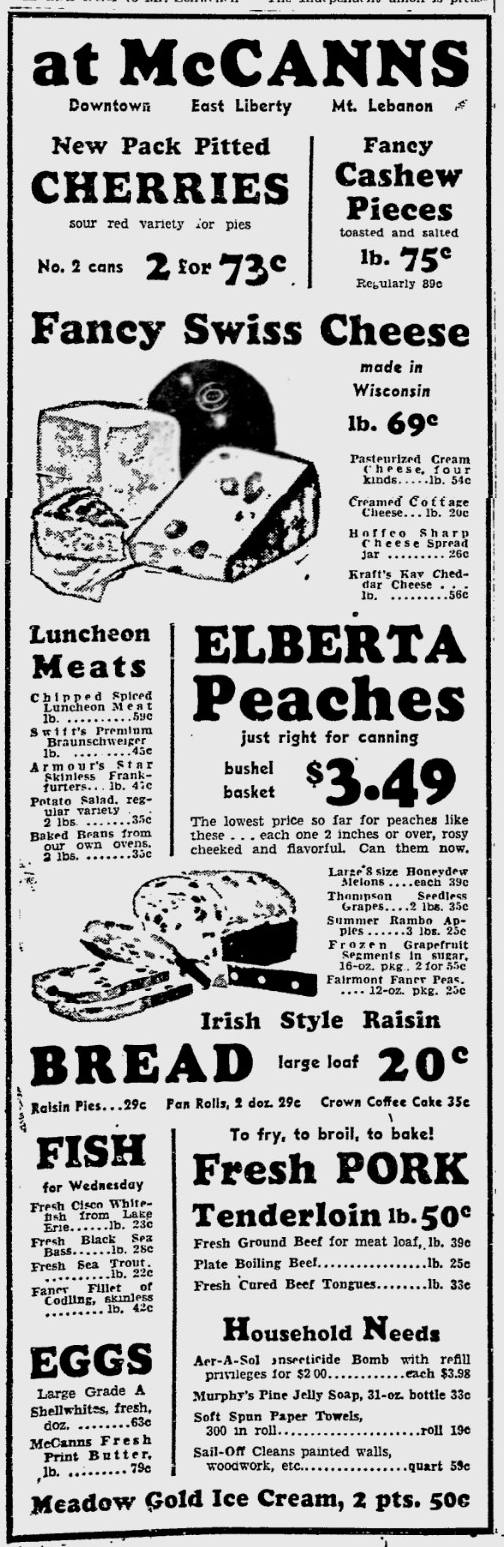
1941WesternAutoHere’s a snapshot of the cost of living from 80 years ago, on the eve of World War 2, from the April 16, 1941, issue of the Pittsburgh Press, courtesy of this ad for Western Auto Stores.  (For a larger image, from most browsers, click twice on the image.)

According to this inflation calculator, one dollar in 1941 was the equivalent of $18.02 in 2021 dollars. Here are some representative prices, with the modern equivalent in parenthesis:

Western had its own brand of radios, Truetone. A portable, which could operate on battery or household current, sold for $14.45 ($260.39), not including the battery. A single-unit car radio, with pushbutton tuning, could be had for the same price. A three-piece unit sold for $27.95 ($503.66), which included installation. The six-tube set had a chassis that mounted out of the way, with separate control unit and speaker.  Whichever car radio someone bought in 1941, there’s a good chance that they would be taking it inside to listen to when gas rationing meant the car spent most of its time in the garage.

Spark plugs would set you back a quarter ($4.50), but they were guaranteed for 10,000 miles. Fan belts started at 34 cents ($6.13). A new battery for the car would be $4.45 ($80.19) and was guaranteed for two years. A bicycle was $18.75 ($338), but if you needed just a tire, that was $1.62 ($29.20). Tires for the car started at $6.44 ($116.05), but they included a free tube. If you wanted to go fishing, a complete outfit could be had for just 98 cents ($17.66).


1941 CW Transmitter

Screen Shot 2021-04-05 at 1.21.22 PMEighty years ago this month, the April 1941 issue of Popular Mechanics showed how to put together this simple CW transmitter designed to cover five bands (160, 80, 40, 20, and 10 meters, since 15 meters wasn’t a ham band until after the war). Crystals for the transmit frequency could be used, or the crystals for 160, 80, and 40 would double easily. Plug-in coils were used to switch bands (and presumably, a 15 meter coil could be wound after the war).

The 20-watt transmitter was billed as suitable for the beginner. If the receiver in the photo above looks familiar, it appeared in the magazine’s January issue, and we previously wrote about it.  The transmitter, like the receiver, had a built-in AC power supply, this one using a type 80 rectifier.  The transmitter itself used a 6L6-G tube.  The parts for the set were said to be available in kit form from a number of suppliers, and would set the builder back about $13, plus tubes, coils, and crystals.

The new ham putting together these sets would be able to work only other U.S. stations, since there were already restrictions on working foreign stations.  And 8 months later, they would be off the air after Pearl Harbor, although the receiver would continue to pull in war news.

Screen Shot 2021-04-05 at 1.22.06 PM


1961 Speed Mail

1961AprPESixty years ago, the U.S. Post Office tried something that Popular Electronics, in its April 1961 issue, called “Electronic Speed Mail.” The official name for the service was just “Speed Mail,” but it was an early hybrid of electronic mail (or more accurately, facsimile) and snail mail.

The Post Office Department envisioned having centers in 71 cities strategically located across the country. To write a letter that would be delivered the same day, a sender would write the letter on a special form provided by the post office, taking care to write only within the lines. The form was likened to the special “V-Mail” form of World War II, with which letters were microfilmed stateside and delivered to Army Post Offices where they were printed and delivered, or vice versa. In this case, the message form was sealed and deposited into the mails. At the local post office, it was fed in, still sealed, to a facsimile machine. The machine opened the mail, scanned it, and placed it into a sealed container. After the operator was sure that the message had been properly sent, the batch of message forms was destroyed.

The scanned message was then sent via the Echo 1 satellite to the closest post office to the recipient. There, the message was printed and sealed into a window envelope with only the recipient’s address and return address showing. Again, the entire process took place without human eyes seeing the message.

An example of the message blank is shown below. This one bears a message sent from Postmaster General Arthur Summerfield to Vice President Nixon, late in 1960. (Even though the message was sent crosstown in Washington, it was relayed via Chicago to demonstrate the service’s capabilities.)

When the Kennedy Administration took office, newly appointed Postmaster General J. Edward Day (best known for the creation of the ZIP code) was less enamored with the system, and no further efforts were made to promote it. The Western Union Mailgram service (“the impact of a telegram at a fraction of the cost”) was introduced nine years later in 1970, and allowed rapid mail service. Messages were sent by Western Union to the nearest post office, where they were printed and delivered the same day received.