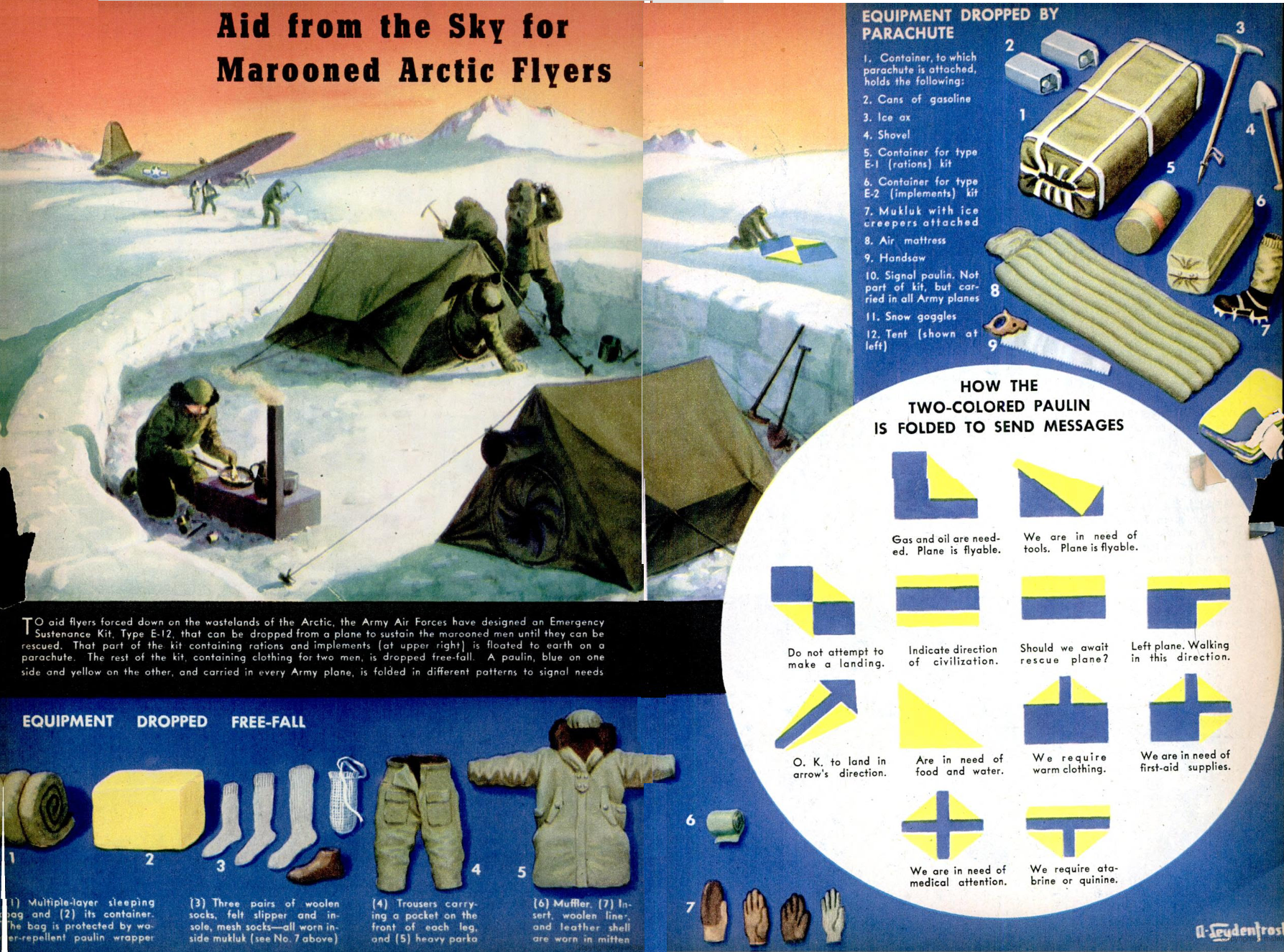
When I placed another Amazon order, I decided to try one of these little hand crank generators. The XioNiu Hand Crank Generator is designed for use in an emergency to charge USB devices. The cost was so low, that I couldn’t really resist. You can see the current price at the Amazon link below. I believe it’s eligible for free Prime shipping. I got free shipping by combining it with a larger order:
It does work as advertised (at least until it gets broken), but you need to understand its limitations. The product is really more of a novelty than something that is particularly useful. I received it from China a couple of weeks after ordering it. The one I ordered was broken. I requested an exchange, which prompted a few e-mail exchanges from the seller in China. The seller didn’t want me to bother sending it back, and offered me a refund. I asked for a replacement rather than the refund, but the seller didn’t seem interested. The link I ordered from didn’t have any reviews, but I found another link for what appears to be the identical product, and a good portion of them seem to arrive broken. So it looks like the XioNiu factory has some quality control issues they need to resolve.
Finally, I agreed to a refund, and it was applied to my Amazon account promptly. Rather than throwing it away, I gave it to my son and asked him whether he could repair it.
Amazingly, he was able to fix it, at least for a while. The actual generator was slightly out of line inside the case, and didn’t connect to the gears attached to the crank. My son simply set it back in place and it started working. In the process, however, the plastic into which the screws go broke off, and we had to put the case back together with electrical tape. And after working for a day, it must have gotten jostled and stopped working again. He’ll probably be able to repair it again, although I’m not sure it’s worth the trouble.
There is a small red LED on the outside of the case which comes on when the crank is turned. This light is very small and red, so it’s not particularly useful as a flashlight. But in a pinch, it does provide some light, so if you’re trapped in utter darkness, you’ll at least have enough light to find your other flashlight.
The USB charger does seem to work. It would probably take forever to fully charge a device, but at least it would provide enough juice to make a call or two in an emergency situation.
Overall, it certainly wouldn’t hurt to keep one or two of these at home, and toss one into your vehicle or desk drawer at work. It does perform its intended function, assuming you get one that’s not broken. However, I wouldn’t want to rely upon one of these as my sole source of electric power in an emergency. Even though it works, it is cheaply made, and won’t last forever. Indeed, as my experience shows, it might not even survive being mailed here from China.
This charger contains a USB socket, so you will need the cable to connect to your phone or other device. I wouldn’t want to rely upon this charger in an emergency, but it is infinitely better than nothing. You probably have a phone and the connecting cable. Eventually, the battery will go dead, and this charger would at least allow you to use it for a few minutes.

 If you’re thinking about making more serious preparations for a power outage, see my earlier post and some of the others linked to it. If you’re just looking for a good quality crank charger for your phone or other device, then I recommend the Midland Emergency Radio shown here. It’s larger and more expensive, but it seems to be very well made. It is first and foremost a radio, and a quite good one, pulling in all local AM and FM stations as well as any portable. At night, it does receive distant AM stations very well. It has a NOAA weather radio, and includes the alert feature, meaning that you can set it to sound an alarm in case of a severe weather warning. The flashlight is also excellent. It contains a built-in battery which can be charged in three ways. To keep it topped off before an emergency, you just need to occasionally plug it into a USB adapter. It also has a solar panel, so it should maintain its charge just with normal daylight. And it does have a hand crank that seems a lot more reliable than the cheap Chinese one I tried.
If you don’t mind taking it apart and fixing it occasionally, then by all means get one of the cheap hand crank generators shown at the top of the page. And it looks like many buyers luck out and get a working one, so it might be worth taking your chances. I would imagine that some of them are working when they arrive, and it is a good concept. However, this particular model is simply unreliable for emergency use, and should only be considered as an additional backup if your basic needs are already met.
Links on this page are affiliate links, meaning that this site gets a small commission if you make a purchase after clicking.

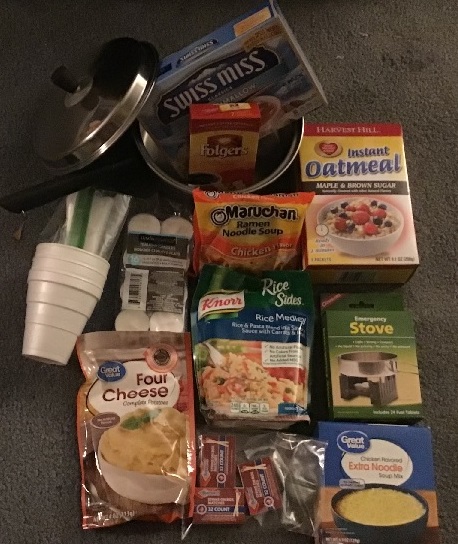 With winter soon upon us, I decided it was time to make sure the cars were equipped with survival kits. Other items are important (such as blankets or sleeping bags, extra winter clothing, tools, a shovel, sand, and probably others), but here are the items that I put in to make sure that the passengers have something to eat if the car gets stuck. This kit contains food and a method of cooking the food. I made identical kits for each car.
 With winter coming up, I’m looking for a small emergency stove to toss in the car, and
 You could cook over candles, especially if you just needed to warm something up, or to melt snow. But an improvised stove made out of tin cans isn’t the most convenient setup. To make the ordeal of being stranded in a blizzard a bit more pleasant, a
 the car, with the knowledge that it’s ready to go, complete with fuel. Any metal container, such as the coffee can the candles are stored in, could be used as a cooking pot. (The pan shown in the picture on the box is not included with the stove.) You might consider getting a cheap pan from the dollar store or an inexpensive
 Each tablet provides enough fuel to boil a few cups of water, so the 24 provided tablets are probably enough to ride out the entire crisis. But if more fuel is needed, you could use your candles o ra gel fuel such as


 Of course, for all of these ideas, don’t forget

 That’s still a reasonable price, however. The




 We call it a “blackout” because the lights go out, and the natural first idea is that you’ll need light. Chances are, your cell phone will work as a flashlight, but the battery won’t last forever, and it’s probably not the most convenient. Fortunately, flashlights are very inexpensive, and you ought to keep one or more in various locations in your home and vehicle. The
 Your next need is information. In many (but not all) blackouts, the cellular network will keep functioning, at least for a few hours, so being able to power your phone is important. Obviously, you won’t be able to plug it in to the wall, so at a minimum, you’ll want to have a
 If you want to charge away from your car, one very inexpensive method is the


 And speaking of radios, you should have at least one battery operated radio. You can get information on your cell phone, but streaming is generally battery intensive. Also, in many emergencies, the cellular network will become unavailable or extremely slow. During the New York blackout,
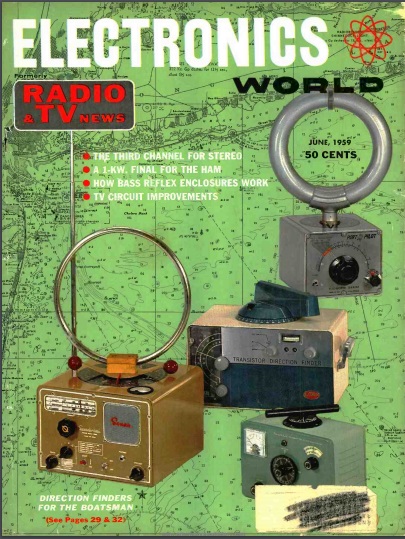


 ruler on the map over that station’s location, and draw a line in that direction. You repeat the process with a second station, and where the lines meet is your location. You’ll need to orient the map, so if you don’t know what way is North, it’s a good idea to have an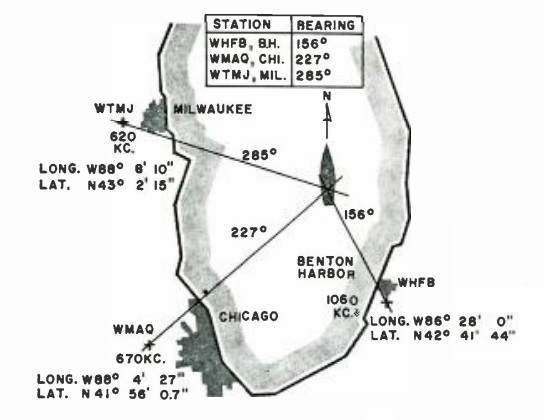


 I wrote up the sales on paper receipts, and if they paid cash, I put it in the till. If they didn’t have any cash, I took a