Category Archives: Emergency Preparedness

Walmart Grocery Pickup Review


WMPUDuring the pandemic, my family wants to keep to an absolute minimum our direct interaction with others. If they’re infected, I don’t want to catch it. And just as important, if I’m infected, I don’t want to spread it to them. To minimize the amount of shopping we need to do, I’ve decided to alternate between online orders at local stores, and Amazon orders.  I think we have enough supplies for the duration, but it’s nice to maintain our normal diet, including things such as fresh milk and bread.

Today, I picked up our first  Walmart order, which was more or less a normal weekly grocery order, including milk bread, soft drinks, and canned goods. We happened to need some superglue, so we added it to the order, showing that you can order anything in the store.

I placed the original order online on Friday afternoon, and picked it up today (Monday). This was the earliest slot available, so the process does require some planning. As of today, no slots were available, and the website asked me to check later. So perhaps this is our one and only order. At the very least, the process does require some planning. However, once you reserve the slot and place the order, you are able to add and remove items from the order, up to about 12 hours before the pickup time.

Update:  The Walmart site seems to have changed since I posted this.  You can now make reservations only for “today” and “tomorrow.”  The best bet seems to be to check the site right after midnight.  For example, if you check at midnight Monday night/Tuesday morning, you’ll be able to reserve a slot for Wednesday.

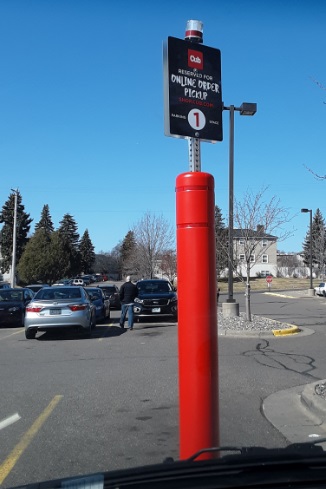
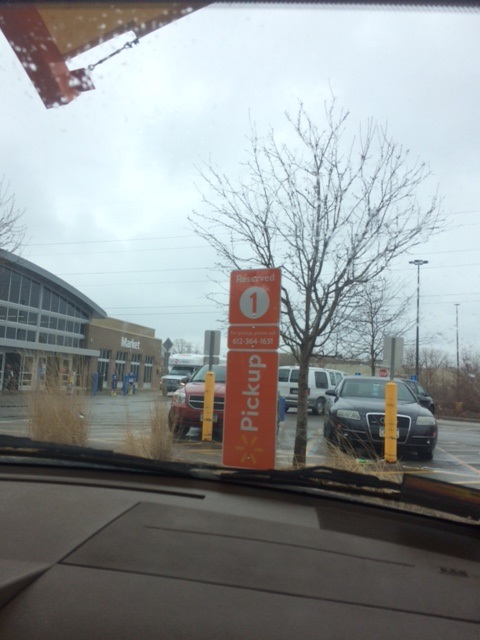
Today, I received an e-mail telling me that my order was ready. The e-mail instructed me to check in on their app to let them know I was on the way, so I installed the app on my tablet. It turns out, however, that this is unnecessary. You can simply proceed to the store, park in the designated area, and then call from your car to the number posted there.

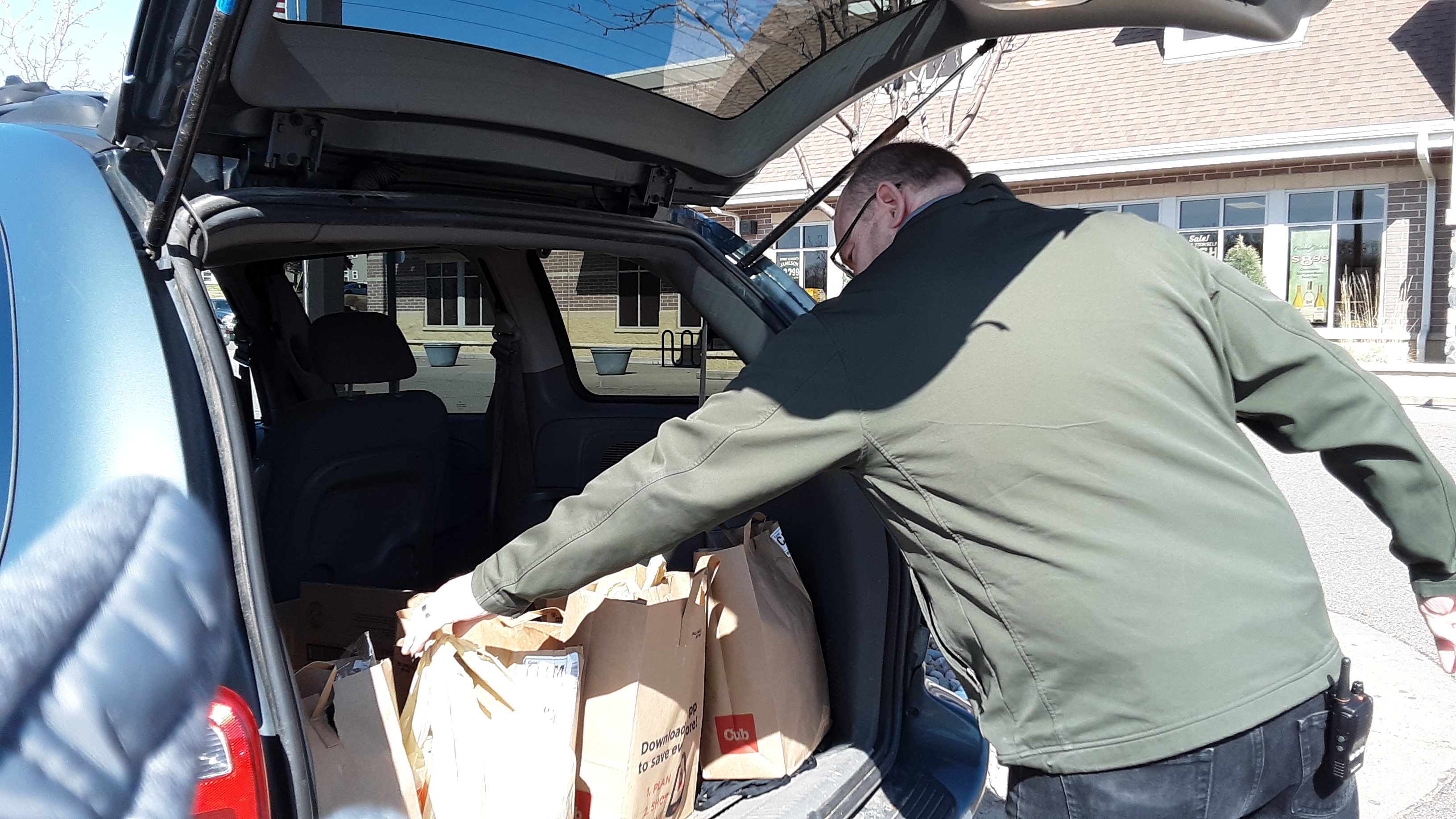
A couple of minutes after calling, the Walmart associate came out with our order and loaded it into the car.  It was a well organized process.  Our bags were in tubs labeled with my name.  I noticed that some were marked “cold,” and some “ambient.”  I apologized for not helping her load it, but I explained that I didn’t want to risk contaminating her.  I did have to sign on a small tablet computer.  Update:  As of March 25, you no longer need to sign for the order.  I was able to stand back 6+ feet the entire time.  I got out my hand sanitizer, and sanitized my hands immediately after doing so.

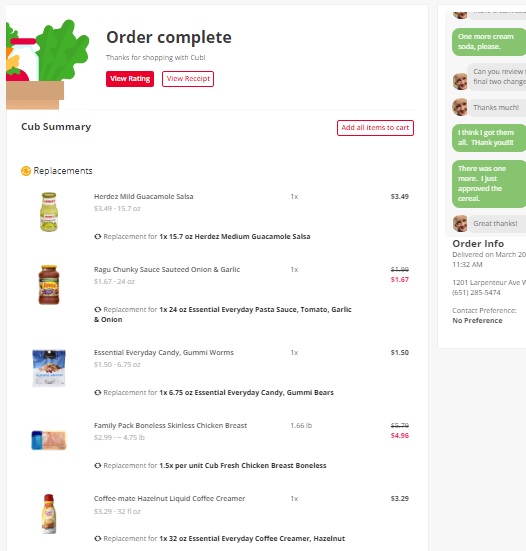
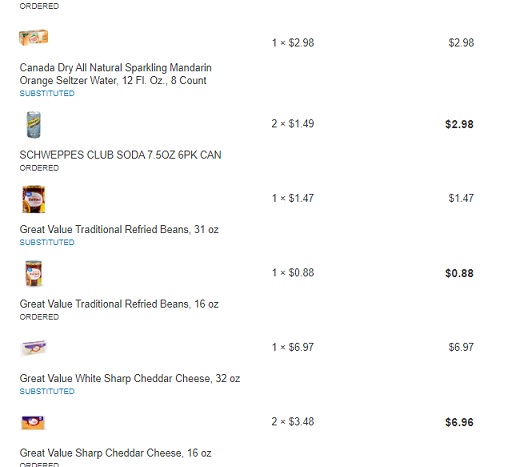
walmartsubstitutionsWhen placing the order, I was able to select whether I would be willing to accept a substitution for items. Some items were out of stock, and I received a substitute item. In most cases, the substitute was a slightly different brand, size, or flavor. For example, they were out of the two-pound package of white cheddar cheese, so I received two one-pound packages of sharp cheddar, for one cent less than my original order.

The only case where the substitute wasn’t useful was our order of a spray can of Lysol (which we were ordering for a neighbor). In the case, they gave us Febreeze, which really wasn’t useful. However, the choices were e-mailed to us, and we had the option of removing the item. I told the associate that if it was difficult, not to bother, but she quickly found the item, scanned it in, and we were credited for the amount.

We ordered a package of toilet paper and were hopeful that we would get it, but it was out of stock and no substitution was available.  We also ordered a container of Ensure for an elderly friend, but it was also unavailable.

Overall, the process worked very well.  If it remains available during the current national emergency, we’ll definitely make use of it again.

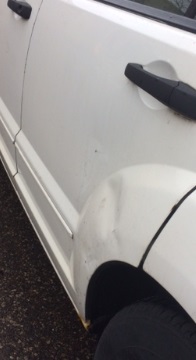
DentThe only glitch was, upon leaving, another customer backed into my car.  Despite what sounded like a loud crunching sound, it left only a small dent in the rear door.  I’m sure if I took it to a body shop and let them know the other driver’s insurance would pick up the tab, they would gladly replace the door for hundreds of dollars.  On the other hand, it’s a twelve year old car, and I doubt if I’ll pursue the matter.

In the car, I had a pencil and sheet of paper, so I tore it in half, wrote my information on one half, and then had the other driver do the same.  When she was finished, I had her keep the pencil.  She was apologetic, and in better times, I would have shaken hands before we left.  In the time of pandemic, we just went our ways.

Some links on this page are affiliate links, meaning that this site gets a small commission if you make a purchase after clicking on the link.


Using Bleach for Sanitizing

image of Coronavirus Disease 2019 (COVID-19)

Due to the coronavirus, some items are unavailable in stores. If there are sick people in your house, it might become important to clean and sanitize more than usual. One convenient method is a product such as Clorox Wipes or Lysol Wipes. However, availability is currently very limited.

One excellent alternative for sanitizing is normal household bleach. The CDC offers guidance on their website.   All of the stores I’ve been to in the last few days have had bleach, although there were gaps in the shelf.   You probably already have a gallon of bleach on hand for normal laundry needs.  If you don’t (or the bottle is getting low), I would recommend adding this to your shopping list.

The first caution is never to mix bleach with ammonia or other cleaners, as deadly fumes can result.

To sanitize surfaces, the CDC recommends one cup of bleach for 5 gallons of water. For smaller jobs, the recipe can be scaled down. For example, for a gallon of water, you would add 1/5 cup bleach. For a quart, you would use 1/20 cup, which is 2-1/2 teaspoons.

The agency recommends cleaning the surface with soap and water, rinsing, and then sanitizing with the bleach solution. Allow the surface to air dry. Try not to breathe in fumes, and keep windows and doors open.

While it’s unlikely that it will be necessary due to the coronavirus, for other emergencies, it’s good to remember that bleach can also be used to disinfect drinking water.  The EPA provides instructions on their website.  Generally, very small amounts of bleach are used, approximately 8 drops per gallon.  The Clorox website also has instructions for sanitizing drinking water with bleach.

Other Posts Regarding Coronavirus


Some links on this page are affiliate links, meaning that this site earns a small commission if you make a purchase after following the link.

Bathtub Liner for Emergency Water Storage


We’ve previously featured products designed to store drinking water in your bathtub. These are an excellent choice if something like a hurricane is approaching your area and you believe that normal utilities might be cut off. These products are a large plastic bag that goes into the tub to keep the water sanitary.

The disadvantage is that these are relatively expensive, and can only be used one time. There’s really no way to empty them completely, so when the disaster is over, there’s really nothing to do other than drain the bag and throw it away.

I’ve recently learned of a product that would work almost as well, at a fraction of the cost. These are bathtub liners that are apparently targeted toward people who are squeamish about taking baths in unfamiliar bathtubs. You place the plastic liner in the tub, fill it with water, and take your bath with the assurance that your body isn’t touching someone else’s germs.

Very few of our readers are squeamish, but there’s no reason why this product can’t also be used to store drinking water. It serves the same purpose as the products designed for that purpose, at a fraction of the cost. The disadvantages are minor.
The first disadvantage is that this liner is not  sealed at the top. It’s designed to be placed at the bottom of an open tub. However, it appears to be large enough that it can be draped over the top. It could probably be closed with clothespins or binder clips.  (The picture shown above isn’t particularly good, since it shows the liner in a non-standard tub.  But the liner measures 90 by 47 inches, so should fit any standard tub.)

The other disadvantage is that it doesn’t come with a pump. However, there’s really no need for a pump, since you can simply bail out the water with a pan or even a cup. If you really want a pump, you can purchase one separately for just a few dollars.

The products designed for water storage look like they would work well, but there’s really no way to test them. These liners are inexpensive enough that you could try one out and then throw it away when you’re satisfied that it works. Depending on the brand, the package contains either ten or twelve liners, so that even after testing, you should be all set for another several disasters, at a very reasonable cost, which is shown here:

If a hurricane is bearing down on you and there’s no time to order products online, I also have instructions for using normal plastic sheeting or plastic garbage bags to store water in your bathtub.

Links on this page are affiliate links, meaning this page earns a small commission if you make a purchase after clicking on the link.


image of Coronavirus Disease 2019 (COVID-19)As the coronavirus continues to spread, we will occasionally be posting hints to help your family prepare.  We recommend that you continue to follow official advice, such as that provided by the CDC.  Click here to keep yourself informed.

Click here to read our previous posts on the subject of emergency preparedness.

Pandemic Shopping Time

image of Coronavirus Disease 2019 (COVID-19)The photograph above was taken on February 26, 2020, at a supermarket in Bergamo, Italy. As you can see, the shelves are almost bare. As of this writing (March 5), according to news reports, Italy has confirmed 3800 coronavirus infections, and 148 persons have died. Institutions such as schools have been closed.

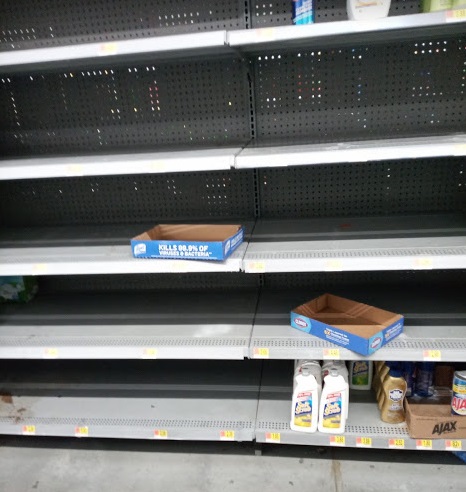
Where the sanitizing wipes were supposed to be today.

Where the sanitizing wipes were supposed to be today.

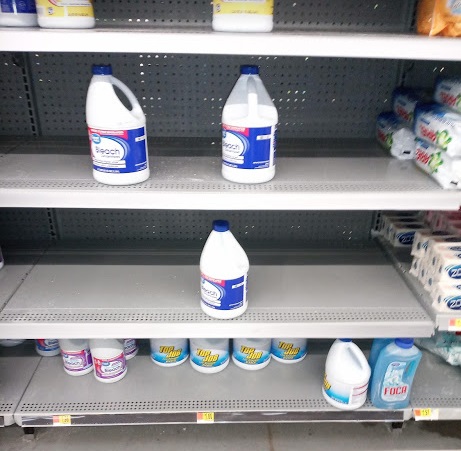
It’s quite possible that the epidemic will affect commerce in North America just as it has in Italy. Since more and more cases are being reported in the U.S., it seems quite possible that store shelves will have similar shortages within a few days. This afternoon, I visited a local Walmart. There was no “panic buying,” but many items were out of stock. At this point, the missing items were mostly preparations specific to a pandemic. There was no hand sanitizer, or sanitizing wipes. There was no isopropyl alcohol. There was still bleach available, but the shelves were starting to become empty.

BleachAisleThe only “prep” item I bought today was a gallon of bleach. The CDC has instructions
for using household bleach for cleaning and sanitizing, and even if other cleaning products are not available, a gallon of bleach should be enough for thousands of uses. If your big box store is out of it, I bought mine at Dollar Tree. People are buying it, but if you look around, plenty should be available.

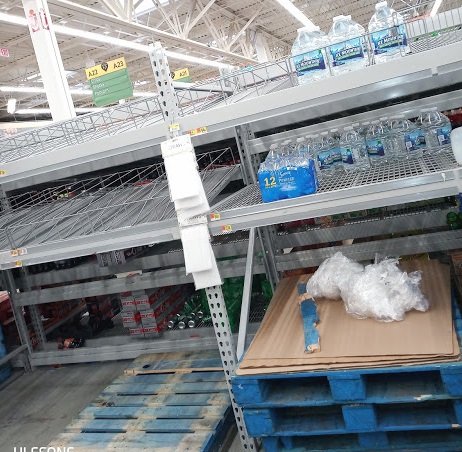
As of today, there weren’t any shortages comparable to those in Italy.  However, I did notice that many grocery items seemed to have minimal stocks.  In the soda aisle, for example, some brands and flavors were missing.  The bottled water aisle seemed to have the most obvious shortages.  Personally, I don’t see much need to buy water, since there’s no reason WaterAisleto believe that the tap water will stop working.  But I guess if you normally drink bottled water, you might go on the assumption that it will be unavailable, at least temporarily, within a few days.

I think the moral of the story is that the time is now to stock up your normal groceries, and to do it as soon as possible.  We published the following list previously as a recommended shopping list for hurricanes.  For a pandemic, you have much more flexibility, since your normal refrigerator and stove will continue to function normally.  These are, of course, just suggestions.  The following links are to Walmart.com.  If you want to save time, you can order online, and then pick up your order at the store.


Product Review: Walmart Equate Plus Nutritional Shake

UpdateThis page was written pre-COVID, and in the intervening years, only the chocolate, vanilla, and strawberry flavors are available.

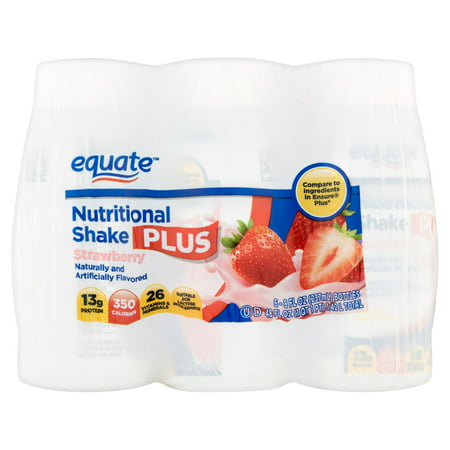
As I’ve previously recounted, I was quite sick just over a year ago and was hospitalized.  In the process, I lost a lot of weight, and needed something to provide easy nutrition.  As a result, I became something of a connoisseur of nutritional drinks, the most familiar brand names being Ensure and Boost.  These products are designed to partially replace part of one’s normal diet.  They generally contain a warning that you shouldn’t use them as your sole source of nutrition without consulting your physician, but they are a good supplement to ensure you’re getting adequate calories and nutrition.  Most, for example, provide about 350 calories.

As I discovered, some tasted better than others.  My health has recovered, and I guess there’s really no medical need for the added nutrition.  But I like them, and they make an extremely convenient breakfast if I’m in a hurry.  The 350 calories keep me going even if I don’t have a chance to eat anything else.  They’re now part of my routine.

The major brand names tasted OK, but I also sampled some of the store brands.  Initially, the Walgreen’s store brand was my preferred choice.  Unfortunately, however, at some point they changed the formula.  The old version’s label stated that it provided 25 vitamins.  The new label proudly proclaimed that it now had 26 vitamins.  Unfortunately, the changed formula didn’t taste as good.  So I had to do more shopping, and tried the Walmart store brand.

Initially, I was a bit disappointed.  I bought the chocolate, and it wasn’t quite as good as the Walgreen’s brand.  It’s hard to articulate, but something about the chocolate flavor seemed a bit artificial, and the overall experience wasn’t as “smooth” a taste as I wanted.  Fortunately, however, I decided to try some of the other flavors.

My favorite was the mocha flavor.  If you like coffee, you’ll like this flavor.  The addition of the coffee flavor brings back the “smoothness” that was missing in the plain chocolate.  In fact, if you ordered an iced mocha at Starbucks and they served you one of these, you would be quite satisfied.

I also enjoy the strawberry and banana flavors.  It’s also available in vanilla, but I haven’t had a chance to try that flavor yet.  While they can be consumed at room temperature, they are best served chilled.  Refrigeration of the unopened bottle is not necessary, so they’re handy to keep a few on hand.

If you’re looking for a product with fewer calories, the Walmart brand, as well as most of the other brands, offer an “Original” version.  The “Plus” version is 350 calories, but the “Original” version is 220.  Look for the words “Plus” or “Original” on the label, or glance at the Nutrition Facts label to make sure you’re getting the 350 calorie version.

I much prefer the Walmart store brand to the name brands.  As an added bonus, as you might have guessed, the store brand is also cheaper.  Tastes may vary, but if you or a loved one have been prescribed a nutritional drink, you’ll want to consider trying this less expensive store brand.  In addition to saving a little money, you very well could prefer it.  And if you’re a busy person and might occasionally miss a meal, it’s not a bad idea to keep one in the back of the fridge, or even in your desk at work, to quickly give you the nutrition to keep going.

And while one of these products is too expensive to buy in bulk for emergency food storage, it might fill a niche, and keeping some on hand for emergency preparedness purposes might be prudent.

Some links on this page are affiliate links, meaning that this site earns a small commission if you make a purchase after clicking on the link.


Oral Rehydration Solutions for Emergency Preparedness

image of Coronavirus Disease 2019 (COVID-19)Click here for homemade electrolyte solution information.

As the coronavirus continues to make the news, we’ll be offering some posts with advice for preparing. As with any potential emergency, there are common-sense preparations that one can make, such as making sure that your family has an adequate supply of food and other items, in case supplies are interrupted or you are unable to leave your home.

Note: Please keep in mind that I’m not a doctor. I’m a lawyer. Just as you wouldn’t take legal advice from a doctor, you probably shouldn’t take medical advice from a lawyer. So please do your due diligence, and take medicine only upon medical advice.   But you can’t take medicine if it’s not available. My main focus is giving advice to make sure you have medicine available in the first place.

Basic Preparations:  Food and Medicine

For pandemic preparedness, the Department of Homeland Security’s ready.gov website recommends that you store a two week supply of water and food. (You can find food storage pointers at many earlier posts, many of which are linked here.)  The site also stresses that you should make sure you have a continuous supply of any prescription drugs you are taking. This seems especially critical in the case of the corona virus. According to news reports, about 90% of the active ingredients used by U.S. drug manufacturers originate in China. It seems quite possible that supply chains will be disrupted. If you take any prescription medications, it’s best to get refills as soon as possible, so that you always have a supply on hand. If the pharmacy can’t fill your prescription, it won’t be an emergency if you have a month’s supply at home. But if the pharmacy can’t get your medicine, and you just took the last pill, this could turn into a serious emergency.

Unfortunately, some insurers won’t pay for the refill until you’ve almost run out. If that’s the case, you might consider simply paying cash for an extra refill. But whatever you do, don’t just walk into the pharmacy and say that you’ll be paying cash. That could be a mistake that costs you hundreds of dollars. In this post and this post, I have suggestions that will dramatically reduce the cost of your prescription. You’ll save so much that you’ll be angry that the pharmacy was willing to charge so much in the first place.  In fact, in some cases, you might wind up paying a cash price that is less than your insurance co-pay.

Ready.gov also recommends making sure you have adequate supplies of nonprescription drugs and other health supplies, “including pain relievers, stomach remedies, cough and cold medicines, fluids with electrolytes, and vitamins.”

Oral Rehydration Solutions

By “fluids with electrolytes,” they mean oral rehydration solutions, the most familiar brand name of which being Pedialyte. If you are dehydrated by a condition such as diarrhea, this could be a lifesaving item to have on hand.

Unfortunately, this could be expensive to stock up in advance. However, with some foresight, you can do this economically. The simplest way to plan for possible dehydration is to stock up is to buy some Pedialyte or generic equivalent. It’s probably less expensive to buy it in powdered form. One replacement, albeit probably not as good medically, is a sport drink such as Gatorade. It is available ready to drink, or as a powder. (I have noticed that Dollar Tree sells small containers of a generic equivalent of Pedialyte, and at $1, these are quite economical for stocking up.)

Preparing to Make Homemade Rehydration Solution

As a last resort, you can make an oral rehydration solution at home. There are a number of recipes available, including from reputable sources such as the World Health Organization.

In most cases, you can make an acceptable oral rehydration solution with items that you normally have at home, such as sugar, table salt, and sodium bicarbonate (baking soda). If this is all you have, then this is certainly better than nothing. Many recipes, however, also call for potassium chloride. For example,  this recipe from physician Dr. Kara Fitzgerald, adapted from the WHO formula. includes potassium chloride. This is probably something you don’t have in your kitchen. However, the good news is that it’s readily obtainable prior to the disaster, and you can get enough to last a lifetime for just a few dollars. You can buy it at the grocery store in the form of “Morton Lite Salt.” This product is half regular salt (sodium chloride) and half potassium chloride. Since sodium chloride is also part of the recipe, this can be used. Dr. Fitzgerald, gives the following recipe, to be added to four cups of water: 1/4 tsp. table salt, 3/4 tsp. baking soda, and 1/4 tsp. Morton Lite salt.  For flavoring, you can add some Crystal Light or Sugar Free Kool-Aid.

Another alternative is Morton Salt Substitute, which is 100% potassium chloride. If your recipe calls for 1/2 teaspoon of salt and 1/2 teaspoon of potassium chloride, then you would use a full teaspoon of Morton Light Salt. On the other hand, you could also use a half teaspoon of regular salt and a half teaspoon of Morton Salt Substitute. The only difference is that the Morton Salt Substitute appears to be slightly more expensive.

Since the Lite Salt is so cheap (it’s probably about $2 at your supermarket), it seems to me that it’s cheap insurance. Since the only reason we would ever use it is for an emergency rehydration solution, I wrote the recipe and taped it to the container. We always have the other ingredients on hand, and it’s good to know that we have a method to produce a lifesaving medicine, if the need ever arises.
Some links on this page are affiliate links, meaning that this site earns a small commission if you make a purchase after following the link.


Broadcasting and the 2010 Haitian Earthquake

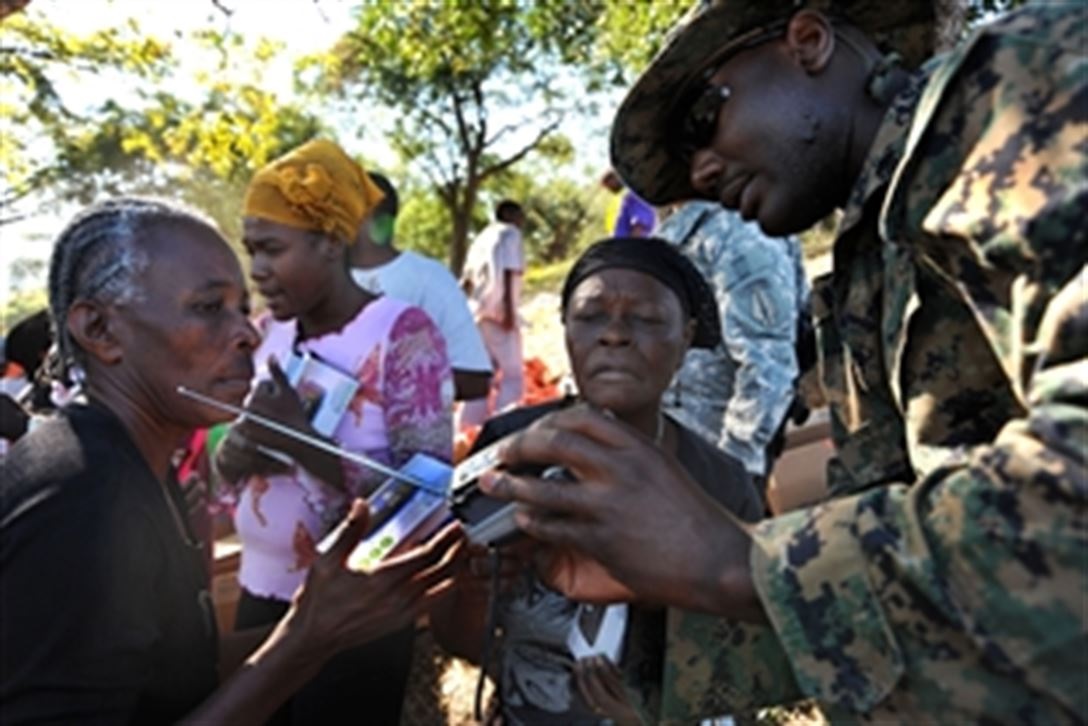
U.S. Marine shows Haitian man how to operate crank radio. US Dept. of Defense photo.

U.S. Marine shows Haitian man how to operate crank radio. US Dept. of Defense photo.

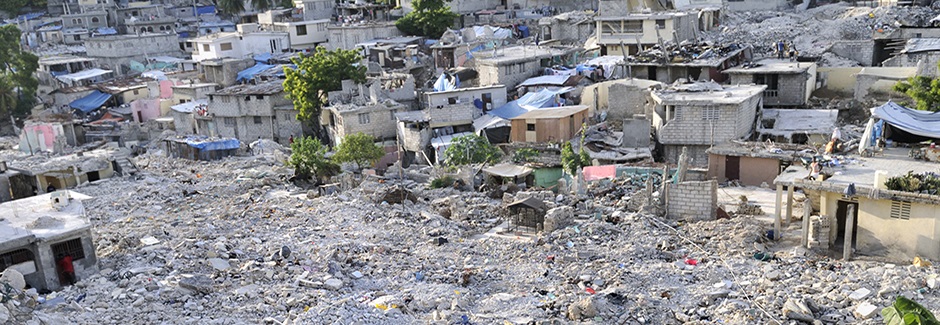
Today marks the 10th anniversary of the catastrophic magnitude 7 earthquake that hit Haiti on January 12, 2010. The epicenter of the quake was about 25 kilometers west of the capital, Port-au-Prince, where tens of thousands died.

The actual death count will never be known, but estimates range from 100,000 to 316,000. The morgues were overwhelmed by the sheer number of bodies, and most were buried in mass graves.

Over a quarter of a million residences, along with 30,000 commercial buildings, had collapsed or were severely damaged. Not surprisingly, the country’s communications infrastructure was severely damaged. The public telephone system was totally unavailable, and cellular service was severely impacted.

A bright spot in communications was radio broadcasting. The Port-au-Prince region was served by 50 radio stations prior to the earthquake.  All but one of these, Radio Signal FM, were initially knocked off the air. Within a week, however, about 20 stations, including Radio Lumière, a Christian station serving most of the country, were back on the air. Radio Lumière’s staff moved the station’s equipment to a tent outside its main building in order to resume broadcasting. Also, within about a week, a French community broadcasting association had a 300 watt transmitter flown in from Paris.

Additional broadcasting came from foreign countries. The U.S. Air Force Commando Solo aircraft was broadcasting Voice of America programming in Haitian Creole, which was also transmitted from the VOA’s 1180 kHz transmitter in Marathon, Florida. The BBC World Service also launched a Creole service with information about aid and rescue programs, as well as messages from people trying to locate family members. Initially, broadcasts were on shortwave, but were later relayed by FM relays from stations in Haiti as they came on the air.

One of the first voices on the air came from station 4VEH in Cap-Haïtien. That city, in the north of Haiti, was largely unaffected by the quake, and broadcasts continued on its AM station and FM network. The 10,000 watt AM signal on 840 kHz, would be listenable 136 kilometers away in Port-au-Prince. But to make sure, the station quickly made arrangements with Trans World Radio (TWR) on Bonaire to simulcast the 4VEH program. While the distance covered was over 800 kilometers, the entire path is over saltwater, and TWR’s then-100,000 watt 800 kHz signal (it’s now 400,000) watts was beamed directly toward Haiti. It put in a formidable signal which could easily be picked up on even the most inexpensive AM radio. The Creole program from the Christian radio station shared both practical help and a message of hope.

For those without radios in Haiti, a number of groups distributed solar or crank radios in Port-au-Prince. Among these was the U.S. military, which distributed 50,000 radios in the city.

This story serves as a reminder of the importance of having a battery-operated radio available in case of disaster. Even though the cellular network is down, and there is devastation for many miles in every direction, radio signals can be picked up, even with an inexpensive radio, for hundreds of miles. A battery-operated radio is a minimum requirement, as long as you have plenty of batteries. A radio that can be operated with a hand crank and/or solar power is an even better option. Shown below are some inexpensive options.

Battery Radios

Solar and/or Crank Radios

U.S. CDC image.U.S. CDC image.

References


Note: Some links on this page are affiliate links, meaning that this site earns a small commission if you purchase after clicking on the link.

Car Winter Survival Kit

CarSurvivalKitWith winter soon upon us, I decided it was time to make sure the cars were equipped with survival kits. Other items are important (such as blankets or sleeping bags, extra winter clothing, tools, a shovel, sand, and probably others), but here are the items that I put in to make sure that the passengers have something to eat if the car gets stuck. This kit contains food and a method of cooking the food.  I made identical kits for each car.

My experience with getting stuck in a blizzard actually involves getting to a hotel in the nick of time, only to find that the hotel didn’t have any food. All of the food here could be heated up in a hotel microwave. Everything here came from either the dollar store or Walmart (with the exception of the pan, which came from Goodwill). Here is a list of the contents, with links to Amazon.

For all of these foods, water is necessary, and I always have some in the car.  But if stranded in winter, it’s probably because the car is stuck in frozen water, meaning that it’s readily available.

Links on this page are affiliate links, meaning that this site gets a small commission if you make a purchase after clicking on the link.


Inexpensive Emergency Stove

With winter coming up, I’m looking for a small emergency stove to toss in the car, and this one looks like it should fit the bill.

The official winter survival advice from the Minnesota Department of Public Safety is “don’t expect to be comfortable–the challenge is to survive until you’re found.”

On the other hand, if you can be as comfortable as possible, it seems to me that’s an added bonus. The state recommends keeping candles in a car survival kit. They can safely be burnt inside a metal coffee can for both light and heat. The best choice is probably a package of inexpensive tea candles.  Most brands reportedly burn for about two hours each, and a couple of them in the bottom of a coffee can can warm up a cold car surprisingly well.

You could cook over candles, especially if you just needed to warm something up, or to melt snow. But an improvised stove made out of tin cans isn’t the most convenient setup. To make the ordeal of being stranded in a blizzard a bit more pleasant, a small emergency stove like the one shown above would be ideal. The great advantage of this stove is that it comes with fuel in the form of 24 fuel tablets. While the brand name isn’t given, they appear to be the similar to Esbit fuel tablets.  Thus, you can just toss the package in the car, with the knowledge that it’s ready to go, complete with fuel.  Any metal container, such as the coffee can the candles are stored in, could be used as a cooking pot.  (The pan shown in the picture on the box is not included with the stove.)  You might consider getting a cheap pan from the dollar store or an inexpensive aluminum mess kit.

Each tablet provides enough fuel to boil a few cups of water, so the 24 provided tablets are probably enough to ride out the entire crisis. But if more fuel is needed, you could use your candles o ra gel fuel such as Sterno or Fancy Heat (Fancy Heat is available at Dollar Tree,
so you can stock up economically).  Whatever fuel you’re using, crack open a window if using it in the car.  Outside of the car, you can also use sticks or even paper for fuel.

If you’re ever stranded in your car in the winter, then it’s undoubtedly because of snow.  The good news is that you don’t have to worry about water for drinking or cooking.  After all, frozen water is what your car got stuck in in the first place.  With this stove, you can easily melt it.  Canned goods wouldn’t store particularly well in your car in winter, but with a stove such as this one, you have the opportunity to cook many inexpensive dehydrated foods and beverages such as ramen noodles, instant soup, instant oatmeal, hot chocolate, or instant coffee.  In fact, even in lesser emergencies, such as forgetting your lunch money at home, a stove such as this would allow you to cook a pleasant lunch at a city park or highway rest area.

The link below shows the current price for this stove on Amazon.  As you can see, the price is quite reasonable, given that it comes complete with fuel.

Of course, for all of these ideas, don’t forget matches.  Wooden matches are probably the best, since they’re easier to use if your hands are cold. But in a pinch, book matches will serve the purpose.  Keep in mind that a lighter will stop working at extremely low temperatures.  Whichever kind of matches you get, it’s probably a good idea to store them in a ziplock bag to make sure they’re dry when needed.

See this link for more ideas for your car winter survival kit.

Some links on this page are affiliate links, meaning that this site gets a small commission if you buy after clicking on the links.