Author Archives: clem.law@usa.net

1927 Soviet Fahnestock Clips

1927DecRadioL

1927DecRadioL2Ninety years ago, the Fahnestock clip was well established in the free world as a convenient method of making electrical connections. They were readily available wherever radio and electrical supplies were sold.

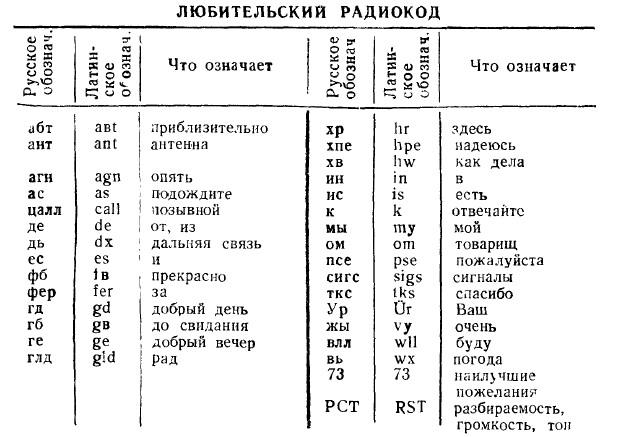
Soviet amateurs, on the other hand, were forced to use a bit more ingenuity, as shown from this issue, 1927 issue number 6 of Радио любитель (Radio Amateur) magazine. The article, by Engineer V.D. Romanov, shows how to make Fahnestock clips! While I can’t read the text, the diagrams are quite clear. The clips can be cut from sheet metal. Or for the truly enterprising Soviet ham, the article shows how to fabricate makeshift Fahnestock clips from wire!

There will undoubtedly come a day when the Fahnestock clip becomes unobtainium. When that happens, you’ll be able to make your own. In the meantime, you can get them at Amazon:


1917 CW Crystal Set

1917DecWirelessAgeA hundred years ago this month, the December 1917 issue of Wireless Age showed this method of received undamped waves (CW) with a crystal detector.  Unlike spark signals, the CW signals had no audio modulation.  Therefore, with just a crystal set, you can’t hear anything.

The conventional method to receive CW signals is with a receiver that has a BFO, an oscillator that mixes with the incoming signal.  When the CW signal is transmitted, you hear a tone which is the difference between the frequencies of the two signals.

This circuit uses a rotating variable condenser in the circuit.  The article includes alternate placements, but the idea is the same.  An audio frequency (the same as the frequency of the motor’s rotation) is imposed on the signal, and the code can be copied in the headphone.  The pitch you hear is equal to the frequency at which the capacitor is rotating.

We previously showed a similar idea from 1943 in this post.  In this circuit, CW can be copies by interrupting the circuit with a motor driving a commutator.


1937 Two-Tube Broadcast Set

1937DecPM1

1937DecPM2Eighty years ago, the December 1937 issue of Popular Mechanics carried the plans for this simple two-tube portable broadcast set. It featured two type 30 tubes, one serving as regenerative detector and the other as audio amplifier to drive a set of headphones. The set could be taken on hikes or bike rides or to the ball game. And since the set ran a long time on a set of batteries, it was said to have a definite value in flood, hurricane, or earthquake areas.

The 22.5 volt B battery would last about six months. The filaments were powered by two flashlight batteries, which would be good for about five hours at a cost of only a dime each.

1937DecPM3


1958 Boys’ Life Radio Contest

1957DecBLSixty years ago this month, the December 1957 issue of Boys’ Life announced the 1958 running of the magazine’s radio contest for hams and SWL’s.

According to the magazine, over 300 Scouts and Explorers at the 1957 Jamboree had been licensed hams, and most of them got their start with one of the BL radio contests.

The 1958 running had two classes for SWL’s. Class A entries used manufactured receivers or converted surplus sets. Class B was for scouts using homemade receivers they made themselves.

There was also a class for licensed hams, but the magazine noted that licensed hams were never eligible for prizes for winning contests. Hams were to call CQ BSA, and exchanged message number, RST, rank in scouting, and BSA region or country.  For the SWL categories, prizes ranged from ARRL memberships to receivers.

This year, the SWL contest was based entirely on the number of US and Canadian regions logged, number of states, and number of countries. Once a station in a particular region, state, or country was logged, there was no reason to log another. There were bonus points for logging all regions and all states, and any station qualified, whether it was broadcast, TV, FM, code, armed forces, police, amateur, or other.

The log had to include a 25 word written statement of either “I like short-wave radio because…” or “I’d like to get an amateur radio operator’s license because….”

Logs were to be signed by an adult certifying that the scout logged the stations by himself, alone.


Radio Electronics in Our Life by B.V. Fomin, 1957

FominRadioelektronikaIt’s unclear exactly what’s going on in this picture, although there’s little doubt that the message being sent is critical to the success of the current five-year plan, and these comrades are making sure that the message gets through.

This is the cover of an intriguing little book entitled “Radio Electronics in Our Life”  by B.V. Fomin, published in Moscow in 1957 as part of a large series entitled the Popular Scientific Library.  This series, covering a wide variety of scientific and engineering topics, was published by the State Publishing House of Technical and Theoretical Literature (Гостехиздат; ГИТТЛ).

This and many other fascinating Soviet books and magazines can be found at Журналы СССР.


Peace Light 2017

IMG_20171201_105357

This cartoon marking the 1st anniversary of Pearl Harbor appeared 75 years ago today in the Pittsburgh _____, Dec. 7, 1942.

This cartoon marking the 1st anniversary of Pearl Harbor appeared 75 years ago today in the Pittsburgh Post-Gazette, Dec. 7, 1942.

Pearl Harbor Anniversary

Today marks the 76th anniversary of the attack on Pearl Harbor, December 7, 1941, marking the entry of the United States into World War II.


The Peace Light

As a symbol of peace, we show the flame above, which has been burning for hundreds of years.  This flame was burning throughout the Second World War, the First World War, the U.S. Civil War, and every other war in modern history.  It’s shown here in my living room, but it originates from the Church of the Nativity in Bethlehem, where it has been continuously tended for hundreds of years.  The exact date that some monk struck a flint to ignite it is not known, but it is believed to be about a thousand years ago.

Each year during the Advent season, it is transported from Bethlehem to Europe and North America, courtesy of Austrian Airlines.  This year, it was brought to Kennedy Airport on November 25.  From there, volunteers fan out across the country to distribute the flame.  Most of these are connected with Scouting in some way, and Scouts and Guides in Europe participate in similar activities.

As I did last year, I played a small part in the distribution.  Prior to my getting it, the flame traveled to Indianapolis, and then to Chicago.  From there, it went to Des Moines, and I met an Iowa Scouter in Albert Lea, Minnesota, to transfer it to St. Paul.  From me, it was picked up by others who took it to Wisconsin and North Dakota.  From there, it will travel to Winnipeg, and probably to other points.  Meanwhile, others are taking it to other parts of the United States, Canada, and Mexico.

You can read more about the Peace Light at the U.S. Peace Light website or the Peace Light North America Facebook group.  If you’re close to St. Paul, Minnesota, and would like to receive the Peacelight, feel free to contact me and we can make arrangements.  In other areas, you can find a local source on the Facebook page.


Lanterns

One common question is how the Peace Light travels on two international flights from Israel to Austria, and then to North America.  The flame is transported safely in an antique blastproof miner’s lamp.  On the ground, it is walked through customs by airline employees to the airport chapel.

1916JunBL


On the ground, the most common way to transport the light is with a lantern such as the one at the top of the page.  These are rarely used these days, since mantle type lanterns provide considerably more light.  But in the 19th century, the cold-draft kerosene lantern was something of a revolution in lighting, since it provides a fairly bright flame and is also relatively safe, since it will self-extinguish if tipped over.


A good history of the lantern can be found at this site.  Prior to such lanterns, the best available option for camp lighting was the candle lantern.  As the name implies, it was just a ventilated enclosure in which a candle was inserted.


The ad at the left, from the June 1916 issue of Boys’ Life, shows both types of lamps.  The candle lantern here is known as a “Stonebridge” lantern, since it was manufactured by a company of that name, and replicas have been made over the years.  Interestingly,  in addition to providing more light, the kerosene lantern is actually less expensive.  Candle lanterns start at $1.50, but the cold-blast lantern is only 75 cents.


Both types of lanterns are readily available today.  The cold-blast kerosene lantern can be found at Amazon at any of the following links:


You can also obtain the lantern at WalMart with this link or this link.  The fuel is available at this link.  You can order the lanterns and fuel online with these links, and then pick them up the same day at the store.

And for those who want to be even more retro in their camp lighting, these candle lanterns are also available at Amazon:

The replica Stonebridge lantern shown below is very similar, or possibly identical, to the 1916 candle lantern shown in the ad:

How to Transport the Peace Light

If you need to transport the flame only a short distance, one good option is to use a votive candle at the bottom of a coffee can. For longer distances, I place the lanterns at the top of the page inside a 5 gallon bucket similar to the one shown at the left, wtih sand or cat litter at the bottom.

Carrying it in this manner is very stable, and I have never experienced it tipping.  If it does tip, the entire lantern is safely contained, and the lantern will self-extinguish.

It should be noted that because there is an open flame, you should not refuel the vehicle with the Peace Light in the car.  Fill up your gas tank before picking up the light.  If you need to buy gas before you reach your destination, it will be necessary to leave the lantern at a safe location before driving to the pumps.  And while the combustion of these lanterns is very complete, it is a good idea to keep a window of the car open slightly.

Plans for a more a elaborate carrier are also available at the Peacelight.org site.


Patrick Vincent Coleman, 1872 – 1917

Vince Coleman. Wikipedia photo.

Today marks the 100th anniversary of the Halifax Explosion, December 6, 1917.  We remember it as a great act of heroism by a telegrapher, train dispatcher Vince Coleman.

Tall cloud of smoke rising over the water

Only known photograph of the blast, probably taken about 15 seconds after detonation from about one mile away. Wikipedia photo.

The 1917 explosion in Halifax harbor killed approximately 2000 people and injured 9000 more. It represented the largest man-made explosion prior to the development of nuclear weapons, and released the equivalent of 2.9 kilotons of TNT.

It was the result of a collision between the SS Mont-Blanc, a French freighter carrying high explosives, with the Norwegian vessel SS IMO. The Imo was en route to New York to take on relief supplies for Belgium. The ship was given clearance to leave the harbor on December 5, but had been delayed due to fueling. By the time the ship had taken on fuel, the submarine nets were up for the night, and the ship had to wait.

The Mont-Blanc had arrived from New York the night of December 5 and was heavily loaded with explosives. The ship intended to join a convoy, but was also arrived too late to enter the harbor due to the submarine nets.

When the nets were lowered the next morning, the ships passed in a strait called the Narrows. At 8:45 AM, the two ships collided. While damage was not severe, barrels of Benzol broke open and flooded the hold. Sparks ignited the vapors, and a fire started at the water line. As the crew of the Mont-Blanc frantically boarded their lifeboats, they shouted warnings that the ship was about to explode.

At 9:04, the ship exploded, with a cloud of smoke rising over 11,000 feet. The shock wave was felt over 129 miles away, and an area of over 400 acres was completely destroyed. A 50-foot tsunami hit Halifax.

Panoramic view over traintracks to destroyed cityscape

Halifax ruins. Wikipedia photo.

Vince Coleman, 45, was a dispatcher for the Canadian Government Railways. He, along with Chief Clerk William Lovett, was working at the Richmond station, only a few hundred feet from the pier. He was responsible for controlling trains along the main line into Halifax.

Minutes after the fire started, a sailor had been rushed ashore to warn people of the ship’s cargo. The men in the station began to rush out of the building, but Coleman hurried back to send a warning message to the other stations down the line. In particular, Coleman was aware that a passenger train was due, and that its path would take it right to the explosion. He sent the following message to all of the other stations down the line:

HOLD UP THE TRAIN. AMMUNITION SHIP AFIRE IN HARBOR MAKING FOR PIER 6 AND WILL EXPLODE. GUESS THIS WILL BE MY LAST MESSAGE. GOOD-BYE BOYS.

The message was heeded. The passenger train, with 300 aboard, was halted at Rockingham station, about 4 miles from the downtown terminal. It is almost certain the Coleman’s message saved the lives of those 300 passengers. In addition, the message, which was received by numerous other stations, along with the line then going silent, gave news of what had happened, allowing relief supplies to be immediately sent to Halifax.

This was critical, since a winter storm soon delayed further relief supplies. The passengers and crew of the first arriving trains began rendering assistance, but the first dedicated relief train was udnerway by 10:00 AM, and arrived by noon.

The next day, Halifax was blanketed by 16 inches of snow, delaying other relief trains from Canada and the United States. Coleman’s heroic message ensured that relief was on the way while there was still time to save hundreds of lives.

This short video dramatizes Coleman’s heroism:

It also features in the 2007 miniseries “Shattered City: The Halifax Explosion”, which is available on Amazon.

References


Some links on this site are affiliate links, meaning this site earns a small commission if you make a purchase.


Wartime Radio Log

1942Dec5RadioGuideSeventy-five years ago today, the December 5, 1942, issue of Radio Guide included this listing of all of the broadcast stations in the U.S., Canada, and Mexico.

Numerous other such listings are available, most of which can be found at AmericanRadioHistory.com.  This particular listing is handy since it takes up only two pages, and provides an interesting snapshot of the broadcast band during the war years.

An alphabetical listing by call letters can be found in the December 19 issue.


1917 Stewart Phonograph

1917DecTalkingMachineThis ad directed at dealers appeared a hundred years ago this month in the December 1917 issue of Talking Machine magazine.  It’s for a relatively inexpensive compact phonograph from the Stewart Phonograph Corp. of 327 Wells Street, Chicago.

According to the ad, thousands of them would “be sent to the boys in the Army and Navy.  It is most suitable as a gift for Uncle Sam’s fighting men.  It is easy to see that large numbers will be sold.”  Of course, those fighting men would need the optional carrying case, turning it into the “Military Special” for a total price of $11.

It turns out that the Steward Phonograph Corporation ceased business in the United States in about 1920, but most of the assets were sold to a Canadian subsidiary, which continued production of an identical unit.  It also turns out that the proprietor of the company was John Stewart, who later became one of the principals of Stewart-Warner radio.

References


Treasure Trove of Ten One-Tube Radios: 1942

1942DecemberRadioCraft0Seventy-five years ago this month, Hugo Gernsback and the other editors of Radio Craft magazine undoubtedly anticipate the popularity of OneTubeRadio.com, since the December 1942 issue was packed with no less than ten different one tube radios!

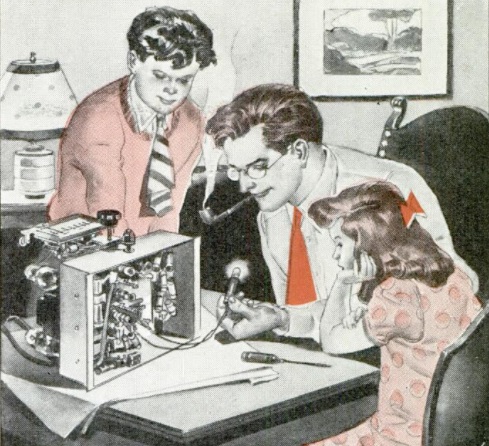
1942DecemberRadioCraft1The first is the simple set being operated by the young man shown above.   This set, the “easy one-tuber” was a broadcast set billed as being for any beginner: “Any schoolboy can build this unique one-tube set at a trifling cost. It is an easy little set to make and will bring in plenty of stations on the headphones.”

"Easy One Tuber" schematic.

“Easy One Tuber” schematic.

This set, which used a type 30 triode, was built in the venerable cigar box, and procurement of this chassis could be done at no cost: “Any cigar store will have an empty one to give you–or perhaps your father will hurry up and finish his latest box of cigars, if you tell him that you are about to build something really useful for once!”

The tuning coil was tapped for variable selectivity. The article noted that the lower the clip was placed on the coil, the sharper the tuning would be. But if carried too far, volume would be reduced.

Regernation was adjusted by means of a variable tickler coil mounted inside the tuning coil. It could be rotated to place the set just on the verge of oscillation for maximum sensitivity.

The article recommended an indoor aerial wire of about 40 feet, but noted that stronger signals would be picked up with a longer outdoor aerial.

One-tube shortwave set.

One-tube shortwave set.

For the slightly more advanced student, the magazine next carried the “beginner’s one-tube short-wave set” shown at the top of this page and at the left, designed by Francis R. Harris, who noted that “broadcast wavelengths and the programs they carry are very interesting, but the real thrill of radio lies in the short wavelengths–the higher frequencies–on which it is possible to pick up programs of all kinds from the very ends of the earth!”

The set was “the simplest and the best breadboard style that we have yet constructed. It is designed for the absolute beginner who is neither radio man nor mechanic, and yet it will equal or better the performance of many more elaborate lay-outs.”

The use of plug-in coils allowed the set to tune 545 to 16 meters (550 kHz to 18 MHz). The only tools required were screwdrivers, diagonal cutters, long-nose pliers, wood tools, and a soldering iron.

The set used a type 33 pentode. While that tube was designed for AF applications, it apparently functioned well as a detector up to the promised 18 MHz.

1942DecemberRadioCraft3

The article recommended a 50 foot outdoor antenna, fed into the house with a porcelain standoff. “Don’t under any circumstances, use one of those flat contraptions that is supposed to go under the window.”

MorganReceiverThis set probably looks vaguely familiar to many readers.  While the circuit is not identical, the general layout and construction philosophy is very similar to Alfred Powell Morgan‘s one-tube receiver from the Boy’s First Book of Radio and Electronics.  Many radio hobbyists got their start after discovering this book in the elementary school library.  Morgan’s set is shown at the left, and has an uncanny resemblance to the 1942 model.

If that wasn’t enough for one tube radio fans, the magazine went further and included eight more “famous 1-tube circuits” shown below.

1942DecemberRadioCraft5

The seven shown on the page above are first the “Ultra-Audion,” “undoubtedly the most publicized circuit in radio,” the genesis of the regenerative circuit, which would tune all way down to 30,000 meters with appropriate coils and one tuning condenser.

The “Ambassador” was “without question the receiver that longest held the spotlight of popular interest.”

The “Interflex” was a design of Hugo Gernsback’s creation, using a crystal detector with one stage of audio amplification, with no need for transformer.

The “Megadyne” was said to be “of special interest to technicians,” and also combined a crystal detector with one stage of audio amplification.

The “Harkness Reflex” put the single tube to work twice, first as detector, and also as audio amplifier.

The “Solodyne” had been imported from Egnland, and was originally billed as “batteryless.” However, it simply combined the A and B batteries.

1942DecemberRadioCraft6Finally, shown here on the continuation page is the “Oscillodyne,” a super-regenerative circuit.

In addition to all of these one-tube sets, the issue also contains some two-tube receivers, as well as a few one-tube phono oscillators.