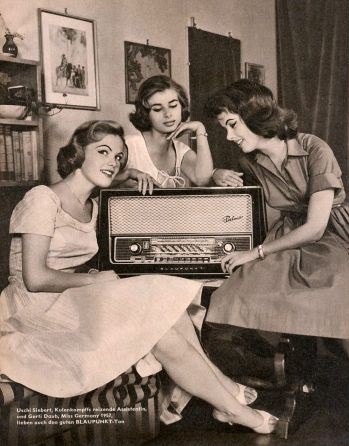
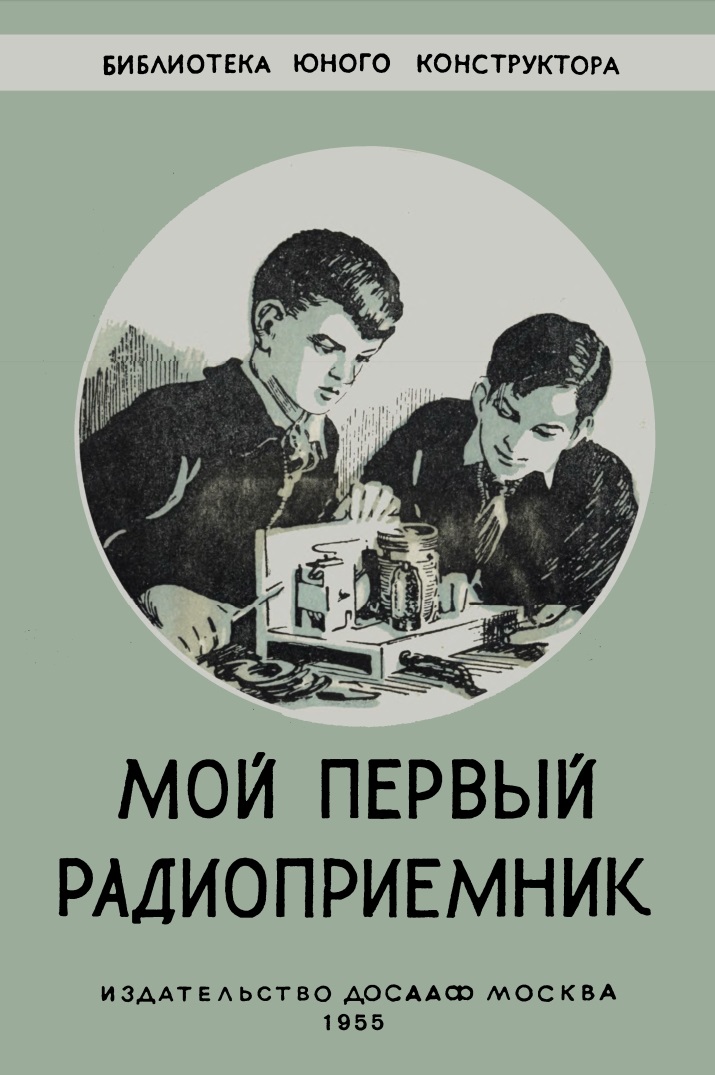
 The young comrades shown here are constructing their first radio receiver, according to plans contained in the 1955 Soviet book, Мой первый радиоприёмник (My First Radio Receiver), by V. Borisov , part of the series Библиотека юного конструктора (Library of the young designer), a series of small books published between 1937 and 1964 showing various construction projects, many related to radio.
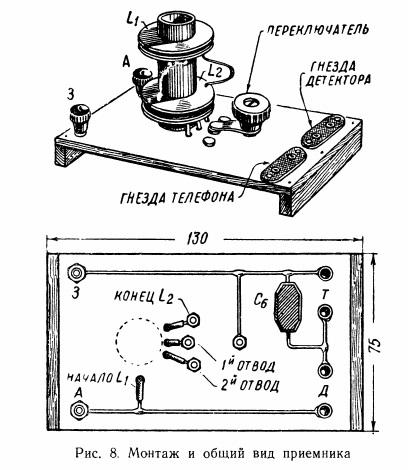
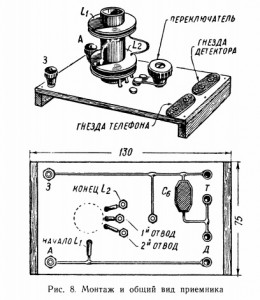 The first set in the book, shown here, is not immediately recognizable, but it is a simple crystal set, with a tuning range of 200 to 2000 meters (150 – 1500 kHz), to cover the longwave and mediumwave broadcast bands.
The largest component is the dual coil, which appears to be a manufactured part. The two binding posts on the left are for the antenna (A) and ground (3). The knob in the center is a switch for selecting taps on the coil. The actual detector is not shown. It plugs into the terminals at the top right of the top drawing. The headphones plug in to the other set of terminals.
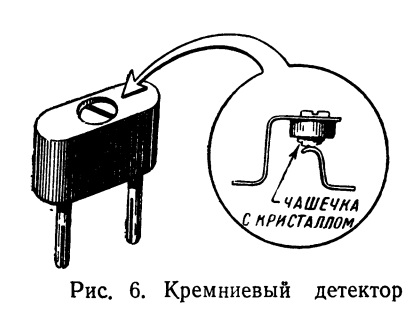
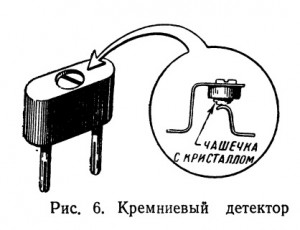
The detector, shown below is a manufacture fixed detector.
The book’s second crystal set, shown below, is slightly more advanced, and is shown below. This set also uses the same fixed crystal, and includes a variometer, which also appears to be a manufactured unit that the builder purchases.
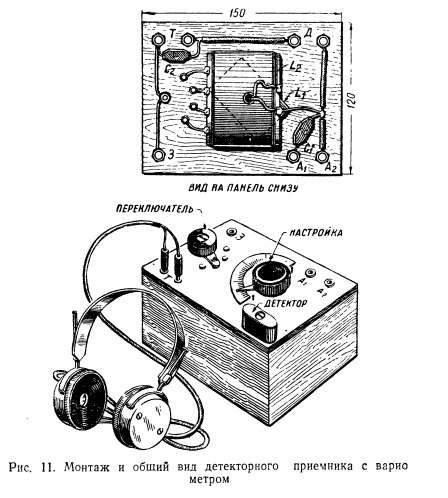
The final crystal set is shown below. It uses the same fixed detector, and includes a variable capacitor for tuning. The fixed coil in this one appears to be much simpler than the ones employed in the other set, but there don’t appear to be any instructions for winding it. So I assume that this is also an item that the builder simply purchases.

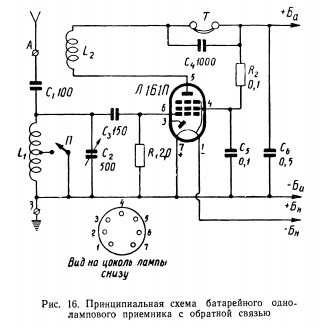
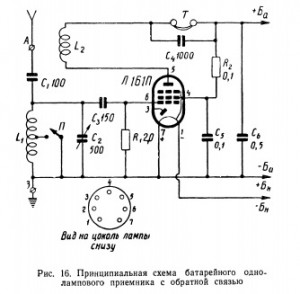
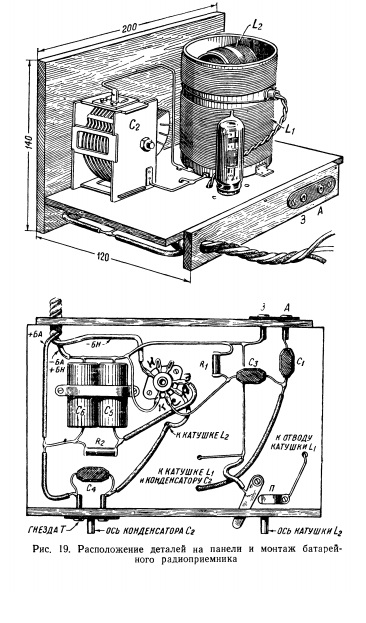 After showing these crystal set designs, the book moves on to some simple vacuum tube receivers. The basic one-tube receiver is shown at left. Since I can’t read much of the text, it’s a little unclear exactly which circuit is shown here. The text includes a number of different schematics, along with different pictorial diagrams for the tube socket. I assume this is because different builders might get their hands on different tubes, and the diagrams are shown for various common tube types. A representative example is shown below, the circuit diagram for use with a 1Б1П tube.
 Since B batteries might be hard to come by for struggling soviet radio builders, the book also includes plans for a power supply, using a transformer and 5Ц4С dual rectifier (the equivalent of a Western 5Z4G).
The book also contains plans (but unfortunately, no picture of the completed set) for a two-tube regenerative receiver with one stage of audio amplification to drive the speaker. This set is presented after the rather complex power supply is shown, so I assume it’s a project for the advanced student.
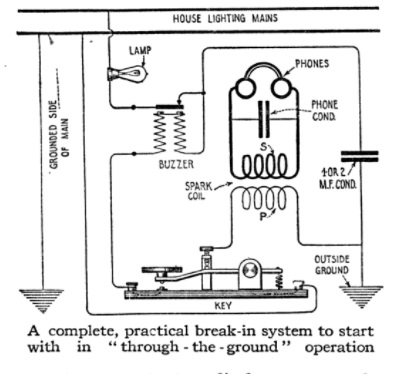
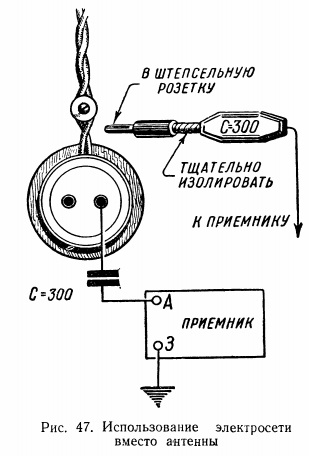
The book shows how to set up an antenna, and shows diagrams of nice outdoor antennas, complete with lightning switches, passthroughs to get them into the house, and grounds. But for those who didn’t want to go to all that bother, it also shows the self-explanatory method shown below for using the house wiring as an antenna. The same idea was featured on this side of the iron curtain, as can be seen at this post. Both great minds had the same idea: Connect a radio to the house wiring, using a capacitor to let the RF through, but keep the high voltage out. It’s a great idea unless the capacitor develops a short, in which case the headphones on your head suddenly become energized with the household current.
Many an American kid got his start in radio when he discovered Alfred Morgan’s book in the elementary school library. I wouldn’t be surprised if there were Soviet kids who did just the same thing when they discovered Borisov’s book.
This book, and thousands of other old Soviet books and magazines, can be found at can be found at Журналы СССР. Even if you can’t read the text, the site is worth exploring.