Author Archives: clem.law@usa.net

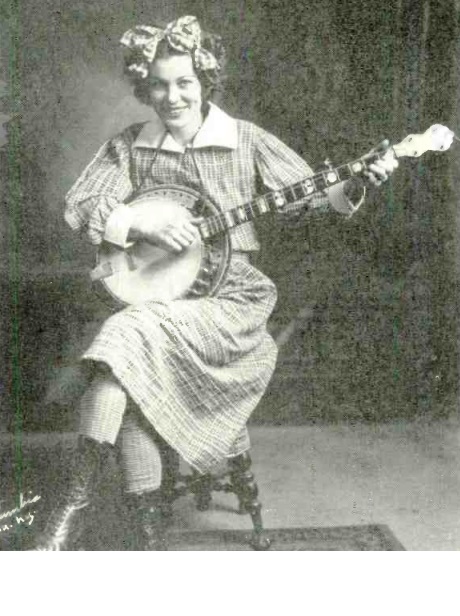
“Cousin Em” WHAS Louisville 1938

1938NovRuralRadioI’m sure that most of our readers agree that you can’t have too much banjo music on the air. In 1938, WHAS Louisville did things right by carrying “Cousin Emmy”, as shown here in the November 1938 issue of Rural Radio.

The day was guaranteed to get off to a good start, since the program was carried at 6:45 AM, six days a week.


More 1928 Television

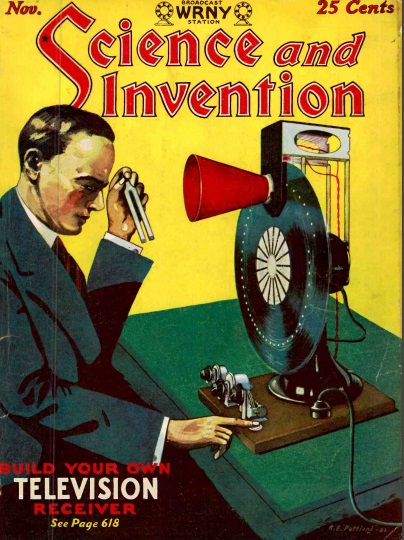
1928NovSciInvYesterday, we showed how Hugo Gernsback’s magazine Radio News was promoting television.  And the cover of his Science and Invention magazine for November 1928 was also engaged in the enthusiasm, with plans for the set shown here.

1928NovSciInv2


1928 Television

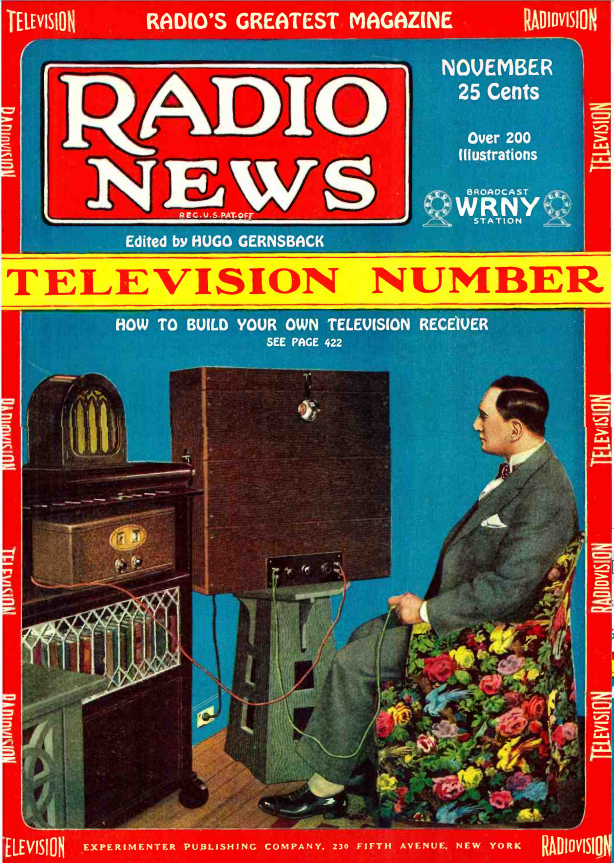
1928NovRadioNewsNinety years ago, it was clear that television was going to be the next big thing, and the November 1928 issue of Radio News contained all of the information needed to get started.

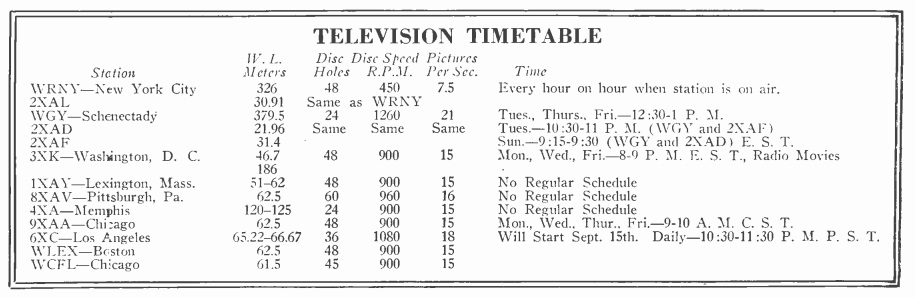
In addition to showing the plans for the mechanical set shown here, the magazine carried the television schedule of the magazine’s flagship station, WRNY.


1928 Homemade Trickle Charger

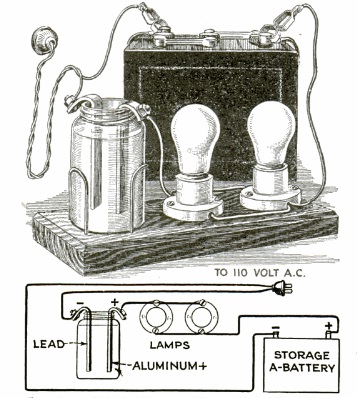
1928NovPMNinety years ago this month, the November 1928 issue of Popular Mechanics showed how to put together this trickle charger for your set’s “A” battery (the one supplying filament voltage, which appears to be 6 volts in this case).

The voltage was dropped over two lamps in parallel, and the current was rectified by a homemade rectifier consisting of a strip of aluminum (as pure as possible) and strip of lead, in a solution of borax. The article noted that the charger wouldn’t do much good for a completely dead battery, but by hooking up the trickle charger when the set was not in use, it would keep it topped off.


How to Solder: 1948

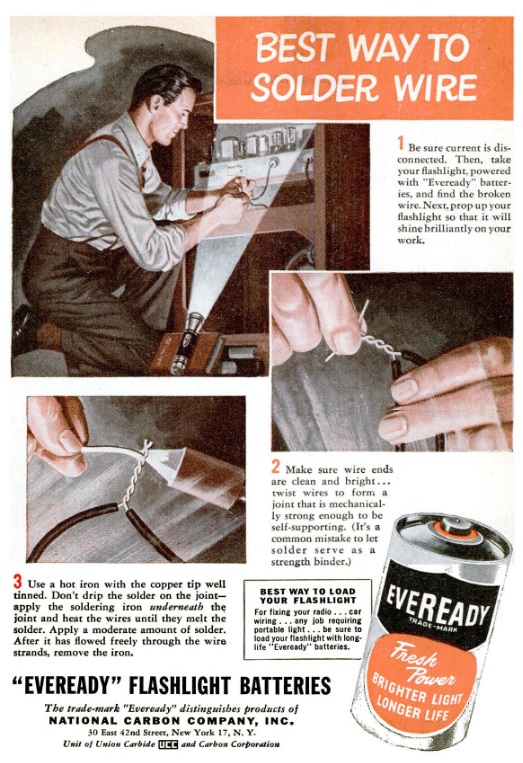
1948OctPMThis tutorial on soldering appeared 70 years ago this month in the November 1948 issue of Popular Mechanics.

It reminds you to keep your trusty Eveready flashlight handy when soldering. First, you can use it to locate the broken wire. Then, you can prop it up to brightly illuminate the work area.


American Basic Scientific Club

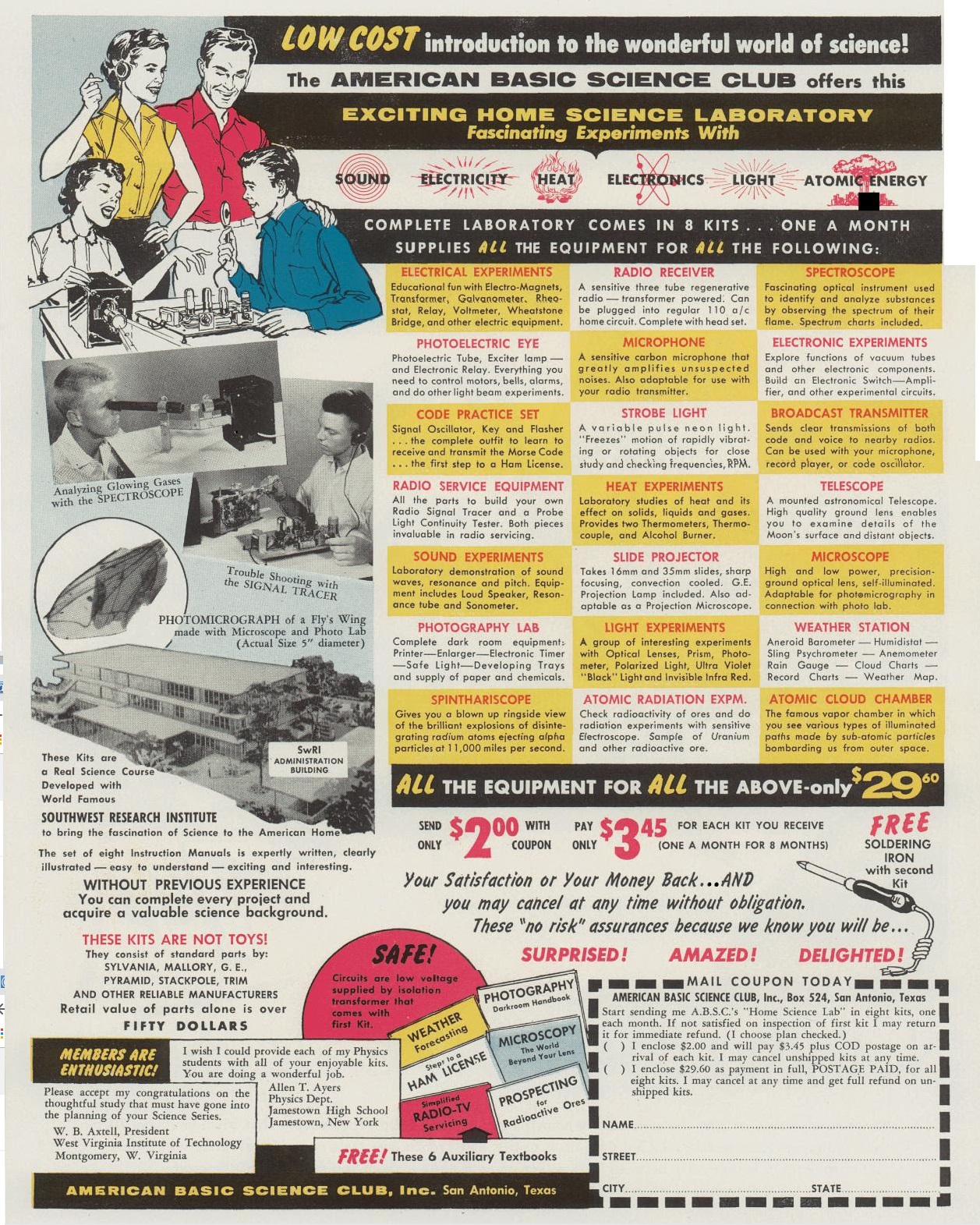
1958NovBL This ad for the American Basic Scientific Club appeared inside the back cover of Boys’ Life 60 years ago this month, November 1958.  For only $3.45 each, the club would send one scientific kit per month for eight months, each containing an interesting project on subject such as radio, meteorology, atomic energy, and photography.  At the end of eight months, the student would have a working regenerative receiver, signal tracer, code practice oscillator, darkroom (including enlarger), and many other scientific instruments.

I don’t recall hearing about this club, which was apparently in decline by the 1970s when I would have been interested.  There’s an interesting history of the club at this website, written by the son of the founder.  And a picture of the three-tube regenerative receiver, along with a partial schematic, can be found at this link.  The set appears to be mounted on a chassis made of a single piece of metal, mounted on the cardboard box in which the kit arrived.  It does have a power transformer, making it relatively safe for the young experimenter.

One of the books included with the kits was a guide to obtaining a ham radio license.  It appears that the receiver could be built for either the AM broadcast band or 80 meters, meaning that it probably made a workable receiver for a new novice.


1938 One Tube Regen

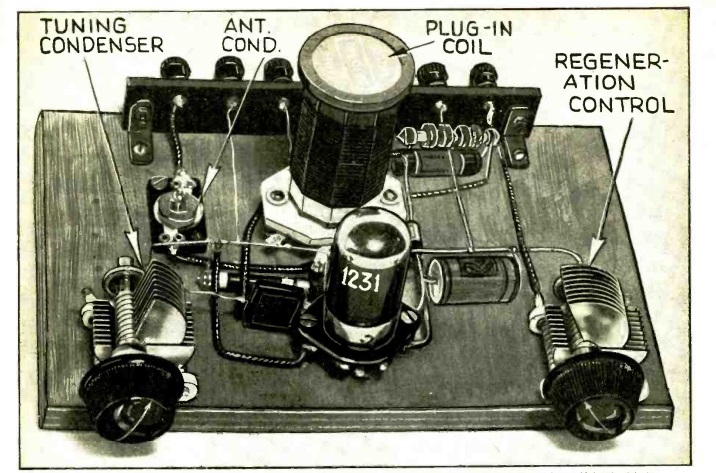
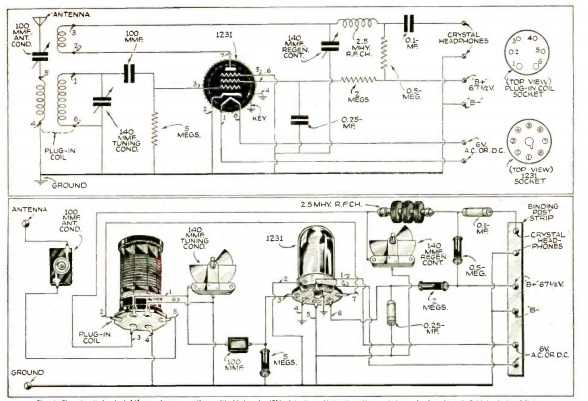
1938NovRadioCraftEighty years ago this month, the November 1938 issue of Radio Craft carried the plans for this handsome one-tube regenerative set built around a type 1231 pentode tube.  The tube appears to be unobtainium today, and was an amplifier tube used in early television circuits. It appears that a more available 7V7 can be substituted.

The author reported that he was tasked, right before deadline, in whipping up a circuit and construction article for a simple receiver, and designed and built the set in a single evening before sitting down to write the article. With just a short wire dangling out the window of a modern steel building, the author reported that both broadcast and shortwave stations began pouring in.

1938NovRadioCraftSchematic