If your travels ever take you through Iowa on Interstate 80, then you owe yourself a stop at West Branch, IA, to visit the museum and the adjoining historic site.
According to the familiar adage, on the Internet, nobody knows you’re a dog. But as shown by the photo above, the general concept predates the Internet by decades. The photo, from the July 1939 issue of Boys’ Life, shows Maud, an English Bulldog, at the controls of W2KBA, the station owned by Vincent S. Barker, who had written a feature about Amateur Radio for the magazine’s April issue.
Maud appears to prefer operating CW, and is busy putting a weak DX station in the log.
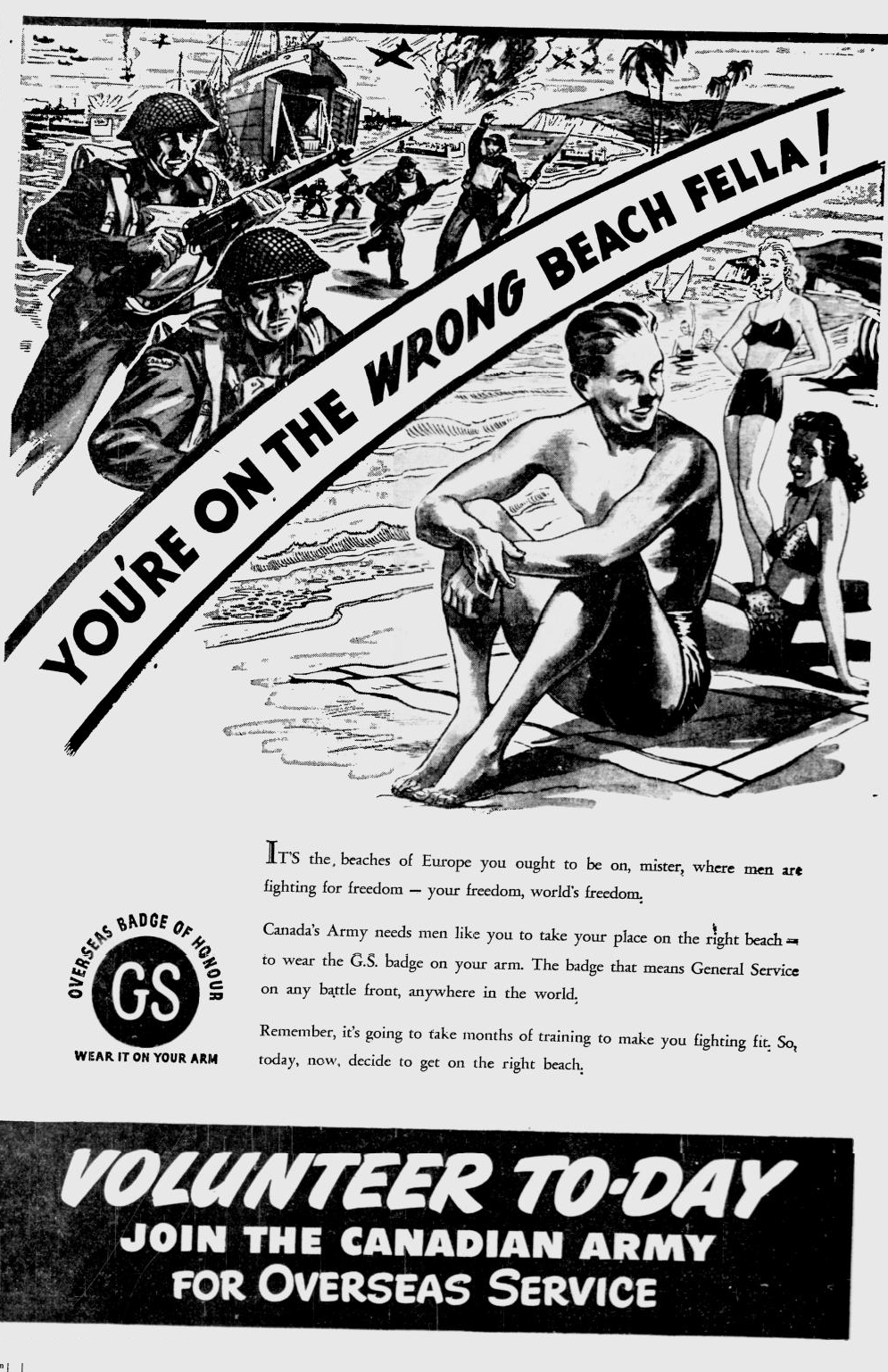
On Dominion Day (now known as Canada Day) 75 years ago today, July 1, 1944, the gentleman on the right is enjoying a nice summer day on a Canadian beach. The gentlemen on the left, however, were busy on Juno Beach in France, and offered a friendly reminder that the first guy was on the wrong beach.
Surprisingly, the guy relaxing on the Canadian beach (with the pretty girls keeping their distance) was probably also a soldier in the Canadian Army!
After Canada entered the War in 1939, the government of Prime Minister Mackenzie King was eager to avoid violent opposition to the draft, as had happened in 1917. Conscription was instituted in 1940, but with the condition that drafted soldiers were to be used only in North America, and not overseas. Other than the Aleutian Islands Campaign, there was little need for combat soldiers to serve in North America. It wasn’t until late 1944 that drafted soldiers were sent overseas. In the meantime, soldiers had to volunteer. This ad is part of the persuasion, which of course also came from their comrades who had volunteered. Those who volunteered for overseas service wore the “GS” (General Service) insignia. Those who didn’t volunteer wore distinctive uniforms with a black necktie, to make sure that nobody got the two groups mixed up.
This means, of course, that the 340 Canadian soldiers who died taking Juno Beach on D-Day
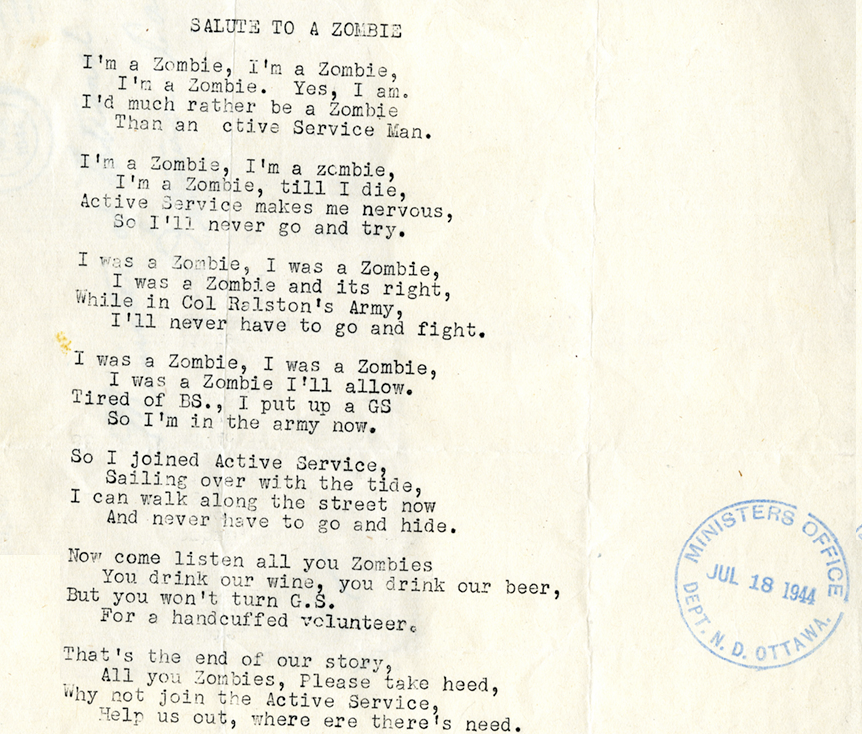
were there only because they volunteered to be there. By 1943, the men who declined to ship out as part of the GS were being referred to as “zombies,” neither alive nor dead. The force came to be called the Zombie Army. The song “Salute to a Zombie” (sung to the tune of Darling Clementine) became popular throughout Canada.
The song probably hasn’t been performed in almost 75 years, which seemed like a shame. A 1943 performance of the song at a Calgary military base caused a riot after General Service men sang it to taunt the zombies. Ironically, the military police who had to break up the fight were probably themselves zombies, as it would be unwise to waste a GS man with that domestic role.We put out a call for volunteers, and loyal reader David Cripe agreed to perform the song. We are confident that tempers have cooled after 75 years, and no riots will ensue.
If you want to economize on paper cups, you generally can’t get much cheaper than the time-honored conical paper cup, the staple of office water coolers. The exact price will vary from day to day, but the link below should show the price for 5000 cups, complete with free shipping.
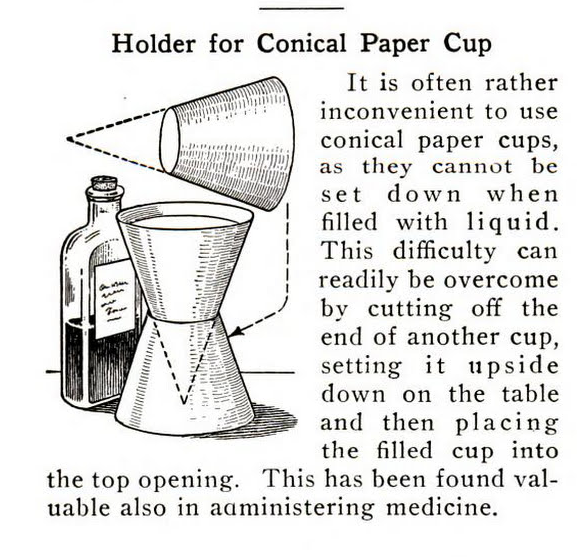
But there is, of course, a problem. You can’t set down a conical paper cup. This problem was solved 90 years ago, as shown in the June 1929 issue of Popular Mechanics. You simply take one of your 5000 cups and clip off the end. Place it on the table upside down, and it serves as an ideal holder for another cup. The holder, of course, can be used many times.
Links on this page are affiliate links, meaning that if you purchase after clicking on them, this site receives a small commission.
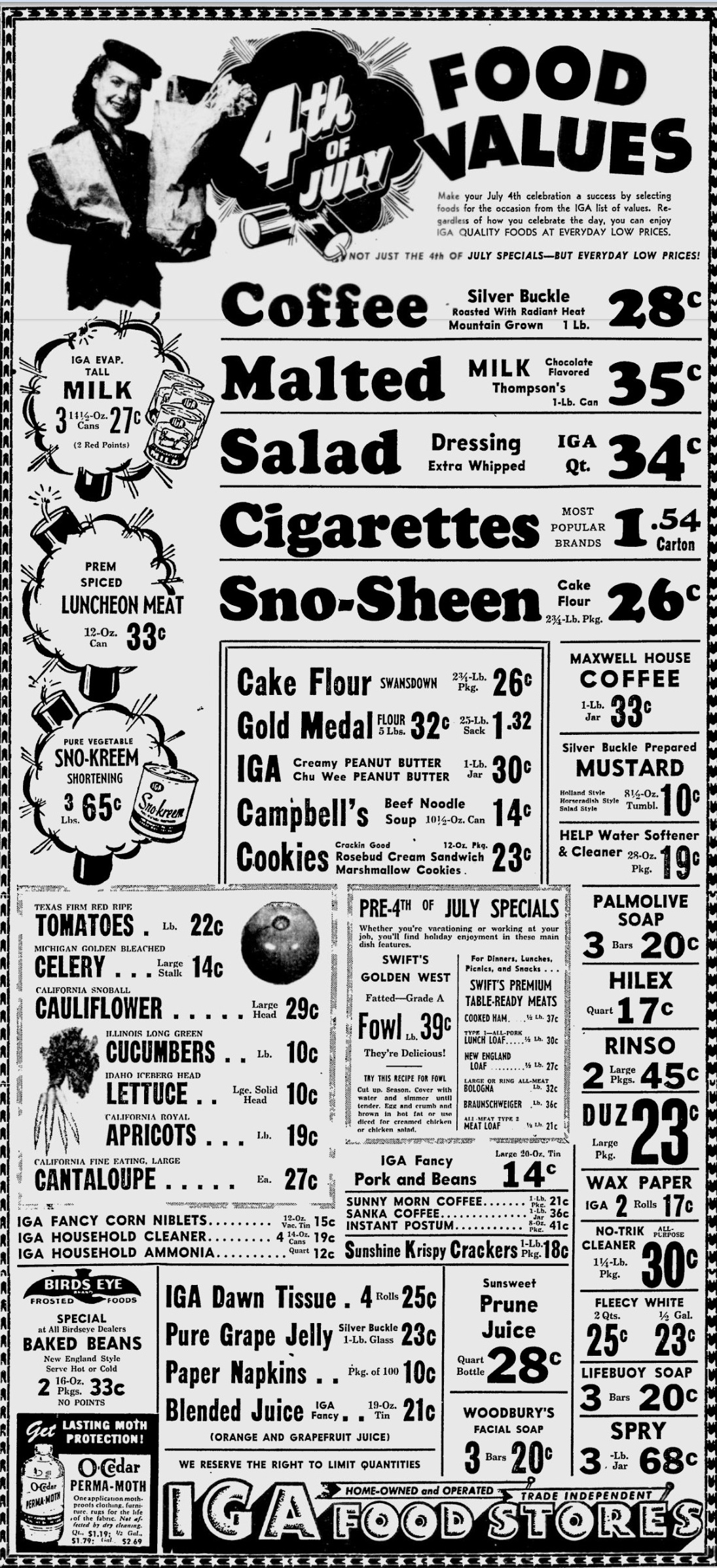
Here’s another snapshot of wartime grocery prices 75 years ago today, June 29, 1944, as shown in this IGA ad in the Milwaukee Journal. In most browsers, you can click on the image, and then click again to enlarge.
If you’re a comparison shopping time traveler, you might be interested in the following links:
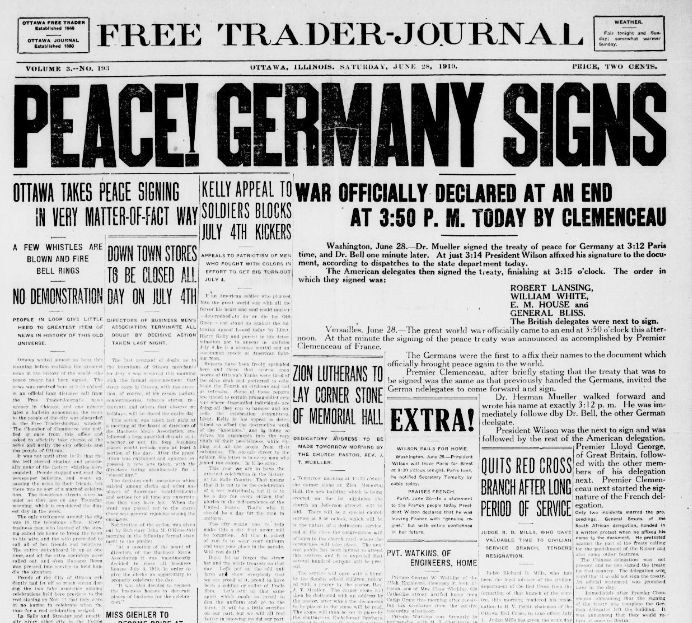
Fighting in the First World War ended on November 11, 1918, with the signing of the Armistice. And one hundred years ago today, the war officially ended with the signing of the Treaty of Versailles. Confident that he had made the world safe for democracy and ended all wars, President Wilson set sail for home.
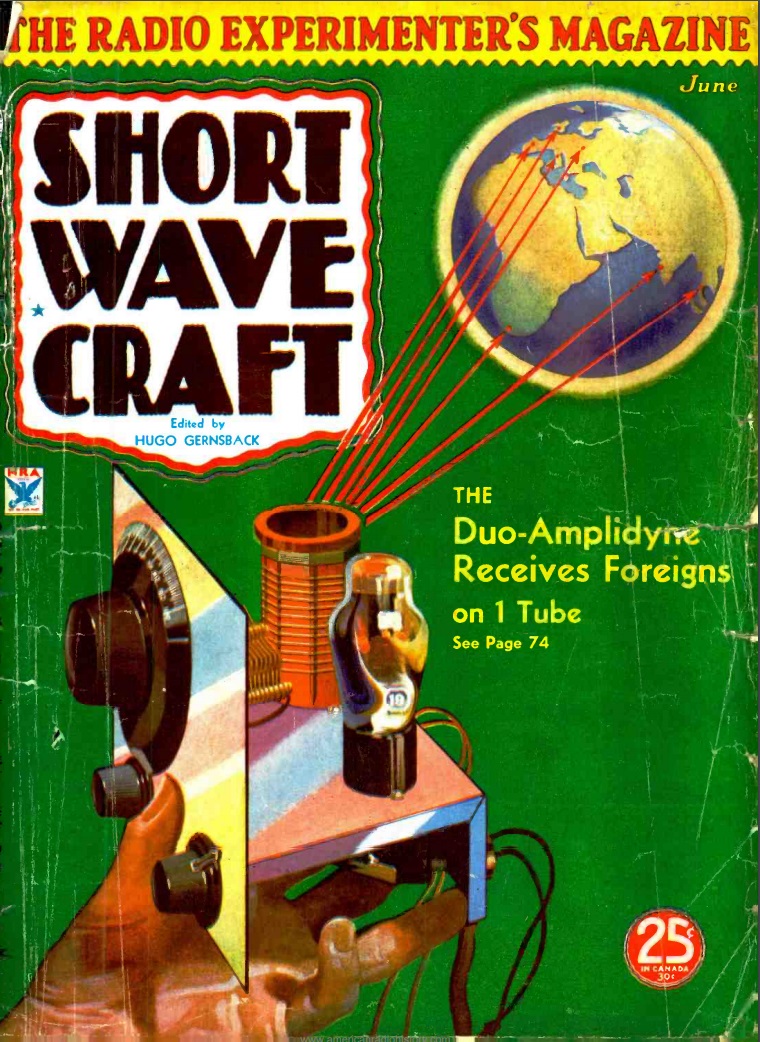
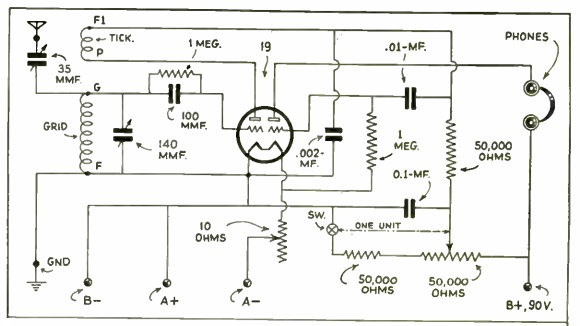
Eighty-five years ago this month, the June 1934 issue of Short Wave Craft showed how to put together this one-tube receiver, which the magazine promised would pull in foreign stations with a ten foot antenna.
The set used a type 19 dual triode, one half of which was detector, with the other half serving as audio amplifier to drive the headphones. The set could be used either as regenerative or superregenerative. This meant that it had excellent sensitivity on AM signals in the superregenerative mode, but it could also be set as a standard regen to copy CW signals.
The author, George W. Shuart, W2AMN, reported that on the first night after building the set, he was pulling in German stations in the heart of downtown Manhattan. He promised that anyone who built the set would be more than pleased with its smooth performance and simplicity.
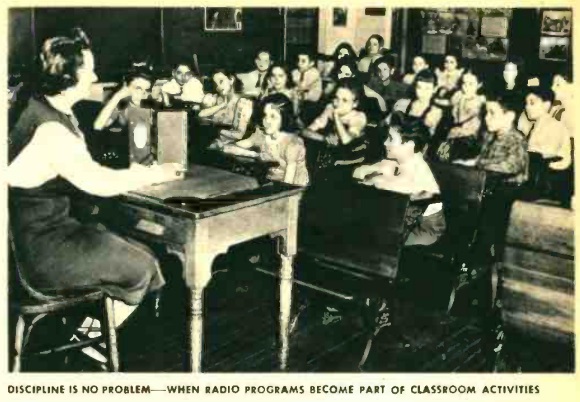
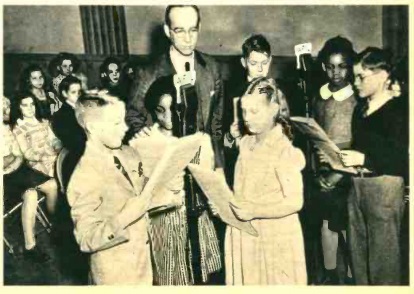
Seventy-five years ago, the over 170,000 students in the Philadelphia schools were getting a good dose of the fourth “R.” In addition to reading, ‘riting, and ‘rithmatic, the schools were taking full advantage of Radio. Thanks to the community spirit of the city’s commercial radio stations, regular lessons were scheduled. For example, for the elementary grades, WFIL carried “Studio Schoolhouse,” an educational program three days a week. The Monday program allowed the students, left, to participate in dramatized scripts about how they could help the war effort.
The pictures and accompanying article appeared in the June 1944 issue of Tune In magazine.
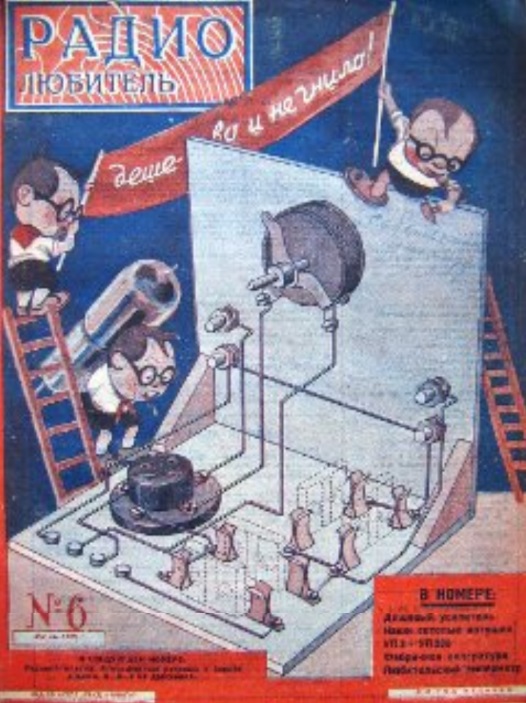
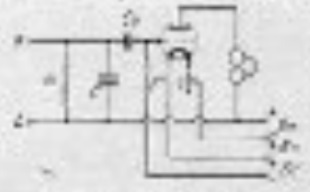
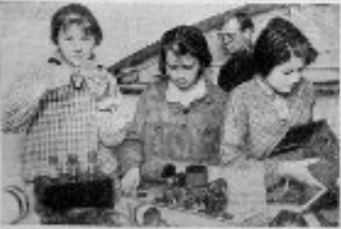
Ninety years ago this month, these three Soviet radio experimenters were putting together what appears to be an audio amplifier, following the plans contained in the June 1929 issue of Радиолюбитель (Radio amateur) magazine. Apparently, they’re either small experimenters, or they’re using a very large tube.
Unfortunately, the scan is rather low quality, but the word усилитель (amplifier) appears in the title. There are headphones hooked to the plate, so it must be an audio amplifier. The circuit is simple, with the only control being the rheostat on the front panel to control the filament voltage. It’s likely that the input of the amp would be hooked to a crystal set, with the tube amplifying the volume to a more listenable level.
Not to be outdone, these Soviet girls are shown in the same magazine putting the finishing touches on another electronic project.
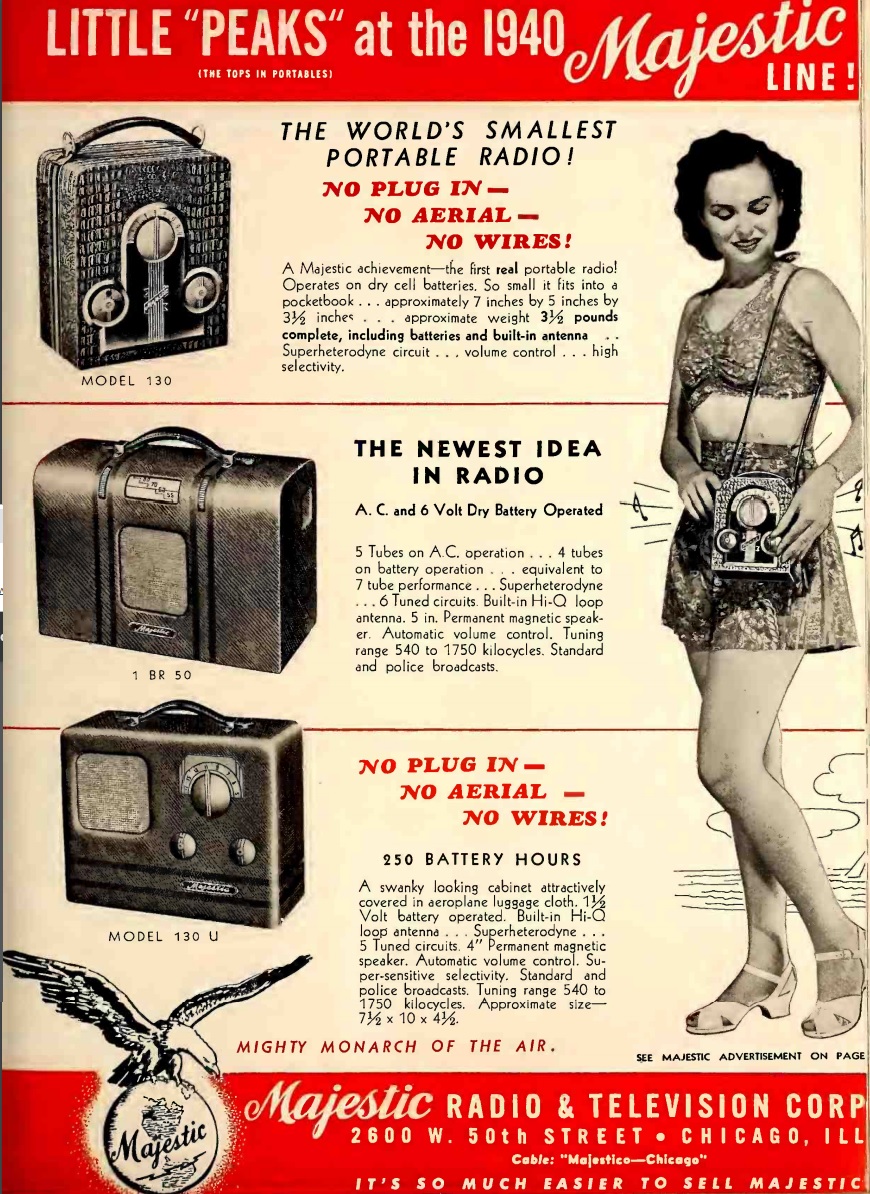
Eighty years ago this month, the young woman shown here was pulling in some musical entertainment on her way to the beach, courtesy of her Majestic model 130 portable radio. The “camera style” set, billed as the world’s smallest portable, featured a superheterodyne circuit, with a 3-tube lineup consisting of 1A7GT, 1N5GT, and 1D8GT, powered by a 60 volt B battery and a 1.5 volt battery to light the filaments.
The ad here appeared in the June 1939 issue of Radio Today. You can see a restored example of the set playing at this video:

 There is an interesting post today at the blog of the Herbert Hoover Library and Museum about Herbert Hoover and the history of radio. The author is Thomas Schwartz, the director of the museum.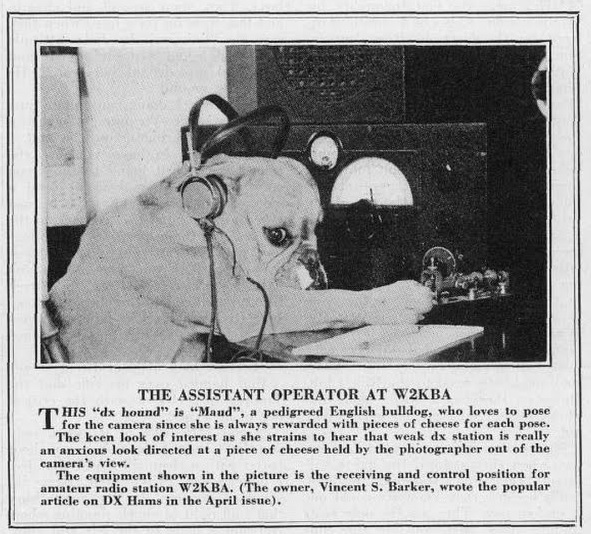



 If you want to economize on paper cups, you generally can’t get much cheaper than the time-honored conical paper cup, the staple of office water coolers. The exact price will vary from day to day, but the link below should show the price for 5000 cups, complete with free shipping.