Author Archives: clem.law@usa.net

1939 Four Tube TRF

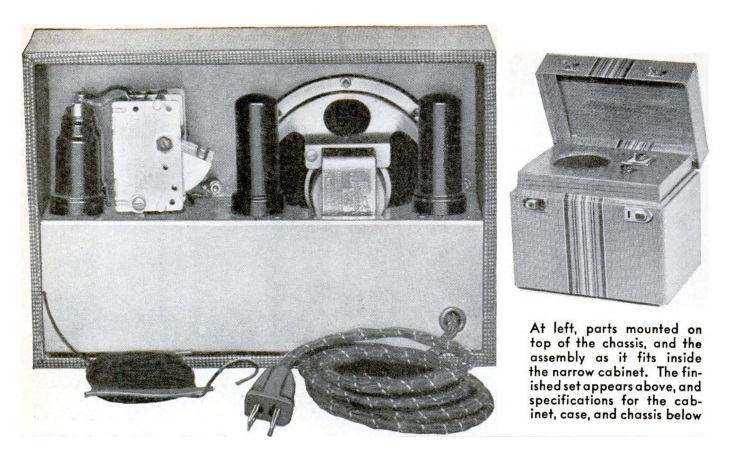
1939NovPSThe young woman shown here is on a weekend jaunt, but that doesn’t stop her from tuning in her favorite radio programs, thanks to the four-tube set described in the November 1939 issue of Popular Science. The set was specially designed for overnight travels, since it nested inside an overnight luggage carrier. The entire piece of luggage could be built according to the plans in the magazine, or it could be made up at the local luggage shop. Both the radio and the baggage were attractively covered in airplane-luggage fabric. When she arrived at her destination, she simply took the radio out of the top of her case, plugged it in, and she was again connected with the world.

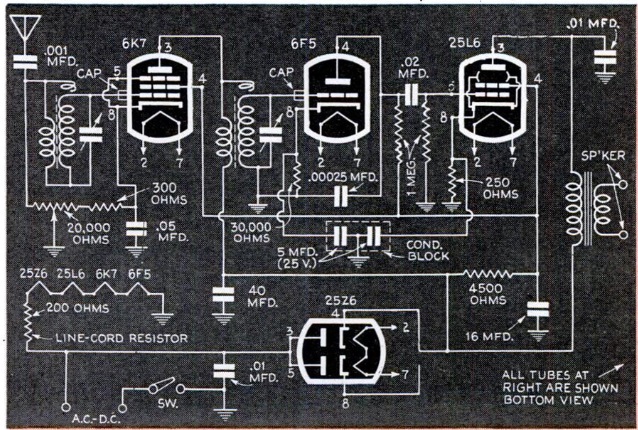
The receiver itself was a four-tube TRF design.  A curtain burner cord provided the filament voltage.

1939NovPSschematic2

1939NovPSschematic


A Vision of Postwar Appliances

1944NovRadioCraftThis wistful look at the possibilities for postwar home appliances appeared in Radio Craft magazine 75 years ago this month, November 1944. The idea had been sent in to the magazine by George Predential of Schenectady, NY, and penned by cartoonist Frank Beaven. One wonders what they would think of modern bread machines, some of which are shown below.

Some links on this page are affilliate links, meaning that this site is paid a small commission if you buy after clicking on the links.


1944 Two Tube Broadcast Set

1944NovPMShown here is Sgt. Donald L. De Velder of Rochester, NY. He was stationed in Panama, and spent fruitless months trying to find a radio. After finding nothing but the opportunity to spend a fortune on an old beat up piece of tin, he decided to take matters into his own hands and build his own.

Together with Staff Sergeant Emmet Ellis of Nigara Falls, NY, he was able to assemble this two-tube set. It ran off the 110 volt line cord, and a short antenna running down his foot locker allowed him to pull in the local Armed Forces station, as well as other Panamanian stations. The cabinet was made of plywood, and almost all parts were scrounged up from junk heaps. The only expense was for the 32L7 tube, which set the Sergeant back $2, although he was quick to point out that he could have found it for 69 cents back in the States.

The set used two dual tubes. A 12B8 served as RF amplifier and detector. The 32L7 provided audio amplification to drive a PM speaker, with the other half of that tube serving as rectifier. The set was written up in the November 1944 issue of Popular Mechanics.  Sgt  DeVelder died in 2007 at the age of 83.

1944NovPM2


Happy Halloween!

IMG_4700-3Happy Halloween from OneTubeRadio.com!

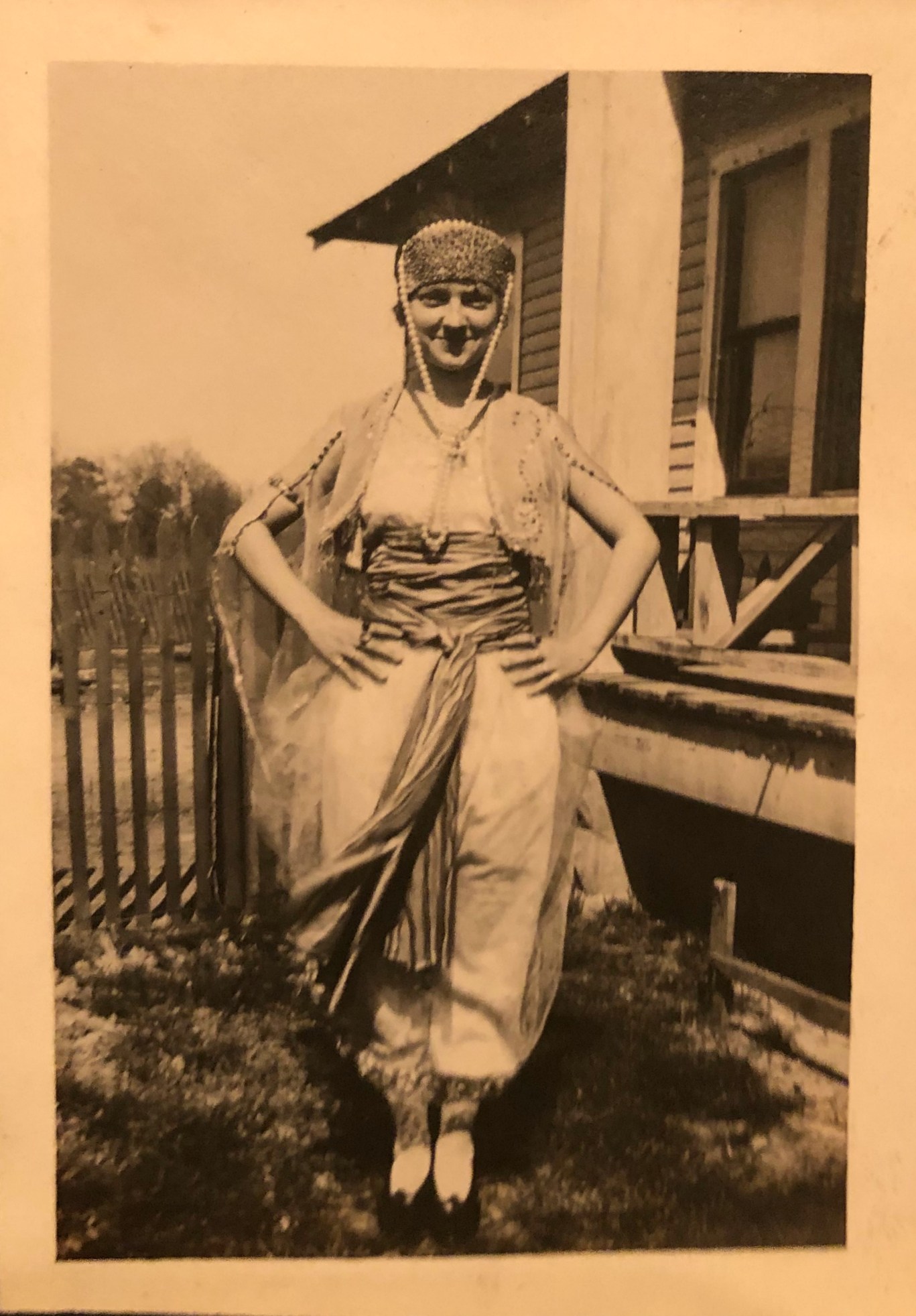
The picture above was taken a hundred years ago today on Halloween 1919.  This young woman in Texas or Oklahoma is dressed up as a Gypsy as her Halloween costume.

The photo is courtesy of Jennifer of Jennifer Chronicles blog, jenx67.com, and used with her permission.  It came from a photo album she found in an Oklahoma City flea market.  The gypsy in the photo was probably the owner of the album, since she appeared in many of the pictures.  A common theme of the album is soldiers at Fort Sill, Oklahoma, along with their girlfriends.  Other pictures show this woman dressed as a Red Cross nurse.  You can see more photos from the album at this link and at this link.


1959 Novice Receiver

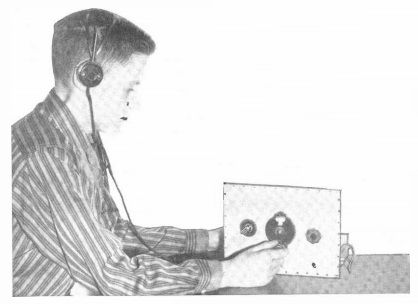
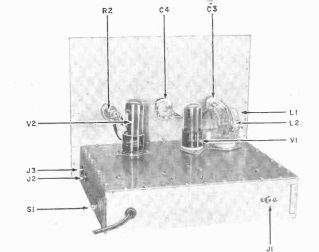
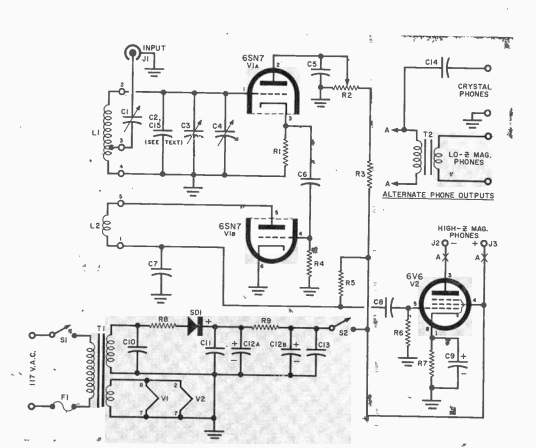
1959SeptPE21959SeptPE3The young man shown here is doing some code practice in anticipation of getting his novice license, using this receiver described sixty years ago this month in the October, 1959, issue of Popular Electronics . The magazine showed how to construct this simple two-tube receiver designed especially for the novice. It tuned the 80, 40, and 15 meter bands using plug-in coils, and those coils were carefully designed to give maximum bandspread over the CW bands, allowing the new novice to tune in the crowded novice bands.

The set was regenerative, but according to the article, it would give most superhets a run for their money.

1959SeptPE4


Car Winter Survival Kit

CarSurvivalKitWith winter soon upon us, I decided it was time to make sure the cars were equipped with survival kits. Other items are important (such as blankets or sleeping bags, extra winter clothing, tools, a shovel, sand, and probably others), but here are the items that I put in to make sure that the passengers have something to eat if the car gets stuck. This kit contains food and a method of cooking the food.  I made identical kits for each car.

My experience with getting stuck in a blizzard actually involves getting to a hotel in the nick of time, only to find that the hotel didn’t have any food. All of the food here could be heated up in a hotel microwave. Everything here came from either the dollar store or Walmart (with the exception of the pan, which came from Goodwill). Here is a list of the contents, with links to Amazon.

For all of these foods, water is necessary, and I always have some in the car.  But if stranded in winter, it’s probably because the car is stuck in frozen water, meaning that it’s readily available.

Links on this page are affiliate links, meaning that this site gets a small commission if you make a purchase after clicking on the link.


1939 Radio Sound Control Studio Set

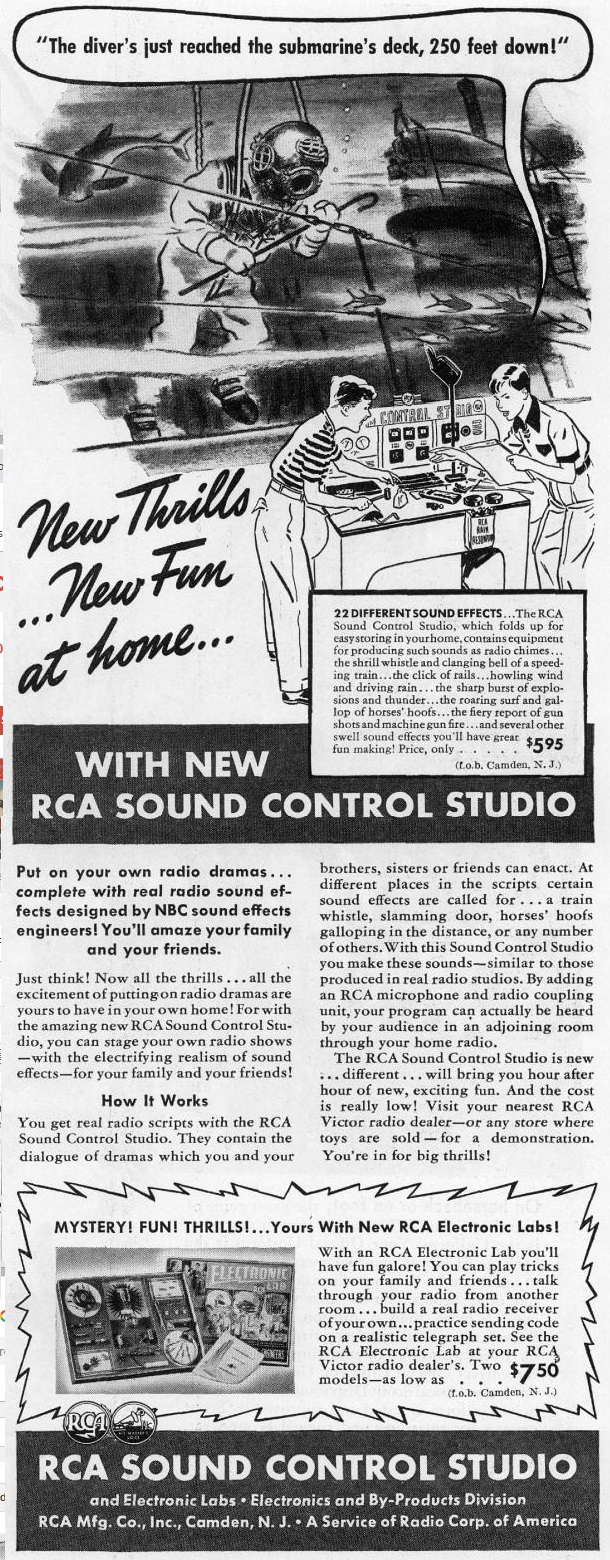
1939OctBLEighty years ago this month, the October 1939 issue of Boys’ Life carried this ad for two extremely interesting products from RCA, more specifically, the RCA “Electronics and By-Products Division.”  The first is the RCA Sound Control Studio, which enabled aspiring young radio producers to make their own radio programs at home, with a complete selection of devices to make sound effects.

With the set, they could make train whistles, slamming doors, horses’ hoofs, howling wind, driving rain, and many others. And if they also added the “RCA microphone and radio coupling unit,” the program could be heard on the radio in an adjoining room. The set included a book with drama dialogues with certain sound effects specified. The set sold for a mere $5.95.

The other set, which apparently included the microphone and transmitter, was the RCA Electronics Labs kit. The projects contained therein allowed youngsters to build a real radio receiver, transmitter to talk from another room, realistic telegraph set. The electronics labs started at $7.50.


How To Remove A Fence Post

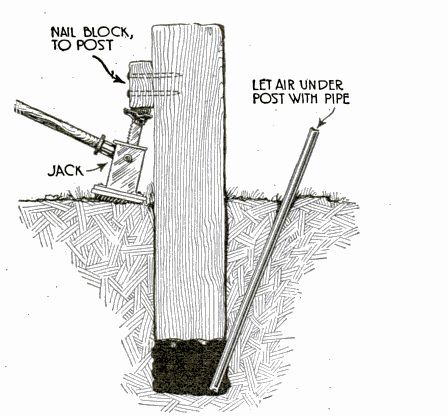
1919OctPSA hundred years ago this month, the October 1919 issue of Popular Science showed how to remove a stubborn fence post. The problem was that there was a huge vacuum at the bottom as you removed it. This was solved by driving a pipe to allow air into the void.


1919 Homemade Radio Parts

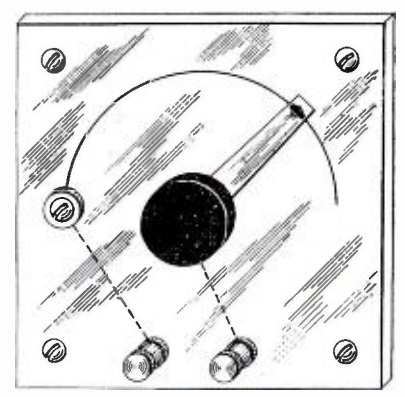
1919OctRadioAmateurNewsGridLeakYesterday, we presented a homemade headphone from a hundred years ago, from the October 1919 issue of Radio Amateur News. That issue also contained a number of other homemade parts, such as the variable grid leak resistor shown above, submitted by the aptly named Arno Kluge. The part is made on bakelite or rubber, and the resistance is formed by a line of India ink traced with a compass.

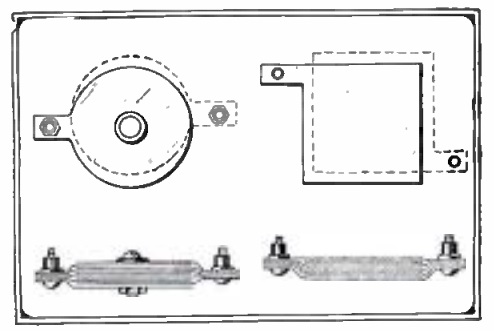
The magazine also contained two capacitors, one fixed and one variable.  The fixed condenser is made using sheets of mica as the insulator.  For those wishing to make a reproduction today, the best source of mica would probably be the waveguide cover from an old microwave.

1919OctRadioAmateurNewsFixedCondenser

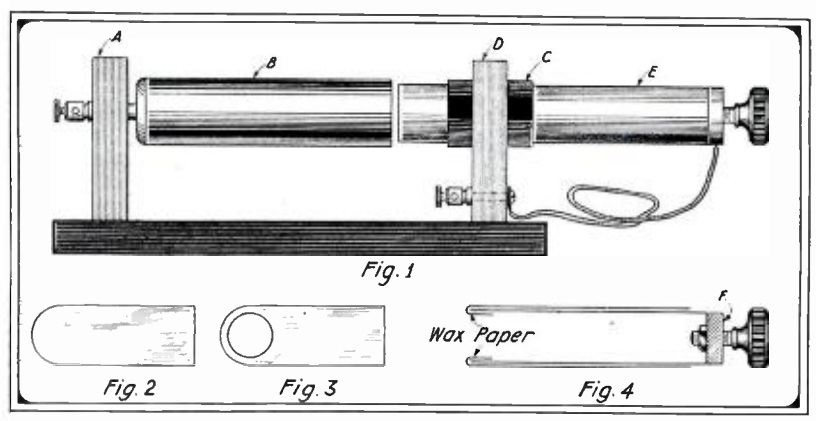
The variable condenser is made from two tubes.  In this case, the author used parts from an old bicycle pump.  The inner tube is shellacked, then covered with wax paper, and then shellacked again.

1919OctRadioAmateurNewsVariableCondenser


1949 Milwaukee Television

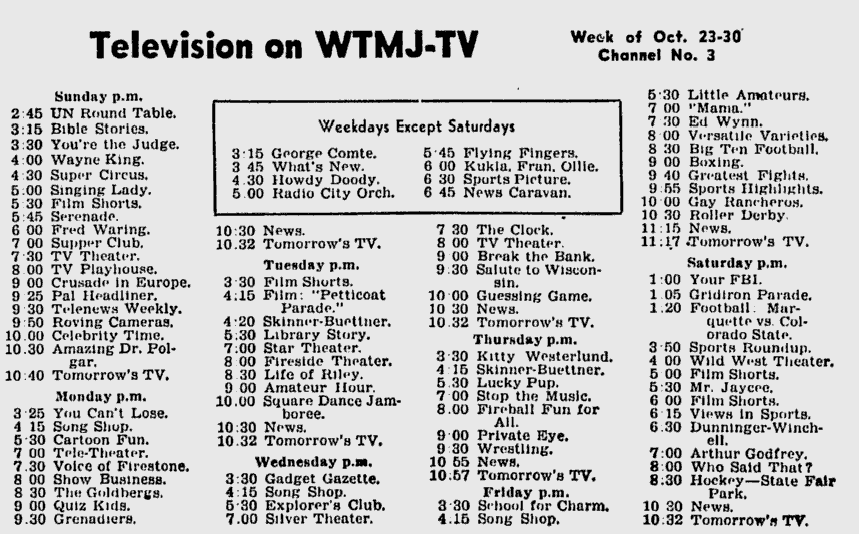
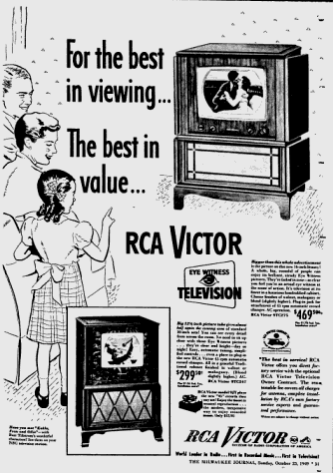
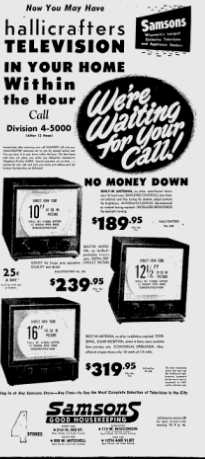
1949Oct23TMJ1949Oct23TMJrcaFor Milwaukee residents lucky enough to own a television, here were the programs they could watch 70 years ago this week, as shown in the Milwaukee Journal, October 23, 1949. (From most browsers, click twice on the image for an enlarged version.)  The only station on the air yet was WTMJ-TV (owned by the newspaper), and here were some of the program highlights:

The “Televison Playhouse” program for the week, 8:00 PM Sunday was an adaptation of the novel “Because of The Lockwoods” by Dorothy Whipple. Before that, the station signed on at 2:45 PM with a special discussion of the United Nations. Panelists were Robert Hansen, Mrs. Martha Klein, and Bruno Bitker, with Dr. J. Martin Klotsche serving as moderator.

At 9:00 PM was the 25th chapter of “Crusade in Europe.” This week’s discussion was Eisenhower’s postwar visit to Russia and his meeting with Stalin. The special guest for the program was former Minnesota Governor Harold Stassen, then president of the University of Pennsylvania.

On Wednesday, the “Salute to Industry” program was a tribute to the Milwaukee police1949Oct23TMHallicrafters department.
Sports was a part of the programming. On Saturday, October 29, the Marquette-Colorado State football game was aired (Marquette won 68-13), and that evening the station carried the Milwaukee vs. Toledo hockey game.

If you didn’t have a TV yet, you had many options. You could get an RCA Victor console starting at $269. Or if you were really in a hurry, you could call Samson’s, and they would dispatch a special service car to your house within an hour, where they would install a new Hallicrafters set on approval, with no obligation. Hallicrafters prices started at $189.95, with no money down.