Author Archives: clem.law@usa.net

1945 Magnets

1945JuneRadioCraft3This young woman, shown in the June 1945 issue of Radio Craft, is demonstrating the power of the alnico magnet, which, according to the accompanying article, can lift 4450 times its own weight. Wartime progress in the development of magnets promised many new postwar consumer products.


1920 Metal Detector

1920JunElectExp1A hundred years ago this month, the June 1920 issue of Electrical Experimenter showed this ingenious metal detector. Like most metal detectors, it relies upon the inductance of a coil increasing in the presence of metal.

This one uses two identical coils. A buzzer is pulsing a voltage through them, but they are wound such that they are 180 degrees out of phase. Thus, the two signals will cancel out, and nothing will be heard through the headphones. But if one of the coils comes near metal, the inductance changes, and the two signals no longer cancel out. Thus, the buzzing can be heard through the headphones.

The circuit was said to be able to detect a one square foot piece of iron down five feet, or a quart of washers a foot down.

1920JunElectExp2


Field Day 1940: Lessons for 2020

1940June15BCField Day 1940 should give some inspiration to those who are operating Field Day 2020.

Eighty years ago, the U.S. was still 18 months away from being drawn into the war, but the subject was on the mind of the FCC. Amateur radio operators were not silenced until Pearl Harbor, but there were already restrictions in place, as described in the June 15, 1940, issue of Broadcasting magazine.

The magazine noted that non-essential services, such as amateur, experimental, and special private radio might be curtailed or shut down due to wartime conditions. On June 5, 1940, the FCC banned all amateur communications with hams in foreign countries.

On June 7, the FCC banned portable and mobile operations with a couple of exceptions. First of all, such operations were allowed above 56 MHz, the thinking being that there was little threat from these line-of-sight signals.

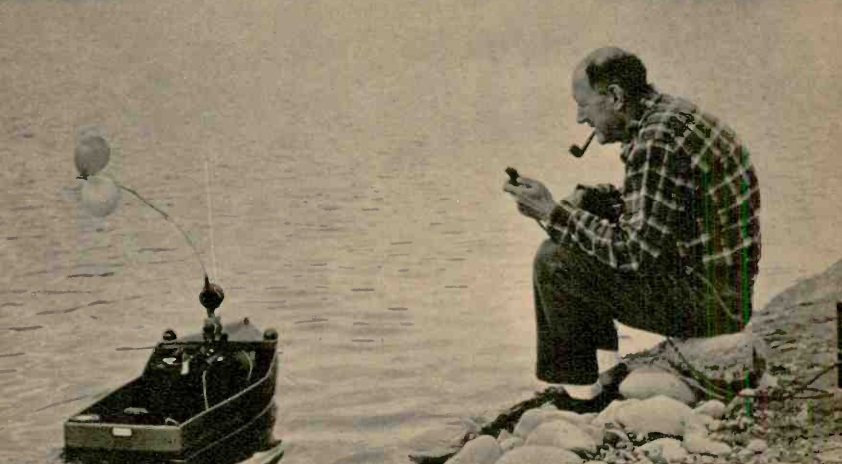
Operators at ____ getting ready to launch a balloon-supported antenna, Field Day 1940. Photo, QST for December 1940.

Operators at W8QLU/8 getting ready to launch a balloon-supported antenna, Field Day 1940. Photo, QST for December 1940.

In addition, there was a blanket exception allowed for stations participating in the 1940 ARRL Field Day, which the magazine described as “tests of portable transmitters designed for special use in time of emergency.”

Despite the restrictions, hundreds of ham stations took part in Field Day. One of the high scores was from the St. Paul (MN) Radio Club, W9KYC/9, which made 505 contacts on all bands from 160 to 10 meters. 228 of those contacts were with other Field Day stations, the rest presumably being with home stations.

This year again, Field Day is subject to emergency restrictions, and many of the large multi-transmitter operations will be off the air. Despite initially saying that they weren’t going to do so, the ARRL finally relented and will allow points for contacts between home stations operating with commercial power.

While this rule change is understandable, it would seem odd to stay home and get on the air, while pretending to be in a Field somewhere. While many hams won’t be able to do Field Day this year in the normal fashion, they can operate in an honest-to-goodness Field if they use a bit of creativity.

In 1940, despite a war looming and government restrictions, at least 228 groups of hams were able to lug their bulky transmitters, receivers, and generators to remote locations and get on the air.

One of the purposes of Field Day, then and now, is “tests of portable transmitters designed for special use in time of emergency.” This year, there’s an actual emergency going on. But despite that actual emergency, there’s nothing stopping hams from taking their equipment–which is much smaller and more portable than it was 80 years ago–into an honest-to-goodness Field to put it on the air.

CookieCrumbleThis year, my wife and I will be operating from a city park near our home. The tentative plan is to be in the two-transmitter class, probably covering 20, 6, and 2 meters. Power will be supplied with the trusty fish-finder battery, and the antenna will be supported by the trusty golf ball retriever. As a trial run this weekend, I set up in our own backyard for the annual Cookie Crumble QRP Contest. Despite poor conditions, I made contacts with Pennsylvania, New Hampshire, New York, and Texas. On Field Day, I’ll repeat the operation. Even though I’m physically distancing myself from others, there’s no reason for me to sequester myself in the basement. I can just as easily operate from a bona fide Field for Field Day.

The ARRL made another temporary rule change this year, and will publish a cumulative score for clubs. I think the idea was that, even with club members operating from their home stations, they can still be part of a club effort. I guess they can pretend they’re all in the same virtual field. And by operating from the comfort of their own home, they can get an even larger score than when they set up multiple transmitters in a real field.

But that rule change applies to all classes of entries–even those who are operating a traditional Field Day from the field. Therefore, I have taken the liberty of forming a new club for the hundreds of hams who figure out a way to operate Field Day as it was meant to be–in the Field.

The new club is named “The Outstanding In Their Field Amateur Radio Field Day Club.” It is open to any and all hams, worldwide, who plan to operate Field Day as a Class A or Class B station, namely, from a remote location with emergency power and temporary antennas. Your setup might be elaborate, or it might be as simple as a $30 Baofeng. If you believe that one contact in such conditions is better than filling up an entire logbook from your air conditioned home station, then this club is for you.

Membership in the Outstanding In Their Field Club is simple. There are no dues or long-term commitment. You can join in one of  three ways. If you are gung-ho, then you can sign the club’s articles of association, which you can view at this link. If you’re on board, but not quite to that extent, you can just send me an e-mail to w0is@arrl.net. Or if you’re not sure and want to wait until the last minute, you can join simply by naming the club in your Field Day entry.

Despite war looming, at least 228 hams hit the Field for Field Day 1940. There’s no reason why we can’t do the same. If you also think so, please consider joining The Outstanding In Their Field Amateur Radio Field Day Club.


1940 Setchell Carlson Portable

1940JuneRadioRetailingShown here, from the June 1940 issue of Radio Retailing, is the ad for an unusual portable, the Setchell Carlson Model 66.

As the ad states, the unique feature is the lack of a “B” battery.  Instead, it ran on flashlight batteries, what we would today call D cells.  The set accomplished this by virtue of the fact that the power supply, like that in a car radio, used a vibrator to produce the high voltage.  Some pictures and discussion of the set can be found at this link.

You can read more about Setchell Carlson at our earlier post.


1945 One Tube Broadcast Receiver

1945JuneRadioCraft1An unnamed soldier at Camp Gordon Johnston, Florida, sent in this receiver circuit to Radio Craft magazine, which published it in the June, 1945, issue.  The soldier reported that he constructed it in his barracks, using various parts gathered around camp. He reported that it pulled in all local stations loud and clear with loudspeaker volume, using a 45 volt battery.

One half of the 1D6GT tube was used for the detector, with the other half serving as audio amplifier.


1940 4 Tube Portable

1940JunePM1Shown here are just a few examples of how fun in the summer of 1940 could be augmented with this handy portable receiver, as described in the June 1940 issue of Popular Mechanics. The set ran off a commercially available (at least until the war came along) combination A/B battery which would allow the set to be run on trains, boats, camps, summer homes, or the lawn for up to 200 hours. Provision was made for an external antenna, but the set’s internal loop antenna would pull in signals from up to 100 miles away, and 1500 miles at night.

Parts for the four-tube superhet were said to cost about $7.50, not including the battery and case.

1940JunePM2


Radio Sales Corp., Milburn, NJ, 1945

1945JuneRadioRetailing

Seventy-five years ago this month, there was a clear sense that the war would soon be over, and business as usual would return to Main Street. The June 1945 issue of Radio Retailing offered on its cover this example of Radio Sales Corp., 327 Milburn Ave., Milburn, N.J. The owner, Milton Marks, declared that the dealer with the best sales argument and best-equipped organization would get the business in the competitive postwar market. He further stated that “catch as catch can” merchandising would be catastrophic.

Marks was getting ready to throw his merchandising of radios and appliances into high gear. He kept a priority book of customers who really intended to buy and genuinely needed new appliances, and those customers would get the first shipments in the order received.

His store focused on providing excellent service and honest dealing. He reported spending about $750 per year on newspaper advertising, and an additional $100 on scholastic advertising, which he noted was a builder of goodwill.

As seen in the Google streetview below, the block is still clearly recognizable. In fact, the old Radio Sales Corporation location is currently vacant. Perhaps a modern electronics retailer wants to move in and take advantage of some of that old goodwill.

MilburnNJ


1960 Magic Talking Box

1960JunePEThis young woman is mystifying her friends by carrying on a conversation with this black box. Close inspection reveals that the box is, indeed, empty, but voices manage to emanate from it.

Actually, she’s talking to an accomplice in another room, and inside the box is a one-transistor amplifier concealed in a false bottom. It contains a pickup coil, consisting of 2000 feet of #30-34 wire. This is the secondary of an audio transformer, the primary of which is concealed under the carpet.

The two-way capabilities were courtesy of a hidden microphone in her room. The accomplice would hear her voice, and talk back through the box. The whole system is described in the June 1960 issue of Popular Electronics.

For those who don’t like winding the coil themselves, a suitable replacement would be a telephone pickup coil, similar to the one shown at left.

1960JunePE2


Minneapolis-St. Paul Civil Unrest

A protester stands on a police car with a smashed windowshield outside the Target in the Midway area of St Paul, Minnesota (49946336068).jpg

Protester atop smashed police car, about 3 miles from my house. Wikipedia photo.

As I write this, I’m under a 8:00 PM to 6:00 AM curfew, as a result of civil unrest in the Minneapolis-St. Paul area after the killing of George Floyd on Memorial Day.  Just now, I can hear a helicopter, which I assume belongs to a law enforcement agency. We live in what’s normally a quiet neighborhood, and thankfully, it’s been very quiet here after dark.  Each of the three nights of the curfew, I’ve haven’t heard more than a couple of cars go by.  I assume (and hope) that they belong to neighbors returning home from work. Rioters seem to enjoy setting things on fire, so at sunset, I’ve been hosing down the house and the vegetation next to it. Our recycling bin is full (the trash miraculously got picked up, but not the recycling), so I poured enough water in there to make all of the paper soggy and unsuitable for burning. We have a stack of firewood behind the house, so I thoroughly hosed that down as well.

Others can delve into the deeper issues, but since one of the subjects covered by this blog is emergency preparedness, it’s appropriate for me to discuss those aspects of how it affects people in the Twin Cities.

We’ve been under a state of emergency since March due to the coronavirus. Because of health issues, my family has taken greater precautions than most. Since mid-March, none of us has been inside a building other than our own home, and none of us has been within six feet of anyone outside of our household. We’ve rarely been within 20 feet of anyone else, and that’s usually with a mask.

20200528- DSC8078 (49948047547).jpg

Minneapolis police precinct station burning. Wikipedia photo.

And on top of this emergency, we now have civil unrest. Many of the protests have been peaceful, but there has been a great deal of violence. The neighborhoods surrounding Lake Street in Minneapolis have seen horrible destruction.  As noted below, it is clear that most of this destruction is the result of outsiders, and not people who live in the neighborhood, and not the same people who are protesting.  One of the city’s five police precinct stations was burned to the ground.  Looting has spread. I’m unsure of the exact details, but a gas station/convenience store less than a mile from our house was reportedly the object of some kind of attack, and it is now boarded up. A liquor store a little over a mile away was looted in a case of “flash looting.” It’s boarded up, but still operating.

The Minneapolis mayor did little to stop the violence.  St. Paul did somewhat better.  Eventually, state police (Minnesota State Patrol and Department of Natural Resources) personnel were brought in, as well as the National Guard.  On Friday night, rioters attempted to enter St. Paul, but the St. Paul Police Department blocked the bridges between the two cities.  There was a large protest on Sunday near the Minnesota State Capitol (about two miles from my house), but that appears to have been entirely peaceful.  The Minnesota National Guard is out in force protecting the Capitol.


Monday Morning Update:  One thing that seems clear to me is that nobody is burning down their own neighborhood. There are clearly outside forces at work. Unfortunately, there have been few arrests, so it’s hard to pinpoint exactly who is responsible. The looted liquor store near my house is a fortunate case where they did make an arrest. It sounds like a few dozen people (who piled out of just a few cars, in an obvious planned attack) took part in the looting. Only two got arrested. One was from Crystal, Minnesota, a suburb of Minneapolis. The other was from Wisconsin. They came here to loot, they came here to destroy someone else’s neighborhood, and what they did had nothing to do with the killing of George Floyd. They merely took advantage of the tragedy.

It sounds trite to say it, but these people were outside agitators. On one NextDoor group, there was a heated discussion of whether they were extremists from the far left, or extremists from the far right. Honsestly, I don’t care one way or another. They have no right to come into my neighborhood, steal from us, or burn down our buildings.  I live in a neighborhood that has been only lightly affected.  I’m sure those who live near Lake Street or University Avenue feel the same way.  It doesn’t matter if they’re black or white, or rich or poor, or Republican or Democrat.  Nobody has the right to invade their safety and security.

The people who have been victims of racism are also people who need to buy groceries, need to buy prescriptions, need to get things in the mail. Many of them protested what happened, and rightly so. But they didn’t burn down their own supermarket or their own pharmacy or their own post office. Thugs from outside came in and did that. Maybe those thugs were on the far left. Maybe those thugs were on the far right. It doesn’t matter. They have shown by their own actions that they don’t care at all for the people of those neighborhoods.

It does appear that these outside thugs, whoever they are, have at least some level of sophistication. I have seen numerous reports, from media and from friends, of cars driving around without license plates. When they are stopped by police, the occupants scatter. The governor reported that there was a denial of service attack to the state’s computer systems during one of the riots, and he said that it showed sophistication. The division director of the ARRL sent out an e-mail that there have been unidentified transmissions on local amateur radio repeaters, and gave instructions on how to report them.  One person in a nearby neighborhood reported on NextDoor reported finding a threatening note.  Apparently, she had a “Black Lives Matter” sign in her yard, and the note told her to take it down or have her house burnt down.

Was that note placed there by someone in the neighborhood?  I can guarantee you that it absolutely was not.  Maybe it was placed there by a white supremacist to cause fear.  Maybe it was placed there by someone who wants us to start thinking that one of our neighbors is a white supremacist.  It doesn’t matter.  They’re both equally unwelcome here, just as they’re unwelcome in the neighborhoods around Lake Street or University Avenue.


The actual killing of George Floyd took place in south Minneapolis. Google Maps tells me that it’s a 12.7 mile drive from my house. Very serious violence erupted Wednesday, Thursday, and

Minnesota State Patrol stand at E Lake St and 29th Ave S in Minneapolis, Minnesota (49949772331).jpg

Minnesota State Patrol and National Guard on duty on Lake Street, Minneapolis. Wikipedia photo.

Friday nights. Saturday and Sunday nights seem to be quieter. Some of the riots spilled over into St. Paul, particularly along University Avenue. A Target store was the subject of looting. One that hit close to home was an attack on Ax-man Surplus, my favorite source of electronic components and more. It’s now boarded up, but the boards vow that they’ll be back. These stores are about three miles from my house.

Many stores are closed and/or boarded up as a precaution. On Saturday, I had to mail some letters at the post office, so my daughter and I went for a short drive through the suburb of Roseville. Many stores were closed and boarded up. Others, such as McDonald’s, are boarded up but still operating with a drive-thru. Target was boarded up and closed. We drove past about 10 gas stations, and most were closed. One, a BP station near the looted liquor store, was also the victim of looting, and was boarded up. Three stations were open. Since my car was at about a half tank, I stopped, paid at the pump with a credit card, and quickly filled up.

The two Cub Foods supermarkets that we went past were open. Since many other stores, such as Target, were closed, their parking lots were very crowded, similar to what one might expect the day before Thanksgiving. Now is not a good time to have to buy groceries.

We needed a prescription filled at a local pharmacy on Thursday. When she called, they had already closed as a precaution. They were open on Friday morning, and she was able to pick it up then. Closing as a precaution was a wise decision. That evening, another neighborhood pharmacy owned by the same owner was burned by rioters. Fortunately, the one in our neighborhood was luckier. When she picked up the prescription, most other stores were closed. A local convenience store was still open, and she said it was the most crowded she ever saw it. With the supermarkets closed, it was probably the only place in town to buy food.

Fortunately, even though we’re not really “preppers,” we’ve always tried to keep well stocked up on groceries and other household supplies. And because of COVID-19, we redoubled those efforts. So we are very fortunate to have a full pantry.

Even so, like most Americans, we rely on the supermarket to maintain our normal diet. And this week, we ran out of milk. As I described previously (here and here), during the pandemic, we’ve been taking advantage of home delivery and curbside pickup.  We had our next order at Walmart scheduled for late Tuesday afternoon.  I was just notified that it was cancelled, and I had to reschedule for Thursday.  I suspect that it was too late in the day for their comfort (or mine).

In the meantime, we have powdered milk, and it’s actually not bad.  I’ve previously taste tested various brands, and the surprising favorite is the Walmart store brand.  You can tell it’s powdered milk, but just barely.  I make it with warm water and mix it well to make sure it’s well aerated.  Then, I put it in the refrigerator and serve it cold.

We’re not eating exactly what we would have eaten otherwise, but we’re eating well, and we’re not hungry.  We’re out of frozen pizzas and soda, and we’re even out of store-bought bread.  We make things other than pizza,   We can and do bake bread, and to replace the soda, we have plenty of Kool-Aid on hand.  (Prepping doesn’t necessarily mean that you have to forego junk food.)

As I’ve said before, I hope I’m wrong, but I’m afraid that there will be food shortages this year.  We will cope, because we have on hand things like rice, beans, oil, masa (for making tortillas), flour, sugar (and even Kool-Aid).  We will be able to eat good food, and we won’t be a burden on anyone else to figure out how to feed us.

Right now, in my own city and my own neighborhood, I’m sure that there are people who are hungry.  It’s probably not because they don’t have enough money for food.  But the stores where they normally buy their food are closed, or maybe even burnt down.  If they don’t have gas in the car, they can’t get to stores that are still open, and most of the gas stations are closed.  They can’t go anywhere at night, as long as the curfew remains in effect. If they don’t have a car, they can’t get to the store because bus service has been suspended.

There are probably a lot of people trying to figure out how to make a meal out of the random leftovers that they happen to have in their cupboard.  I ate a bowl of cereal with powdered milk, and I’m guessing I had it a lot better than many.  There are numerous opportunities to donate food items for impromptu food shelves that have sprung up.  Most of those using these impromptu food shelves probably aren’t there for economic reasons.  They need to be there for the simple reason that someone burned down their supermarket.

A lot of people are hurting right now because some thugs decided to burn down their supermarket or their pharmacy or their post office.  They’re compounding the injustice done to George Floyd.  At this point, there’s not much I can do to fight back, other than to make sure I’m not in a position where I’m overly dependent on the things that they destroyed.  The good people of my state will rebuild the supermarkets and pharmacies.  If I have enough resources to weather this storm, then I can be part of the solution and not part of the problem.

Some links on this site are affiliate links, meaning that this site earns a small commission if you make a purchase after clicking.


1960 Silent Lawnmower

1960MayPSSixty years ago this month, the May 1960 issue of Popular Science featured this as the next big thing, although it never quite caught on. It was a silent engine for the lawnmower, outboard motor, chain saw, or almost anything else. You would light it with a match. If using it with an outboard motor, it would probably be a good idea to bring along some waterproof matches to avoid rowing back to shore.

Then engine was a variation on the Stirling engine, which alternately heats and cools air, deriving power from the differential pressures.  The Wikipedia article is long and interesting, but the section entitled “Applications” is only three lines long, and doesn’t mention outboard motors, chain saws, or lawnmowers.  You can buy a Stirling engine, such as the one shown at left, and in fact, we have one.  It’s a very interesting novelty item, and we’ve even coaxed enough power out of it to light an LED.  But it’s not something with many practical applications.

In the short story Fallout Shelter Journal by Clement R. Dodge, the North Koreans develop an undetectable submarine by patiently using Stirling engines to recharge electric submarines from thermal vents on the ocean floor.  Maybe they got the idea from this magazine.