Author Archives: clem.law@usa.net

100 Years of Extension Cords

1920JulElecExpOne hundred years ago this month, the July 1920 issue of Electrical Experimenter introduced its readers to a new concept, namely, something known as the “extension cord.” The magazine noted that the extension cord was one of the handiest little articles around the electrically lighted home, and the it was naturally one of the first things wanted.

The article gave detailed instructions on how to put together an extension cord, and stressed the importance of using all new components for the plug, socket, and wire. It warned that house wiring needed to be kept 2-1/2 inches from other wires, and at least a half inch from any surface. In the extension cord, the wires would be in close proximity, separated only by combustible cotton insulation. Therefore, only the very best new materials should be used. As for the length, the magazine suggested that 25 feet would be suitable for most purposes.

The modern reader will note that the ends are what we would call today light sockets. Most household electrical devices of the time were wired with a plug identical to that of a light bulb. The traditional two-prong socket came later.

For those wishing to save some work, extension cords are now readily available, and with the proper plugs.  The one shown at left includes three USB ports.  If you want to recreate the 1920 cord, I wasn’t able to find one off the shelf. However, it’s an easy matter of combining the cord shown at right and one of the the handy converters shown below.

Many savvy travelers toss one of the converters on the left into their suitcase.  It almost always guarantees an extra electrical outlet in a hotel room.


Some links on this page are affiliate links, meaning that this site earns a small commission if you make a purchase after clicking on the link.


US Forest Service Radio, 1920

1920JulyPS11920JulyPS2A hundred years ago this month, the July 1920 issue of Popular Science reported that the United States Forest Service had found a valuable ally in the radiotelephone. 42 sets like the one shown above were in operation at remote points in Wyoming, Montana, and Oregon. Range varied from 10 to 300 miles, with about 50 miles being typical.

The article noted that two such stations bore a cost of about $3000. However, that particular circuit covered 60 miles, and a comparable telephone system would have cost over $5000. Even though rangers started with no radio experience, the Service reported that after a few months, they were able to expertly take and send messages.1920JulyPS3

The trees themselves were pressed into service as antenna supports. At each site, two suitable trees would be stripped of branches and the wires stretched between them. Initially, storage batteries were packed back to the closest town for charging, but gasoline generators had just been installed to save that labor.

Mules, such as the ones shown at right, transported the equipment to its station. But when the trails got too steep for the mules, the rangers themselves carried the equipment.


Independence Day Sesquicentennial

Even though today marks the 244th anniversary of American independence, it is actually the 150th anniversary of the Independence Day holiday. July 4 was first made a federal holiday in 1870.


Mounting the Radio On The Wall: 1945

1945JulPSSeventy-five years ago this month, the July 1945 issue of Popular Science shared this self-explanatory helpful hint for mounting a radio on the wall. Many times, the radio wound up at the wrong end of the room, because that’s where the table was. With this idea, you can mount it wherever desired, and it had a sleek “built-in” look about it.

The magazine did caution that before following this scheme, you should make sure the radio’s cabinet is structurally sound.


1945 One Tube Code Oscillator

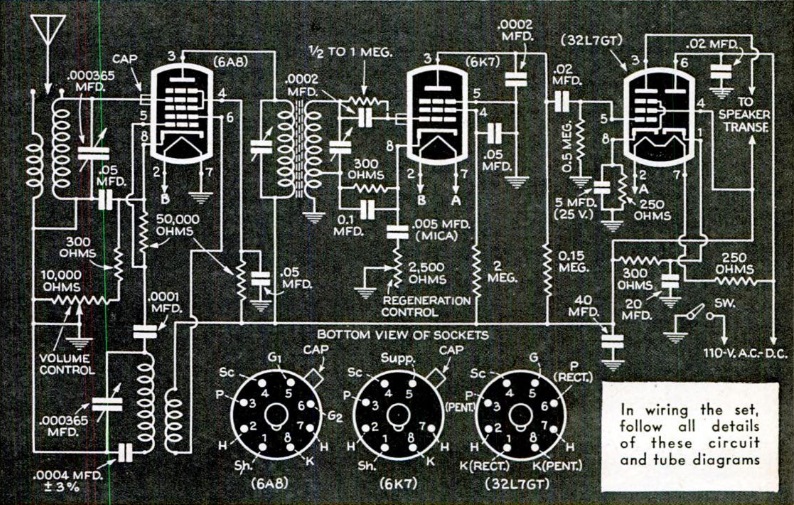
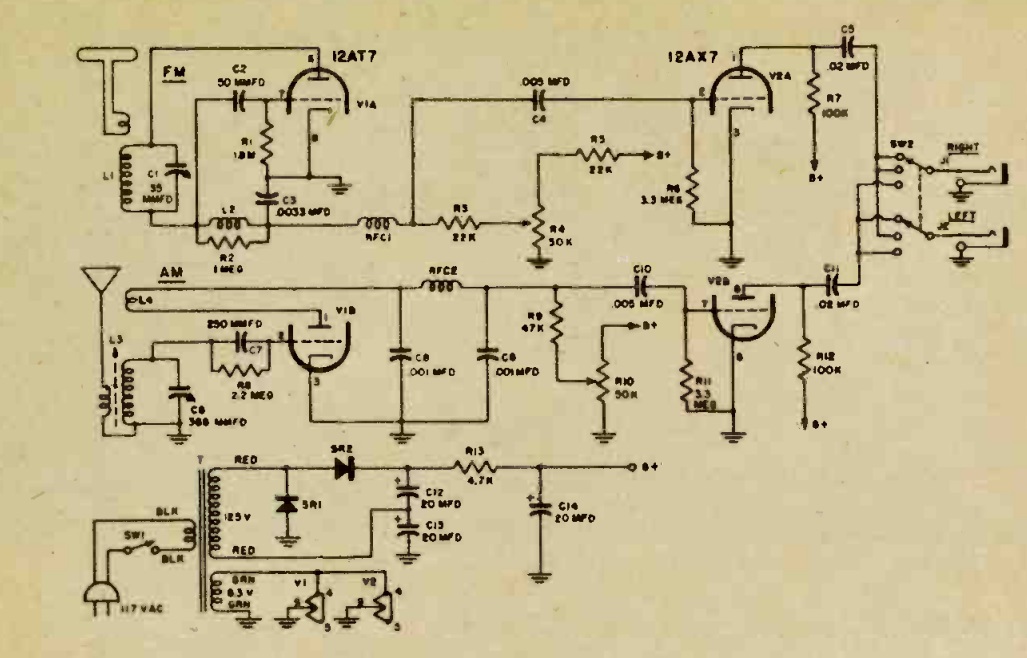
1945JuneRadioCraft2Seventy-five years ago this month, the June 1945 issue of Radio Craft carried this schematic for a code oscillator sent in by one Gene Clardy of Fort Worth, Texas. According to Clardy, the circuit’s main feature was its safety, since no high voltages were present. With no possibiity of high voltages on the key or headphones, all possible shocks were avoided.

The set used a 6 volt doorbell transformer to light the filament. The secondary of the transformer was also rectified by half of the tube to supply the B+.


Book Condenser

1970JunSciElec3Fifty years ago this month, the June-July 1970 issue of Science and Electronics  carried this project, which itself dated back another fifty years. It’s a simple crystal set, but the most interesting feature is the tuning capacitor, which is a book-style condenser. It consists of two blocks of wood, each with a layer of aluminum foil carefully glued to one side. These are hinged together, and the set is tuned by turning a screw to open and close the book.

Astute readers might remember similar capacitors used in this 1944 crystal set and this 1942 tutorial on making parts at home.


Radio A Hundred Years Ago

1920JuneWirelessAgeI don’t know much about the provenance of this photograph, other than that it was taken in Atlanta about a hundred years ago. What is clear from their expressions, however, is that the two girls in the foreground obviously understand the magic of radio. Chances are, they had never heard a radio before, but when they heard music coming out of the headphones, they realized that the world had changed. I’m guessing their families were among the first on their block to get their own radio set.

Not everyone gets the magic, though. Many of the others seem a bit skeptical about this new contraption. All I know about this picture is that it appeared a hundred years ago this month on the cover of the June 1920 issue of Wireless Age, and that the caption reads, “members of an Atlanta club who danced to music received by wireless ‘phone.”


R.F. Field, R.F. Engineer

1945JuneNatlRadioExp

Shown here (at right) is the appropriately named Mr. R.F. Field, a radio engineer with General Radio Company. The photo appeared 75 years ago this month in the June 1945 issue of General Radio Experimenter, a monthly publication put out by the company.


Sending Sourdough Yeast by U.S. Mail

BreadSeveral weeks ago, I wrote about my experiences using sourdough started with commercial yeast. While it’s starting to show up again in supermarkets and it’s apparently now available again on Amazon, yeast is not always available. In a long-term food emergency, that could pose a problem. Flour is inexpensive and plentiful, but in order to turn it into bread, you really need yeast. Fortunately, as I wrote previously, you can grow your own at home. You just need one package of commercial yeast, and you can turn it into an infinite supply.

You can also share your sourdough starter with neighbors. But I wondered whether it was possible to share with people who live further away. I asked for volunteers, and got two. I’ve now heard back from one of them, and it turns out that yes, you can share your yeast with anyone, courtesy of the U.S. Mail.

I spread a thin layer of the sourdough starter, about three inches by three inches, on a piece of parchment paper, and then left it to dry. In a couple of days, I removed it and broke it into two pieces, one for each recipient. I could have just as easily used wax paper, plastic wrap, or even just a plate.  After drying, I placed them in plastic sandwich bags, and placed those inside envelopes which I mailed.

My suggestion when they received them was to put it in a glass of sugar water to bring the yeast back to life. Then, use that water in place of some of the water and yeast in a bread recipe.

The loaf of bread shown above was baked by my cousin in Oregon, after she received it in the mail from Minnesota. She did report that the bread didn’t rise as much as expected. But it did rise some, even though it was denser than usual.

This is my experience as well. The yeast that are growing today, the descendants of the ones I started with, aren’t quite as active. It does take longer for bread to rise. But she reported that the bread tasted good.

The other package went to a friend in Alabama.  He reported that the yeast survived the trip and came to life when he added sugar water, although I don’t think he’s made any bread with it yet.  If he does, I’ll also post the results here as well.


The Class of ’20

23June1920Shown here is the Class of ’20 (1920, that is) who graduated from the Furness School of Philadelphia on this day a hundred years ago, June 22, 1920. These girls are performing the “Welcome to Summer” dance as part of the commencement exercises, and this picture appeared in the next day’s issue of the Philadelphia Evening Public Ledger.

Since the school was a junior high at the time, these were probably eighth graders, probably born in about 1906. Their older brothers very well might have gone to war, and we hope that most of them came back to attend the graduation.

A few years after this picture was taken, their families probably got their first radio. They were 23 years old when the stock market crashed, and they lived through the depression as young adults. Then, another war came. They were a little too old to go to war, and most of their children were too young. All of them, boys and girls, undoubtedly fought on the Homefront.

When they were in their 40s, they saw their first television, and probably bought one soon thereafter. They worked hard and retired with more wealth than their parents. A handful of them bought a computer and sent e-mails to their grandchildren. A few of them lived to see 9/11 on their television screen.

Welcome to Summer, Class of ’20.

A few weeks ago, I recorded this message to the Class of 2020: