The LFR: 1920’s-1960’s Air Navigation

From the late 1920’s until the 1960’s, an important tool for air navigation was the Low Frequency Radio Range (LFR).

At its peak, there were about 400 LFR beacons in the United States, and many more worldwide. Each station consisted of a transmitter being fed into two directional antennas. One antenna was sending the Morse letter “A”, dot dash. The other antenna was sending the letter “N”, dash dot. The two signals were synchronized so that the two signals alternated. At four directions from the station, the two signals blended to produce a constant tone. If a plane was off this course in one direction, the pilot would hear the “A” start to get stronger. Off course in the other direction, the “N” would get stronger.

Aeronautical charts such as the one shown here would show the letter that would be heard in each of the four quadrants. Here, in the quadrants south and north of the station, the pilot would hear the letter “N”. In the east and west quadrants, he would hear the letter “A”. On the shaded lines, the pilot would hear the continuous signal. These “beams” would be about a half block wide near the station, and as much as several miles wide far from the station. Most air navigation followed routes along these beams. The course a pilot followed would be along airways connecting the stations, and flying cross country would be a game of “connect the dots” as the pilot flew from one station to the other.

Every thirty seconds, the “A-N” signal would be replaced with the call letters of the station, in this case, RL, which would also be transmitted in Morse.

Despite the simplicity of the system, the accuracy was enough to use for instrument landings, and instrument approaches using the LFR beacons were published for many airports.

For the pilot, only a normal radio receiver was required. In later years, more sophisticated receivers were employed, which would show the pilot visually whether he was on the “A” side or the “N” side of the beam. But in most cases, the pilot navigated by listening to the signal in his headphones.

LFR station using Adcock antenna (Wikipedia photo).

LFR station using Adcock antenna (Wikipedia photo).

Most of the stations operated between 190 and 535 kHz, with powers of up to 1500 watts. Early stations used crossed loop antennas, but Adcock antennas (phased verticals) were used in most later stations.

Directly above the station, there was an inverted “cone of silence” where the directional signal disappeared. Even in times of no visibility, the pilot would know that he had passed over the beacon when the signal disappeared.

Starting in the late 1940’s, the LFR began to be replaced by the VHF Omni Range (VOR). While the VOR required a special receiver in the aircraft, it was superior in that it could be used to “fly a beam” in any direction from the VOR station, rather than just the four possible with the LFR.

bc1206

Photo courtesy of Ian O’Toole, VK2ZIO, Kurrajong Radio Museum. Used by permission.

Shown here is a BC-1206C Range Receiver, which would have been installed in the aircraft for the purpose of receiving the beacons. This radio, manufactured by Setchell Carlson, Inc., of St. Paul, Minnesota, is a five-tube superheterodyne.  As you can see from the schematic, it’s not much different from a standard broadcast receiver.

REFERENCES

Click Here For Today’s Ripley’s Believe It Or Not Cartoon


War QRM A Hundred Years Ago

QRM

A hundred years ago today probably marks one of the first times that QRM (radio interference) made the editorial cartoon pages.  This example, from the Richmond Times-Dispatch, December 8, 1914, depicts the interference to U.S. commercial stations from the warships patrolling just outside the U.S. coast.  The signals from the British ships were the primary culprits in causing interference to U.S. stations.


Radio Coverage of Pearl Harbor


imgHandler

USS Shaw at Pearl Harbor. Defense Department Photo.

Contrary to popular belief, the networks never broke into live programming to announcing the attack on Pearl Harbor on December 7, 1941. The first broadcast announcement came at about 2:30 Eastern Time on CBS, during a scheduled newscast.

But you tell me that you’ve heard an announcement breaking into a symphony mid-note, with the words: “We interrupt this program to bring you a special news bulletin. The Japanese have attacked Pearl Harbor, Hawaii by air.” This was actually from a record produced by CBS in 1948. The second sentence came from an actual broadcast later in the day. You can hear the original at this link.

There was apparently no recording made of the first announcement, and there was apparently no interruption of regular programming.

A recording from Minneapolis CBS station WCCO  is available at RadioTapes.com.  While there’s no time stated on the WCCO recording, this was apparently recording during the break in the New York Philharmonic concert, which started at 3:00 Eastern Time.  Therefore, the WCCO recording probably starts at about 3:30 Eastern Time.

References


Victrolas for Christmas, 1914

1914OmahaPhonographs

In 1914, Santa Claus probably delivered quite a few new phonographs to American parlors. He had quite a selection available, as shown in the December 6, 1914, advertisement in the Omaha Daily Bee.

Prices ranged from $18.75 to $207.50, with all of them available on credit. The less expensive models could be brought home for $5 down, including a set of records.


Click Here For Today’s Ripley’s Believe It Or Not Cartoon



Chicago Gets New Fire Boxes, 1864

FireAlarmTelegraph150 years ago today, December 5, 1864, the Chicago Tribune carried this item regarding fire alarm telegraph boxes to be installed in the city. The first was to be installed at the corner of Canal and Polk streets.

One spotting a fire would simply unlock the box, turn the crank, and the alarm would be transmitted to the central station, “unerringly, beyond the possibility of mistake.”

108 such boxes were to be installed. The keys would be given to policemen “and to trustworrthy persons resident nearest the place where the boxes are stationed.” This system, it was said, “cannot fail to vastly diminish the destructiveness of fires in Chicago.”

It’s not known whether such a box was installed in the vicinity of Mrs. O’Leary’s cow seven years later.


Click Here For Today’s Ripley’s Believe It Or Not Cartoon


Americans Enlist in Canadian Air Force, 1939

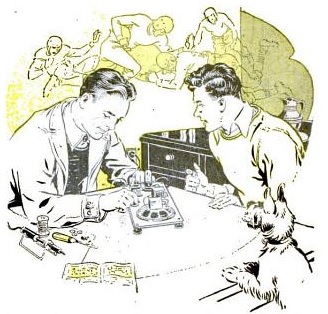
Seventy-five years ago today, December 4, 1939, the Canadian Government announced that U.S. Citizens would be permitted to enlist in the Royal Canadian Air Force. Recruits were required to be of “European descent and resident in Canada.” However, the Canadian government, eager to recruit American aviators, was quite lax on the “residency” requirement. Residency meant only that the applicant must be in Canada at the time he filed his papers.

This, of course, would have been a violation of American law and American neutrality. But even though 9000 Americans eventually enlisted, I’m not aware of a single case of an American being prosecuted for service with the Allies.

The Canadians had even been quietly recruiting in the United States, even though this was clearly a violation of U.S. law. Americans were initially required to pledge his allegiance to the British monarch, which could potentially lead to loss of U.S. citizenship. At some point, however, this was relaxed, and American recruits were required to merely obey RCAF rules and discipline for the duration of the war.

Some Americans had already enlisted. For example, De Peyster Brown, an American pilot who served in the Battle of Britain, had enlisted in the RCAF on September 9, by claiming to be Canadian.


References

The Americans in the RCAF


German and British Amateur Radio Stations on the Air During WW2

Chart showing German amateur frequency bands, 1944. DASD-CQ, September 1944.

Chart showing German amateur frequency bands, 1944. DASD-CQ, September 1944.

It’s widely believed that amateur radio went off the air for the duration of World War II. That was certainly the case in the United States and Canada, as well as most of the warring countries. Some neutral countries remained on the air. For example, Portuguese hams remained on the air, and much of South America was still engaging in amateur radio as usual.


But strangely enough, the major exception was Nazi Germany.  German stations were ordered off the air after commencement of hostilities in September 1939.  But soon thereafter, many stations were granted a special wartime license, known as Kriegsfunkgenehmigung.  QST for April 1940 carried the following announcement sent from Chris Schmelzer, D4BIU:

There seems to be a widespread misunderstanding concerning the activities of German amateur stations to-day. According to a statement made by our government, all sport activities, etc., will be continued during the war to as large an extent as possible. Due to this, amateur stations D4ACF, D4ADF, D4BIU, D4BUF, D4RGF, D4TRV, D4WYF, D4HCF and D4DKN have been relicensed recently. More licenses will follow shortly. The stations are supposed to carry on strictly in the usual manner.

The website of the Foundation for German communication and related technologies contains copies of many wartime issues of DASD-CQ, the journal of  the German national amateur radio society, Deutschen Amateur-Sende-und Empfangs-Dienstes, which continued publication throughout the war.   From recording calls contained in that journal, the author of the web page counts at least 86 active call signs through 1944.  And DC5WW has provided a list (the source of which is not clear) of all licensed stations as of August 1944.  These include a number of stations licensed only for 10 meters.  And a collection of 1943 German QSL cards can be found at the website of Radioclub Braunschweig.  In addition to the hams with transmitting licenses, a larger number of receiving licenses were issued to DASD members.  It appears that the DASD was tasked with approving licenses at this time.  A 1944 letter from DASD president Ernst Sachs to Heinrich Himmler explaining the importance of amateur radio is available online.

So it is clear that there were a significant number of hams on the air from Germany throughout the war.  Many of them, it seems, were using a receiver very similar to the National HRO.  In fact, the tuning condensers were manufactured by National and imported through Portugal.  When the German military believed that they were not up to military specifications, they were given to the DASD for distribution to hams for use in receivers using German tubes.

As shown on the chart above, amateurs were allowed to operate on 20 channels between 3500 and 3600 kHz, as well as 7000-7200, 14000-14400, and 28000-30000 kHz.  (Not surprisingly, the Germans called them kiloHertz rather than kilocycles at the time.)

One can only speculate as to why Nazi Germany allowed its hams to remain on the air when the free world was silent.  The author of this page offers two reasons, both of which seem plausible.  The first was to show the world a sense of normalcy.  Apparently, the idea was for those in the rest of the world to have the impression that life was going on normally.   Or, as the QST article above put it, “all sport activities, etc., will be continued during the war to as large an extent as possible.”

The other reason was more practical.  It was believed that hams and SWL’s could provide valuable propagation information.  Indeed, one source noted that both hams and SWL’s were required to keep duplicate logs and send one copy to the authorities for analysis.

According to that same author, there was apparently no political test for licensees.  There was no special requirement of adherence to Nazi ideology (at least, no more so than required of the general population).  While the original plan to issue licenses was apparently approved by the SS, the actual administration of the program was under the control of the Wehrmacht, whose concerns were presumably more practical than ideological.

Even more surprising is that there were a handful of QSO’s, during the war, between these German stations and British stations!  In 1944, the British government allowed a small number of hand-selected prominent hams back on the air.   Under this program, called “Plan Flypaper” the call signs G7FA through G7FJ were assigned and allowed to operate with 50 watts on 80, 40, 20, and 10 meters. Among these hams was Louis Varney, G5RV, who became G7FJ. The full details of this program, including the operating rules, can be found at the Southgate ARC website.

The participants in this program made numerous contacts with neutral countries, and a handful of contacts with German stations.  They were forbidden from calling German stations, but they were instructed to make the contact if a German station called them.  The purpose of this program was apparently two-fold.  First of all, the idea was to simply make themselves available in case any interesting information was received.  They had instructions, if an enemy station wished to send a message, to relay it to headquarters, and to inform the other station to contact them again the next day for any response.

The other idea was that if any Allied prisoners of war gained access to a transmitter, they would be able to make contact with one of these British stations.  Apparently, neither of these goals was realized.

Here’s another interesting article about amateur radio in Nazi Germany, by Prof. Bruce Campbell KG4CUL:  https://theconversation.com/nazis-pressed-ham-radio-hobbyists-to-serve-the-third-reich-but-surviving-came-at-a-price-90510


Click Here For Today’s Ripley’s Believe It Or Not Cartoon


1914 Boy Scout Human Cannonball

ScoutHumanCanonballI don’t believe that “human cannonball” is currently an approved activity in the BSA Guide to Safe Scouting.  But a hundred years ago, these Scouts were apparently preparing to shoot one of their number (or at least pretending to) from a cannon at Fort Independence, Massachusetts.  The photo appeared in the December 1914 issue of Boys’ Life.


Mississippi River Open, December 1864

ChicagoTribune12031864A hundred fifty years ago today, December 2, 1864, the weather in Minnesota was warm and rainy.  And the Mississippi River was open to navigation, which was totally unprecedented this late in the season.  This dispatch from St. Paul was in the Chicago Tribune the next day.  It reported a boat leaving from LaCrosse, Wisconsin, to St. Paul.

Minnesota's Road Network in 1860, Minnesota Historical Society.

Minnesota’s Road Network in 1860, Minnesota Historical Society.

There was no rail connection until 1867, when a line was built to Iowa and an all-rail route was available until Chicago.  A few rudimentary roads were in place, but the only means of economically transporting goods and passengers was by river.  So when a warm spell thawed the river in December, the pioneers were eager to take advantage of it.


References

Roads and the Settlement of Minnesota, Minnesota History, September 1940.


1939 Floor Lamp Radio

LampRadio1939Seventy-five years ago, Popular Science, December 1939, showed how to make this handy radio to be clamped onto any convenient floor lamp (or simply be used as a standard table radio). It had a myriad of potential uses. “Mounted on a bridge lamp it provides a radio for card games; attached to a floor lamp beside your favorite chair it puts the evening’s programs at your finger tips; and fastened to a standing lamp in your bedroom it serves as a convenient bedside set.”

Frankly, the “floor lamp” feature sounds a bit like an afterthought. The cabinet is hinged and includes cutouts to go around the lamp. A decorative band on the lamp, or a hose clamp, keeps the radio from sliding down.

The guts of the radio itself consist of a two-tube circuit consisting of two loctal tubes. A 7A7 serves as the regenerative detector, with the regeneration control used to control the volume. A 32L7 serves as the audio amplifier and rectifier. It’s an AC/DC set, with a 220 ohm resistor used to drop the line voltage to power the filaments. Because it’s run right off the AC line, there is a capacitor between the external antenna and the set, which the diagram reveals would otherwise be connected directly to one side of the line cord. The article contains a stern warning that this condenser “is extremely important, since it eliminates any possibility of blowing out the tubes or burning the primary of the antenna coil (which could start a fire) should the antenna wire or antenna lead accidentally come in contact with a grounded pipe or radiator” or, worse yet, some hapless person who happens to be touching the radiator.

I wonder how many people built such a radio. By this time, nearly every commercial radio sold was a superheterodyne, rather than the sometimes tempramental regenerative circuit used here. But still, a radio such as this one would be a pretty good performer, and quite suitable as a second radio after the big one in the parlor.

According to the 1942 Allied Radio Catalog (the new loctals were not yet shown in the 1939 catalog), the tubes would cost a total of $1.36. The least expensive table radio in the 1939 Allied catalog (a four-tube superhet) was $6.95.  Since most of the other parts could probably be scavenged from a broken radio, building this little two-tube set could represent a bargain for someone wanting to boast two radios in their home.