 During the pandemic, my family is minimizing as much as possible direct contact with others. We’re staying home, going out only when necessary, and staying away from other people when we do go out. To purchase groceries and other items, we’re ordering online. Earlier this week, I reviewed our experiences with Walmart pickup.
Today, we picked up an order from a local supermarket chain, Cub Foods. We had to chose a pickup slot about five days out. We placed a small order initially, and kept adding to it during the week. For our Walmart order, we had to make any final changes about 12 hours before the pickup time. With Cub, we were able to make changes up until the last minute.
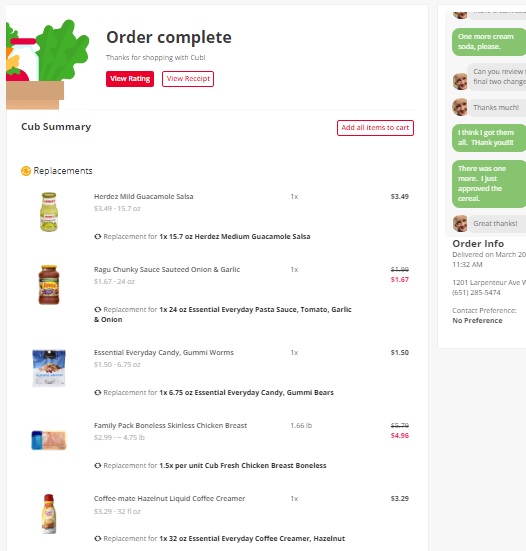
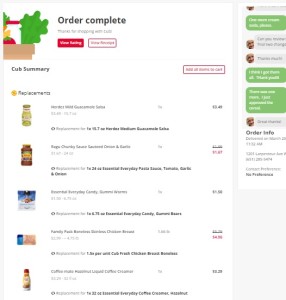 When our order was being shopped, we received a text alerting us. We were able to log in to the app (or to the website, which I used) and chat directly with the person doing the shopping. When a product was out of stock, we were given a suggestion for a replacement product which we could either accept or decline. In a couple of cases, she texted us and asked for our choice.
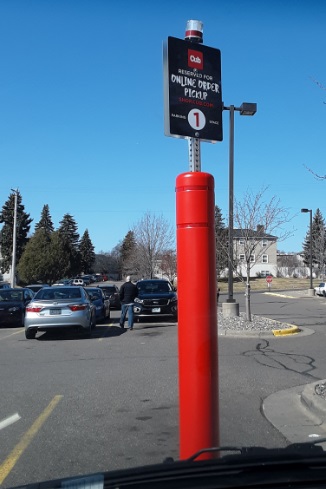
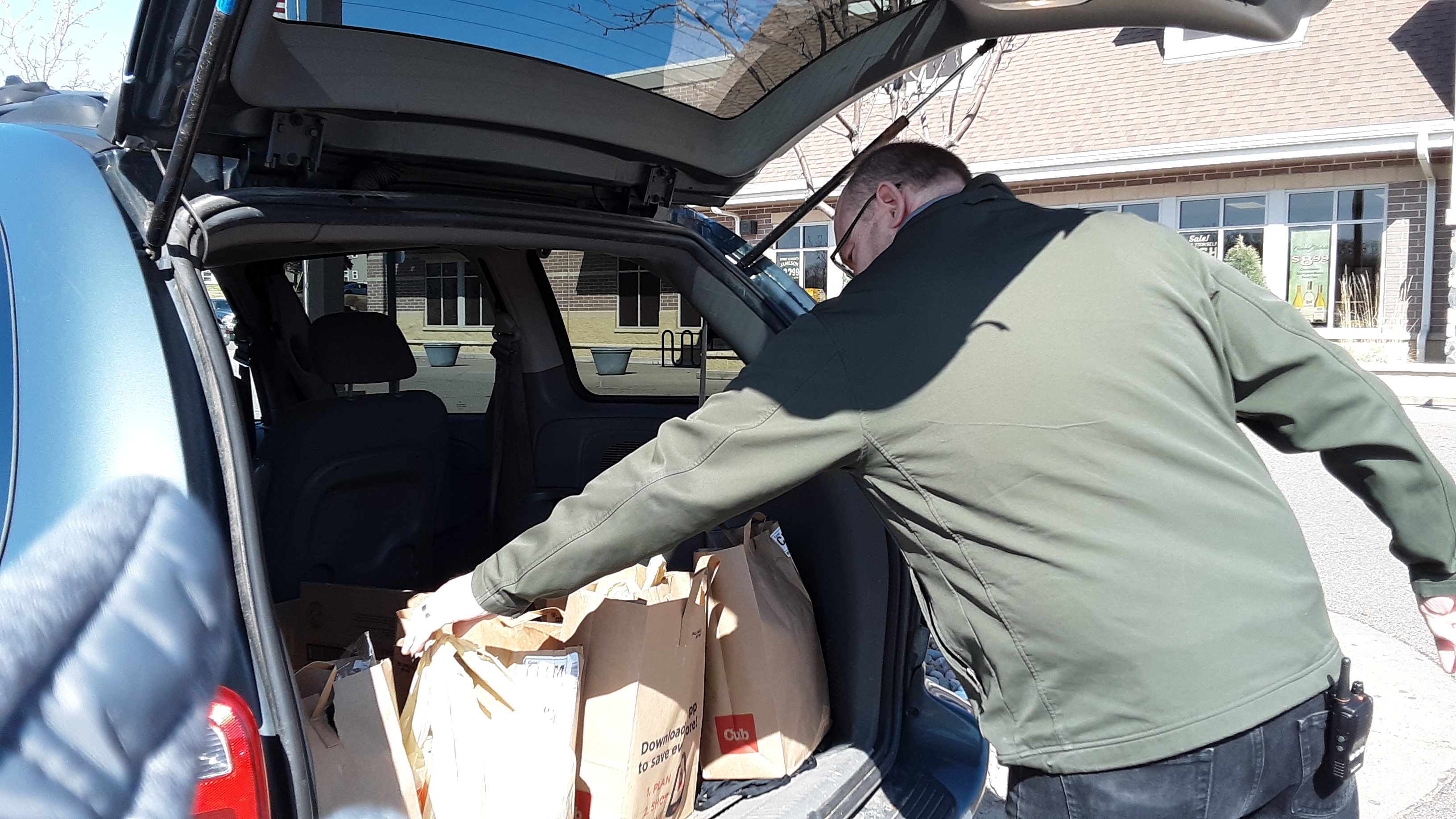
A few items (rice, hand sanitizer, and toilet paper) were completely out of stock, and we were informed. We were informed when she was finished, and at the store, we alerted them that we were there using the app. The employee loaded the groceries into our car, with no personal contact needed. Unlike at Walmart, we didn’t need to sign in, and it was possible to stay back several feet.
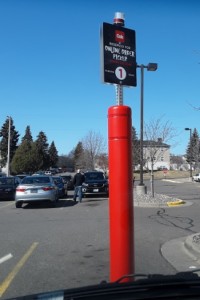 One big advantage of Cub was that the whole pickup took place without any close contact with the employee. We opened the door, and he loaded the groceries. At Walmart, there was the additional step of having to sign for the order on a small tablet computer, meaning that there was some chance of contamination. Update: As of March 25, Walmart is no longer requiring you to sign for the order. At Cub, you identify your car on the app (including the license number), so there is no need to sign personally. The employee simply comes out to the right car and delivers your groceries.
Walmart had two advantages over Cub. First of all, it was possible to get a slot slightly sooner. It appears that slots open up at midnight (local time, I’m guessing) and you can make reservations for the next day. It appears that with Cub, you need to make the reservation about five days out. Also, with Walmart, it appears that you can purchase any item in the store. So if you need items such as hardware, electronics, or even clothing, Walmart would be the best option. Since Cub is a grocery store, you’re limited to mostly groceries. (However, like any major supermarket, Cub always has a small selection of non-grocery items.) Also, Walmart has somewhat lower prices overall.
Despite those advantages of Walmart, we preferred Cub. Being able to communicate with the shopper with respect to substitutions was a very nice touch. If you think of an item at the last minute, you can add it in.
At Walmart, most of the substitutions were very reasonable, and we did have the opportunity to reject them. But there was no mechanism to ask for a different replacement. With Cub, that was possible. At Walmart, you reject any substitutions when you’re picking up your order, with no opportunity to get a different replacement.
To chat with the shopper while your order is being filled, you of course have to be available online at the right time. When life gets back to normal, perhaps that will be difficult. For the time being, though, that’s not a problem.
Of course, unlike at Walmart, nobody crashed into our car when we were picking up items at Cub. But that’s hardly the store’s fault. We’ll probably use Walmart again if we’re in more of a hurry or need non-grocery items. Their service was very good. But for most of our grocery needs during this crisis, we’ll probably rely on Cub.
Some links on this page are affiliate links, meaning that this site gets a small commission if you make a purchase after clicking on the link. The links to Cub, however, are not affiliate links, and we are not compensated if you use them..

 The State of Minnesota is now under a “stay at home” order, and many other areas now have similar restrictions. Non-essential businesses, especially ones which require close personal contact, are closed. And even if they were open, I wouldn’t want to see a barber right now. The close contact would make it likely that they would infect me, even if asymptomatic, or that I would infect them.