Category Archives: World War 2

OSS Collecting Tourist Photos, 1942

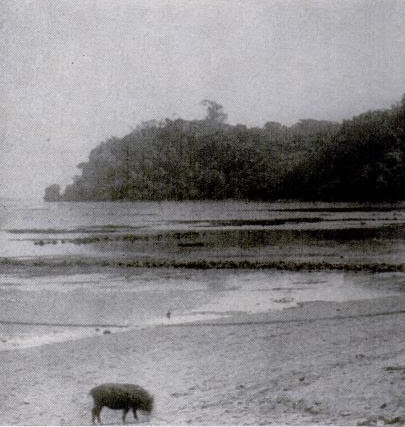
1942Oct5Life1Seventy-five years ago today, the October 5, 1942, issue of Life magazine included this nondescript tourist photo as an example of something the government desperately needed.  Specifically, the Office of Strategic Services (OSS), the forerunner of the CIA, was requesting tourist photos from around the world for use in invasion planning.

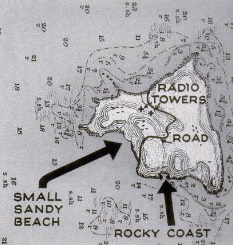
1942Oct5Life2To illustrate the point, they provided this map of hypothetical Fitzhugh Island, the site of a powerful radio transmitter being used by the enemy.  To silence the radio station, an invasion was required.  The location of the radio station was clearly visible on the prewar map.  But many details necessary to mount the invasion were unknown.  In particular, it was not known whether the beach was suitable for landing the invading forces.

This is where prewar tourists got involved.  In a dusty photograph album somewhere in America, there probably existed photographs taken during a prewar vacation to Fitzhugh Island.  That photograph, shown above, needed to get into the hands of the OSS to confirm that the beach was suitable.

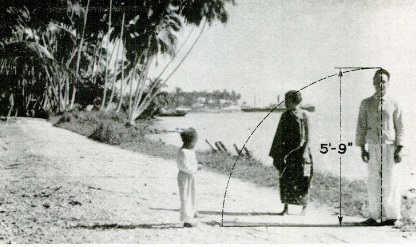
Many photographs would be useful for things like determining the composition of roads (and whether they would support a tank) and their width.  The photo shown below could be used to measure the width of the roadway, since the tourist’s height was known or could be readily estimated.  The image of the ship in the background also provided valuable clues as to the harbor’s suitability for invasion.

1942Oct5Life3

To get these photographs where they were needed, the OSS was asking for “all photgraphs (stills and movies) taken by tourists outside the U.S., in Europe, Asia, the Philippines, South Seas, Africa.  All types are useful, even family groups.”  To facilitate handling, the magazine asked those in possession of such photos to write for a questionaire (but to complete the questionaires before sending any photos).  The magazine provided the address of the OSS as P.O. Box 46, Station G, New York, N.Y.

After the hypothetical case of Fitzhugh Island, the magazine turned to an actual example of where such photos had been used. On February 27, 1942, British commandos under the command of  Lord Louis Mountbatten launched  Operation Biting, a successful raid against a Nazi RADAR at Bruneval, France, about twelve miles from Le Havre.

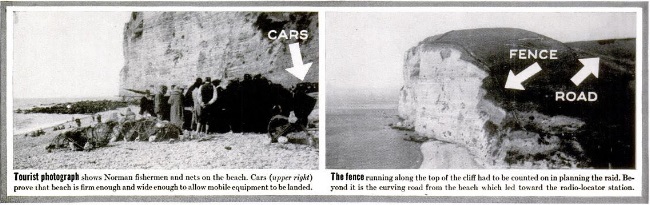
The BBC had previously broadcast a plea asking all people who had spent a holiday along the northern coast of France to send in any pictures they might have taken. Among the pictures that flooded in were the two shown below.

1942Oct5Life4

These  photos showed some critical details necessary for planning the raid.  The photo of fishermen on the left showed that there were cars on the beach, thus confirming that the sand would support mechanized equipment.  And the landscape on the right revealed a fence and the exact location of the road to the station.


1937 Parachute Jump for Young Comrades

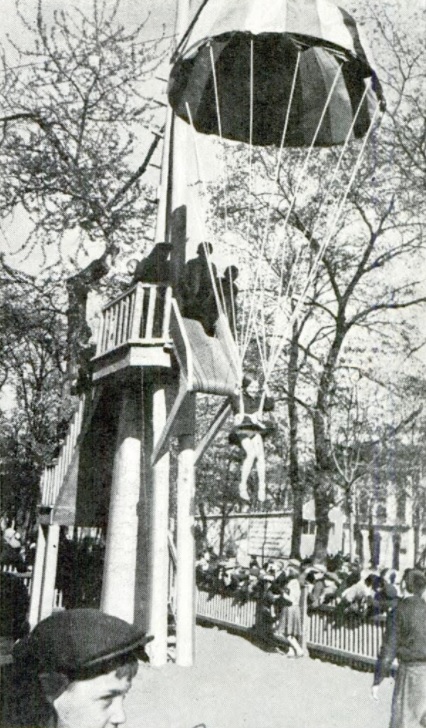
1937OctPMThis photo should put to rest, once and for all, the myth that commie kids never got to have any fun. Eighty years ago, parents the world over apparently weren’t quite as concerned that their children be protected from all conceivable dangers. Today, we might worry that the playground slide is too dangerous, but at least it deposits Junior in very close proximity to terra firma.

But they didn’t worry about things like that in 1937, and they certainly didn’t worry about it in the glorious Soviet Union.

In this Moscow park, the slide ended twelve feet above the ground, and the kids just had to trust the laws of aerodynamics to see them safely to the ground.  The accompanying text in the October 1937 issue of Popular Mechanics notes that this was one of the park’s most popular features.

The first woman in space, Valentina Tereshkova, was born in 1937, so my first hunch was wrong, since the young comrade shown in this 1937 photo obviously wasn’t born in 1937. But Comrade Valentina Vladimirovna was an amateur skydiver when, as a textile worker, she was inducted into the Cosmonaut Corps.  And there is definitely a family resemblance.

RIAN archive 612748 Valentina Tereshkova.jpg

Cosmonaut Valentina Tereshkova. Wikipedia photo.

I’m sticking to my theory that the young comrade jumping from the slide is the future cosmonaut’s older sister.

In any event, if you have kids jumping off twelve foot slides, Hitler should have known that he didn’t stand a chance.


1942: Bringing the Car Radio on a Bike

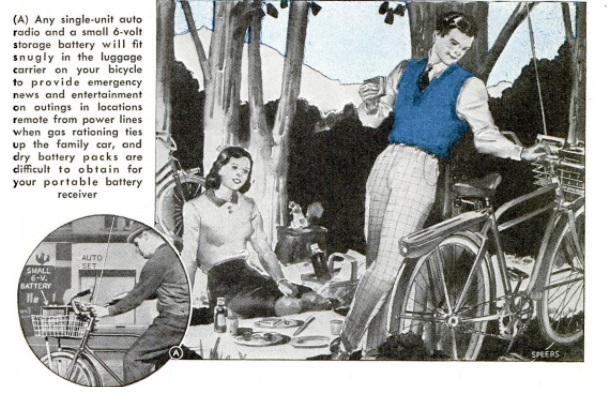
1942OctPMThere was a war going on 75 years ago, but that didn’t stop this young man from enjoying a picnic with his girl, complete with emergency news and entertainment from the radio, as shown in the October 1942 issue of Popular Mechanics.

The war did, however, make planning the outing a bit more challenging.  Gas rationing meant that the family car was out of service, and shortages of B batteries meant that the portable receiver wasn’t an option. Undaunted, he simply borrowed the receiver out of the family car, along with a six-volt battery, probably borrowed from the same car. Dad wasn’t going to be driving anywhere, anyway, so he presumably wouldn’t miss it.

The radio and battery were mounted in the bicycle’s luggage carrier, and Junior and his girl were off to a picnic lunch at this secluded spot.  Junior works on one of the sandwiches as he tunes in some appropriate musical program, and his girl looks on with admiration at his ingenuity.  Not even Hitler and Tojo can put a damper on their romantic picnic.


1942 Kate Smith & Jell-O

1942Sep28LifeThis Jello ad appeared in Life magazine 75 years ago today, September 28, 1942.

Kate Smith, whose program was heard Friday evenings on CBS, reported that she was tickled pink when she learned that Jell-O and Jell-O puddings would be her sponsor. She loved to eat real lucious food and loved to talk about it.

And when she thought of all of the marvelous things that could be made with Jell-O and Jell-O puddings, she said that she could write a book, and just might write one.

She reported that she was busy rounding up her favorite recipes and figuring out new tricks. A few of those recipes appeared in the ad, and she was crazy about every one of them.  And Kate wasn’t one to jump on the all-natural bandwagon.  “Jell-O’s Strawberry, Raspberry, and Cherry flavors seem better than ever to me these days.  Richer, with a real fresh-picked taste.  And they tell me it’s because they’ve found a way to artificially enhance the flavor and then keep it ‘locked-in.'”

Here’s Kate Smith singing the White Cliffs of Dover in 1942:


Fern Sunde 1918-1991

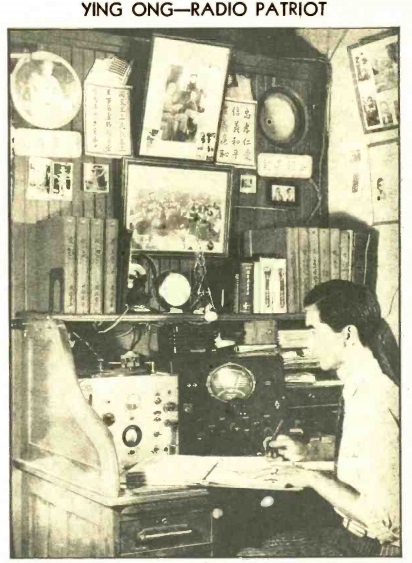
FernSundeFern Sunde (née Blodgett) was born in Regina, Saskatchewan in 1918, and grew up in Cobourg, Ontario. When Canada entered the war, she was a secretary at a life insurance company in Toronto, and enrolled in a night school to learn radio telegraphy. She received her certificate on June 13, 1941, and was the first Canadian woman to do so.

No Canadian lines were willing to take her, and she eventually signed on with the Norwegian freighter MS Mosdale as radio operator. She was initially the only radio operator aboard, but when regulations changed, she became one of three, working four hour shifts with eight hours off.

While she was the first woman to serve aboard a Norwegian merchant ship, 23 other women followed in her footsteps, 21 Canadians and two Americans.

The ship’s captain was Gerner Sunde, and the two eventually wed. She was awarded the Norwegian krigsmedaljen (war medal) in 1943.  She died in Norway in 1991.

References


Staff Sergeant Staff Sergeant Gerald W. Wagner, Japanese POW 1942-45

1942Aug8RadioGuideA few months after the fall of Corregidor,  this letter appeared in the August 8, 1942, issue of Radio Guide.

An earlier issue of the magazine had carried an item about Army nurses who had escaped from Bataan. This was spotted by one Mrs. G.C. Wild, originally of Rapid City, South Dakota, who was then in Richmond, Kentucky, on a defense project. Mrs. Wild was the sister of Staff Sergeant Gerald W. Wagner, who had been assigned to the Sternberg General Hospital in Manila. She and her mother had no word from Sgt. Wagner since February, 1942. After reading about the nurses, she wrote to the magazine asking if they could pass along her request for information about her brother, in the event that one of the nurses could provide some information as to his fate.

While the magazine had no way to contact the nurses, it published the letter, and asked any readers who knew any of the nurses to pass along the plea.

While it’s unlikely that the letter writer received any reply to her plea, it appears that Sgt. Wagner survived the war. He is listed as having been liberated from the Cabanatuan prison camp, and the report of the liberation appears in this February 2, 1945, newspaper report.  He was later awarded the Bronze Star.


American POW’s in China, 1942

1942Sep14LifeSeventy-five years ago today, the September 14, 1942, issue of Life magazine carried some of the first photographs of American prisoners of war, both military and civilian, held by Japan.  The photographs appeared in an English-language magazine published in Japanese-occupied China with the unlikely title of “Freedom,” which detailed the supposedly benevolent intentions of the Japanese toward the Asiatic people.

The photographs of the American prisoners were published to show the supposedly humane conditions the prisoners were experiencing.  Included were the photos shown below, which supposedly depicted the prisoners receiving radio receivers for entertainment during their confinement.

1942Sep14Life2This first photo shows the gift of the receivers to three representatives of the prisoners, standing at attention while they accept the alleged gift.  The recipient on the left is not identified.  Shown in the center is U.S. Marine Maj. James Patrick Sinnot Devereux, who later served in the U.S. House of Representatives from Maryland.  At right is civilian engineer Raymond R. Rutledge, who was working on a construction project at Wake Island when it fell to the Japanese.  The military-style hat he is wearing is actually an American Legion cap.  In another photo in the magazine, the cap is visible and reveals that he was a Californian.  The photo below shows Maj. Devereux (seated at right) with his unenthusiastic men allegedly listening to the radio in their barracks:

1942Sep14Life3

Despite the upbeat text of the Japanese propaganda article, most of the photos depict obviously unhappy men such as those shown below, in which they are shown signing phonograph recordings which were later broadcast in POW broadcasts from station JOAK in Tokyo:

1942Sep14Life4


How to Unplug Appliances, 1942 or 2017

1942SepPMToday, as a public service, we bring this illustration from the September 1942 issue of Popular Mechanics, which is just as relevant today as it was 75 years ago.

The drawing, which is clearly labeled “WRONG,” shows the housewife unplugging the radio by yanking on the cord.  The illustration in the lower left corner, shows the correct way, namely, by firmly grasping the plug.

The artist perfectly captures what appears to be a cavalier attitude on the woman’s part.  While she was probably otherwise the pinnacle of efficiency, the magazine pointed out that bad connections and broken power cords were the result of such treatment. It was a particularly bad idea in the case of the table radio, since it probably had a “curtain burner” cord, which would withstand few such jerks before causing the receiver to develop crackly noises or simply refuse to work. But even with plain line cords, then or now, the plug was easily damaged.

veracruzflagThe magazine even noted that rubber-covered plugs were not plentiful, so this woman’s treatment of the strategic material was practically unpatriotic in wartime.

As far as we’re concerned, it’s still unpatriotic.  If you love your country, then you should unplug appliances by firmly grasping the plug.


1942 Radio Census

1942Sep7BC1

Seventy-five years ago today, the September 7, 1942, issue of Broadcasting magazine included a supplement with the radio figures from the 1940 census, as well as a complete log of all U.S. broadcast stations as of 1942, and figures showing the numbers of radio retailers and sales figures. The map above shows the percentage of radio homes in 1940. Since there was a freeze on new stations during the War, and since no new radios were being produced, the issue provides an interesting snapshot of radio in the United States during the War years.

Massachussetts led the nation with 96.2% of its homes being equipped with a radio. Within that state, the county with the highest percentage of radio households was Norfolk County, with 98.1% of the households having at least one radio. The last place honors went to the State of Mississippi, with only 39.9% of homes having a radio, despite twelve broadcasting stations in the state. Within that state, the county with the lowest percentage of radio households was Issaquana County, where only 320 households out of 1779 had a radio, or only 18%.

Of Minnesota’s 728,359 households, 664,296 had at least one radio, for a percentage of 91.2. Lake of the Woods County had the lowest penetration of radio receivers, with 1150 radio households out of 1501 total, for a percentage of 76.6%. Minneapolis and St. Paul had very high percentages of radio households, 96.6% and 96.7% respectively. They were edged out, however, by Rochester, with 96.8% of the households having a radio. The other city included in the listing of cities over 25,000 was Duluth, with 95.7% of the households having a radio.

1942Sep7BC2The station listing shown here reveals that during the War years, Minneapolis and St. Paul were served by seven stations. Both KSTP, 1500 kHz, and WCCO, 830 kHz, had 50,000 watt signals full time.

Three stations had 5000 watt signals during the daytime: WDGY on 1130 kHz, reduced its power to 500 watts at night, but the hours were determined by local time in Albuquerque, since it protected a station there. WLB, which later became KUOM, was daytime only, and also shared time on its 770 kHz frequency with WCAL in Northfield, an arrangement that continued in later decades. WTCN reduced its power on 1280 kHz to 1000 watts at night.

WLOL on 1330 kHz was licensed for 1000 watts, and WMIN ran 250 watts at 1400 kHz.

Duluth was listed as the home to KDAL on 610 kHz and WEBC on 1320 kHz. The other station serving the Twin Ports, WDSM, was licensed to Superior, Wisconsin, and appeared in the Wisconsin listings.

Cities with 250 watt stations included Albert Lea (KATE, 1450 kHz), Fergus Falls (KGDE, 1230 kHz, with 100 watts nighttime power), Mankato (KYSM, 1230), Moorhead (KVOX, 1340), Rochester (KROC, 1340), St. Cloud (KFAM, 1450), Virginia (WHLB, 1400), Willmar (KWLM, 1340), and Winona (KWNO, 1230).

Another station covering Minnesota but not listed was WDAY in Fargo, which corrected the oversight by purchasing two full-page ads, one in the Minnesota listing and another in the North Dakota section, pointing out that it had a large service area in both states, and including a story, that must have seemed just a bit risque in 1942, about a traveling soap salesman and a farmer’s daughter.

1942Sep7BC4

1942Sep7BC3


Radio Constructor, 1947-1981

1947AugRadioConstructorSeventy years ago this month, August 1947, the first issue of the British magazine Radio Constructor rolled off the presses, with the matshead bearing the names of editors Arthur C. Gee, G2UK, and W. Norman Stevens, G3AKA, and business manager C.W.C. Overland, G2ATV. According to the introductory editorial, postwar Britain was seeing a boom in short wave listening almost as big as the boom in broadcast listening after the first war.

1947AugRadioConstructor1The first of many receiver plans to be published by the magazine was a four tube (or three tubes, plus selenium rectifier) AC-DC broadcast set shown here. The first issue also carried a few theoretical articles, as well as the plans for one transmitter.

The magazine continued until September 1981, when the final issue was published.