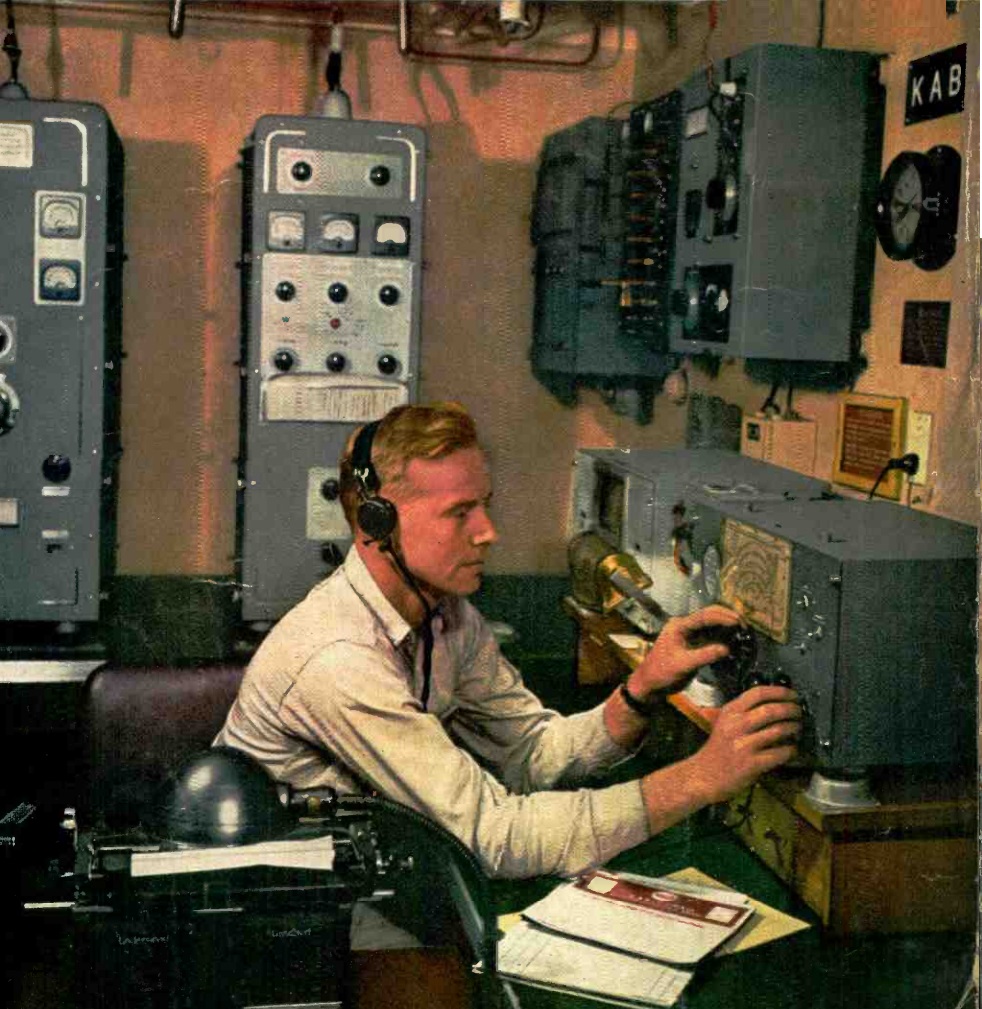
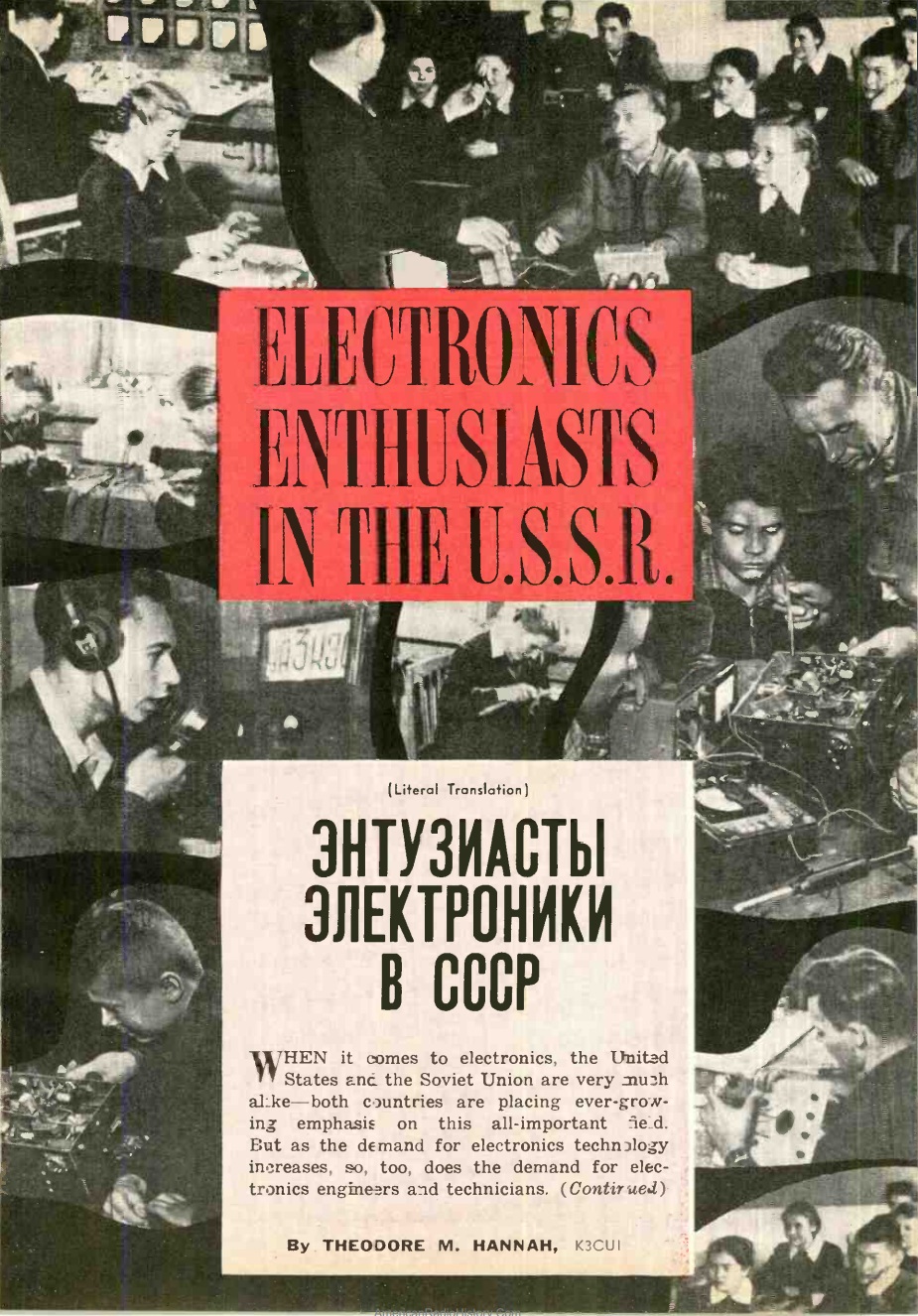
 The cover of the October 1961 issue of Popular Electronics had a teaser saying, “you wouldn’t want to be an electronics hobbyist in the U.S.S.R.” The accompanying article, however, didn’t really deliver on that premise. I wouldn’t have wanted to be anything in the old Soviet Union, but as the article shows, a hobby in electronics would actually be a bright spot in an otherwise bleak existence.
The Soviets recognized that a hobby in electronics prepared young people for a career in science, and they did a lot to encourage it, by providing awards for copying Morse code and direction finding and even on-the-air contests. Club stations were plentiful, so a young person wishing to get on the air had many opportunities. The Young Pioneers youth organization employed instructors in Morse code and radio theory.
Along with rifle, parachute jumping, and motorcycle clubs, radio clubs were affiliated with the Red Army through ДОСААФ (DOSAAF), the Volunteer Society for Cooperation with the Army, Aviation, and Navy.
Radio and electronics magazines, many of which we feature here, were popular in the Soviet Union. To view a treasure trove of these and other magazines, be sure to visit Журналы СССР.
The magazine even provided the Moscow phone number of the Central Radio Club, K-5-92-71, and noted that if a reader ever found themselves in Moscow, they should give them a call.
The beginner wishing to get a start in radio needed to first complete the basic DOSAAF electronics course, at which point he or she would take the SWL test to get the SWL license necessary to listen on the ham bands. This included a 10 WPM code test, as well as a written test on subjects such as operating procedures, Q codes, international prefixes, and even first aid.
After some experience, and as long as the prospective ham was at least 14 years old, he would then be allowed to take the test to become a ham. This required a 12 WPM code test and a fairly rigorous written test. Higher class licenses were available with code speeds of 18 WPM and a rather difficult test. There was also a no-code license which allowed 5 watts on 144 and 420 MHz, available to those 12 and older.
For another look at amateur radio in the Soviet Union in 1934 and 1965, see our earlier post.

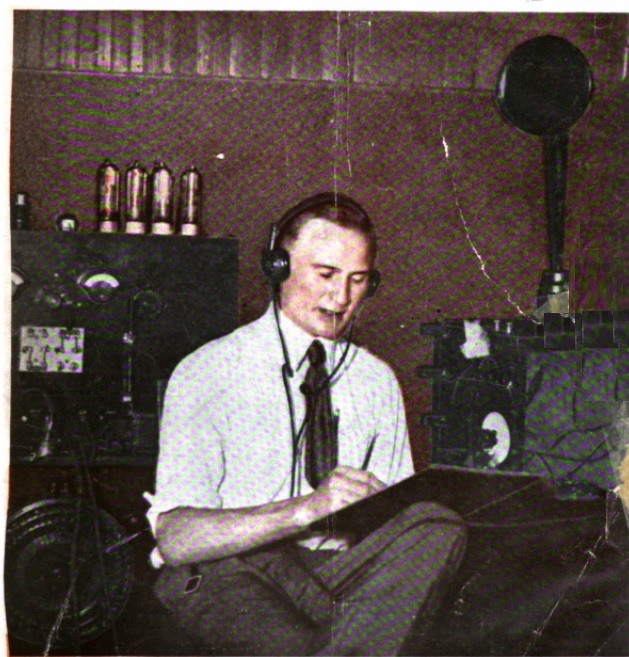 Shown here, on the cover of the October 1921 issue of Wireless Age, is H.O. Peterson of the University of Nebraska, Lincoln, at the controls of station 9YY, which he had designed. The station was part of the laboratory equipment of the Department of Electrical Engineering.