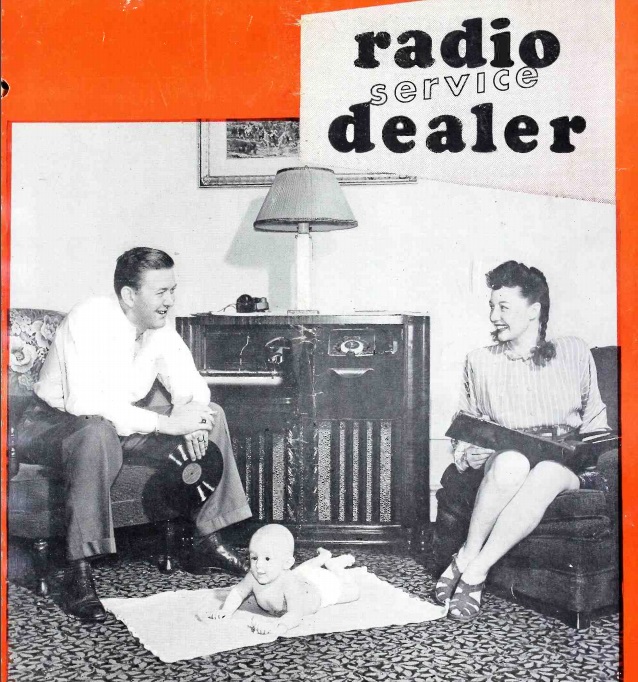
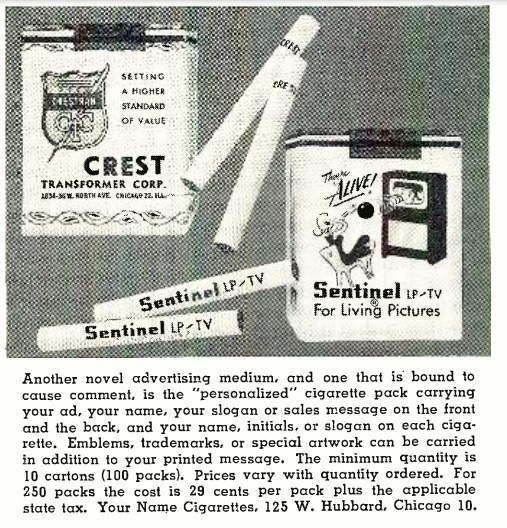
 The radio dealer is always looking for ways to promote the business, and one good way of doing that is with some sort of advertising novelty. The September 1951 issue of Radio News details many of them, such as spoon trays, calendars, key chains, and, of course, match books. But the dealer who really wanted to be remembered by his customers couldn’t go wrong by handing out personalized packs of cigarettes! Not only did the package carry the advertisement, but the dealer could have his name printed right on the cigarette itself. The minimum order was 100 packs, and the price varied by quantity. For 250 packs, the cost was 29 cents a pack, which was only a small premium over the going price of about a quarter a pack.
The cigarettes were supplied by Your Name Cigarettes, 125 West Hubbard, Chicago, a business owned by one Lester B. Patterson. Patterson was a serial entrepreneur. In addition to the cigarette company, he operated the Maxilume Company, Transveneer Company, and Clinical Dental Laboratories. The promotional cigarettes were manufactured by a cigarette company in the East and sold by Patterson. That activity was apparently uneventful, but it was the dental lab that led to Patterson’s downfall.
The dental lab probably served an important niche market for discount dentures. He would send customers a paste, used to make an impression of their old dentures. They would send those impressions, along with the old dentures, to Patterson, who would forward them to a lab which would manufacture a new pair. Patterson would then send the new dentures to the customer. This apparently drew the ire of the dental associations in the states where the customers lived, since the price was probably a lot cheaper.
Eventually, Patterson was charged with violating a federal statute prohibiting the mailing of a denture constructed from an impression made by other than a licensed dentist. He was convicted and sentenced to six months in prison. He appealed to the Seventh Circuit Court of Appeals, and argued that the patient had a constitutional right to make an impression of his own teeth, even if it was against the law to make an impression of someone else’s teeth.
The court apparently agreed with the proposition that someone has the constitutional right to take an impression of their own teeth. But that wasn’t what the defendant was charged with. The statute prohibited the making of dentures from that impression and mailing it. So the appeals court affirmed Patterson’s conviction. (The trial transcript is available at this link.)

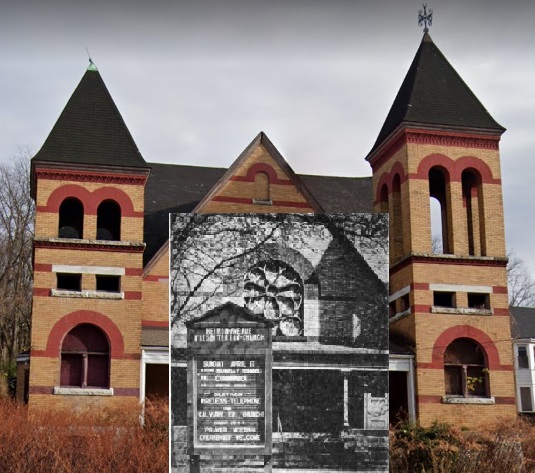 From the picture on Google Street View, it appears that the Herron Avenue Presbyterian Church in Pittsburgh, Pennsylvania, is a vacant building today. And a hundred years ago, the pulpit was apparently vacant.
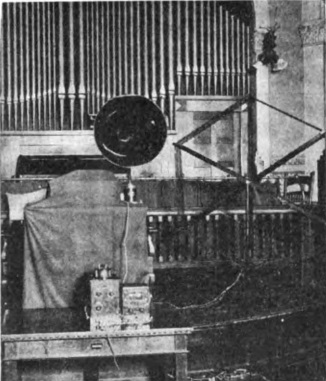 Undaunted, the members figured out a way to fill the pulpit, in the form of the radio receiver shown here. In the absence of a regular pastor, the pulpit was fitted with a radio receiver, and the service was received by radio from the Calvary Episcopal Church some ten miles away. According to the account in the September 1921 issue of Wireless Age, the service was received with unmistakable distinctness. “Interest was so well sustained throughout the religious services, that the proverbial sleeping brother in the amen corner was conspicuously absent.”