


WikiReader.
My website contains a review of the WikiReader. This little device set me back about $20. It’s apparently no longer available on Amazon , but there do seem to be examples available on eBay and elsewhere. It’s a small battery-operated device that contains in its internal memory (with some limitations) the full contents of the English language Wikipedia.
In other words, it contains what its manufacturer called “the Internet without the Internet.” If you’re transported back in time, if you get stranded on another planet or on Gilligan’s Island, or if the world suffers TEOTWAWKI (The End Of The World As We Know It), you’ll no longer have access to the Internet, but you’ll have a pretty good summary of just about any subject. The batteries of the WikiReader will eventually go dead, but before that happens, all you need to do is find the Wikipedia article on the history of the battery, take some good notes, and you’ll be able to whip yourself up a new one when the time comes. Once you’re settled in in your new era, you find an interesting article such as the one on the electrical telegraph, put together a prototype, and then make arrangements to demonstrate it to Julius Caesar or Louis XIV.
The WikiReader has a number of practical limitations, and I rarely use it. But it’s carefully put away just in case I’m involved in inadvertent time travel. In my pocket, I have the important knowledge of the 21st century. If I accidentally get stuck in a time warp, I’m going to make the best of the situation.
It appears that I’m not the only one who thinks that way. I recently got an e-mail from Amazon stating that customers who bought the WikiReader also bought a book with the intriguing title The Knowledge: How to Rebuild Civilization in the Aftermath of a Cataclysm by Lewis Dartnell . The book is available in the usual places, such as Amazon, amazon.ca in Canada
 , or your local library.
As the title suggests, the book is written for the benefit of some future inhabitant of Earth who needs to reconstruct (or “reboot” as author Dartnell calls it) civilization after some sort of cataclysm. The first chapter suggests some possible sources of the disaster, and the second chapter discusses the “grace period.” After some types of disasters, such as a pandemic (such as happened in Earth Abides by George Stewart or in my own novel Caretaker
 ), the survivors of the disaster have at their disposal the spoils of the earlier civilization. It’s a relatively simple matter to eat canned food, set up generators, and take advantage of what was left behind. In some cases, such as pandemic, that grace period might extend for generations. In other cases, such as nuclear war, there will be fewer benefits available from the earlier civilization, and survivors will need to get to work right away tending to their immediate needs.
Dartnell doesn’t dwell a great deal on the grace period, since he correctly notes that numerous other survival manuals have been written. What he spends most of his time talking about is rebuilding a technological civilization after the grace period has ended. With a few exceptions (such as how to make soap), he doesn’t provide enough detail about any given technology in order to show exactly how they’re done. But Dartnell does give enough clues in order to point survivors in the right direction.
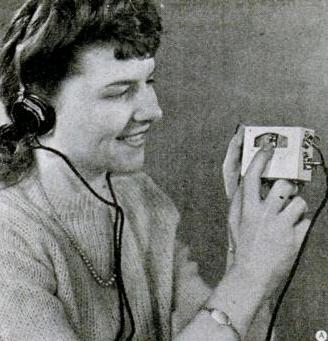
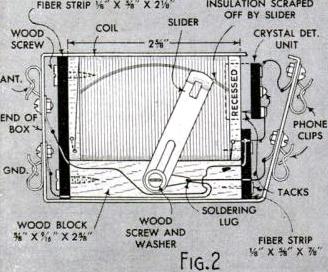
For example, in the section on radio communication, he describes how to build a crystal radio, and he gives enough detail to allow the future archaeologist to recreate one. He gives some of the theory, but no unnecessary theory. In our current timeline, for example, it probably would have been impossible for society to come up with radio without first having an understanding of Maxwell’s Equations. Instead, Dartnell gives only enough theory to make the thing work. After building a few radios, the post-apocalyptic society would eventually come up with Maxwell’s Equations on its own. So future history would follow the same general course, but in the opposite order from ours in some instances.
In addition to the plans for the receiver, Dartnell also gives enough detail so that someone could probably come up with a workable spark-gap transmitter. I think the stumbling block for the future inventor would be coming up with an earphone sensitive enough to work with the receiver described. Armed with theory in our own civilization, the telephone was created first, which gave the required prior technology. Dartnell does qualitatively describe both a magnetic and piezoelectric earphone, but either one would require a great deal of trial and error. In our own history, a skilled inventor would know enough theory to realize that sound would come out of a telephone receiver if hooked up properly. If it didn’t work the first time, he would eventually figure out that he needed to make it more sensitive by adding more windings to the coil. The post-apocalyptic inventor would have more trial and error. But if he or she had enough faith in the book (perhaps because he knew that the soapmaking description was correct), that might provide the incentive to keep experimenting. (Dartnell does provide the future inventor with Edison’s admonition that genius is 1% inspiration and 99% perspiration.)
Similarly, Dartnell gives enough clues to invent the triode tube. There isn’t nearly enough detail to make one, but he tells just enough about the Edison effect so that a gifted future scientist could verify it, and some hints as to how this effect could be harnessed to provide amplification. Dartnell mentions in passing that oscillation is possible, although I hope the future scientist figures out that feedback is necessary in order to get the thing to produce radio signals.
In order to jump-start science, Dartnell provides a few simple experiments to prove non-intuitive concepts, such as the Earth spinning on its axis (Foucault’s Pendulum) and revolving around the sun (stars rising four minutes earlier each night). In case the surviving society has lost track of time, he shows how to establish the year, either by the proper motion of Barnard’s Star or changes in the night sky due to the Earth’s axial precession. The book contains convenient charts showing the reader the year (as well as a map and picture to locate the Svalbard Global Seed Vault).
In short, the future reader will get a lot of useful information from this book. In most cases, the ideas contained in the book will need additional details, but Dartnell points the future inventor on the right path for either experimentation, or at least a clue as to which ancient texts he or she should try to recover. (The book contains an extensive bibliography to help the future inventor in that quest.)
Chances are, nobody would read a book entitled, “The History of Science and Technology.” But when you get to the end, you realize that’s exactly what you read. In detailing the easiest course for future civilization, he necessarily recreates our own. There will, of course, be some differences. For example, most readily accessible deposits of fossil fuels will be gone for the next civilization. But he offers a number of workarounds. And since the current nitrate supplies of our early civilization (see The Guano Islands Act for an interesting discussion of a seemingly mundane commodity) are also depleted, he goes into more detail regarding the relatively simple chemistry required to fix nitrogen from the air. On the other hand, aluminum requires a great deal of industry to refine. But in the case of a future society, even hundreds of thousands of years in the future, our dumps will provide ample mines of high-grade ore that will need little more than melting down and re-casting.
In short, if you bought a WikiReader after reading my review, then, yes, Amazon was right. You’ll want a copy of Dardnell’s book as well.
More information, including a discussion forum, is at the book’s website: the-knowledge.org
Buy this Book on Amazon:
USA: Canada:
Click Here For Today’s Ripley’s Believe It Or Not Cartoon 

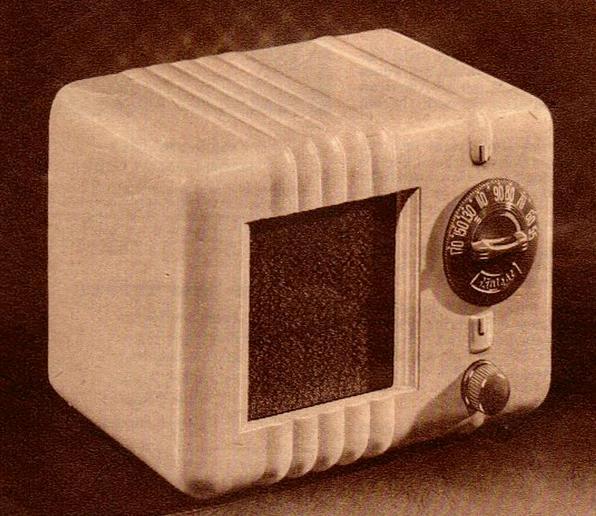 In an earlier post, we showed an inexpensive 1940 four-tube broadcast radio for $7.95 available at Walgreen’s. A modest radio such as this one would probably stay in service until the end of the War, because on April 22, 1942, the War Production board ended the production of civilian radio receivers. So if you had a radio, that’s the one you would have for the duration.
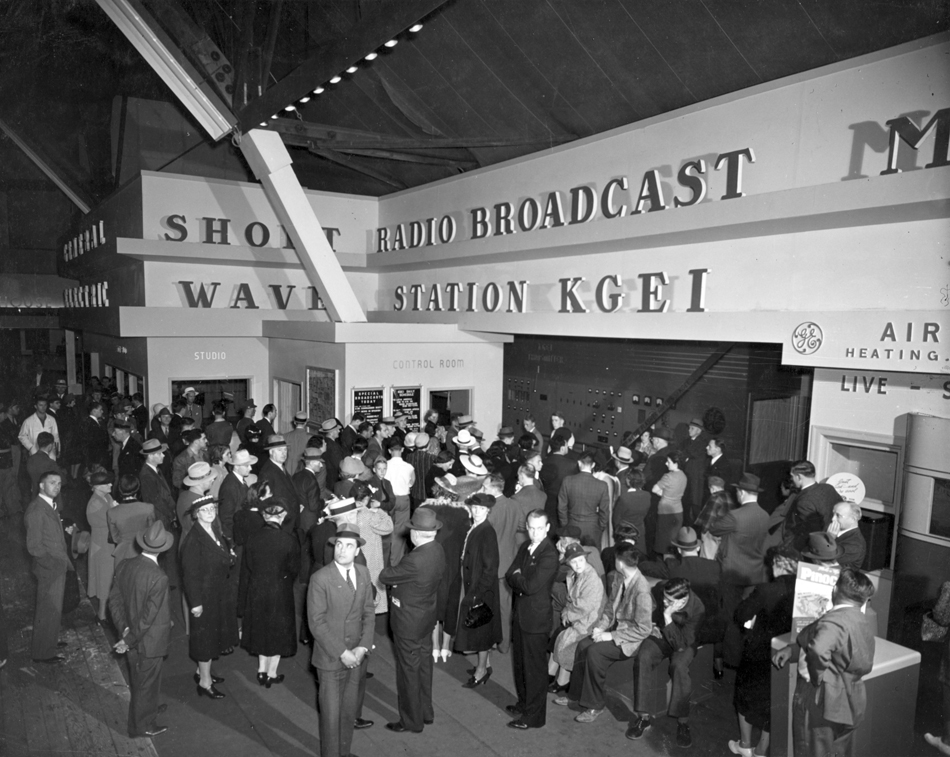
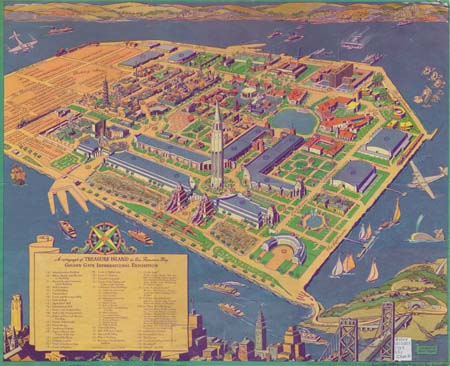
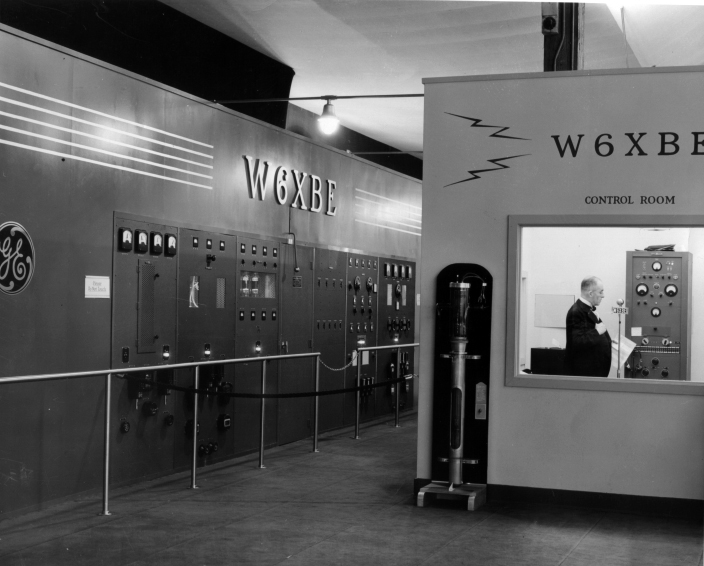




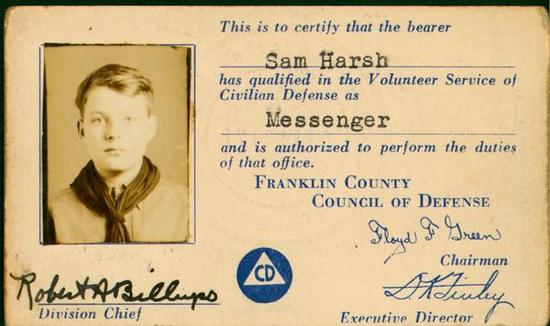
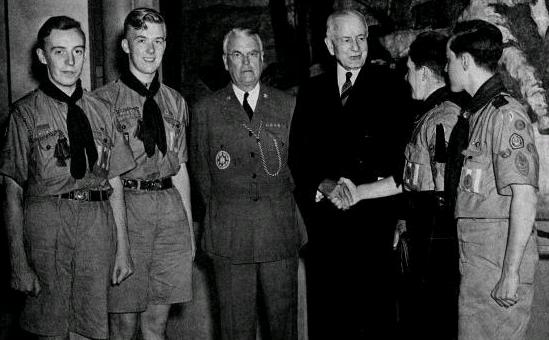

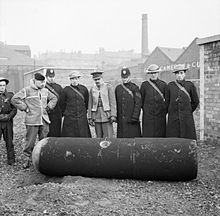
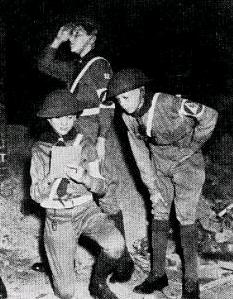
 , page 275.
 , page 140.
 , page 220.