Category Archives: Radio history

Amateur Station 9CXX, 1925

9cxx1925

Ninety years ago this month, in an article entitled “Riding the Shortwaves,” Radio Age (November 1925) carried this photo of the efficient, but surprisingly simple, amateur station of 16 year old 9CXX, located at 514 Fairview Drive, Cedar Rapids, Iowa.  The article was an introduction to amateur radio, and pointed out that stations such as the one shown here could pull in stations from around the world with a three-tube receiver, “while broadcast listeners are using receivers with five to nine tubes.”

The article focused on the station of young 9CXX because in the summer of 1925, the then-15-year-old amateur had come to prominence by being the only station who managed to keep in touch with WNP, the station of the MacMillan Arctic expedition aboard the Bowdoin.

9cxxRxA schematic of the 9CXX receiver is shown here.  It was also followed by two stages of audio amplification, which are not shown.  As can be seen, the circuit is very simple.  While the receiver is regenerative, it has no regeneration control.  Instead, the regeneration was adjusted by reaching in and carefully moving the two coils.  And in order to avoid capacity effects, the tuning condenser (which had to be of the highest quality, according to the article) had no type of vernier dial.  Instead, the shaft had an eraser mounted at the end which was used to carefully tune the set.  With the two stages of audio, it was reported that the Arctic expedition had come in loud and clear to the point that the operator could remove the headphones and hear the voices of the crew throughout the room.

9cxxTx

9CXX had two transmitters, shown here.  The one on the right put out 50 watts, and the one on the left 1000 watts.  The high power transmitter used 4000 volts on the plate.  When the power supply caused the house lights to dim, the 15 year old installed a new 20 amp circuit, running a heavy cable up from the house’s service box.  The contacts with the Arctic were made on 15, 16, and 21 meters.  He routinely made contact with Australia, usually on 40 meters.

When the young ham made his contacts with the Arctic, it was with antennas installed in a tree.  “Having built a dream house, on Colonial lines, his parents were thinking more of architectural beauty than of scientific achievement, and poles are likely to be unsightly.  But since their son established his remarkable record there have been erected on the roof two thirty-foot masts.”

If the call sign looks vaguely familiar, that’s because it was held by someone who went on to continued prominence in radio, Arthur A. “Art” Collins, who later held the calls W9CXX and W0CXX.  Collins built is first radio, a crystal set using a Quaker Oats box, at age 9.  By 1923, after attending a two-day radio course at Iowa State University in Ames, he had his amateur license.  In 1931, then married, he decided to turn his hobby into a business and started Collins Radio in his basement at 1620 Sixth Ave. S.E., Cedar Rapids.

He formally incorporated the company in 1933, and by 1954, the company, now Rockwell-Collins, had sales of $80 million. The company remained a leading producer of broadcast transmitters until the 1970’s, and also produced amateur equipment most of that time.  Along with fellow  amateur General Curtis LeMay, Collins played a large role in the adoption of SSB voice by the U.S. military.

A good biography of Art Collins can be found at WA3KEY’s site.

Read More at Amazon

Click Here For Today’s Ripley’s Believe It Or Not Cartoon


Battle of Fort Rivière, 1915

Battle of Fort Rivière. USMC image.

Battle of Fort Rivière. USMC image.

A hundred years ago today, November 17, 1915, the United States fought the Battle of Fort Rivière.  Chances are, most Americans have never heard of this battle, even though it resulted in three Medals of Honor being awarded to U.S. marines or sailors.

Among the Medal of Honor recipients was then-Major, later General Smedley Darlington Butler, who led the U.S. forces in the battle, which was part of the U.S. occupation of Haiti, which had begun on July 28, 1915.  The occupation had been motivated by two factors.  Those factors overlap a great deal, and historians have debated the relative importance of each.  First of all, there was a need to protect U.S. commercial interests in Haiti.  The country had potential with agriculture, minerals, and ports.  American interests were hampered by, among other things, the fact that foreigners were not allowed to own property.

The other concern was German influence in the Western Hemisphere, and the United States viewed Germany as having too much influence in Haiti.  While the German population was quite small, it did have a very great commercial influence, since a very large portion of the commercial activity was controlled by German families with strong ties to the old country.  Also, the Germans were more willing to marry in to prominent Mulatto families, thus skirting the property ownership laws.

President Wilson sent in the marines in July, and the largest battle took place on November 17 as U.S. sailors and marines stormed an old French fort where the peasant rebels were holed up.  The battle against the poorly equipped rebels was over quickly.  Over 50 rebels were killed.  The only U.S. casualty was a marine who had two teeth knocked out by a rock thrown at him by one of the rebels.  While a few later skirmishes took place, this was the decisive battle.

Under the occupation, Haiti adopted a new constitution written by then-Secretary of the Navy Franklin D. Roosevelt.  It gave U.S. officials more or less absolute veto power over acts of the Haitian government, and also guaranteed foreigners the right to own property.

The occupation did have the result of modernizing Haiti.  For example, Port-au-Prince became the first location in the Caribbean to have an automated dial telephone system.  Also, Haiti had radio broadcasting as early as 1926, as reported in the February 26, 1927, issue of Radio World.

General Smedley Butler

An adult male looking to the right in a military uniform; military ribbons are visible.

General Smedley Butler. Wikipedia photo.

As a result of the battle, Butler received the first of his two Medals of Honor, and he went on to become, at the time, the nation’s most decorated military hero, and made a name for himself two other times off the battlefield.

The first was in in 1934 when he testified before the House Special Committee on Un-American Activities, revealing what came to be known as the “Business Plot.”

He testified that he had been called upon by business leaders to lead a march of veterans on Washington, at which point he would stage a coup against President Roosevelt. Roosevelt would be kept on as a puppet figure, with Butler wielding most of the power. Butler had been a key figure in earlier marches by veterans, was respected as a military leader, and the conspirators, most of whose names were never publicly revealed, planned to use Butler as their puppet, so he testified.

The Committee, and the American press, generally dismissed Butler’s testimony as an implausible conspiracy theory.  The phrase “tinfoil hat” hadn’t yet been coined, but if it had, it probably would have been applied to Butler.  Compounding the problem was that Butler seemingly hadn’t named any names, although this wasn’t entirely true.  He had named names, but since most of his allegations amounted to hearsay, the Committee had refused to make them public.

The most plausible explanation, it seems to me, is that there was indeed a conspiracy to overthrow the government, and that Butler was approached to lead it. It doesn’t appear that he had any motive to fabricate the story. However, it also seems likely to me that the conspiracy wasn’t as large as he was led to believe by those who approached him.

In 1935, based upon his experiences as a career military officer, Butler published “War is a Racket,” a widely-distributed pamphlet in which he argues that war is, indeed, a racket, which he summarized as follows:

War is a racket. It always has been. It is possibly the oldest, easily the most profitable, surely the most vicious. It is the only one international in scope. It is the only one in which the profits are reckoned in dollars and the losses in lives. A racket is best described, I believe, as something that is not what it seems to the majority of the people. Only a small ‘inside’ group knows what it is about. It is conducted for the benefit of the very few, at the expense of the very many. Out of war a few people make huge fortunes.

Butler’s recommendation was to make war unprofitable by conscripting soldiers only after conscripting capital.  Of course, the naysayers would say that this runs roughshod over private property which, of course, it does.  But conscription of soldiers also runs roughshod over their own personal liberties, so the idea doesn’t strike me as too farfetched.  Butler also recommended that the declaration of war be done not by congress, but by a referendum of those subject to service, and also a restriction of the military to self-defense only.

The book is available online at numerous places, including archive.org.


Click Here For Today’s Ripley’s Believe It Or Not Cartoon


1890’s Edison Phonograph

November1955RadioNewsCover

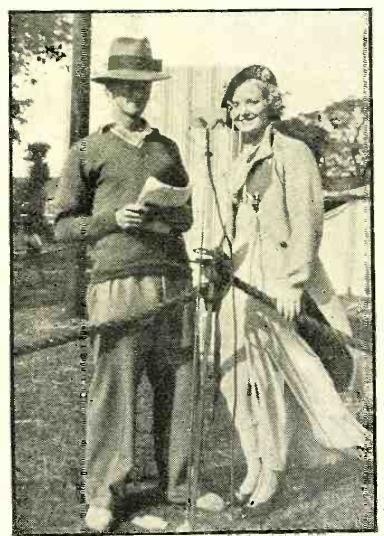
Sixty years ago this month, Radio News, November 1955, carried this photo recreating an American living room sixty years before that, in the 1890’s.  The photograph was staged by NBC, and the photo taken by Jack Zwillinger.  It features an Edison Talking machine.

We’re at a distinct advantage over those in 1955, since we have the capability of listening to many of those early recordings.  In 1955, the fragile cylinders would have been too precious to play on the original equipment.  Fortunately, many of these recordings, some well over a century old, have been digitized and made available on the internet by the UCSB Cylinder Audio Archive and others.  The Library of Congress also has thousands of recordings online, although most of their collection are discs recorded after the turn of the Twentieth Century.  To get an idea of what the woman in the photo might have been listening to, this link will allow you to play The Last Rose of Summer, an 1894 Edison recording.

While the ornate horn is obviously an upscale version of the instrument, a phonograph was already becoming affordable to Americans in the 1890’s, and the scene depicted here would not have been extraordinary.  By 1900, a basic Edison machine could be had for about $10, with the cylinders going for about $5 per dozen.

Click Here For Today’s Ripley’s Believe It Or Not Cartoon


1970 One Tube Superhet

1970OneTubeThe plans for this one-tube receiver appeared in the Fall-Winter 1970 issue of Electronic Hobbyist, a special issue put out by the publishers of Elementary Electronics.  Even though it’s a one-tube set, it’s really the functional equivalent of the “All American Five” five-tube receiver, whose reign was just ending about that time.  The one tube employed was a 6M11, a triple tube consisting of two triodes and a pentode.  The three sections of the tube acted as local oscillator, IF amp, and AF amp.  The detector was a 1N34 diode, and the rectifier was a solid-state bridge rectifier.  So as one-tube broadcast radios go, this is about as sophisticated as they get.

As revealed by the picture, the author concedes, “we didn’t attempt to make the front panel an artistic masterpiece. You may want to make yours more attractive by restyling the dial plate and /or the speaker grille.”

“New old stock” examples of the tube are available at a reasonable price.  The parts that might prove to be unobtanium are the loopstick antenna, oscillator coil, and IF transformer.  If you have an old AA5 that’s beyond repair, the best course of action might be to scavenge them from it.

1970OneTubeSchematic


Click Here For Today’s Ripley’s Believe It Or Not Cartoon


1945 Stromberg Carlson Radio

1945StrombergCarlson

Seventy years ago, the War was over, and American radio manufacturers were getting ready to deliver on the pent-up demand for radios, which had been out of production since early 1942. Stromberg-Carlson was no exception, as shown by this ad in Life Magazine, November 12, 1945, promising that the sets shown here would soon be available.

Interestingly, the FM sets covered two bands.  Since some prewar stations were still on the air on the old band, the sets covered 42-49 MHz.  But since that band would soon be depopulated and the stations moved to the new band, they also covered the modern 88-108 MHz FM band.

Click Here For Today’s Ripley’s Believe It Or Not Cartoon


Armistice Day Blizzard 75th Anniversary

Armistice Day Blizzard, Excelsior Blvd., West of Minneapolis. Minn. Historical Society photo, NOAA.

Today marks the 75th anniversary of the Armistice Day Blizzard, a deadly storm that hit Minnesota and surrounding states on the eleventh day of the eleventh month of 1940.  The strom came up suddenly and without warning, and resulted in 145 deaths, including 49 in Minnnesota.  The death toll was so high because the day started out unseasonably warm, but quickly and unexpectely turned into a severe blizzard to which many were totally unprepared.

I wrote about it previously, and focused on how amateur radio operators became involved.  A couple of names that later became familiar were involved.  Stan Burghardt, W9BJV, later W0IT, kept Watertown, South Dakota, in touch with the outside world, and Sherm Booen, W9HRT, who later became known for the World of Aviation program on WCCO-TV, was a key link from Albert Lea.

Broadcast radio also played an important role that day.  Booen was also employed by KATE radio in Albert Lea.  Even though personal messages were not normally allowed on broadcast stations, an emergency exception was made and some personal messages were broadcast.  Also, to establish contact with Mankato, the station broadcast a message and requested that KYSM in Mankato reply on its frequency.  A two-way link was established on the broadcast band, and some emergency messages were broadcast.  Local phone service was working in Albert Lea, and long-distance service was available in Mankato.  Therefore, the on-air link established a lifeline to the outside world.

In Willmar, Minnesota, station KWLM had gone on the air only a month earlier.  The station’s application had initially been rejected by the FCC on the grounds that Willmar was too small a community to warrant a station.  The blizzard proved this argument wrong, since the station provided an important link for that community as well.

The storm covered much of the Midwest, and in Chicago, it was notable as a severe wind storm. The area was hit with 65 MPH winds, the strongest since 1898. Among the victims was this 357 foot tower of a station then located in Gary, Indiana. The call letters of the station, and the cause of the tower collapse, are revealed on the transmitter building: WIND.

And now, as another Chicago broadcaster would say, you know the rest of the story.1940WIND

This image is from the November 15, 1940 issue of Broadcasting.

Read More at Amazon

Click Here For Today’s Ripley’s Believe It Or Not Cartoon


1965 Northeast Blackout

Today marks the 50th anniversary of the Northeast Blackout of November 9, 1965.  During the afternoon rush hour, the power went out in most of New York City, as well as parts of the states of New York and New Jersey, New England, and Ontario.

Interestingly, the blackout was documented in part by an aircheck tape from WABC

in New York.  In the minutes before the blackout, the lights began to dim, but the frequency dropped from the normal 60 cycles per second to close to 50 cycles.  Since the station’s turntables used synchronous motors, the music slowed down noticeably.  The DJ even quipped that one recording sounded like it was in the key of R.  When the power went out, most FM and TV stations went off the air until the power was restored.  Most of the City was back on line around midnight, with power fully restored by six the next morning.

The New York Times managed to put out a ten-page edition, using the presses of the Newark Evening News.  Most telephone exchanges remained in service, thanks to battery backups and emergency generators.  Nonetheless, Amateur Radio operators reported for duty, and were on the scene a civil defense headquarters and hospitals, as well as their own homes and vehicles.  The activities of hams throughout the region were reported in QST in February 1966.  Nets on 2 meters and 10 meters were in operation in the New York metropolitan area as well as other areas.  HF traffic nets remained in operation continuously, but there was little additional traffic due to most phones remaining operational.

Massachusetts Governor John Volpe was reported a saying, “I understand that the performance of the radio amateurs on Cape Cod and the Islands during the recent blackout indicate you men lived up to the finest in the tradition of the radio amateurs.”

Click Here For Today’s Ripley’s Believe It Or Not Cartoon


1955 One Tube Reflex Radio

1955reflex

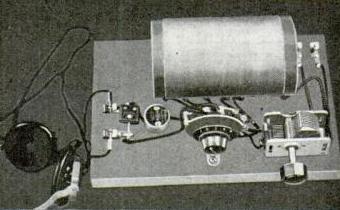
Sixty years ago, the November 1955 issue of Popular Electronics carried the plans for this little one-tube reflex receiver for the broadcast band.  With a very short antenna (just a few inches), the set was capable of loudspeaker volume thanks to the single tube being “reflexed.”  The single 6AU6 simultaneously amplified the RF and also served as a one-stage audio amplifier to drive the speaker.  The set used a 1N34 germanium diode as the detector, and a selenium rectifier, meaning that in the early days of radio, this would have been a three-tube set.

1955reflexSchematicThe author reported that the set picked up the Chicago stations from a hundred miles away.  The set was small enough to build into a wall or a piece of furniture, and instructions were provided to add a phono input or headphone output jack.

Click Here For Today’s Ripley’s Believe It Or Not Cartoon


Huffy Radiobike, 1955

1955Radiobike

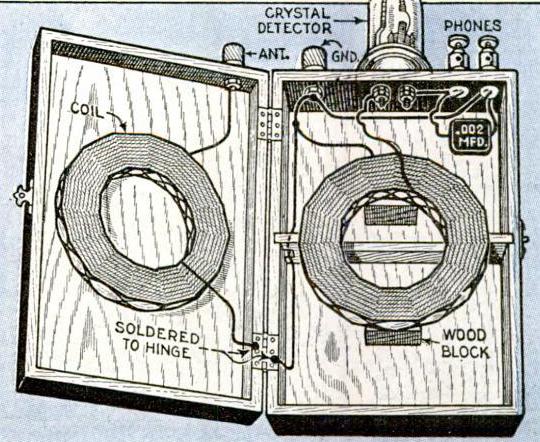
Sixty years ago this month, Boys’ Life magazine, November 1955, carried an ad for this product.  It was almost certainly coveted by many of the readers, and I’m certain that Santa was flooded with requests for it that year.  It was the Huffy Radiobike:  A bicycle with a radio built in to the “tank”!   The ad promised that the radio was no toy, being rain-proof, tamper-proof, and shock-proof.  “You can drop your bike on the walk if you want to . . . but you probably won’t want to.”  The bike itself was well made, of the best materials, strong, speedy, and safe.

The ad also warned readers that “only one in ten thousand will have a Radiobike this Christmas.  Many stores will have only a handful all fall.  So the smart boy, or his dad, will call a Huffy dealer or write the Huffy Manufacturing Co. for catalog and dealer’s name, today.”

As noted in the ad, the radio itself was mounted in the “tank” of the bike and was a three-tube superhet, apparently manufactured by Yellow Springs Instrument Co. About 8500 units were manufactured. A schematic diagram of the radio is available at this link.

The tubes in the set were reflexed, with a 1R5 serving as converter, a 1U5 serving as IF amp, detector, and the first stage of audio, with a 3V4 serving as the final audio amplifier. The set was powered by a battery pack mounted behind the seat.

More information about the set can be found at nostalgic.net.


Click Here For Today’s Ripley’s Believe It Or Not Cartoon


Elegance in SWL’ing, 1956

1955Grundig

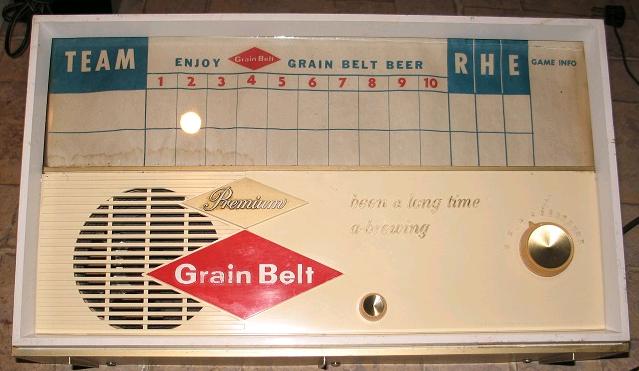
There was a time when people still dressed up to listen to shortwave radio, as demonstrated by this elegant DX’er, undoubtedly tuning in a shortwave broadcast on her Grundig Majestic Pianissimo console. The elegant cabinet, with its natural walnut finish, contained five loudspeakers, an AM-FM-SW receiver, and an automatic phonograph.

This ad appeared in Life Magazine, October 29, 1956. The ad also featured three more consoles tuning the shortwave bands, as well as two table radios. Prices ranged from $69.96 up to $1495, at better stores everywhere.

Click Here For Today’s Ripley’s Believe It Or Not Cartoon