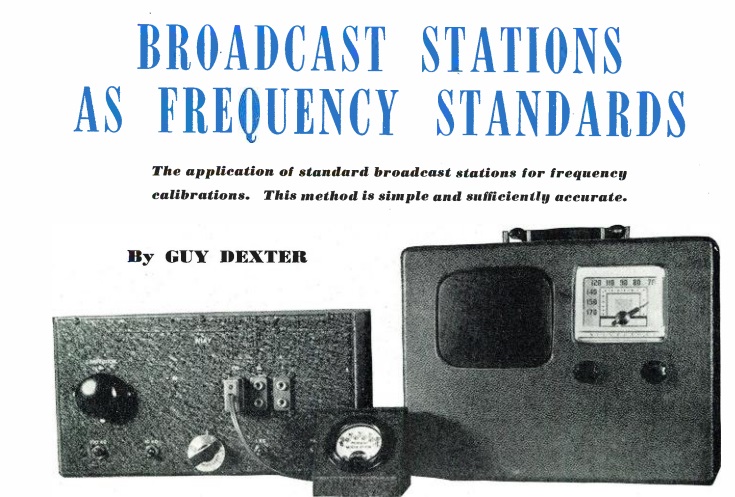
 If you’re looking for a really dangerous science experiment, then you need look no further than the March 1969 issue of Popular Electronics. The magazine describes the electret. It points out that it is the analogue of a permanent magnet. Instead of producing a permanent magnetic field, the electret produces a permanent static electric field. For example, it’s possible to make an electret, and then use it to produce a spark weeks, months, or even years later. The name electret was coined by Oliver Heaviside in 1885 as a combination of electr- from electricity, and -et from magnet.
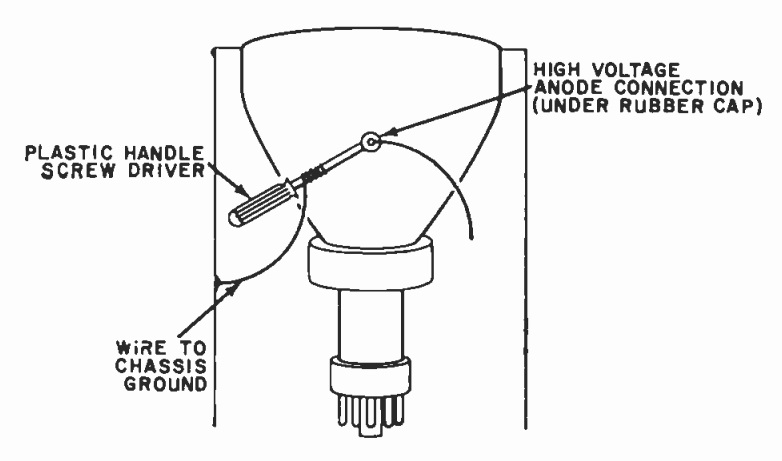
The process to create an electret is quite simple. You simply take a suitable material (in this case, a piece of lucite), heat it to a high temperature, and then let it cool while applying a high voltage. That sounds easy enough, but the voltage must be very high. The article suggests 14,000 volts, and tells you exactly where you can get it–from the family’s portable TV set.
You simply remove the anode clip from the picture tube, and that’s your source of high voltage. But as the article rightly points out, messing around with 14,000 volts could easily prove fatal if you make the smallest mistake. So we don’t recommend this particular experiment. Old TV sets had an interlock for a reason, and that was to prevent them from operating when the case was open. In fact, as the article points out, the wire in question could easily deliver a deadly jolt even with the set unplugged and turned off. This is because the capacitors in the power supply retain a charge. In other words, you probably shouldn’t attempt to duplicate this experiment unless you are very familiar with exactly what the dangers are.
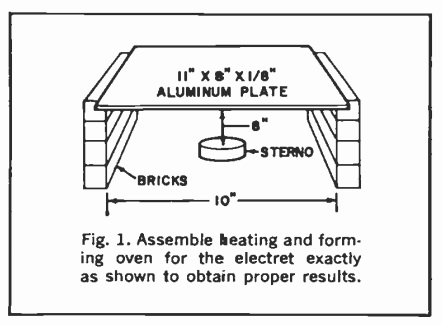
But the procedure itself is quite simple. You build an oven a shown here, and use Sterno to heat it. When you reach the desired temperature, you carefully wire up the high voltage. While standing back many feet, you plug in the TV. If you hear strange noises, then you unplug the TV. Prior to making the connection, and after you unplug the set, you need to discharge the TV’s power supply capacitor. The article recommends an electrician’s glove.
After the lucite is fully cooled, you disconnect things, and you have yourself an electret.
Of course, modern televisions don’t have CRT’s, so they don’t have 14,000 volt power supplies inside. So if you’re intent on duplicating this experiment, you’ll need to find an old TV, the older the better. Even though we have this experiment in the “science fair ideas” category, we don’t recommend it to students due to the lethal voltages involved. But we have many other experiments that you can find by browsing that category.

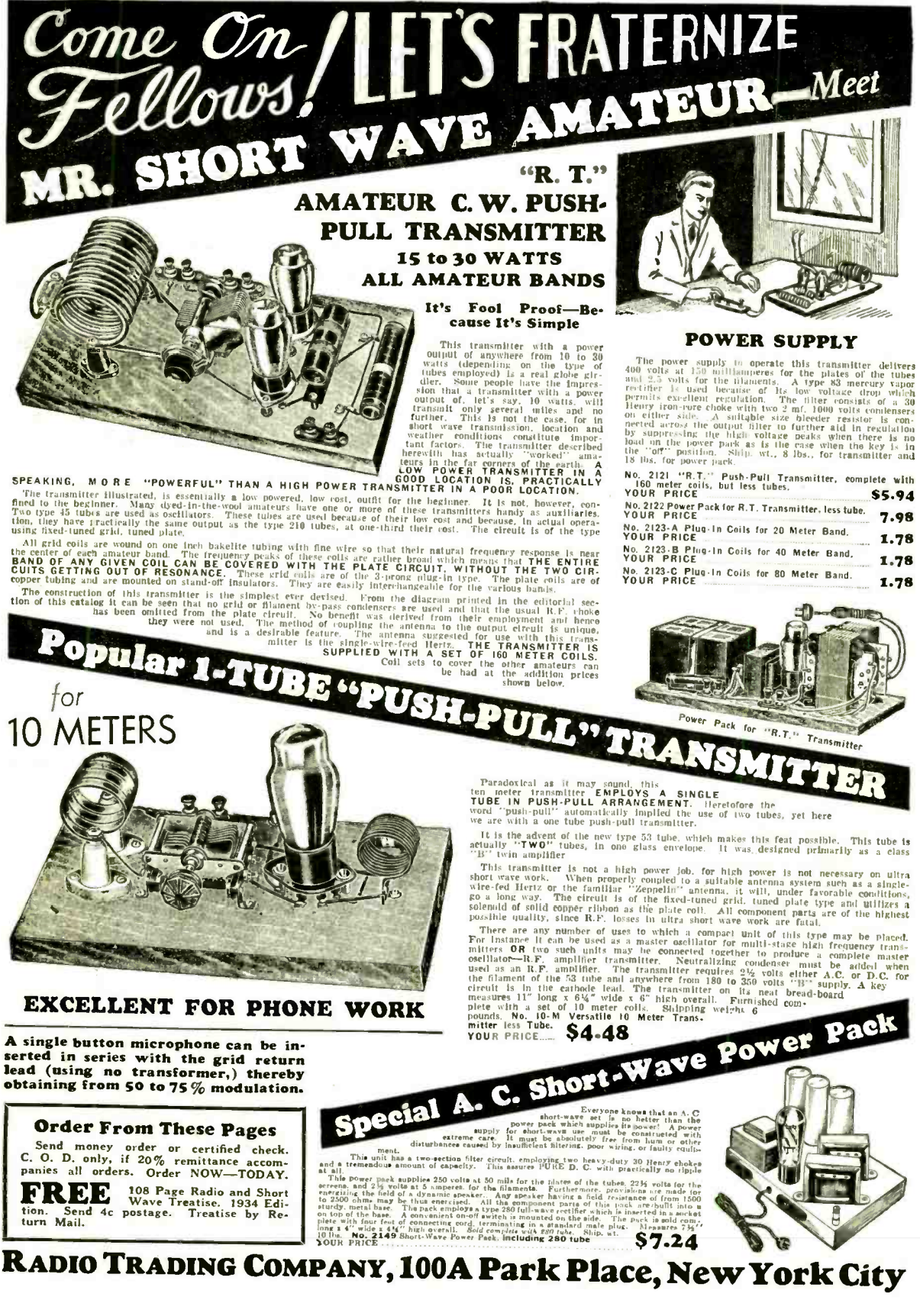 This ad for the Radio Trading Company, 100A Park Place, New York, appeared 85 years ago this month in the April 1934 issue of Short Wave Craft. The top transmitter put out 15-30 watts, depending on tubes used, and retailed for $5.94. This price included a set of coils for 160 meters, but did not include tubes. Coils for other bands were also available. The accompanying power supply sold for $7.98, but did not include the rectifier tube.