Seventy-five years ago this month, the June 1945 issue of Radio Craft carried this schematic for a code oscillator sent in by one Gene Clardy of Fort Worth, Texas. According to Clardy, the circuit’s main feature was its safety, since no high voltages were present. With no possibiity of high voltages on the key or headphones, all possible shocks were avoided.
The set used a 6 volt doorbell transformer to light the filament. The secondary of the transformer was also rectified by half of the tube to supply the B+.
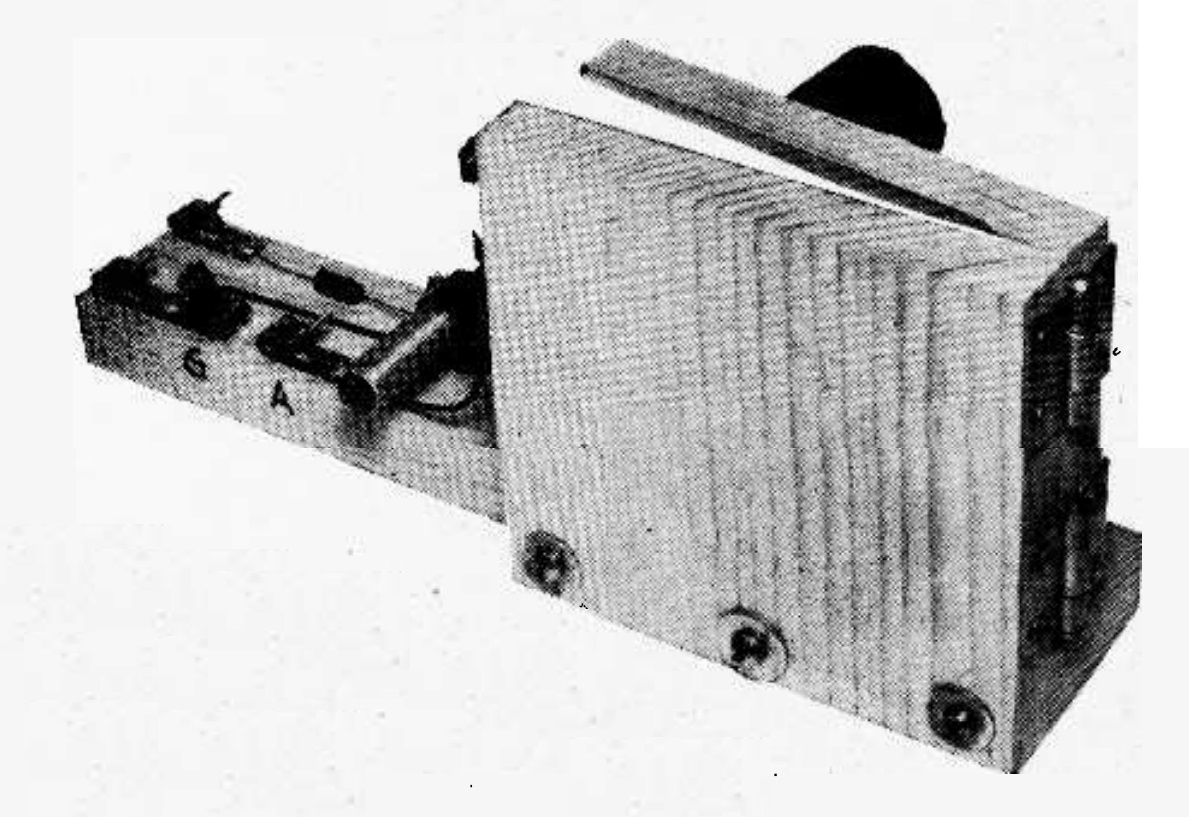
Fifty years ago this month, the June-July 1970 issue of Science and Electronics carried this project, which itself dated back another fifty years. It’s a simple crystal set, but the most interesting feature is the tuning capacitor, which is a book-style condenser. It consists of two blocks of wood, each with a layer of aluminum foil carefully glued to one side. These are hinged together, and the set is tuned by turning a screw to open and close the book.
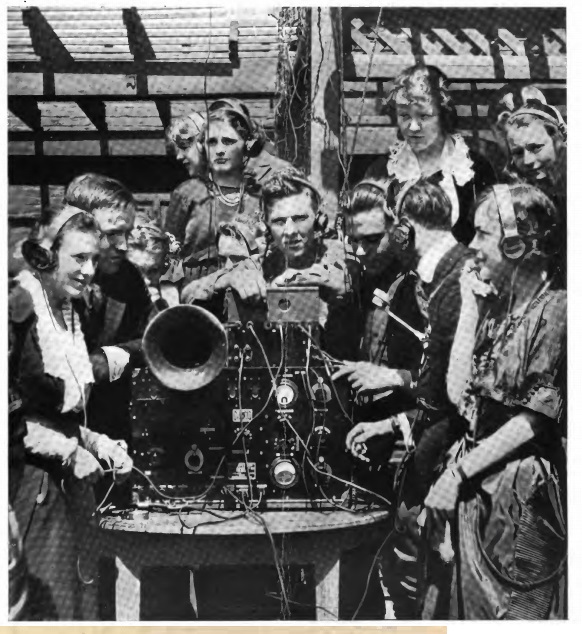
I don’t know much about the provenance of this photograph, other than that it was taken in Atlanta about a hundred years ago. What is clear from their expressions, however, is that the two girls in the foreground obviously understand the magic of radio. Chances are, they had never heard a radio before, but when they heard music coming out of the headphones, they realized that the world had changed. I’m guessing their families were among the first on their block to get their own radio set.
Not everyone gets the magic, though. Many of the others seem a bit skeptical about this new contraption. All I know about this picture is that it appeared a hundred years ago this month on the cover of the June 1920 issue of Wireless Age, and that the caption reads, “members of an Atlanta club who danced to music received by wireless ‘phone.”
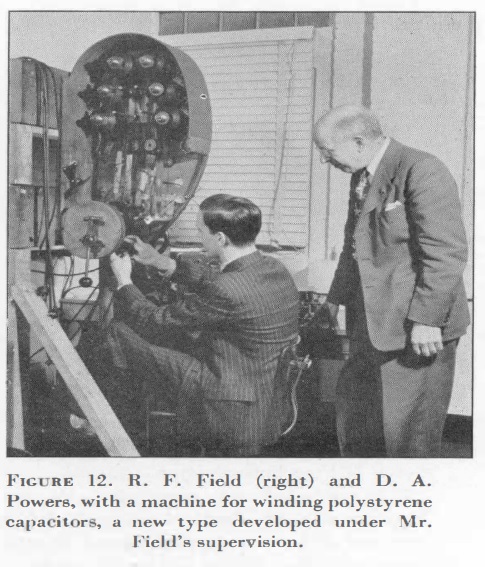
Shown here (at right) is the appropriately named Mr. R.F. Field, a radio engineer with General Radio Company. The photo appeared 75 years ago this month in the June 1945 issue of General Radio Experimenter, a monthly publication put out by the company.
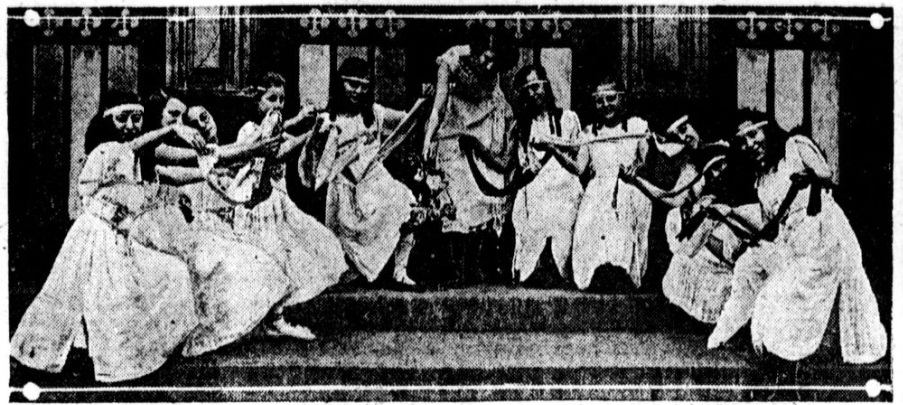
Shown here is the Class of ’20 (1920, that is) who graduated from the Furness School of Philadelphia on this day a hundred years ago, June 22, 1920. These girls are performing the “Welcome to Summer” dance as part of the commencement exercises, and this picture appeared in the next day’s issue of the Philadelphia Evening Public Ledger.
Since the school was a junior high at the time, these were probably eighth graders, probably born in about 1906. Their older brothers very well might have gone to war, and we hope that most of them came back to attend the graduation.
A few years after this picture was taken, their families probably got their first radio. They were 23 years old when the stock market crashed, and they lived through the depression as young adults. Then, another war came. They were a little too old to go to war, and most of their children were too young. All of them, boys and girls, undoubtedly fought on the Homefront.
When they were in their 40s, they saw their first television, and probably bought one soon thereafter. They worked hard and retired with more wealth than their parents. A handful of them bought a computer and sent e-mails to their grandchildren. A few of them lived to see 9/11 on their television screen.
Welcome to Summer, Class of ’20.
A few weeks ago, I recorded this message to the Class of 2020:
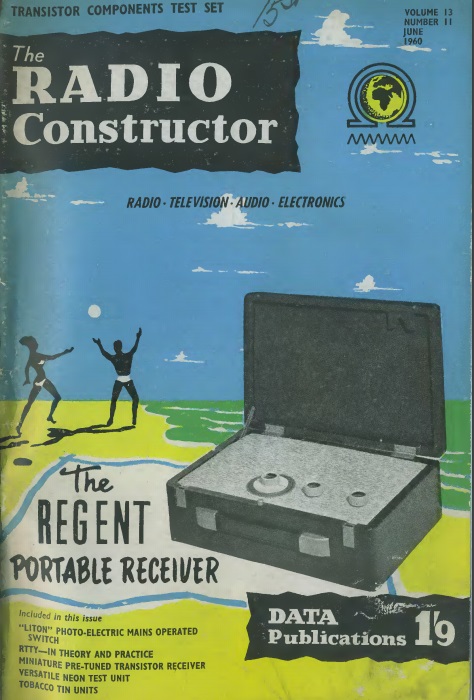
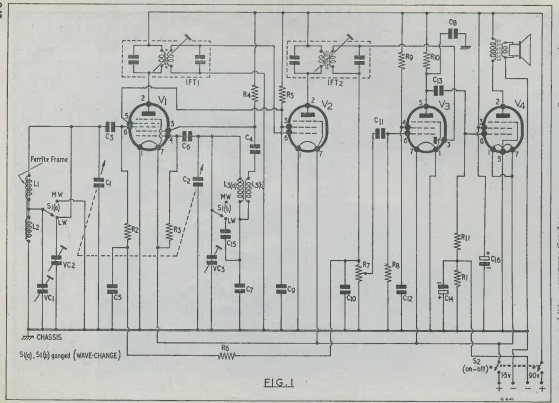
Sixty years ago this month, the June 1960 issue of the British magazine Radio Constructor carried the plans for this four-tube superhet portable, dubbed by the magazine “The Regent.” The set tuned both the longwave and mediumwave broadcast bands, and was said to be sensitive. The set was easy to construct, thanks to the use of a printed circuit board.
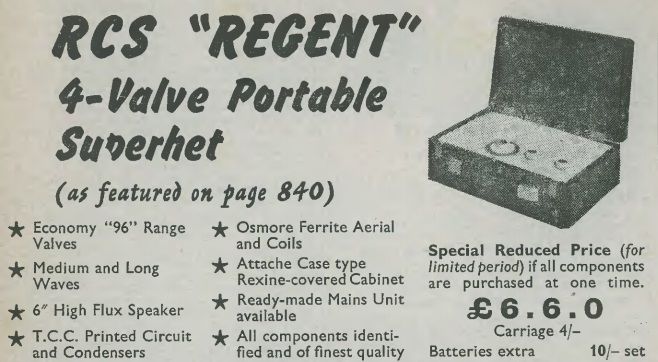
For those who needed help tracking down all of the parts, one of the magazine’s advertisers, Radio Component Specialists, 337 Whitehorse Road, West Croydon, had them advertised, and they could be purchased as a complete kit, or separately.
In June 1941, the U.S. had not yet entered the war, but 50 million Ken-Rad tubes had already enlisted. This ad appeared in the June 1941 issue of Service magazine.
We are sad to report that Vera Lynn has died at the age of 103. She was known in Britain as the “Forces’ Sweetheart” for her songs that helped raise morale during World War 2. Her most famous recording was “We’ll Meet Again,” which was recently echoed by Queen Elizabeth II in her address to her subjects about the coronavirus.
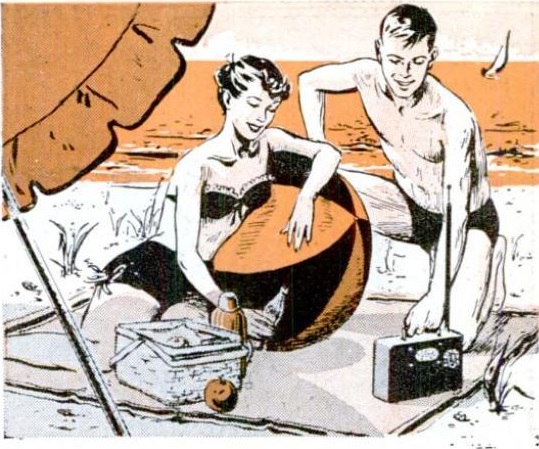
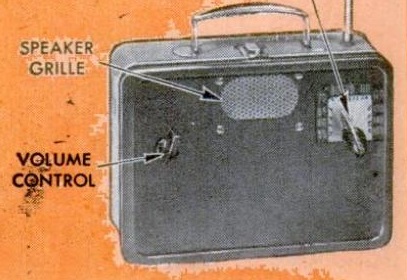
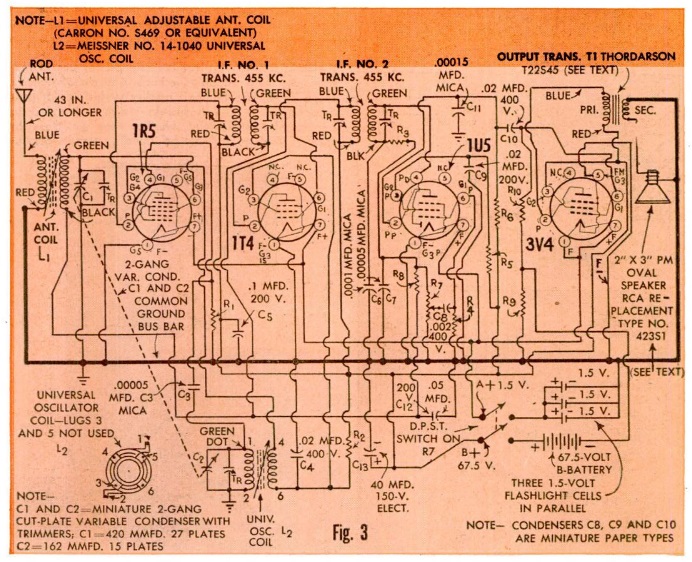
I don’t know if they’re on the beach at Benton Harbor, but seventy years ago this month, this couple were listening to some entertaining program on a radio built into a metal lunch box, as described in the June 1950 issue of Popular Mechanics.
The set was a four-tube superheterodyne, with a 67.5 volt battery supplying the B+ and 3 flashlight batteries in parallel lighting up the filaments. Perhaps the set served as inspiration for the famous Gilligan’s Island radio, as it featured a telescoping whip antenna attached to one side of the internal antenna coil. The built-in antenna was said to pull in local stations, and with an outdoor antenna, even distant stations would supply loudspeaker volume.
The finished set had a professional look thanks, in part, to a dial scale printed in the magazine. For the finishing touch to the set, the dial could be cut out of the magazine and cemented to the case.
Eighty years ago this month, this father-son team lived in an area with poor ground conductivity due to dry sandy soil. Undaunted, they still managed to hook up a good ground for their radio, thanks to this self-explanatory helpful hint from the June 1940 issue of Popular Mechanics. The funnel is permanently soldered to the pipe serving as ground rod. Therefore, whenever the ground conductivity gets poor, it’s a simple matter to pour in some water and squeeze the last mho out of the soil.
If the idea sounds familiar, it’s probably because you previously saw it here.

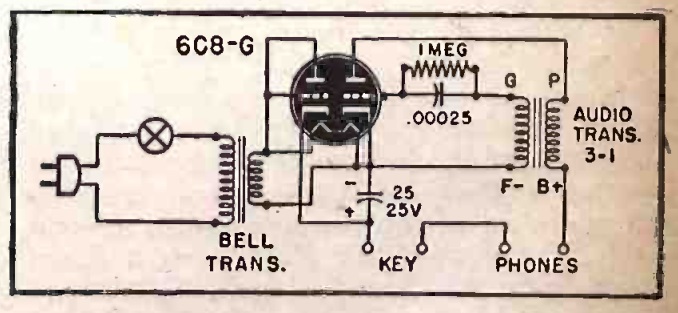 Seventy-five years ago this month, the June 1945 issue of Radio Craft carried this schematic for a code oscillator sent in by one Gene Clardy of Fort Worth, Texas. According to Clardy, the circuit’s main feature was its safety, since no high voltages were present. With no possibiity of high voltages on the key or headphones, all possible shocks were avoided.