Author Archives: clem.law@usa.net

1941 National Youth Administration Sound System Project

1941NYAspeakers

The Pennsylvania students shown here are assembling loudspeaker enclosures for the sound system at the Roaring Spring, Pennsylvania, High School. The project of installing the new sound system was entrusted to the National Youth Administration (NYA). As I wrote in an earlier post,
the NYA was a depression-era program designed to give youth to develop skills in order to take an active part in the national defense program. As reported in the October 1941 issue of Radio News, the program had recently been expanded to cover the radio field, and the high school sound system was one of the first projects undertaken by NYA youth studying radio.

Roaring Spring classroom with new speaker in place.

Roaring Spring classroom with new speaker in place.

The installation covered 21 rooms in three buildings, one of which was across the street, necessitating the laying of an underground cable. The main console was located in the principal’s office, and included two microphone channels, an all-wave receiver, and a turtable capable of playing both 78 and 33 RPM transcriptions. In addition to its public address capabilities, the system was capable of two-way communication from any room. The powerhouse behind the system was a 15 watt audio amplifier employing two 6N7G tubes.

The students’ completion of the project was seen by all as a success, and dispelled any possible doubt as to the NYA radio shops’ ability to construct and install such equipment. After being placed in service, the equipment had required no service or adjustment.

1941NYAhamsAnother way in which the NYA was focusing on radio is shown in this photo from the September, 1940, issue of Radio News.  The Army was in the process of setting up an Amateur Radio network to link Army installations, and it was tapping NYA youth to build that network.  Shown here are Ruth Gaines and Jessie Suddath, both of Georgia, testing the ham gear that they had built.  According to the caption, both were licensed, although their call signs are not stated.

Click Here For Today’s Ripley’s Believe It Or Not Cartoon


U.S. Coast Guard SPARS Radio Operator, 1943

1943USCGradioThe cover of this wartime issue of Radio Craft magazine, May 1943, shows a radioman, as her designation is called, of the U.S. Coast Guard.  The accompanying article explained that she was a membe of SPARS,  the U.S. Coast Guard Women’s Reserve, which had just been created in November of 1942, and largely followed the Navy’s WAVES model of allowing women to serve in stateside positions. More than 11,000 women served in SPARS during the war.

The article explained that the women who would serve as radiomen underwent a sixteen-week training at the University of Wisconsin, which included Morse code, typing, and radio procedure and theory. At the conclusion of the training, the women would pass a code test at 22 words per minute, at which time they received a rating of Radioman 3rd Class.


Click Here For Today’s Ripley’s Believe It Or Not Cartoon


WHO Radio’s Flashing Neon Morse Sign

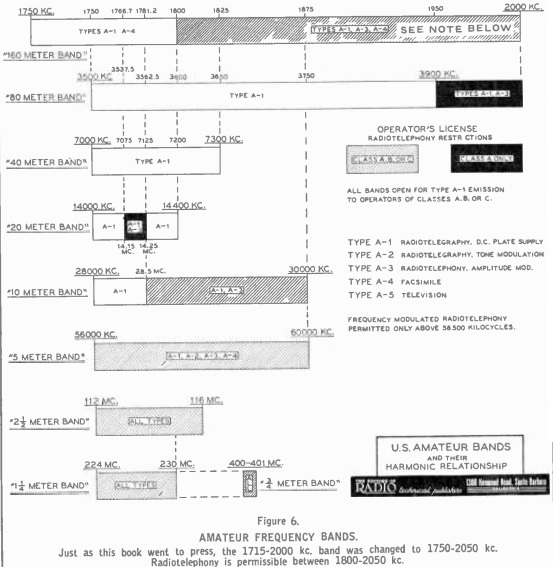
WHOneonsignShown here is the neon sign identifying the studios of WHO radio, which from 1932 to 1954 were located at 914 Walnut Street in Des Moines, Iowa.  This picture was taken in 1938 and appeared in the June 1938 issue of Rural Radio magazine.

The sign was recognizable to all as a flashing neon sign, but only an expert would be able to figure out what it was flashing.  The sign continually flashed in Morse code the station’s call letters:

   . – –       . . . .        – – –

References


Click Here For Today’s Ripley’s Believe It Or Not Cartoon



SS Eastland Disaster, 1915

S.S. Eastland.  Wikipedia photo.

S.S. Eastland in 1911. Wikipedia photo.

Today marks the 100th anniversary of the greatest loss of life in the history of the Great Lakes, the shipwreck of the SS Easland in Chicago on July 24, 1915.

The ship was commissioned in 1902, and served as a passenger and tour boat based in Chicago, with a dock on the Chicago River.  The ship had significant problems with listing from the start. The ship was topheavy, and the ship would list from passengers congregated on the top deck. In a 1903 incident, overcrowding caused water to flow up one of the ganglplanks.

On July 24, 1915, the ship and four other ships were chartered by Western Electric to take employees to a company picnic in Michigan City, Indiana. Ironically, safety measures on the ship made the ship more dangerous. In the wake of the Titanic disaster, ships such as the Eastland were required to carry a full set of lifeboats. The added weight on the deck probably made the top-heavy ship more dangerous.

Passengers, many of whom were low-wage immigrant Czech workers, began boarding for the picnic at 6:30 AM. By 7:10, the ship had reached its capacity of over 2500 passengers. The ship began to list to port (away from the wharf), and the crew attempted to stabilize by taking water into the ballast tanks. In the next 15 minutes, a number of passengers rushed to the port side and the ship lurched and rolled onto its side.

SS Eastland capsizied.  Wikipedia photo.

SS Eastland capsizied. Wikipedia photo.

The river was only 20 feet deep, and the side of the ship rested on the river bottom. Because of the cool weather, many passengers had already moved below deck, and found themselves trapped. Some of them were crushed by heavy furniture as the ship suddenly tilted. Even though the ship was only 20 feet from shore, a total of 844 passengers and four crew members died in the disaster.

Most of the Western Electric employees had worked at the company’s Hawthorne works. While the plant was open the following Monday, the workers spent most of the day gathered in small groups mourning. The plant was closed on Tuesday and Wednesday for workers to attend funerals. Later that week, the entire Bell System declared a day of mourning, with only essential workers coming in to work, and with memorial services across the country.

A few weeks later, Alexander Graham Bell himself spent the day touring the factory and taking the time to stop at each work station and desk to speak to employees about the disaster.

The ship was raised in August and eventually sold to the Navy.  After conversion, she served as the U.S.S.  Wilmette, and served largely as a training vessel at Great Lakes Naval Base.  The ship was used until being scrapped in 1947.

References

Read More at Amazon


Click Here For Today’s Ripley’s Believe It Or Not Cartoon


1940 Crosley Radio Glamour

1940CrosleyGlamor

When I think of glamour, one of the first things to cross my mind would be a wooden five-tube broadcast/shorwave receiver, and in this 1940 advertisement, the Crosley Radio Corporation agrees with me. It is taken from the July 15, 1940, issue of Life Magazine.

According to the ad, certain cities such as Paris and Hollywood have Glamour. (Apparently even Nazi occupation can’t erase the glamour of the City of Lights.) Glamour can be found in certain ships and trains. And it can be found in certain people: Athletes, actors, statesmen, and musicians.

And there was glamour in the Glamour Tone of the Crosley Radio, “a new type of fidelity in sound.”

The glamorous object shown here is the Crosley model 18AN, a five-tube two-band AC-DC superheterodyne which retailed for $19.95 (slightly higher in the West and South). It featured a personal tone control and tuned both the standard broadcast band and shortwave for pulling in war news direct from Paris and other capitals of Europe.

Another nice example of this radio can be found at the Radio Attic Archives.

Click Here For Today’s Ripley’s Believe It Or Not Cartoon


NRI Conar Twins, 1965

1965ConarEIIn an earlier post, we looked at the history of the National Radio Institute of Washington, DC. Started in 1915 as the National Radio School, it featured prominently in national publications for decades, as founder James E. Smith, who apparently never aged, announced in virtually every issue that he would train you at home in your spare time for a good job in radio.


One of the school’s most famous products was the “Conar Twins,” a transmitter and receiver marketed for the novice amateur operator. They were a CW transmitter and receiver covering the 80, 40, and 15 meter bands. Fifty years ago this month, they were reviewed in Electronics Illustrated, July 1965.

According to the review, both kits were relatively easy to put together, with the transmitter taking about six hours, and the receiver, ten. While a few errors in the assembly manual were mentioned, both kits were described as being easy to assemble. The transmitter was tackled first, and the author reported no reports of chirp on the signal of the simple transmitter.

The review of the receiver seems to confirm the popular opinion that the receiver is surprisingly good for its price, with the performance designed as “tops.” The circuit was a superheterodyne, with two stages of IF amplification. The review noted that the receiver could be aligned without any instruments, but that instrument alignment was really necessary for top performance.

In 1965, the new novice could get on the air with a respectable station for only a $64 investment thanks to the Conar Twins.


Click Here For Today’s Ripley’s Believe It Or Not Cartoon



Mary Philbin’s Radiola Superhet

In an earlier post, we showed one silent movie star, Hope Hampton, soldering together a crystal set. A couple of years later, we see here another silent film star listening to the best set on the market.  In this picture,  Mary Philbin is listening to her RCA Radiola Superheterodyne model AR-812, which came out in 1924.

Mary Philbin and Lon Chaney in The Phantom of the Opera.  Wikipedia photo.

Mary Philbin and Lon Chaney in The Phantom of the Opera. Wikipedia photo.

Miss Philbin, who was about 22 years old when this photo was taken, was most famous for starring aside Lon Chaney in the 1925 film The Phantom of the Opera.

The radio, the RCA Radola Superheterodyne model AR-812, was the first home superhet on the market when it came out in 1924.  This was a very advanced receiver for the day, and carried a hefty price tag of $269. (When converting prices to today’s dollars, I always remember that the 1920’s price would be paid with 269 silver dollars, which would be worth about $4000 today.) The set had six tubes, although most of them did double duty through the “reflex” principle. The oscillator tube also served as the detector, a scheme that initially caused problems for inventor Edwin Armstrong. Since the oscillator and the incoming signal were so close in frequency (the set had an IF of 40 kHz), they kept hopelessly interfering with one another. The problem was solved by mixing the incoming signal with the second harmonic of the local oscillator. This kept the two signals far enough apart so that the the same tube could at the same time oscillate at one frequency and detect at another.

The set used six UV-199 tubes and was battery powered. The batteries were housed behind the doors on either side of the front panel. The set had a built-in loop antenna, but it appears that Miss Philbin was intent on pulling in more distant stations with the external loop. As seen in the picture, the set drove a loudspeaker, which appears to be a Radiola UZ1320.  As can be seen in the picture, the set sported a carrying handle.  Since it was fully self-contained, it was a true portable, albeit a bit on the bulky side.

Armstrong and RCA jealously guarded the patents for the superheterodyne circuit. The nameplate on the front warns that it was “licensed only for amateur, experimental, and entertainment use, and only to extent indicated in attached notice.” Most of the electronics, including the transformers, were encased in wax to protect the components from moisture, and also to add an extra level of protection for the intellectual property concealed inside.

Mary Philbin came from a middle-class family in Chicago.  She went to Hollywood in about 1920 after winning a beauty contest sponsored by Universal Pictures.  In addition to Phantom of the Opera, she starred in the 1928 film The Man Who Laughs.

Like many other silent actors and actresses, she wasn’t successful after the transition to sound and had only a few roles early in the sound era, including dubbing her own voice in a talkie re-release of Phantom of the Opera. She was twice engaged, but never married. She made few public appearances after he departure from the screen, presumably preferring to stay home and listen to the radio.  She died in California in 1993 at the age of 90 (New York Times Obituary).

The entire 1925 Phantom of the Opera, as well as other films featuring Mary Philbin, can be viewed at YouTube:

Acknowledgement

I would like to thank Tom McKee of the Inland Marine Radio History Archive for allowing me to use the photo from the Archive’s website.  That site, which will undoubtedly be the inspiration for future posts, contains a wealth of historical information about marine radio on the Great Lakes and inland waterways.  I’m unsure of the origin of the photo, although it’s believed to be in the public domain.

Click Here For Today’s Ripley’s Believe It Or Not Cartoon



Les Paul’s Radio Station, 1940

LesPaul1940


75 years ago, 25-year-old Les Paul had his own radio station in the basement of his New York apartment building, as shown here in the July 1940 issue of Popular Science.  Paul had moved to New York in 1938, performing with Chet Atkins‘ older brother on Fred Waring and the Pennsylvanians radio program.

The building was equipped with an antenna and ground wire that had never been used, and Paul took advantage of it by installing his station’s studio in a soundproof room near the furnace.  A control room was located in his second-floor apartment.  On Friday and Sunday evenings, they transmitted to the other tenants in the building.  Occasionally, big-name guest musicians and announcers would drop by to take their turn at the mike.

The next year, Paul nearly electrocuted himself while experimenting in his apartment.  He relocated to California where he recuperated.  In 1943, he was drafted and served as a performer on the Armed Forces Radio Network.


Click Here For Today’s Ripley’s Believe It Or Not Cartoon


1945 Lifeboat Radio

LifeboatRadio

Seventy years ago, the cover of Radio Craft magazine, July 1945, featured this new radio designed for use in lifeboats. The lifeboats of passenger ships were required to be equipped with radio, and when the U.S. entered the war, this requirement was extended to cargo ships as well. The early sets were battery operated on 500 kHz and had limited range and transmitting time. The Germans were the first to develop a lifeboat radio similar to this one, the Notsender NS2. It was powered with a hand crank, and designed to be held between the operator’s legs. In addition to powering the unit, the crank keyed the transmitter, sending SOS, alternating with long dashes to facilitate direction finding. It also had provision to be keyed manually. It operated on the distress frequency of 500 kHz, and utilized a wire antenna held aloft either by a hydrogen balloon or kite.

American BC-778 "Gibson Girl."  Photo by ArnoldReinhold via Wikipedia, file licensed under the Creative Commons Attribution-Share Alike 3.0 Unported license. https://creativecommons.org/licenses/by-sa/3.0/deed.en

American BC-778 “Gibson Girl.” Photo by ArnoldReinhold via Wikipedia, file licensed under the Creative Commons Attribution-Share Alike 3.0 Unported license.

The British soon captured a few examples, and duplicated them as transmitter type T1333. In 1941, the British, recognizing that they didn’t have the industrial capacity to manufacture the sets in quantity, sought a North American builder. The U.S., recognizing the value of the unit, proceeded with the project jointly, resulting in the BC-778, later upgraded to the AN/CRT-3, which became known as the “Gibson Girl” transmitter. The earlier version, the BC-778, operated on 500 kHz exclusively. Later models also operated on 8280 or 8364 kHz. The American version could also use the generator to power a signal light.

All of the wartime units included a hydrogen generator to fill the balloon, as well as a box kite which could be used to hoist the antenna.

The accompanying article was written by an executive of the manufacturer, Radiomarine Corporation of America, and touted the advantages of the new set. It operated on both 500 kHz and on 8280 kHz, and the primary means of hoisting the antenna was with a balloon, but one filled with a helium cannister. But it had two notable differences. First of all, it was capable of transmitting radiotelephone signals as well as radiotelegraph. But it also included a receiver capable of tuning 8100 – 8600 kHz. Thus, it would allow the occupants of the lifeboat to communicate with rescuers, and also with neighboring lifeboats.

While it was not used during the war, it appears that sets similar to the one shown in the article did go into production. The model ET-8053 appears to have most of the same features, albeit in a more portable set. The model ET-8030 appears to be very similar to the one shown.

References

Click Here For Today’s Ripley’s Believe It Or Not Cartoon


1935 Two Tube Receiver

1935TwoTubePortableEighty years ago, the July 1935 issue of Popular Mechanics
showed how to make this little two-tube broadcast receiver. It uses two dual tubes, a 6F7 and 12A7. The dynamic speaker is likely unobtanium, but a similar design with a PM speaker could probably be done, although it would require a separate filter choke in the power supply. An exact duplication of the design might be a bad idea, though. Not only does the set use a “curtain burner” cord to drop the filament voltage, but one side of the power cord is hooked directly to the chassis, meaning that there’s a 50% chance that it has 120 volts on it.

According to the article, the little set pulled in stations as well as a 4 or 5 tube model, and the small size made it ideal for the traveling man, tourist, or summer home.

The chassis and case were made of heavy cardboard with a coating of shellac. The parts were mounted on a piece of aluminum which served as the actual (hot) chassis.

1935TwoTubePortableSchematic

Click Here For Today’s Ripley’s Believe It Or Not Cartoon