Author Archives: clem.law@usa.net

1940 Bike Radio

Eighty-five years ago, this couple enjoy a favorite radio program as the pedal the streets and roads, thanks to a three-tube radio that works in practically the same manner as a car radio. Two of the tubes are triple purpose, in addition to the power tube feeding the 4-inch speaker. The set came with antenna, mounting hardware, and the battery, which can be seen on the frame.

The radio appears to be the Motorola B-150, which we have previously written about.


Grote-Rankin Co., Seattle, 1925

If you were in the market for a radio in Seattle a hundred years ago today, your timing was perfect.

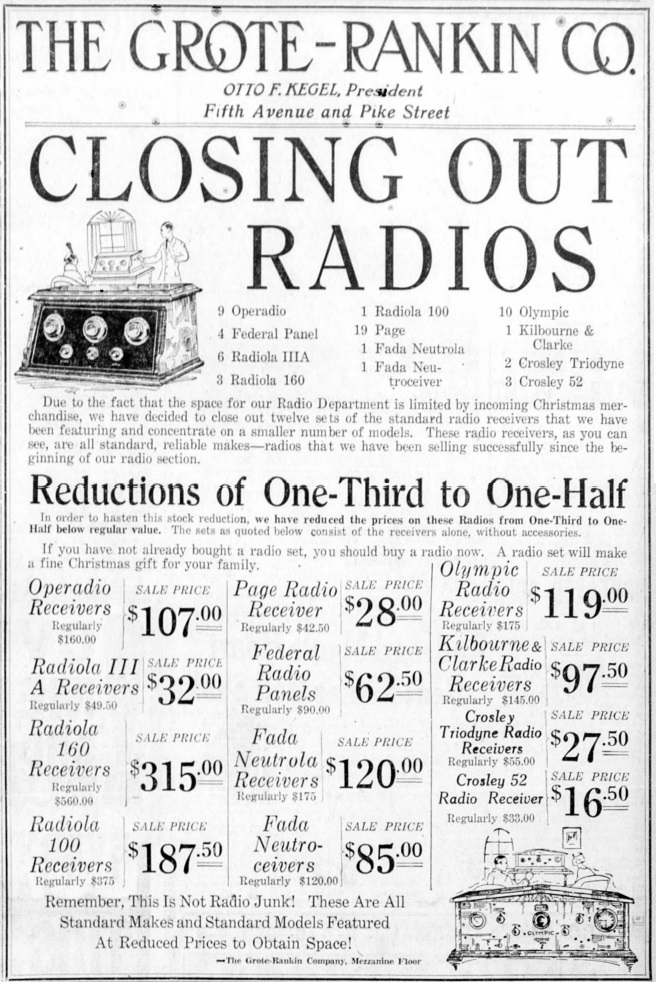
The radio department of the Grote-Rankin Company, Fifth Avenue and Pike Street was getting ready for the Christmas season, and the decision was to concentrate on a small number of models.  That meant that they had to make space for them, and they were offering these attractive closeout prices on many of the models they had in stock.

The lowest priced option was the Crosley Model 52, for $16.50.  It was a three-tube TRF featuring a regenerative detectors.  While it had no speaker and required headphones, that set would have been sensitive enough to pull in just about any signal.  The high-end buyer might be interested in the Radiola 160, originally $560, now on sale for only $315.  That was a top-of-the-line set featured a six-tube superheterodyne receiver, and an acoustic phonograph.  The set shared the horn between the radio and phonograph, and undoubtedly had room-filling audio.

The ad appeared in the Seattle Star, November 6, 1925.



1940 Soldering Clamps

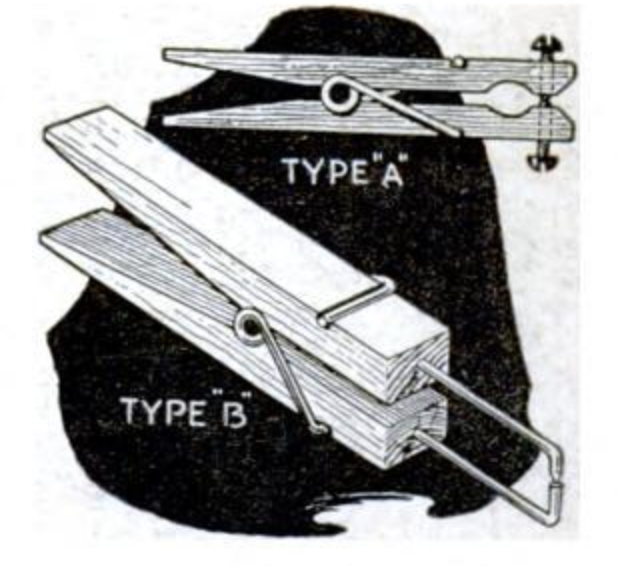
Eighty-five years ago this month, the November 1940 issue of Popular Science showed these ideas for homemade clamps for soldering small pieces. Both use a clothespin, one with two wood screws, filed flat, and the other uses two bent nails. Either one will hold the work in place while being soldered.


Radio Sound Effects 1940

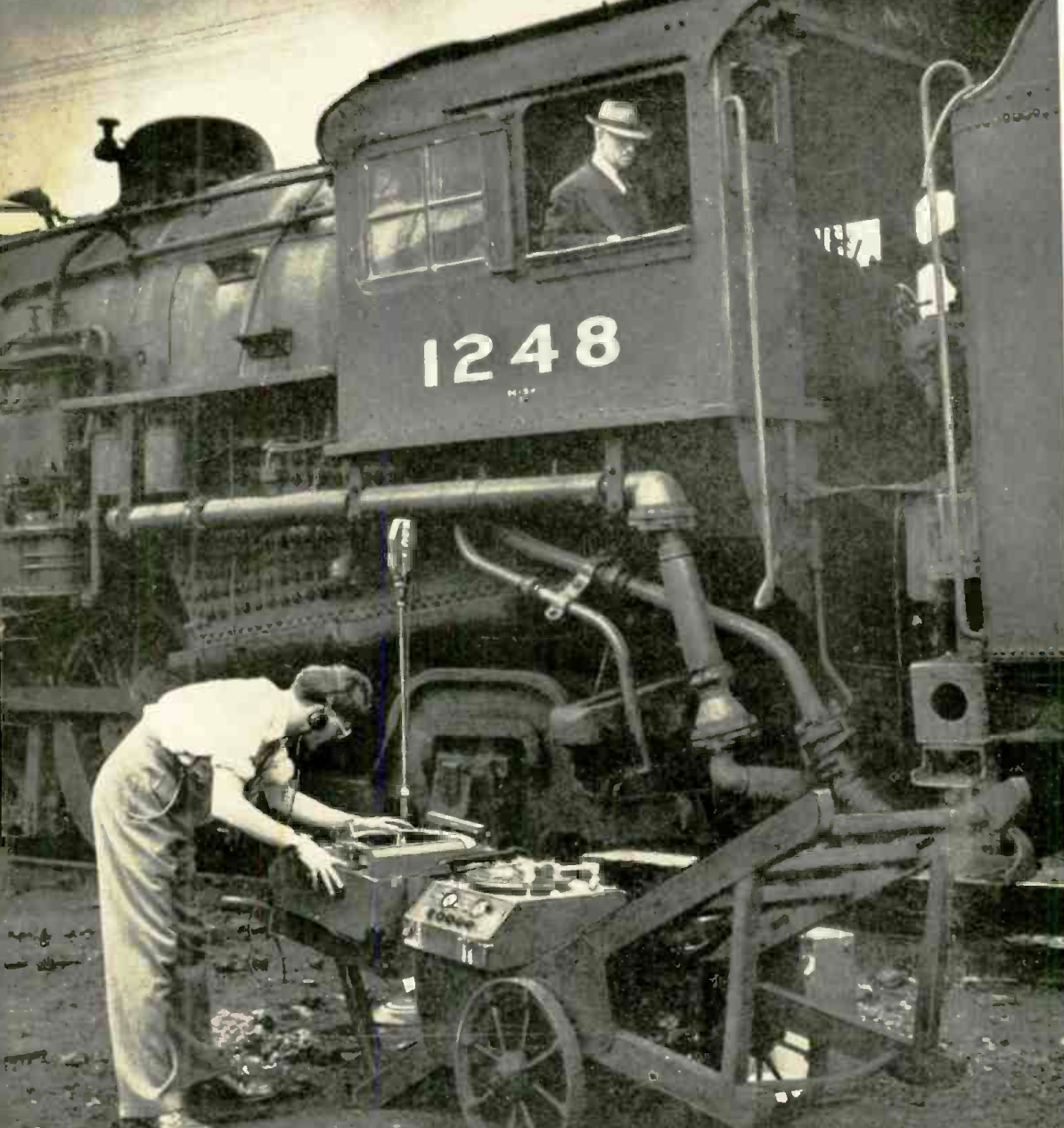
Shown here is Robert Monroe, the author of the NBC drama “Rocky Gordon.” He is at the New York Central Yards at Weehawken NJ, recording the sound of locomotives and railroad yards for the sound effects to be aired.

The photo appeared 85 years ago this month on the cover of the November 1940 issue of Radio Craft.  Interestingly, one of the few references to the radio program is on the CIA website,  undoubtedly in relation to Monroe’s involvement with the  the U.S. Army Intelligence and Security command.


1955 One-Tube Reflex Radio

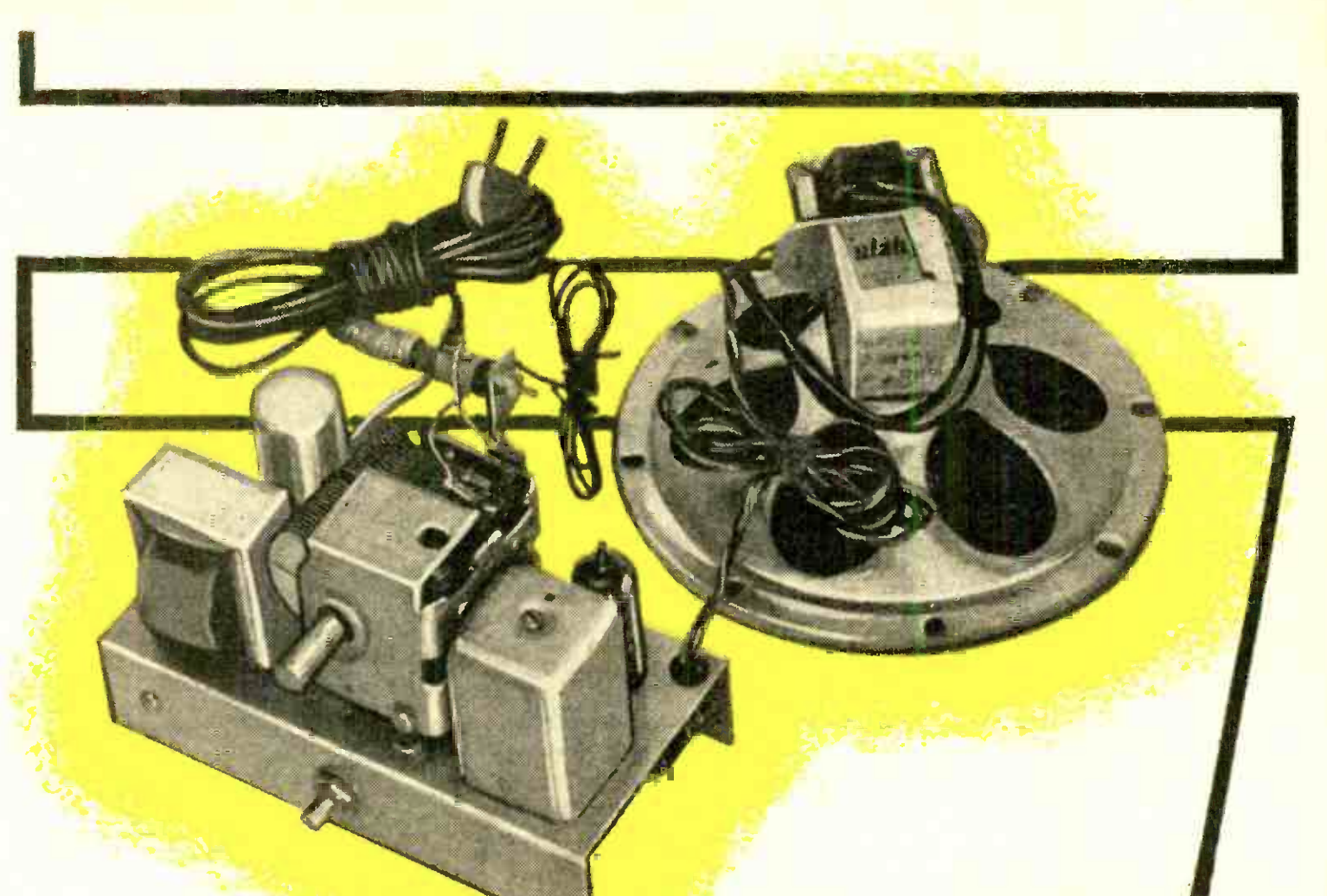
Despite its nondescript looks, this one-tube broadcast receiver from 70 years ago was a good performer. It was designed to be small and efficient. It consumed about the same amount of power as an electric clock, meaning that it could be run constantly. And because of the low power consumption, it put out little heat and could be mounted in a wall or a piece of furniture, without having to worry about ventilation. It was said to put out enough volume to fill the room, but not enough to bother the neighbors.

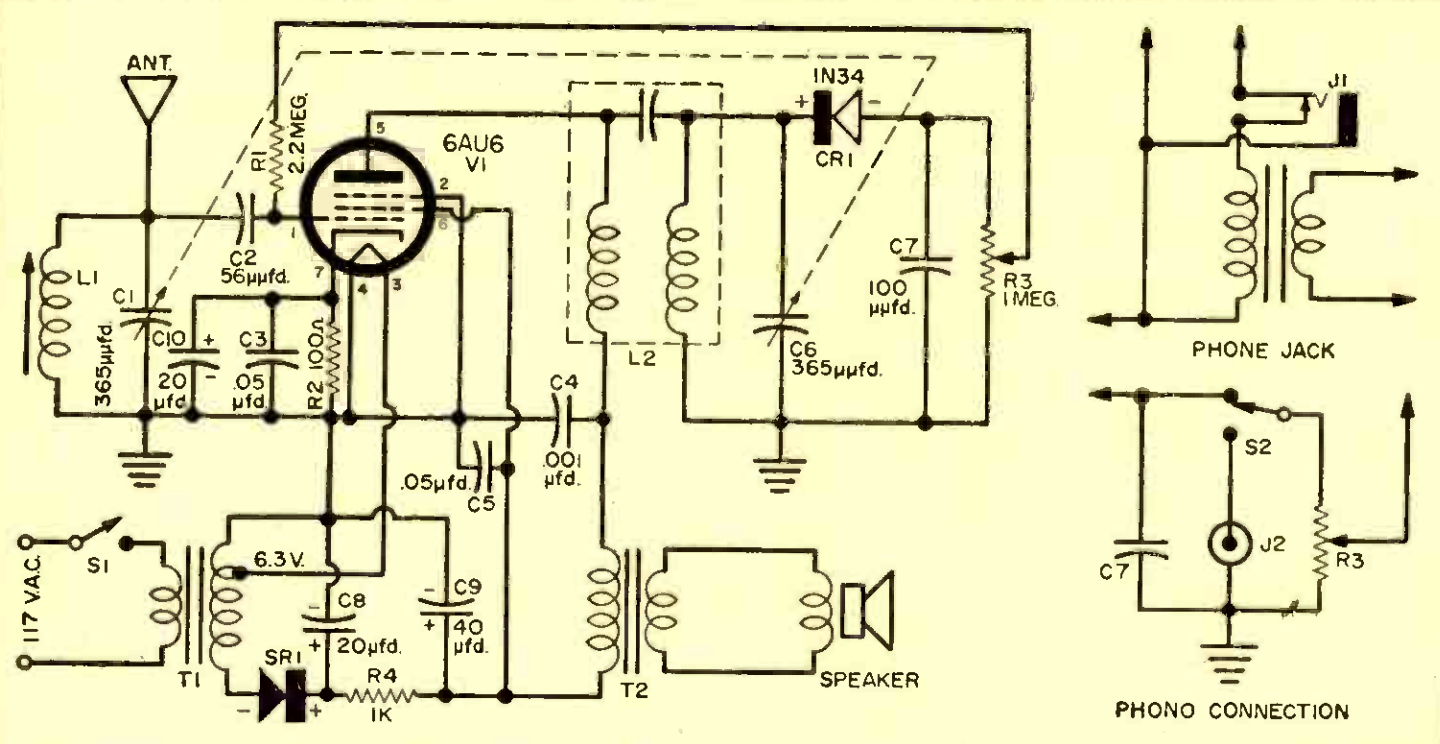
When tested 100 miles from Chicago, it pulled in all of the major Chicago stations during the day with just a 12 inch antenna. This was accomplished by reflexing the 6AU6 to serve as both RF and AF amplifier. A diode was used as detector, and the rectifier was selenium.  It appeared in the November 1955 issue of Popular Electronics.


Wartime Halloween

Happy Halloween from OneTubeRadio.com!

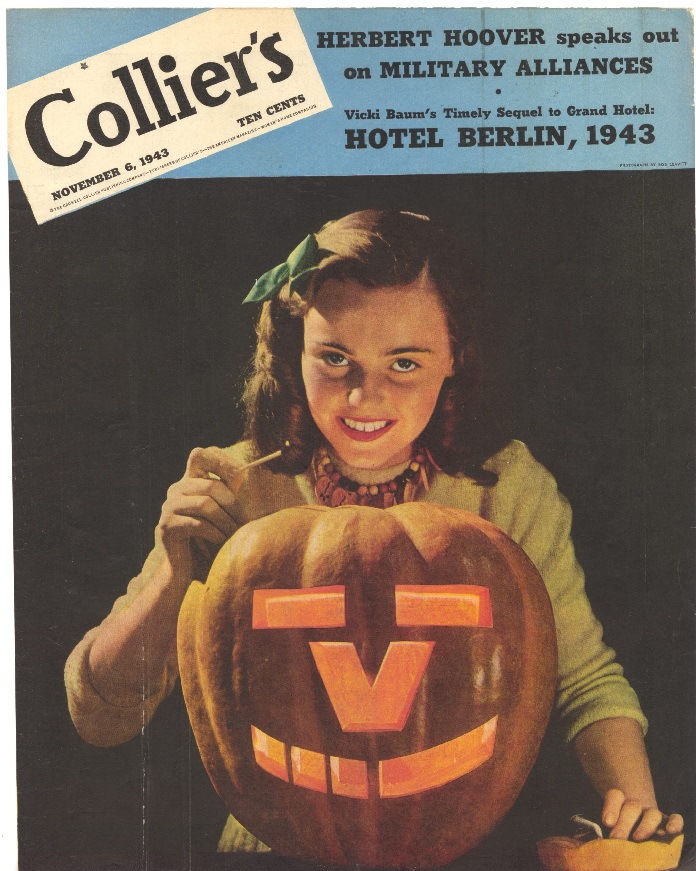
Just because there was a war going on didn’t mean that Halloween shouldn’t take place as scheduled. The cover of this 1943 issue of Collier’s magazine shows that even the Jack O’Lantern had gone to war. Instead of a scary face, it was proclaiming V for victory. In addition to the letter V, it included the …- Morse code for the letter.


Claypool Trio, Indianapolis, 1925

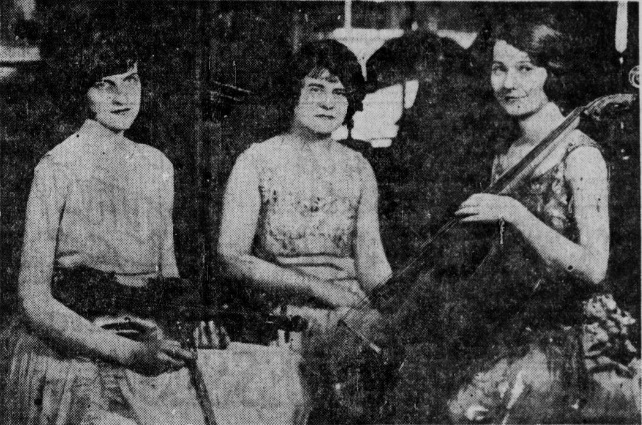
If you were listening to the radio 100 years ago tonight, October 30, 1925, in Indianapolis, you would be able to tune in to the Claypool Trio, composed of Alma Miller Lentz on the violin, Carolyn Turner at the piano, and Consuelo Couchman Rettig on cello. The program was heard on WFBM (now WNDE), and this photo appeared in the Indianapolis Times, October 29, 1925.


1950 Sales Opportunities

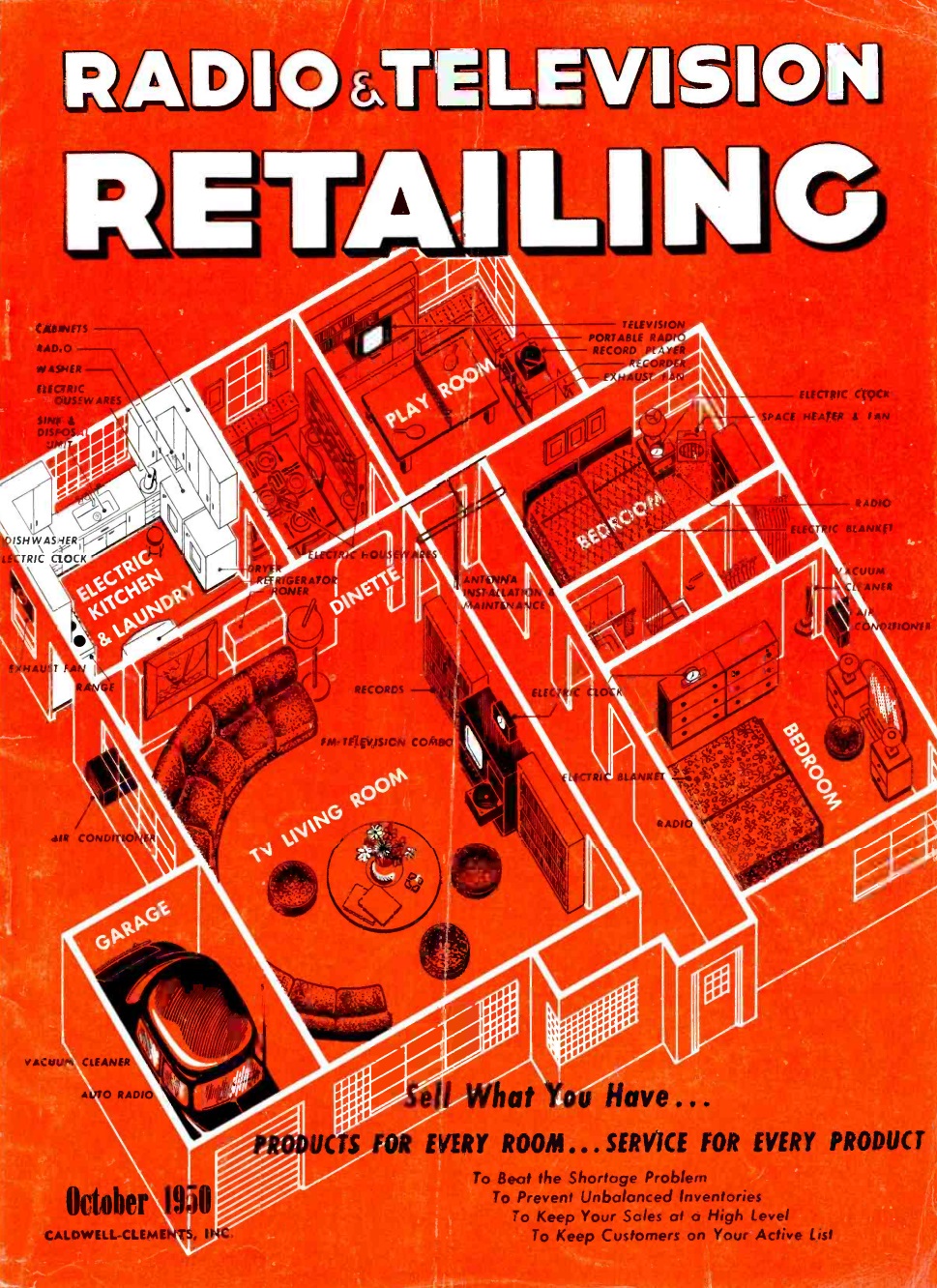
Seventy-five years ago, the cover of Radio and Television Retailing, October 1950, reminded retailers that there were sales opportunities in every room of the house. In addition to radio and television, many dealers carried a wide range of other electrical appliances.


1955 British Signal Tracer

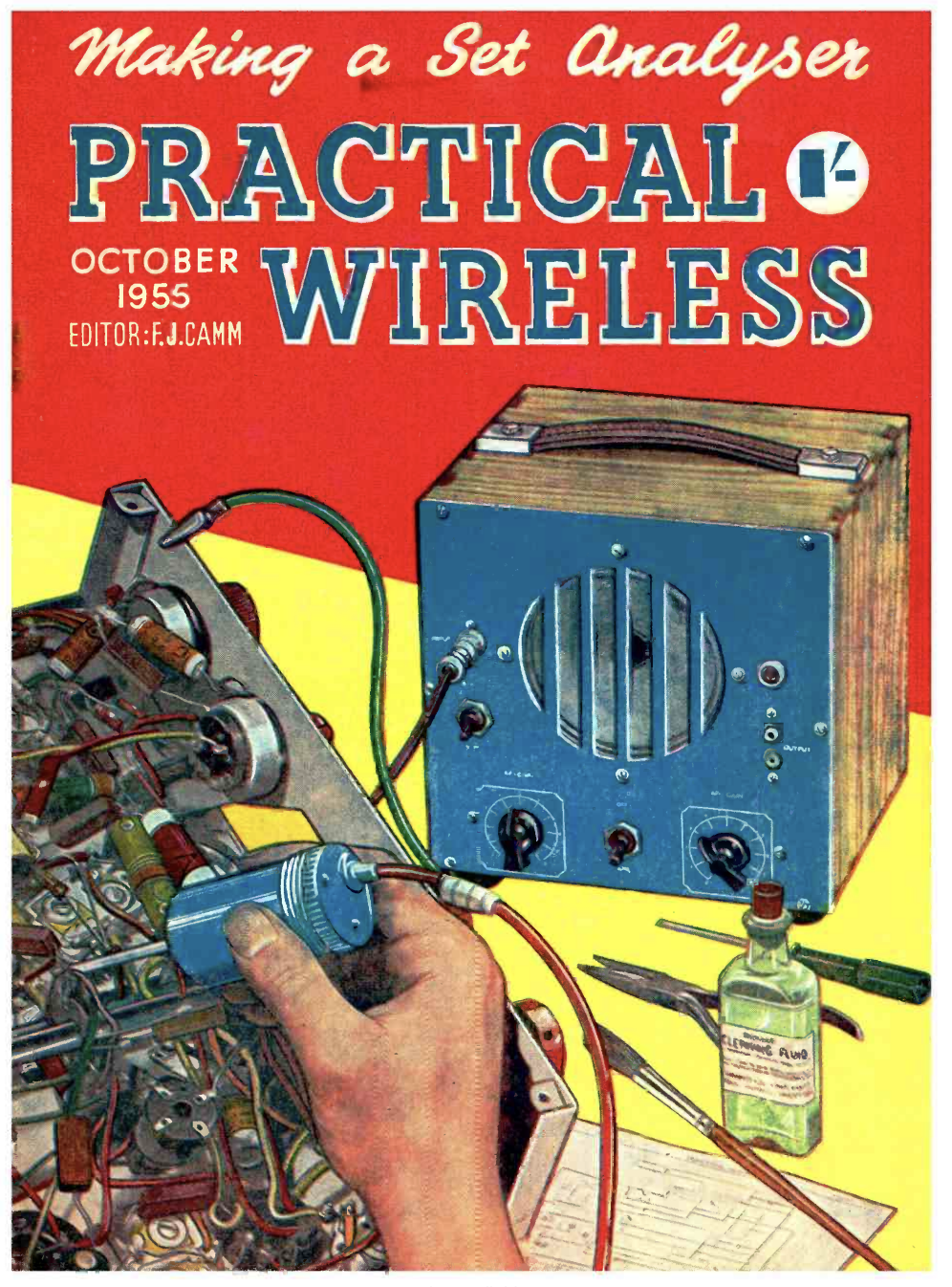
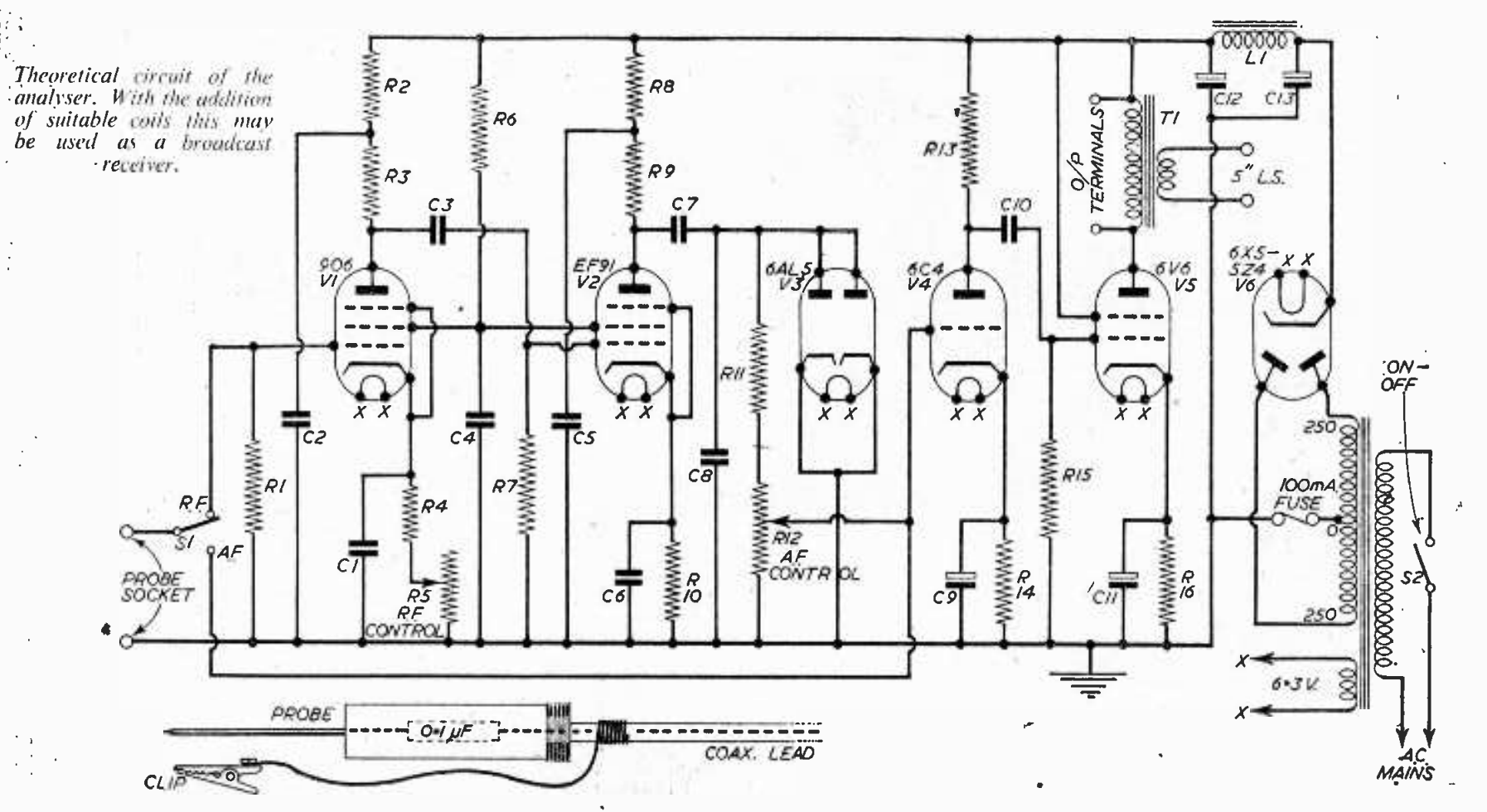
Seventy years ago this month, the British Practical Wireless magazine showed how to make this “set analyzer”, which we would more commonly call a signal tracer. The probe could be switched to AF or RF, and could trace the signal to zero in on the defective portion of a receiver.

And since the circuit contained an entire receiver, it could also be used as a backup for another radio, with the addition of a tuned circuit.


1955 Miniature Distance Getter

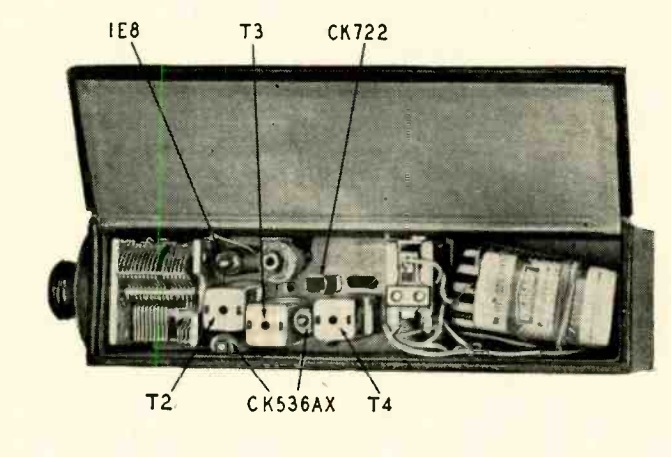
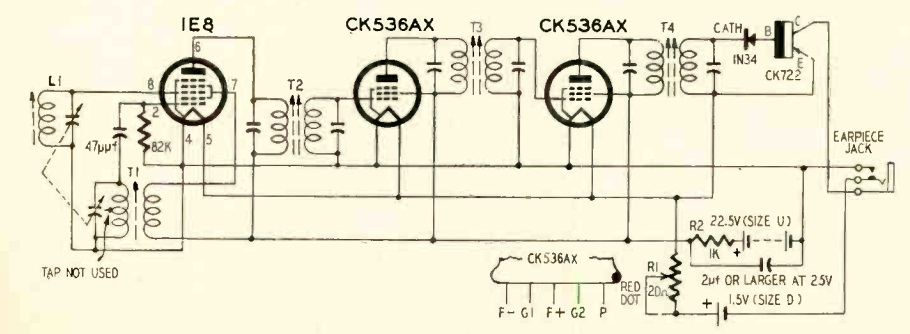
Seventy years ago, the October 1955 issue of Radio Electronics showed how to build this receiver, dubbed the DX Tiny Tuner. It was a miniature unit, designed for long-distance reception on the broadcast band. From a suburb of New York, the set picked up stations in Bridgeport (600 kHz), Philadelphia (610 kHz) and Newark (620 kHz). This compared with a good transistor set that picked up the 600 kHz station with a background of the one on 620, with no sign of the station on 610.

The author noted that the tiny set would pick up any station heard on a communications receiver of S2 or stronger. And surprisingly, it did it with the built-in antenna.

The superhet circuit used three subminiature tubes and one transistor.