Seventy five years ago this month, the May 1944 issue of QST carried a construction article for this 112 MHz transceiver for the War Emergency Radio Service (WERS). The article was unique in that it showed how to “mass produce” the set in a high school shop class.
The Altoona, PA, WERS organization operating under call sign WKYU, had little appropriate equipment. Compounding the problem was the fact that few skilled amateurs remained at home to do the building. The problem was solved by setting up construction of standardized transceivers by radio and electronics students in the vocational department of Altoona High School. The school benefitted by having interesting and worthwhile lab work, and WERS benefitted by having a source of the needed equipment. In addition, the students who were involved in WERS also had particular pride in using equipment they themselves had built.
The circuit is a familiar one for VHF transceivers of the era. A 6J5 served as oscillator and self-quenched superregenerative detector, although other tubes could be substituted. A 6G6 pentode served as modulator and audio amplifier. Since wartime shortages meant that some tubes were not available, the article suggested substitutions for each.
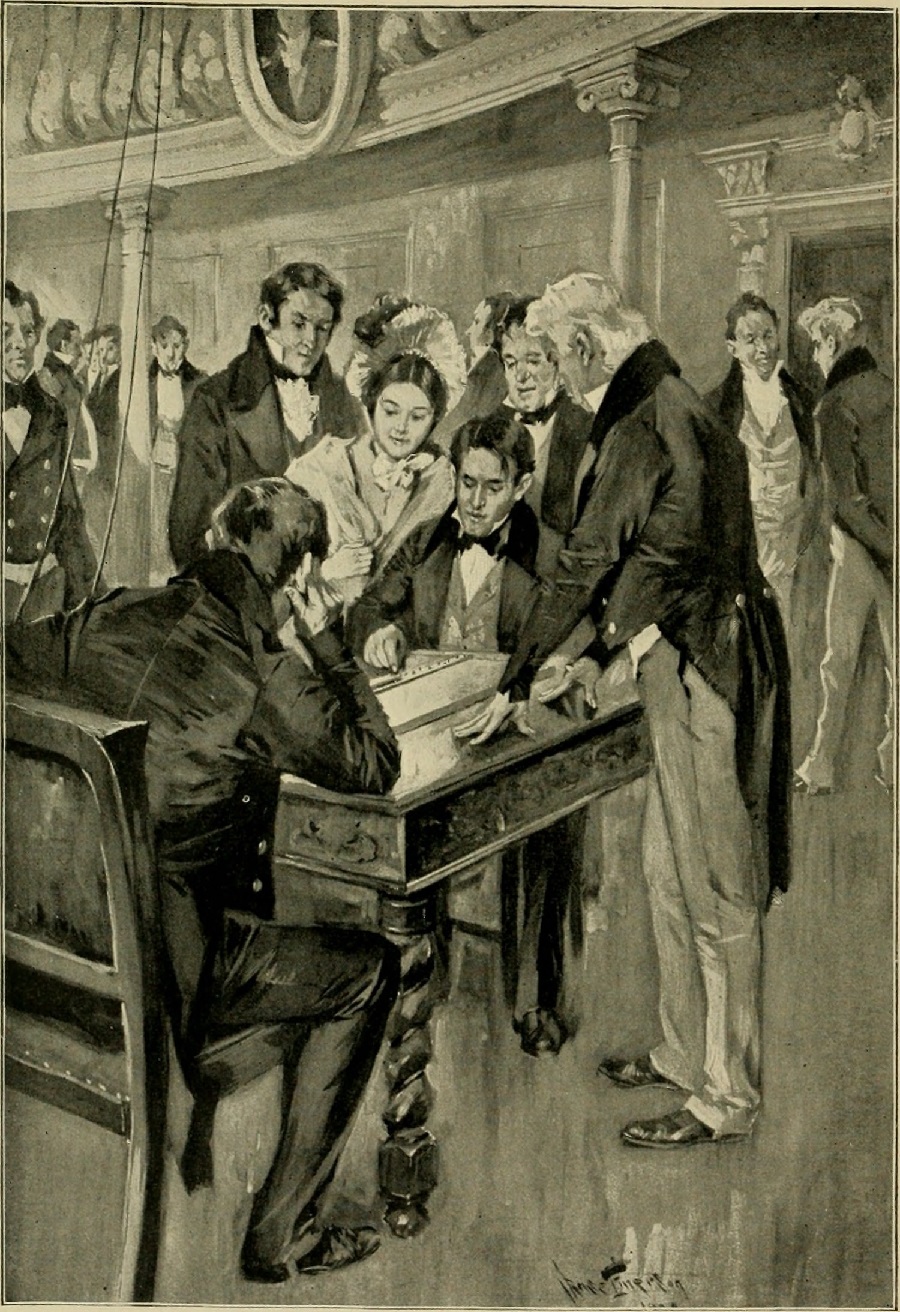
Today marks the 175th anniversary of the first use of the electric telegraph on May 24, 1844, a message sent between Washington and Baltimore by Samuel F.B. Morse.
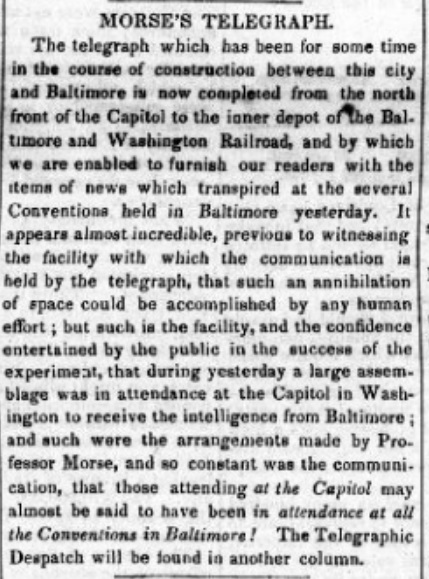
As shown by the newspaper clipping to the left, the device was in immediate commercial use. The article appeared in the Whig Standard on May 28, 1844.
The 38-mile line was authorized by Congress in 1843, and $30,000 was appropriated. It was completed by May 1, 1944, and a demonstration took place that day. This is the demonstration apparently being discussed in this article, since the May 1 demonstration included sending the news of the Whig Party’s nomination of Henry Clay for President. The author of that article announces in astonishment that “those attending at the Capitol may almost be said to have been in attendance at all the Conventions in Baltimore!”
The line officially opened on May 24, 1844, with Morse in the Capitol building sending the words “what hath God wrought” to Baltimore. Within the next six years, 12,000 miles of line were placed.
Interestingly, the word “telegraph” was already firmly ingrained in the English language. Morse’s invention might have been the first electric telegraph, but other devices for sending signals over a long distance already existed. For example, I have transcribed the 1797 Encylopaedia Britannica article on the telegraph, which describes some of the pre-electric telegraphs.
Most readers are undoubtedly aware of the current uses of Morse Code, even 175 years after its first use. An interesting article at Smithsonian.com explains some of them.
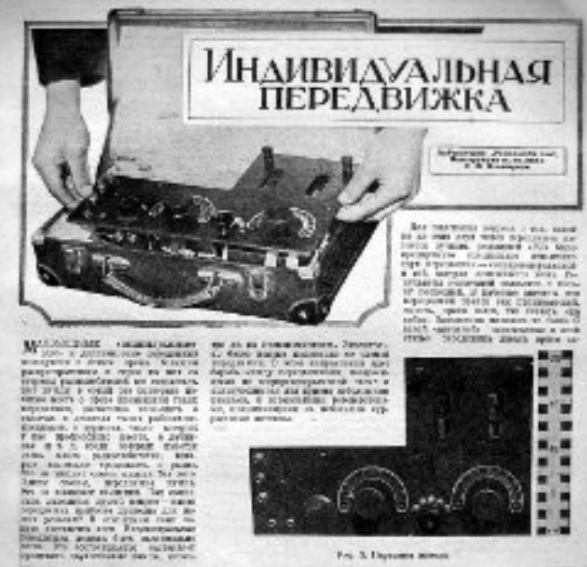
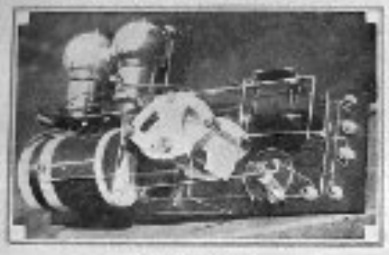
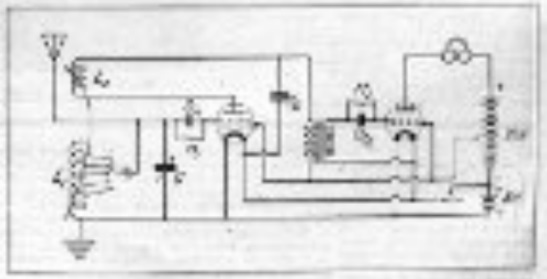
I wish I was able to read more about this 1929 Soviet portable set. But the text is in Russian, and the quality of the scan is rather poor, so I can’t even make out any words to give me hints. But this is obviously a portable receiver from ninety years ago, and some lucky comrade was able to put it together and pull in the signals.
The set appears to be a two-tube regenerative receiver which fits handily into a suitcase. One tube servies as detector and the other as audio amplifier. The circuit appears to be regenerative, with a tickler coil feeding the signal back into the main antenna coil. Tuning is accomplished with a tapped coil and variable capacitor. The cut-out in one corner is obviously to stash the batteries, and perhaps the headphones and antenna wire.
The plans for the set appeared 90 years ago this month in the May 1929 issue of Радио любитель (Radio amateur) magazine.
On this day 75 years ago, the May 22, 1944, issue of Life Magazine carried this photo of 20-year-old Natalie Nickerson of Phoenix, Arizona. According to the magazine, two years earlier she had said goodbye to a “big handsome Navy lieutenant” who “promised her a jap.” He obliged, and she received this skull of a Japanese serviceman signed by her boyfriend and 13 of his friends. The skull carried the inscription, “this is a good Jap–a dead one picked up on the New Guinea beach.”
The magazine added that “the armed forces disaprove strongly of this sort of thing.” Reaction to the photo by American readers was overwhelmingly condematory, and the officer was later reprimanded by the Navy. The photo was reprinted in Japan as an example of American barbarism.
Eighty years ago this month, the May 1939 issue of Radio Retailing carried this feature explaining how salesmen from Austin, Minnesota, based Hormel Foods did their jobs. To tell the story of “a new canned meat,” the salesmen brought along on their calls to grocers a portable phonograph and played a record of the canned meat’s story. They “stood speechless while the record did the selling, softened up the prospect with suitable musical interludes.”
This salesman was employing an Emerson radio-phono.
While the meat is not identified in the caption, it is plainly visible in the photo, which reveals that the phonographic sales pitch was for Spam, the venerable luncheon meat which had been introduced by the company in 1937.
Seventy five years ago, the exact time and place of the D-Day invasion was a closely guarded military secret, but the fact that is was coming soon was no secret. 75 years ago today, the May 20, 1944, issue of the Milwaukee Journal carried this headline that Gen. Eisenhower had issued his first orders to the Underground.
The orders went out over American radio stations recently constructed on the continent. The commander-in-chief advised the underground to take minute and detailed note of every move of the enemy, with particular attention to the moves of his men, tanks, guns, as well as their markings and strength.
When this was published, the invasion was just over two weeks away.
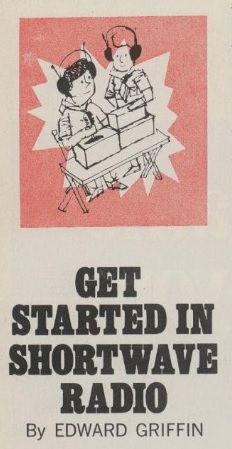
Fifty years ago this month, the May 1969 issue of Boys’ Life carried a one-page primer on shortwave listening. It coached scouts on the basics of the hobby. The article noted that you could get started with a portable or table radio, but for the best experience, it recommended a communications receiver in the $100 price range. The bandspread was identified as the most important feature.
The article noted that the lower frequency bands up to 25 meters were best at night, with the higher frequencies being best during daylight hours.
It noted that it was possible to listen in on both U.S. and Soviet space shots, and noted that the frequencies of 17,655 and 20,186 kHz were the most likely.
Starting in about 2011, residents of Windsor, Ontario, Canada, reporting hearing what came to be called the “Windsor Hum.” The mysterious and annoying sound comes and goes, but it is a low-pitched sound of about 30-35 Hz with an apparent range of several miles. It’s often described as being similar to a truck idling nearby.
Long suspected as the source of the sound is Zug Island, an artificial island in the Detroit River, on the U.S. side of the international border.
Named after an early owner, Samuel Zug, the island was formed from a natural peninsula where he originally intended to build a luxurious estate. The swampy character of the land led him to abandon the idea, and he instead used it for industrial purposes. In 1888, he allowed a small canal to be cut, turning the peninsula into an island, and this canal was enlarged by Henry Ford in the 1920s for easier river access to the River Rouge Ford plant.
The island became a site of iron making as early as 1901, and the entire island is currently part of United States Steel Corporation’s Great Lakes Works. The portion of the plant on the island produces iron, which is processed into steel at facilities in Ecorse, MI, a couple of miles south. The island facility includes three blast vessels, which are believed by many to be the source of the sound.
The Ontario Ministry of Natural Resources concluded in 2011 that Zug Island was the source of the mystery sound. A 2014 report by researchers at the University of Windsor also concluded that the blast furnace operations on Zug Island were the likely source. However, because the intermittent sound was not present on days when some of the research equipment was deployed, the report found that “conclusive evidence of the source was not achieved.”
Interestingly, Zug Island also bears the distinction of being the scheduled destination of the SS Edmund Fitzgerald on her last voyage in 1975. Contrary to the artistic license taken by the song, she wasn’t “fully loaded for Cleveland.”
According to one published report (QST for May 2019), Zug Island is “governed by Homeland Security,” although I’ve found no evidence of this. As with any industrial plant, access is not granted to non-employees to come in and take a look around. Therefore, it’s understandable that the two bridges to the plant are “heavily guarded” as the article claims. The “governed by Homeland Security” claim probably arises from the fact that some of the “No Trespassing” signs posted by U.S. Steel, in an apparent attempt to add emphasis, include language that “under Homeland Security, any individual within 100′ of a docked ship must possess a TWIC card.” Since ships obviously dock on the island to load and unload cargo, this Homeland Security regulation comes into play, as it would at any maritime facility.
The existence of the hum has given rise to a certain amount of citizen science to collaborate in the identification and elimination of the hum. Much of this is carried out in a Facebook group created in response to official inaction.
If you want to hear the hum yourself, it is available at the following video, posted by the Facebook group’s founder . To listen, however, you will need a speaker system or headphones with very good bass response, in order to reproduce the 30-35 Hz. With typical computer speakers or headphones, you will not be able to hear the sound.
Conspiracy buffs might be disappointed, but while the source of the hum has not been pinned down with absolute precision, the likely source has been identified.
Author’s Note: This post is obviously a bit off-topic, since we normally discuss radio history at this blog. (However, we’re prone to branch off into seemingly unrelated topics, so this isn’t the first time we’ve done so.)
The reason why I posted this article is because QST, the membership journal of the American Radio Relay League, published in its May 2019 issue a similar article. I had a number of criticisms of the article, to the point where I thought that I could do a better job myself. So rather than simply criticize, I decided to go ahead and write my own article. The original QST article is probably more polished, as the result of better editing. But even though I wrote it in a day based upon online research, I think mine is better. Here are my concerns with the QST article:
First and foremost, every issue of QST carries on its masthead the words “devoted entirely to amateur radio.” This article, while perhaps interesting, really has nothing whatsoever to do with Amateur Radio. Notably, the author is not a ham, and probably not an ARRL member. Yet three valuable pages of the membership journal were devoted to this off-topic information (and one of those pages consisted of a stock photo). While the article might have covered a topic that was interesting to some members (including myself), it seems like a poor use of such valuable real estate. After all, most members are paying almost $50 per year for membership, and a good portion of that amount is earmarked for the magazine. It might have been a good choice to go on the ARRL website, but putting it in print seems to me to be poor use of membership resources. The editors appear to have noticed this, as they did interview a local ham, who reported that the hum hadn’t affected his radio operations, and that he didn’t know of any other hams who were affected in any way.
More importantly, Amateur Radio is a technical hobby, and if members are interested in this topic, then it stands to reason that they are probably interested in the technological aspects. On this point, the article really lets them down. It uses vaguely “conspiracy theory” oriented language rather than any technical facts. A few trappings of science are included. For example, it includes a graph purporting to show the sound wave. But no explanation is given of the waveform, much less any explanation of how the graph was produced. It’s undoubtedly an oscillograph of a waveform picked up by microphone, but the article doesn’t explain where, when, or how. In fact, the illustration inexplicably shows two copies of the same graph, one on top of the other. Significantly, the article lacked any footnotes or references where the reader might learn more.
And as noted in my article, the article makes the claim that the island is “governed by Homeland Security.” Then, in conspiracy-theory tradition, it goes on to pose questions as to why Homeland Security would be involved, but doesn’t answer those questions.
Also, my first reading of the article left me confused as to whether Zug Island was located in the United States or in Canada. When I started reading, I assumed that the article was talking about a Canadian island. After reading to the end, I correctly guessed that the island was actually on the U.S. side of the border. But I didn’t know for sure until I did independent research.
Other than being written by the producer of a “popular podcast,” I have no idea why this article appeared in QST. I don’t mind the occasional foray into off-topic material. In fact, I enjoy the “Eclectic Technology” column which usually covers non-radio technology that is still of interest to hams. The reason why that column works is because the author knows that readers will be interested in scientific and technical topics.
An article about the Windsor Hum would be at home in a magazine with a broad audience such as Popular Science. But even the editors of such a general-interest magazine would pay more attention to accurately reporting facts, rather than merely hinting at conspiracy theories. And QST readers certainly deserve better.
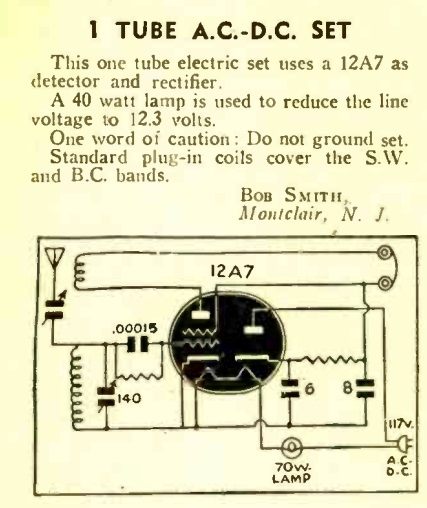
Seventy-five years ago this month, the May 1944 issue of Radio Craft carried this simple one-tube AC/DC circuit sent in by one Bob Smith of Montclair, NJ. The set uses a single 12A7 tube as rectifier and detector. According to Smith, the set would perform on either the standard broadcast band or on shortwave, with appropriate plug-in coils.
The filament voltage is dropped through a standard light bulb, although the schematic shows 70 watts, and the text shows 40 watts. I suspect 70 watts is the correct value, but we’ll leave it up to the reader to do the calculations.
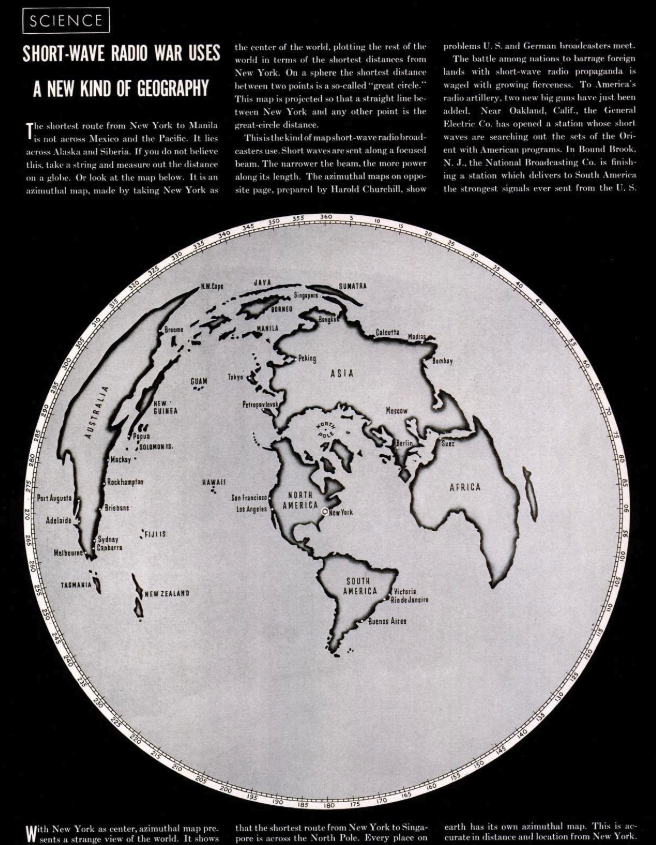
Eighty years ago, the May 15, 1939, issue of Life Magazine introduced readers to the sometimes counter-intuitive geography that comes from living on a globe. In particular, the magazine noted that it was important for shortwave broadcasting. For example, it pointed out that the first reaction on how to reach Manila from New York would be to point the antenna toward Mexico and the Pacific. But by looking at a globe or an azimuthal map centered on New York, it’s clear that the shortest path is over Alaska.
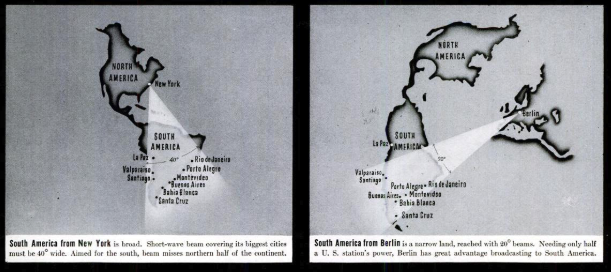
Similarly, the magazine notes that it’s easier for Berlin radio to reach South America than it is for New York. This is because to reach the entire continent, the American station needs to have a beam 40 degrees wide. The German station, on the other hand, can get by with only half the power, since most of the continent can be covered with a beam of only 20 degrees.
It’s not a coincidence that New York and Berlin were chosen as the examples. Shortwave radio was an important force in World War II. For more information, see our earlier post.

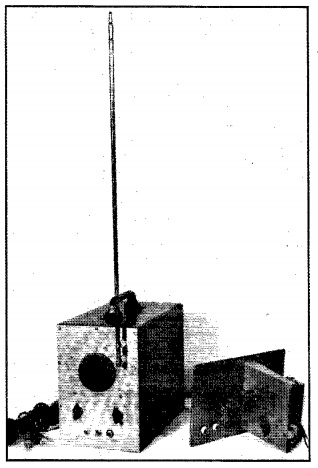 Seventy five years ago this month, the May 1944 issue of QST carried a construction article for this 112 MHz transceiver for the War Emergency Radio Service (WERS). The article was unique in that it showed how to “mass produce” the set in a high school shop class.