On this All Saints Day, we present “For All the Saints” (Sine Nomine):

On this All Saints Day, we present “For All the Saints” (Sine Nomine):
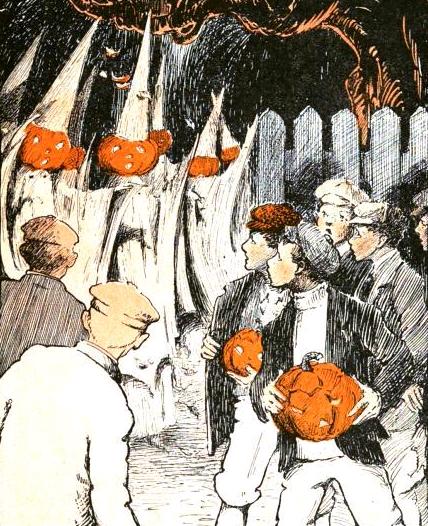 Happy Halloween from OneTubeRadio.com!
For Halloween, I am doing a special broadcast for the neighborhood. If you discovered this page from that broadcast, welcome to OneTubeRadio.com, a blog covering mostly radio history, but also other eclectic topics. If you are outside of our broadcast range, you can listen to the full broadcast by clicking the play button below:
Tonight’s broadcast features War of the Worlds, originally broadcast on CBS radio on October 30, 1938. It also includes Halloween music from French artist Chez Mon Plaisir, who has graciously placed the music in the public domain under a Creative Commons 0 license. It is available for download at FreeMusicArchive.org.

Reception reports are welcome. You can contact us at como-radio@usa.net.
Happy Halloween from OneTubeRadio.com!
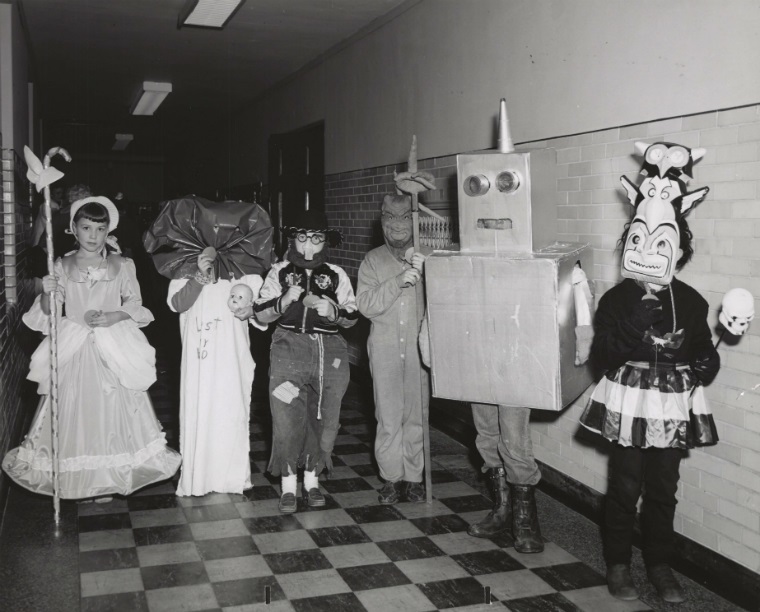
The Windy City youngsters shown here have been collecting Social Security for a few years now, but in 1960, they were celebrating Halloween at Jackie Robinson Park, Chicago.
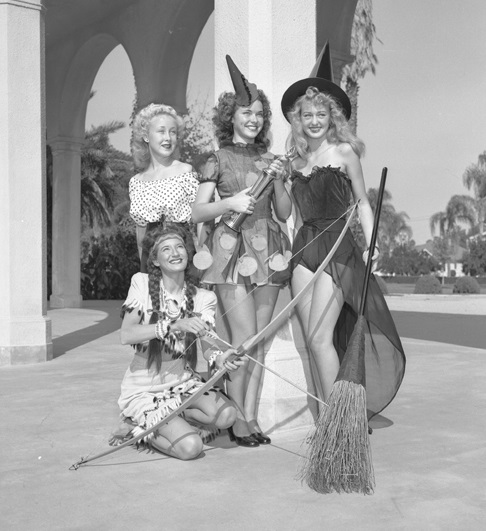
And in 1947, the young women shown below were participants in the Anaheim, CA, Halloween Slick Chick Beauty Contest.
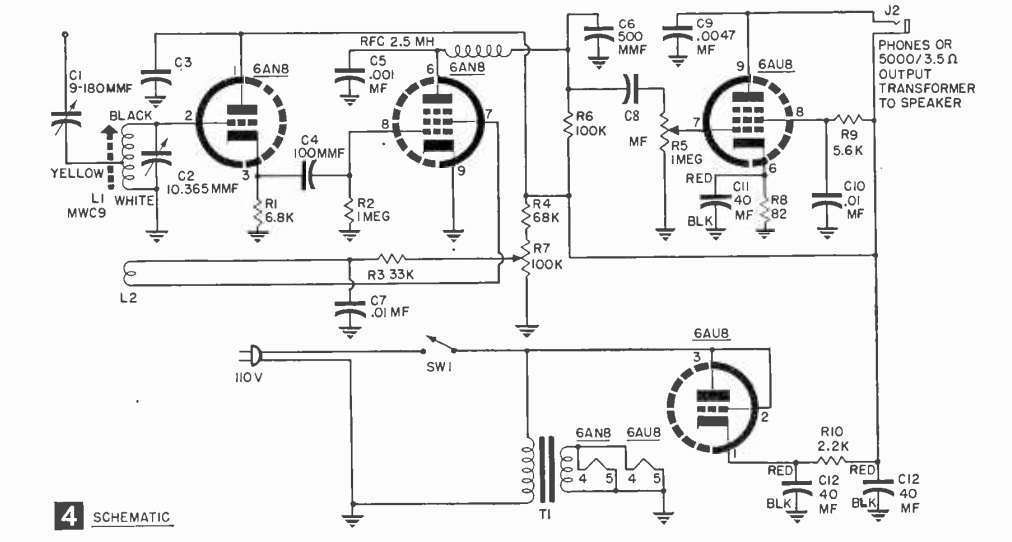
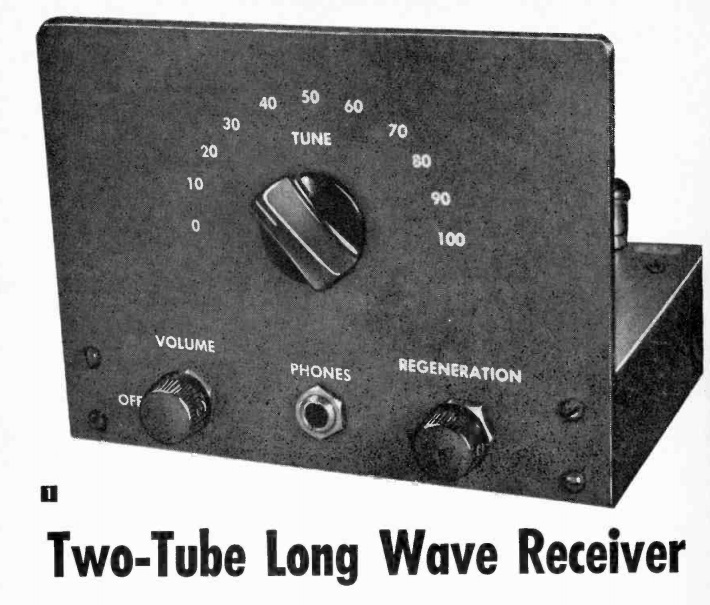 The plans for this handsome two-tube long wave receiver appeared in the Fall 1960 issue of Radio-TV Experimenter.
The AC-DC set used two dual tubes. The two halves of the 6AN8 served as RF amplifier and regenerative detector. Half the 6AU8 was used as audio amplifier, with the triode section pressed into service as rectifier. The set covered 85-550 kHz, and with modification (addition of a coil) could be pressed into service on the broadcast band.
The article addressed the kinds of signals that could be heard on the long waves. At the time, they included the old A-N aviation beacons we’ve previously described.
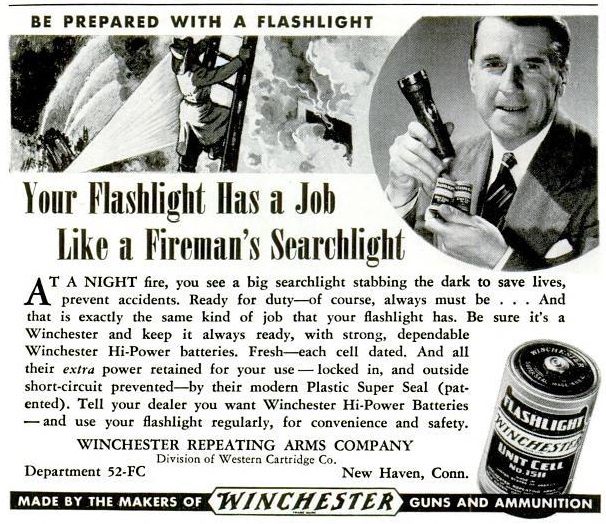 Eighty years ago today, this ad appeared in the October 28, 1940, issue of Life magazine, for the Winchester Repeating Arms Company. It reminds that for convenience and safety, you should carry and use their product regularly. Using it in the dark would save lives and prevent accidents.
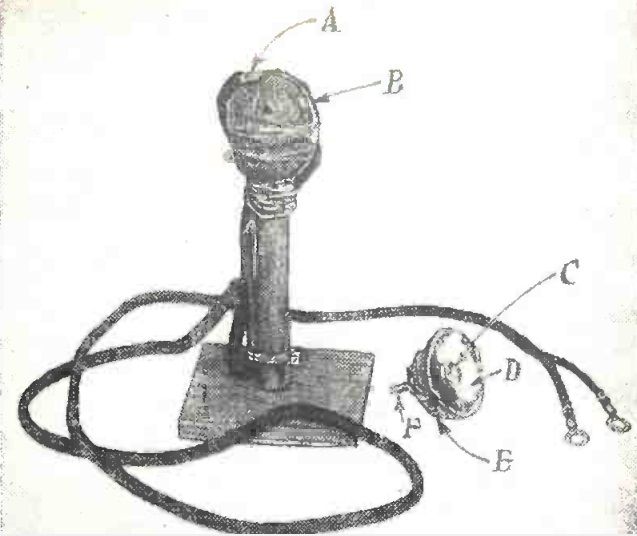 We’ve previously shown ideas for homemade microphones, but unlike this one from75 years ago, none of them were made out of a walnut.
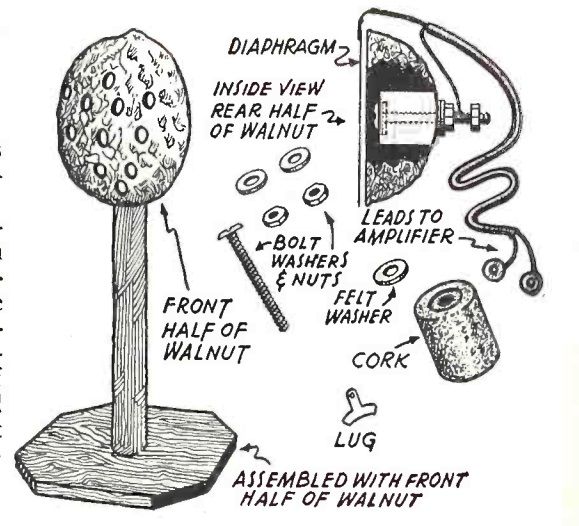
This one, from the October 1945 issue of Radio Craft is, indeed, housed inside a walnut. In addition to the large walnut shell, the required components are “a cord, a little cotton batting, a piece of tinfoil, and a few odds and ends.” The heart of the condenser mike is a diaphragm made of thin copper or tin foil, specifically, “the stiff kind, such as used to be used on cards of buttons.”
The foil is stretched carefully over one half of the shell. Through the other half of the shell a cork is inserted, and a brass screw passes through to a washer which is held in place just next to the foil. The article includes a circuit for a preamplifier. The author notes that the completed microphone “needs plenty of amplification, but the quality is as good as that of any commercial microphone I have ever heard.”

Alexander. Wikipedia photo.
Today marks the 100th anniversary of the death of Alexander, King of Greece, on October 25, 2020. Alexander assumed the throne in 1917 upon the exile of his father, King Constantine I.
Alexander’s short reign was not a happy one. His father, a supporter of Germany, even though ostensibly neutral, was deposed by the Prime Minister, along with his first son, the crown prince. Alexander was brought in, but basically imprisoned in the royal estate.
On October 2, 2020, he was out for a walk on the grounds of the estate. Somehow, his German Shepherd, Fritz, got into a fight with a monkey belonging to the steward of the palace grapevines (to be specific, a Barbary macaque monkey). The king managed to get the animals separated, but in the process was bit. The wounds were promptly attended to, and they were not believed to be serious. The king asked that the incident be kept quiet, and he returned to the palace.
Unfortunately, an infection set in, and the king developed a fever and sepsis. He died on October 25, 1920.
Photo, Minn. Historical Society, via Minn. Alumni Assn.
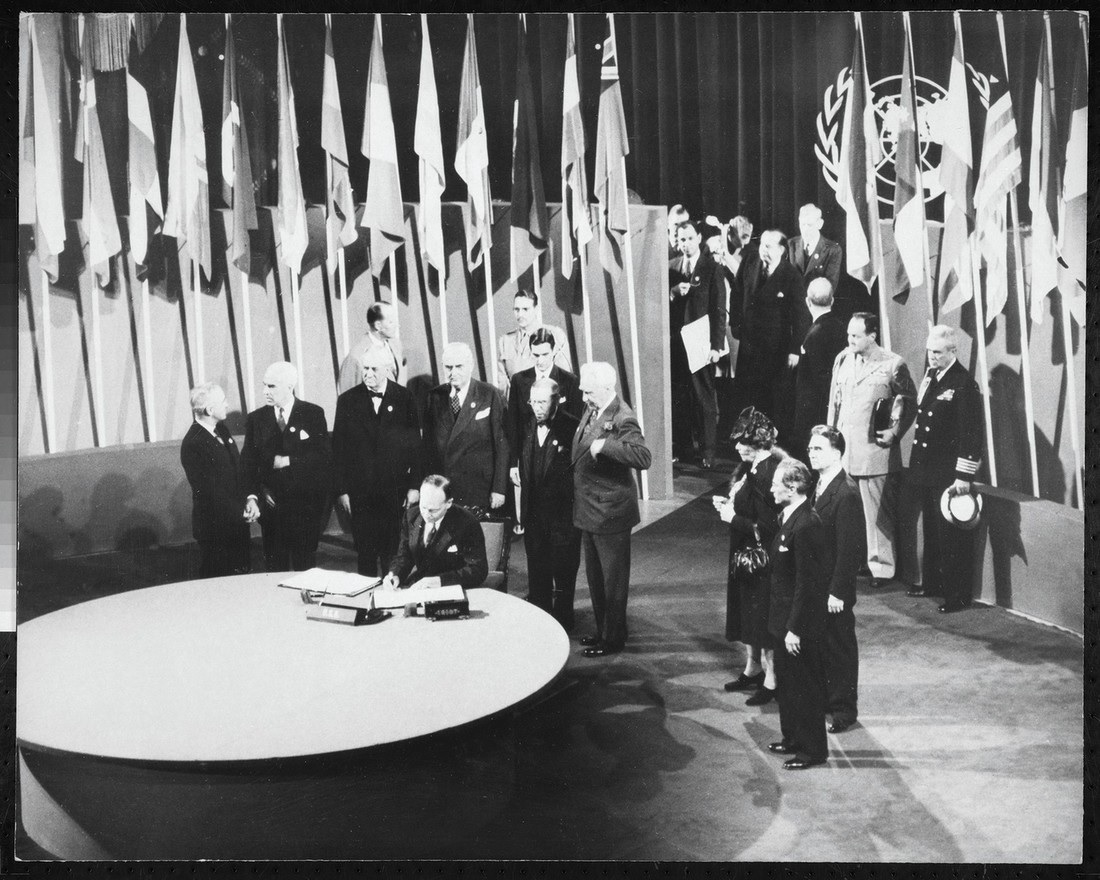
For better or worse, the United Nations came into existence on this day 75 years ago, October 24, 1945. The organization came about as the result of the conference in San Francisco that summer, while the war in the Pacific was still raging. Shown above is former Minnesota Governor Harold Stassen signing the charter as part of the U.S. delegation. At the time of his death in 2001, Stassen had been, for a number of years, the last living signatory of that document.
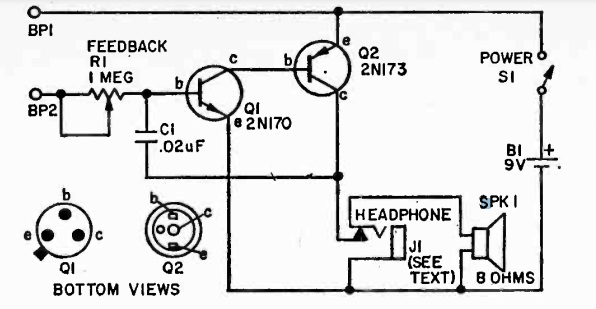
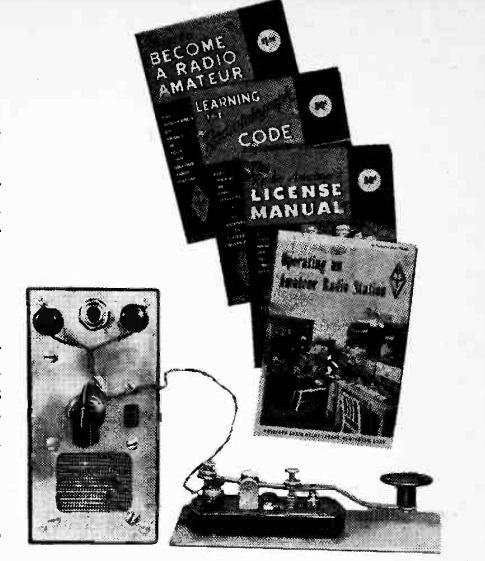 Fifty years ago, the October-November 1970 issue of Science and Electronics showed how to put together, at a total parts cost of about $4, this combination continuity-tester/code practice oscillator.
The circuit was dubbed by the author the “CON-TEST,” since it was first and foremost a continuity tester. But as the photo above shows, it was very suitable for use as a code practice oscillator.
The choice of transistor was not critical, but the author used a 2N170 for the audio oscillator, along with a 2N174 audio amplifier to produce some room-filling volume.
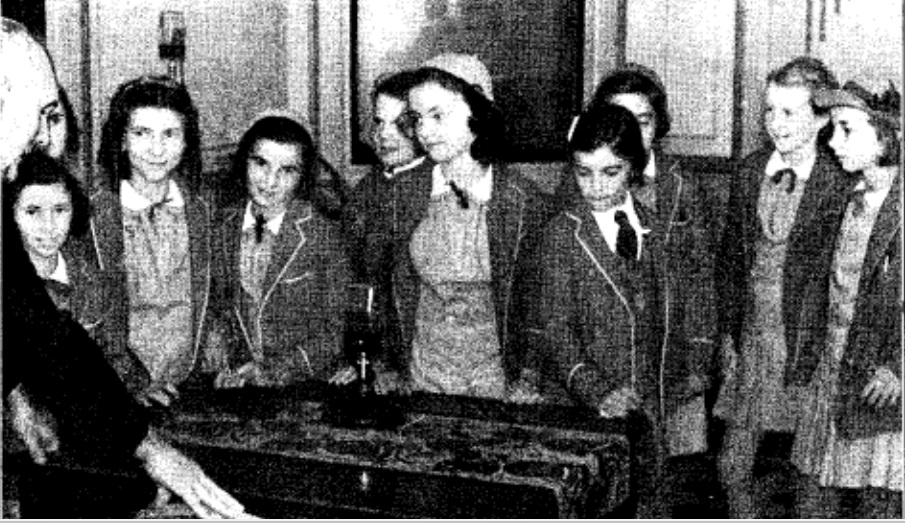 Eighty years ago this month, these students toured the facilities of CKY radio in Winnipeg. The photo appeared in the October 1940 issue of Manitoba Calling,
the station’s program guide. The students were from the Riverbend School, and were being given a tour of the station by Mr. A. McLean, the station’s official guide. According to the magazine, great numbers of attentive students visited the station. Schools interested in arranging a tour were encouraged to call the station’s public relations department.