Author Archives: clem.law@usa.net

Safety in the Dark: 1940 Winchester Ad

Life1940Oct28Eighty years ago today, this ad appeared in the October 28, 1940, issue of Life magazine, for the Winchester Repeating Arms Company. It reminds that for convenience and safety, you should carry and use their product regularly. Using it in the dark would save lives and prevent accidents.


1945 Walnut Microphone

1940OctRadioCraft3We’ve previously shown ideas for homemade microphones, but unlike this one from75 years ago, none of them were made out of a walnut.

This one, from the October 1945 issue of Radio Craft is, indeed, housed inside a walnut. In addition to the large walnut shell, the required components are “a cord, a little cotton batting, a piece of tinfoil, and a few odds and ends.” The heart of the condenser mike is a diaphragm made of thin copper or tin foil, specifically, “the stiff kind, such as used to be used on cards of buttons.”

The foil is stretched carefully over one half of the shell. Through the other half of the shell a cork is inserted, and a brass screw passes through to a washer which is held in place just next to the foil. The article includes a circuit for a preamplifier. The author notes that the completed microphone “needs plenty of amplification, but the quality is as good as that of any commercial microphone I have ever heard.”

1940OctRadioCraft2


Monkey Kills King of Greece, 1920

King Alexander of Greece.jpg

Alexander. Wikipedia photo.

Today marks the 100th anniversary of the death of Alexander, King of Greece, on October 25, 2020. Alexander assumed the throne in 1917 upon the exile of his father, King Constantine I.

Alexander’s short reign was not a happy one. His father, a supporter of Germany, even though ostensibly neutral, was deposed by the Prime Minister, along with his first son, the crown prince. Alexander was brought in, but basically imprisoned in the royal estate.

On October 2, 2020, he was out for a walk on the grounds of the estate. Somehow, his German Shepherd, Fritz, got into a fight with a monkey belonging to the steward of the palace grapevines (to be specific, a Barbary macaque monkey). The king managed to get the animals separated, but in the process was bit. The wounds were promptly attended to, and they were not believed to be serious. The king asked that the incident be kept quiet, and he returned to the palace.

Unfortunately, an infection set in, and the king developed a fever and sepsis. He died on October 25, 1920.


UN 75th Anniverssary

Photo, Minn. Historical Society, via Minn. Alumni Assn.

Photo, Minn. Historical Society, via Minn. Alumni Assn.

For better or worse, the United Nations came into existence on this day 75 years ago, October 24, 1945. The organization came about as the result of the conference in San Francisco that summer, while the war in the Pacific was still raging. Shown above is former Minnesota Governor Harold Stassen signing the charter as part of the U.S. delegation. At the time of his death in 2001, Stassen had been, for a number of years, the last living signatory of that document.


1970 Continuity Tester/Code Oscillator

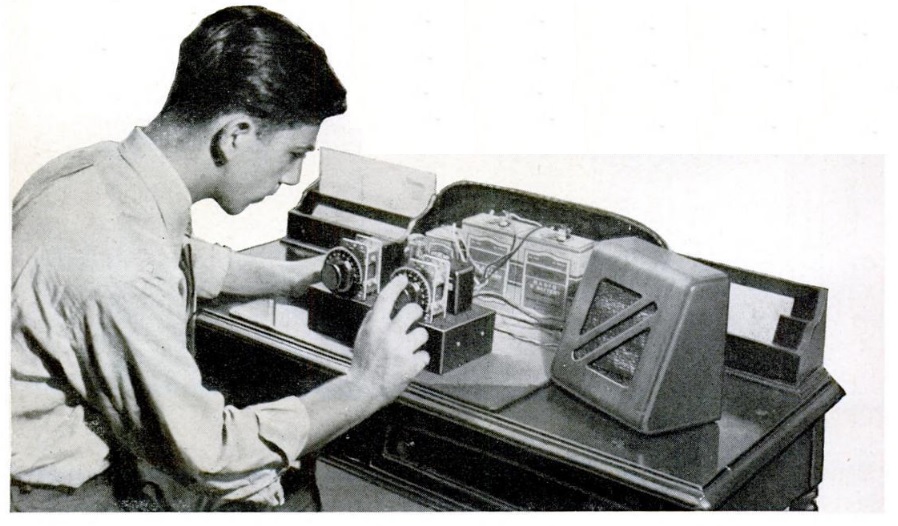
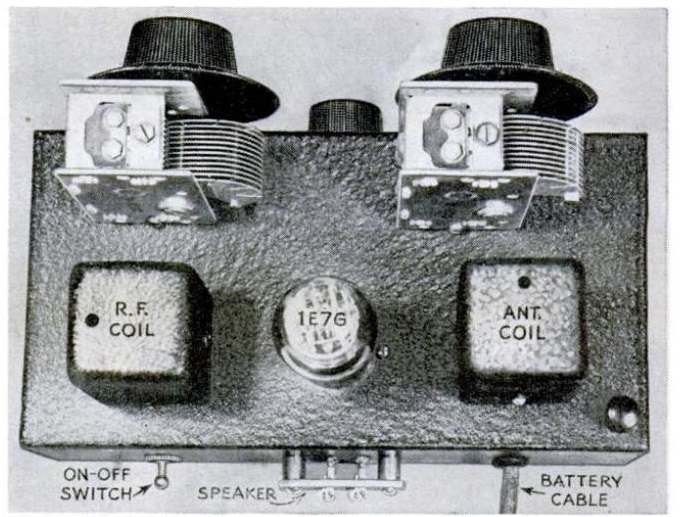
1970OctSciElecFifty years ago, the October-November 1970 issue of Science and Electronics showed how to put together, at a total parts cost of about $4, this combination continuity-tester/code practice oscillator.

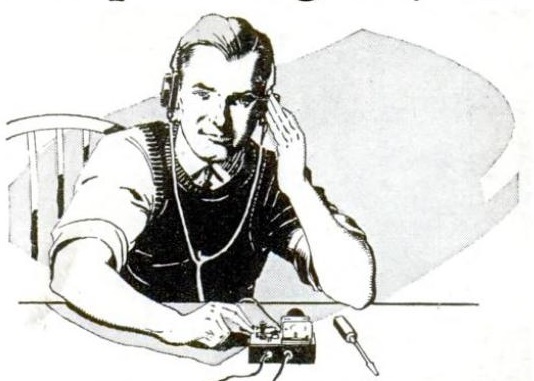
The circuit was dubbed by the author the “CON-TEST,” since it was first and foremost a continuity tester. But as the photo above shows, it was very suitable for use as a code practice oscillator.

The choice of transistor was not critical, but the author used a 2N170 for the audio oscillator, along with a 2N174 audio amplifier to produce some room-filling volume.

1970OctSciElec2


Students Tour Winnipeg Radio Station, 1940

1940OctManitobaCallingEighty years ago this month, these students toured the facilities of CKY radio in Winnipeg.  The photo appeared in the October 1940 issue of Manitoba Calling,
the station’s program guide. The students were from the Riverbend School, and were being given a tour of the station by Mr. A. McLean, the station’s official guide. According to the magazine, great numbers of attentive students visited the station. Schools interested in arranging a tour were encouraged to call the station’s public relations department.


1940 RCA Ad

Life1940Oct21This ad showing RCA’s product lineup for 1941 appeared 80 years ago today, in the October 21, 1940, issue of Life magazine.

For those on a budget, the model 45X-1 for $9.95.  The ad bills that set as having one police band, but in reality, it covers the broadcast band but with a bit of extended coverage to pull in police calls in many areas.

The most expensive of the table radios shown is the 18T for $49.95.  That 8-tube set featured six pushbuttons and two shortwave bands for pulling in the war news from Europe.  At the top of the line of the tabletop radio-phonos was the V-102, a 7 tube set which appears to be broadcast only, for $59.95.

For a larger view of the ad, from most browsers, click twice on the image.


1960 One Tube Broadcast Receiver

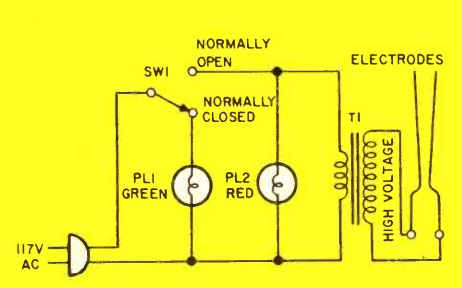
1960RadioTVExpIf you asked the author of this 1960 article whether he had Prince Albert in a can, he would tell you no, that he let Prince Albert out and instead installed a one tube radio.

The former tobacco tin houses a radio using a 117N7GT tube. The filament of this dual tube ran right off line current, with half serving as rectifier. The other half of the tube, a pentode, was “reflexed” to serve simultaneously as RF and AF stages, with a solid state diode serving as detector. The simple circuit could pull in stations up to 70 miles away with loudspeaker volume.

The article concluded that the chassis of the set was “hot.” It warned that care should be taken to make sure the line cord was plugged in the right direction, or all of the internal ground connections should be isolated from the can.

The circuit appeared in the Fall 1960 issue of Radio-TV Experimenter.

1960RadioTVExp2


1960 Scout Signaling

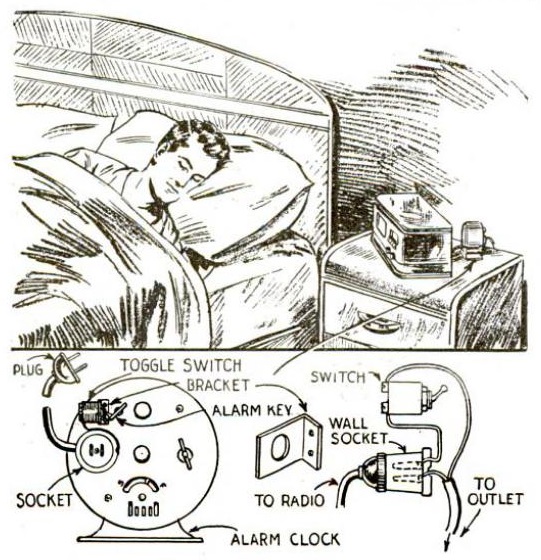
1960OctBL31960OctBL1Sixty years ago this month, the October 1960 issue of Boys’ Life carried two signaling devices. The first was a buzzer-type code practice set. The other, useful for stealthy communications at close range, was this visual signaler, made from a discarded razor blade container. With either one, the scout could get to work on his Morse code, possibly in preparation for Jamboree on the Air, which was announced in the same issue.

1960OctBL2


Review of AccuMed BNX Model A96 Respirator

Update:  When this review was published, the N95 approval was still pending.  It has now been approved, and qualifies as a NIOSH N95 respirator.  Becuase the mask is now approved, it has a new listing at Amazon.  To order, use this link rather than the links below.  I also have reviews of other Made in USA N95 masks at this link.

Bottom Line:  The the AccuMed BNX Model A96 Respirator appears to be an effective measure to protect yourself from coronavirus.  While N95 masks remain unavailable to the general public, this mask appears to be one of the best available alternatives. 

“Masks Don’t Work”

As my anti-mask friends often point out, masks don’t work, and most people wear masks incorrectly. Those statements might very well be correct. Where I differ with my anti-mask friends, however, is what to do about that information. Their conclusion is that since masks don’t work, and since most people don’t wear them correctly; therefore, one shouldn’t bother wearing a mask.

It seems to me that this isn’t a very logical conclusion. If most people wear masks that don’t work, and most people wear masks incorrectly, then it seems to me that the logical conclusion is that I should wear a mask that does work, and I should wear it correctly.

The prevailing wisdom is that I should point out to my anti-mask friends that a cloth mask isn’t designed to protect the person wearing it–it’s designed to protect other people.  But I won’t waste my time doing that–I am essentially a selfish person, and I want something that protects me.  That it also protects those around me is a pleasant side effect, but it’s not my primary motivation.

My anti-mask friends often offer the criticism that I am blindly following orders.  That’s surprising, since almost all of them wear a mask more than I do.    I very rarely wear a mask.  My average time per day of wearing a mask is probably about five minutes.  Very few of even the most avid anti-maskers can make that claim.

This is because I prefer to simply avoid situations where I might have to breathe the same air as other people. For example, I have never been inside a Walmart wearing a mask. I’ve never been inside a bar wearing a mask. I’ve never been inside a church wearing a mask. I’ve never been inside a school wearing a mask. Most anti-maskers can’t say these things, because they’ve been inside one of these places, and they were wearing a mask at the time. I’ve avoided all of these problems, because I haven’t gone inside these places in the first place.  My anti-mask friends often point out the fact that Walmart has the official government seal of approval of being a safe place.  Well, they might believe the government’s pronouncement, but I don’t.  I generally stay outdoors, where there are billions of cubic feet of air, and it’s unlikely that anyone else has breathed the same air as me.

The Occasional Need for a Mask that Does Work

Even though I try to stay outside, there are increasingly common situations where I need to go inside and breathe the same air as other people. On one occasion, I had to go inside the bank, and there was no way to do this particular transaction online. I’ve had to go inside the post office lobby to get my mail from my P.O Box. And occasionally, I’ve had to use the restroom (although when possible, I prefer the vault toilet.) So on these occasions, I need to wear a mask, because the government tells me that I need to wear a mask. And since I need to wear one anyway, I may as well wear one that works, and I may as well use it correctly.

Changing Advice from Government

We can debate all day whether the government should tell me what to do. But since I need to wear a mask anyway, again, I may as well wear one that works. If you remember back a few short months, the government hasn’t always told me to wear a mask. In fact, the initial advice from the government was specifically that I should not wear a mask.

For example, this March 2 Washington Post story quotes the Surgeon General’s recitation of the then-conventional wisdom: “One of the things they shouldn’t be doing, the general public, is going out and buying masks. It actually does not help, and it has not been proven to be effective in preventing the spread of coronavirus amongst the general public.” It also quotes a February 29 Tweet from the Surgeon General: “Seriously people- STOP BUYING MASKS! They are NOT effective in preventing general public from catching #Coronavirus, but if healthcare providers can’t get them to care for sick patients, it puts them and our communities at risk!”

(The editors of the Washington Post have since added an editor’s note saying that the official advice has changed.)

The Surgeon General actually had a point back in February.   There was a severe shortage of effective masks, and it was best to reserve the remaining stock for health care workers, who really needed them. So I dutifully followed the official government guidance and refrained from trying to buy a mask.  It was the right thing to do.  In the meantime, I simply stayed away from other people, let the health care workers get the masks they needed, and gave American industry time to ramp up production.

On the other hand, I can’t stay away from other people forever. In July, I decided that I had given American industry sufficient time to start making masks in sufficient volume, and the time had come to buy myself an effective mask, namely an N95 respirator.

According to the FDA website, an N95 respirator is “a respiratory protective device designed to achieve a very close facial fit and very efficient filtration of airborne particles. Note that the edges of the respirator are designed to form a seal around the nose and mouth.”

The official government advice from that same website is still that I shouldn’t get one, because they are still in short supply:

The Centers for Disease Control and Prevention (CDC) does not recommend that the general public wear N95 respirators to protect themselves from respiratory diseases, including coronavirus (COVID-19). Those are critical supplies that must continue to be reserved for health care workers and other medical first responders, as recommended by current CDC guidance.

I’ve given American industry plenty of time to produce respirators. While I am sympathetic to the plight of healthcare workers, I’m also selfish.  In July, I decided to ignore this official government advice.  (Ironically, it’s the anti-maskers who are obeying this government edict.)  I decided that it’s been long enough, and I should buy myself a mask for my own selfish purpose:  Reducing the possibility of infection if I need to use a public restroom or go inside a building for some other reason. So my anti-mask friends will be glad to know that I’ve decided to selfishly ignore government recommendations.

Unfortunately, it’s not quite that easy, since there are no N95 masks to be found. An N95 mask becomes an N95 when it is approved by the National Institute for Occupational Safety and Health (NIOSH).

A year ago, I could have walked into my friendly neighborhood hardware store and, for a couple of dollars, bought a genuine NIOSH-approved N95 respirator, proudly made in the USA. And as someone who likes to be prepared for emergencies, I should have done exactly that. But I didn’t. And in 2020, you can’t buy them, because there aren’t enough, and the entire national supply is earmarked for healthcare workers.

There aren’t even enough for healthcare workers. For that reason, the FDA has relaxed its standards, and has issued an emergency use authorization for American healthcare workers to use imported respirators meeting other countries’ standards. This includes, ironically enough, Chinese-made respirators meeting the Chinese KN95 standard, which is similar to the American N95 standard.

Buying a Chinese Mask

I’d prefer not to have to use a Chinese-made mask meeting the standards of the communist Chinese government to protect myself from a virus that originated in communist China. So I’m still kicking myself for not going to the neighborhood hardware store in 2019 and buying a supply of American-made masks. But beggars can’t be choosers, and as of July, the best that I could do was get a Chinese mask. There were KN95 masks available in July, and I bought one similar to this one from a reputable medical supply company in Texas. Even though it was made in China, it was better than nothing, and it met the FDA requirements for healthcare workers. So I decided it was adequate for my rare ventures into public buildings.  The one that I purchased was marked that it met the KN95 certification, and the seller had available the lab report showing that it had the better-than-nothing Chinese certification.  The one that I purchased did (at least for me) have a good fit.  (The CDC website  contains instructions for putting on a mask and ensuring a proper fit.)  The mask must be tight against the skin all around so that all of the air passes through the mask, and not around the gaps.  While this mask fits me, it doesn’t fit my kids very well, and it’s difficult to ensure a proper fit on them.

Re-using Disposable Masks

These masks are disposable, which makes perfect sense if you can walk into the neighborhood hardware store and buy a replacement.  But since there’s a shortage, the FDA has addressed the crisis by allowing re-use.  For example, these instructions from the North Dakota Department of Health show the approved procedure for re-use.  Basically, you remove the mask carefully and store it in a paper bag until the next use.  This video from the University of Nebraska is a good overview of the procedure:

I use a similar procedure with my masks, which are normally worn for less than five minutes at a time.  I store it in a brown paper bag until it’s time to re-use it.

Review of AccuMed BNX Model A96 Mask

Even though the Chinese-made KN95 masks seem to be effective, and they are certainly better than nothing, I am somewhat dubious having a Chinese mask protect me from a Chinese virus.  Fortunately, there is now an alternative, namely the BNX Model A96. They are available at Amazon from this link, although I bought mine directly from the manufacturer, AccuMed of Houston, Texas.  They are made in the USA, and they originate from the brick and mortar location shown here.

“A96” is simply the product’s model number.  They are, however, certified KN95 masks, meaning that this American product has the Chinese communist seal of approval.  If that’s all I knew, I might not be particularly impressed.  But more importantly, the manufacturer has applied for N95 certification, and that NIOSH application is pending.  All of the documents in support of certification are linked on the AccuMed website.   I would feel even more comfortable if the N95 certification were already granted.  But again, what I should have done in 2019 was gone to the hardware store and bought a NIOSH-approved mask.  I didn’t, so now I have to make the best of the situation.  This mask has met the KN95 requirements, which makes it at least as good as the previous mask I purchased.  And it’s made in the USA, which in my opinion makes it better.  And it seems likely to me that it will meet the N95 requirements.  At such time as it is certified, I suspect it might become unavailable for purchase.  So it seemed to me that now was the time to buy.

121544449_10223941902839248_8353851582245925028_oI tried this mask on at home, and I made one trip to the post office with it.  My initial reaction is that it is a good product.

It is smaller than my previous Chinese mask.  As far as I know, all N95 masks have straps that go over the head, so that one is worn at the crown of the head, and the other one at the neck.  Most of the KN95 masks have ear loops.  In my opinion, the head bands make the mask much more comfortable, since it’s not constantly pulling on the ears.

This mask is smaller than my previous Chinese mask.  That does make it somewhat more difficult to put on and take off.  However, the straps, even though a bit tight, were still comfortable.  More importantly, they ensured a tight seal against my skin.  Once I had the mask on, it took very little adjustment to make a tight seal.  The Chinese mask, even though it did make a seal, required more adjustment to get it just right.  (With both masks, it is quite obvious that there is a seal, since I can see the material bellow in and out with each breath.)  I did a self-test, and there were no leaks around the edges.

The smaller size also means that it’s a better fit for children.  Both of my kids (14 and 16 years old) were not able to get a good seal with the Chinese mask.  With this mask, the seal is much better, and when they breathe, the mask fabric visibly bellows in and out.

Just as soon as it becomes possible, I plan to walk in to the friendly neighborhood hardware store and buy myself an N95 mask that rolled of the assembly lines of the 3M corporation.  You can even view them on Amazon today, where you are told that civilians aren’t allowed to buy them, even if they had any.  But I suspect it will be a long time before I’m able to buy one.  I’m reminded of the line from Alas Babylon where one character opines that he’ll probably never be able to buy gasoline in his lifetime.

Eventually, they’ll be back in stock at the hardware store, and at that time, I plan on stocking up.  But in the meantime, the AccuMed BNX Model A96 appears to be the best choice.


Note: Some links on this page are affiliate links, meaning that this site receives a small commission if you place an order after clicking on the link.