Monthly Archives: February 2026

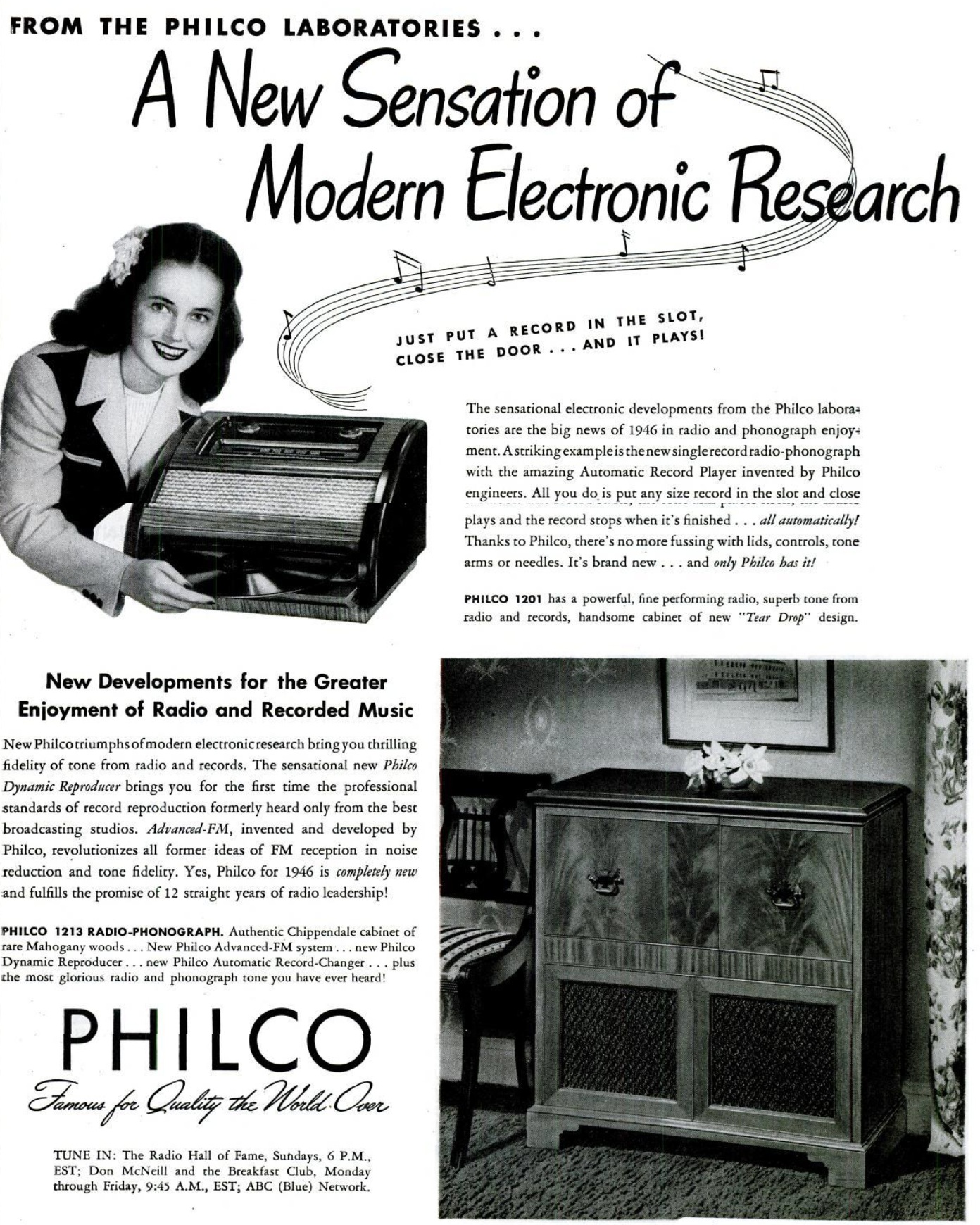
1946 Philco Radio-Phonos

Eighty years ago today, the February 18, 1946, issue of Life magazine carried this ad for two of Philco’s latest offerings.  The model 1213 was a console radio-phonograph.  The ad mentions that the radio tunes both AM and FM (the new postwar band).  But it also covered 9.3 through 14.5 MHz shortwave.

But the model 1201 was revolutionary, having just been invented by Philco engineers.  There was no more fussing with lids, controls, tone arms, or needles.  You simply inserted the record (of any size), closed the cover, and the record would play itself.
KGEI, 1941

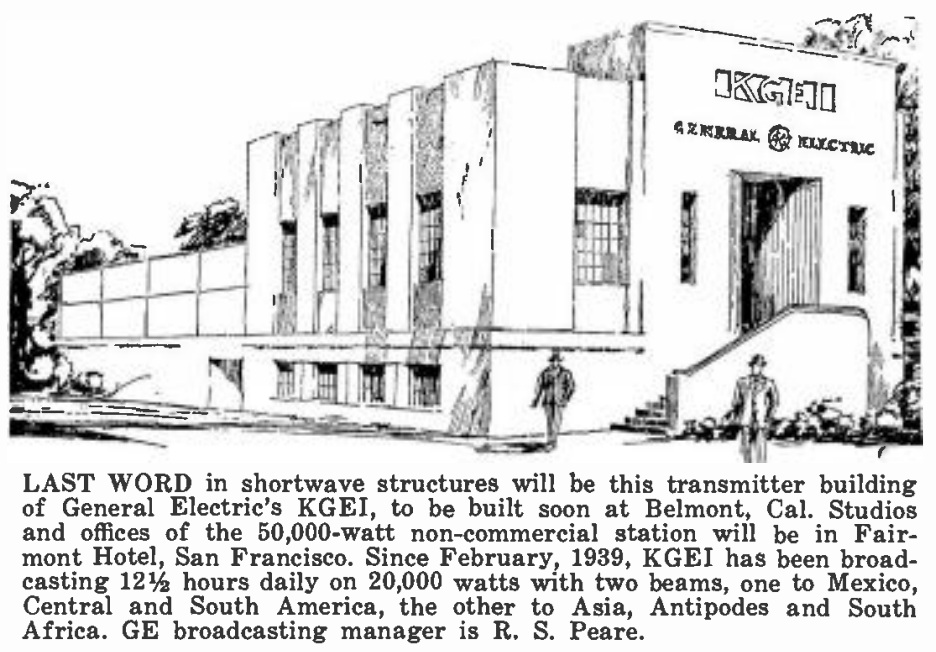
We’ve previously written about KGEI, GE’s shortwave station in San Francisco, and the role it played in World War 2. This item 85 years ago today in the February 17, 1941, issue of Broadcasting shows the transmitter building for the 50,000 watt transmitter that would soon be on the air.

The building is still standing, with the KGEI call letter restored, and is used by Silicon Valley Clean Water.


1926 Experiments in Polarization

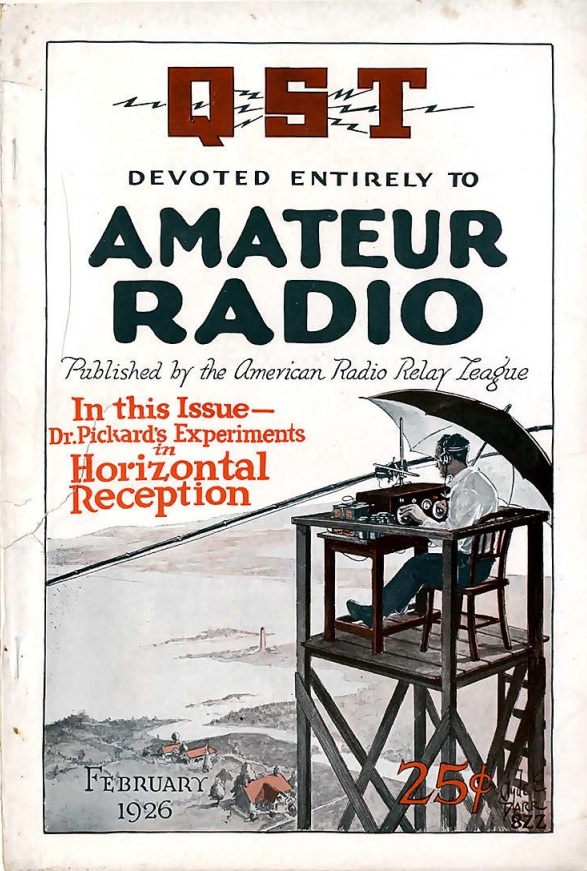
The illustration on the cover of QST 100 years ago this month, February 1926, looks fanciful, but it’s a real scene. The accompanying article contains an actual photograph of the structure, used by Dr. Greenleaf W. Pickard (1877-1956) in carrying out experiments on what we would today call the polarization of radio waves.

Dr. Picard discovered that short waves, unlike long waves, do not remain vertical after leaving the transmitter. The structure was located at Seabrook Beach, NH, and analyzed waves of 80, 40, and 20 meters. Most of the stations received were calling CQ on the ham bands, and a number of schedules were also made. A total of 379 stations were logged to gather the data, including a few Canadian and European stations.

The article concluded by requesting readers to submit reports. It cautioned that a mere list of “calls heard” would be of little use. What was needed was comparisons of vertical vs. horizontal receiving antennas.


Happy Valentine’s Day!

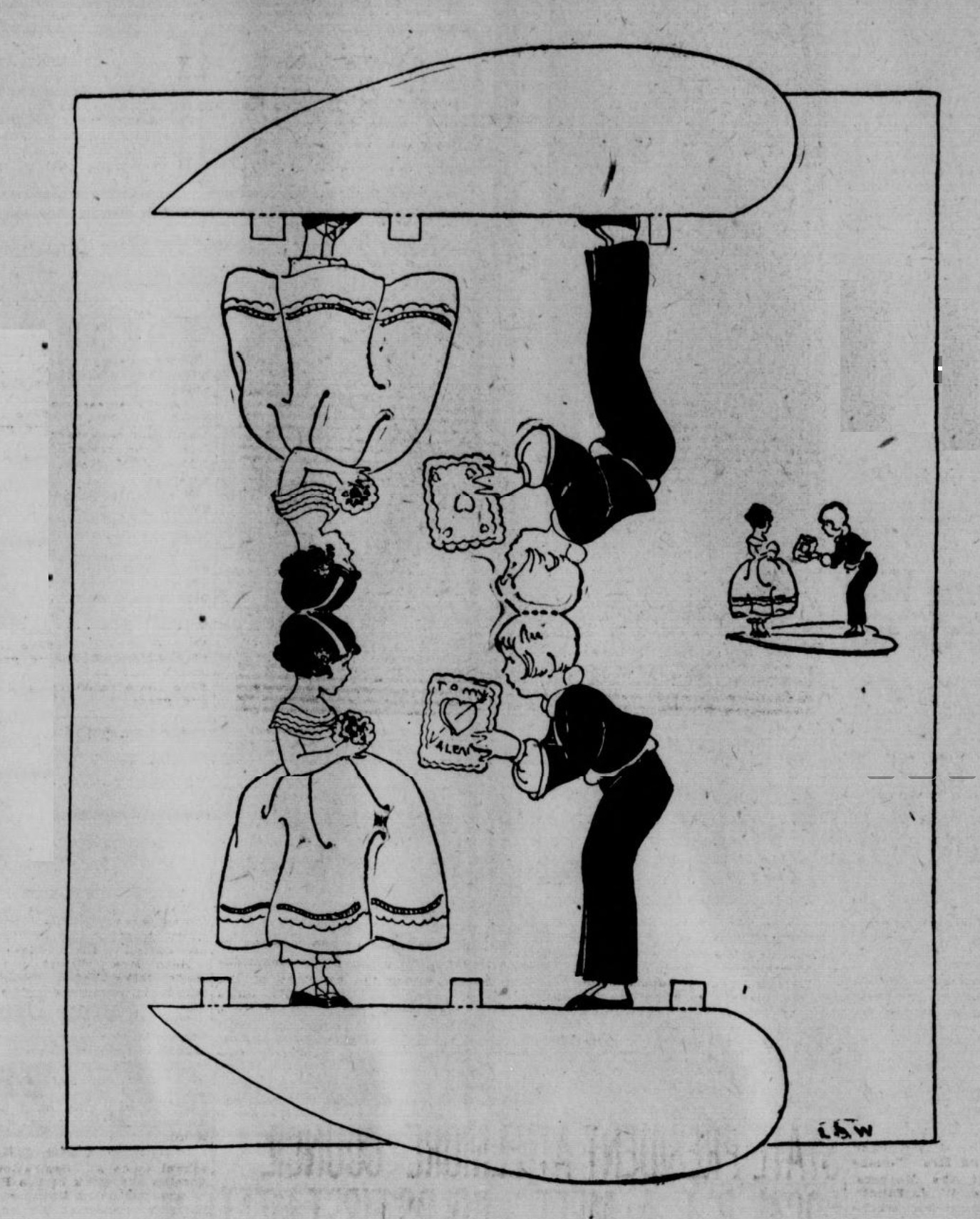
If you forgot all about Valentine’s Day, there’s no need to panic. We have you covered, with this do-it-yourself Valentine that appeared 100 years ago in the February 14, 1926, issue of the Montgomery (AL) Advertiser.

We’re sure that the vast majority of our readers will find it self-explanatory, but here are the exact instructions from the newspaper:

How’s this for a pretty Valentine? The editor of the Boys and Girls Page went a long way to find one that would just suit the boys and girls he knew. At last he came to a tall tower, and Inside the tower was a little old lady making It especially for you! So of course the Editor brought it right back and here It Is!

The children’s names are Tom and Jacqueline. Jacqueline has a blue dress with a red border around the skirt, and blue stockings. Tom’s hair Is yellow and his shirt lavender. They are standing on a red heart. Now, after you have colored them, paste the whole thing on very light weight cardboard. Be sure to let the paste dry before you begin to cut out. If you cut very nearly you may cut out the Inside, but If not, you had better just cut around the outside edge. Now, fold at the top of the children’s heads and paste the valentine together as far as the children’s feet. Fold the half of a heart, outward so that It forms a base for them to stand on.

I You may hold the heart together by j pasting the flaps underneath or by cut i ting them off and pasting a whole section of cardboard on the bottom and trimming It off to the size of the heart.

If you would like a real nice valentine, trace the design on fancy paper and paint with water colors.


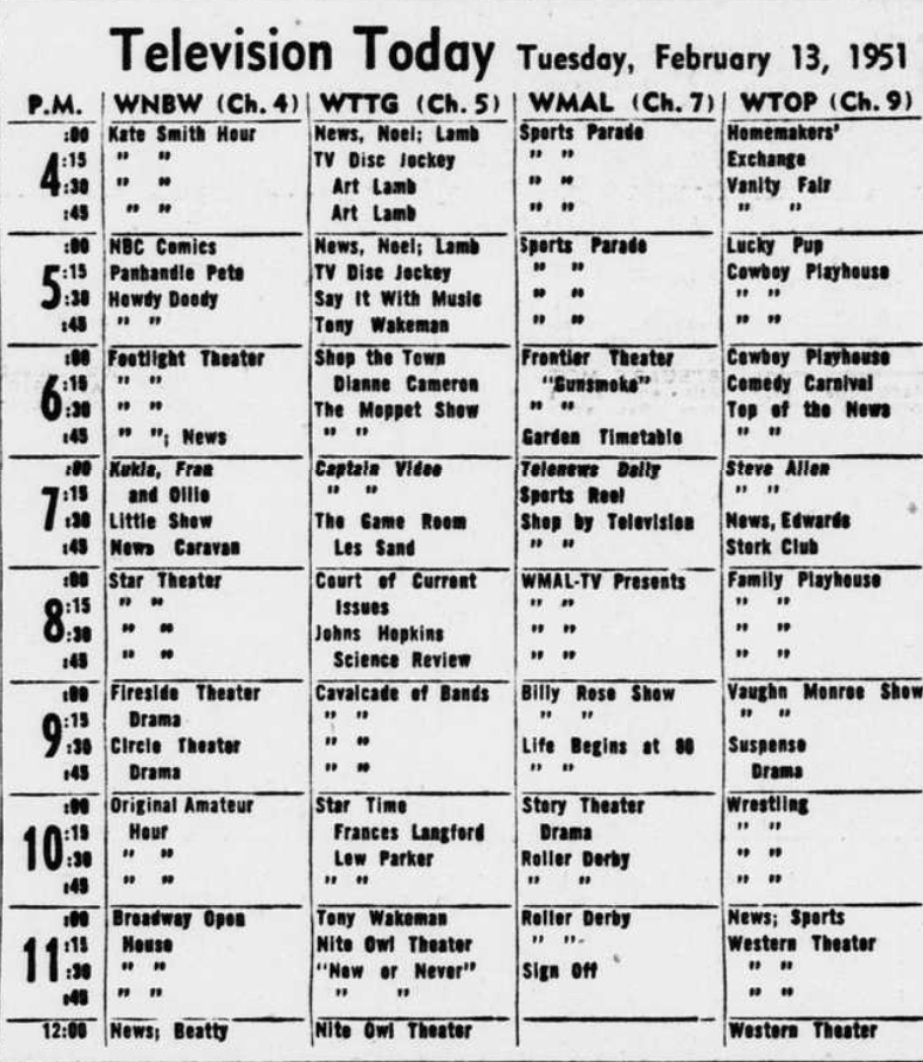
1951 TV Listings

If you were in Washington 75 years ago tonight, here’s what you could expect to watch. There are a few familiar names here, such as Kate Smith, Steve Allen, and Kukla Fran and Ollie. There are also some staples of early television, such as wrestling and roller derby. “Western Theater” on channel 9 doesn’t specify what movie they are showing, but it looks like channel 5 is showing the 1935 crime film “Now or Never” at 11:15 PM.

These listings appeared in the February 13, 1951, edition of the Washington Evening Star.


1951 British Radio Controlled Planes

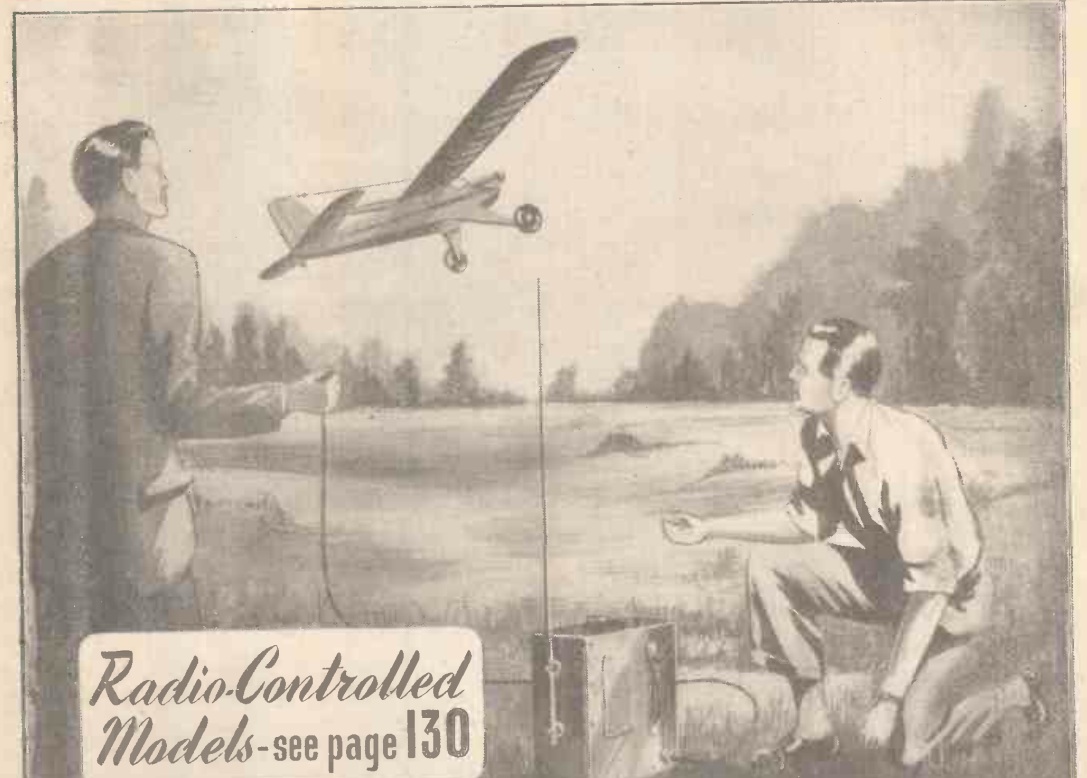
Seventy-five years ago this month, these British enthusiasts are operating their radio controlled planes, as shown on the cover of the February 1951 issue of Practical Mechanics.

The magazine carried the first in a series of articles regarding the hobby. It noted that technical expertise in radio was not a prerequisite. Indeed, the author had heard from more than one retailer to the effect that they preferred selling their equipment to those who were not technically inclined. The radio “expert”, it turns out, would often try to tweak the equipment to the point where it wouldn’t work any more.

The article noted that while licenses were required in America, that was not the case in Britain, as long as the users stuck to certain wavelengths. In didn’t specify them, but from the size of the antennas shown, they appear to be VHF.


1951 VOR

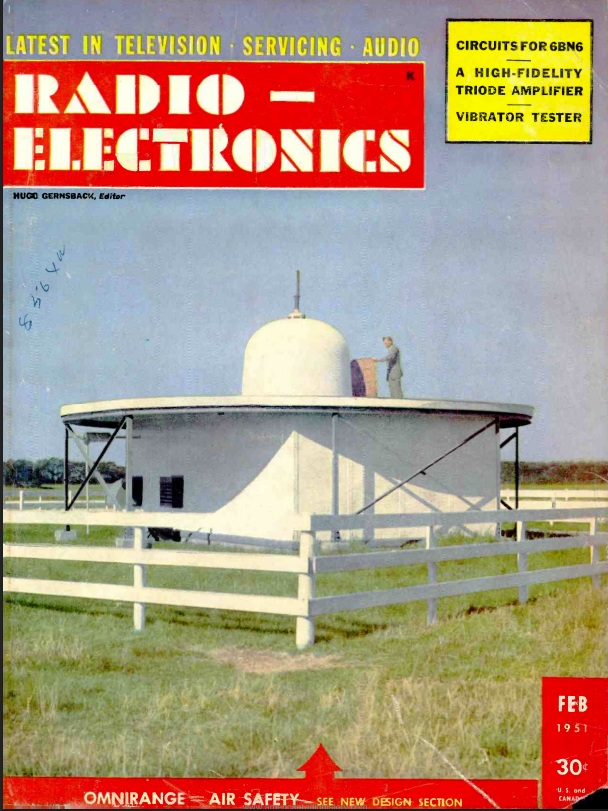
Seventy-five years ago, the cover of the February 1951 issue of Radio Electronics shows what is recognizable to most pilots and radio enthusiasts as a VOR installation. Apparently, the name VOR (VHF Omni Range) hadn’t caught on yet, as the article uses the term “omnirange”. The Civil Aviation Administration had begun the process of installing them, and the price tag was estimated at a whopping $1.5 billion.

I’ve always thought the VOR was a very clever invention. It allows a pilot, armed with relatively simple passive equipment, to know the exact direction from the ground station. Unlike radio direction finding, there is no 180 degrees of ambiguity. You know right away the exact bearing to the station. This is accomplished by two signals from the VOR. There is an omnidirectional signal, as well as a directional beam that sweeps at a defined rate. By measuring the phase angle between the two incoming signals, the receiver instantly tells your bearing.

The particular station shown on the cover was at Erie, PA, and the photographer was Avery Slack.


1976 Light Communications

We’ve previously reported on projects involving light-beam communication. It’s relatively simple to modulate an electric light, and receive it at a distance.

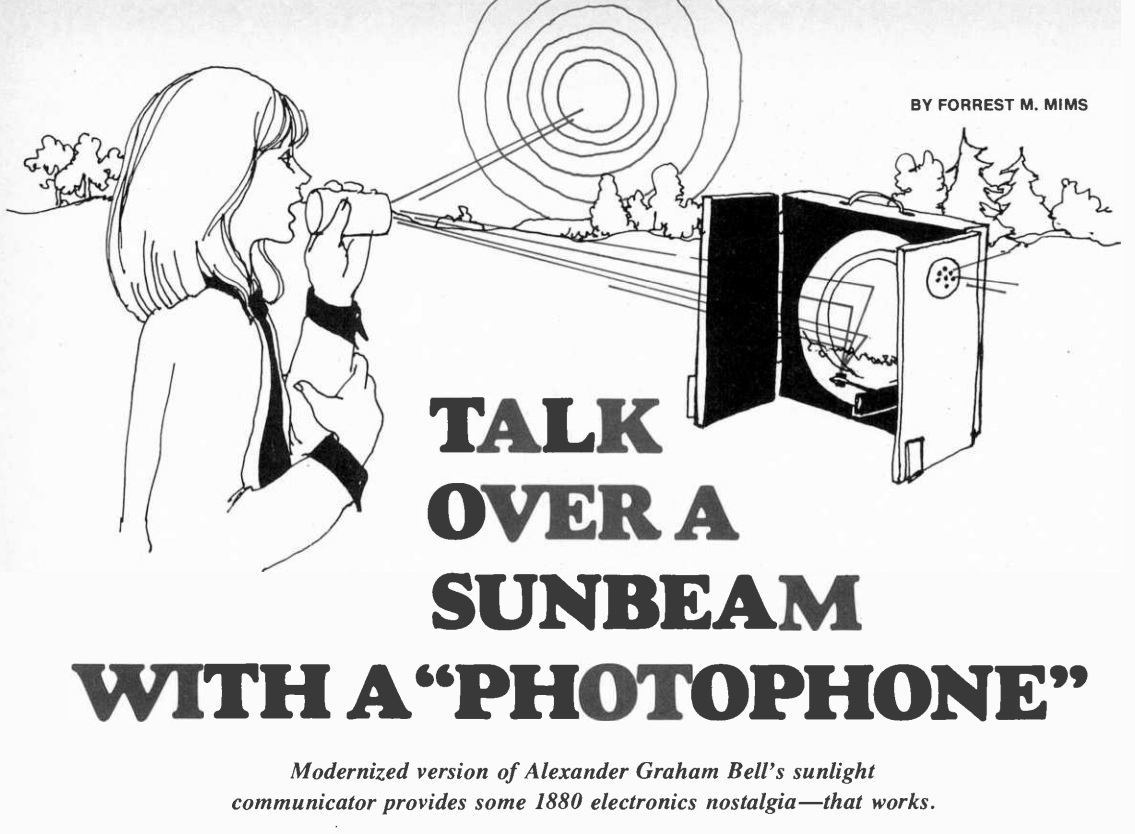
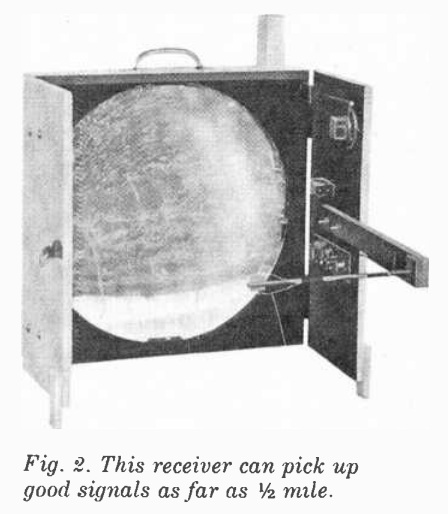
Fifty years ago, the February 1976 issue of Popular Electronics carried an interesting article by Forest Mims on the same general subject. But this project recreates the work of Alexander Graham Bell in 1880, the photophone. Bell was the first to communicate a voice wirelessly, but his transmitter (and the one shown in this article) is powered only be the sun. It consists of a mirror, to which is glued a short tube into which one can speak. The mirror is mechanically vibrated by the sound.

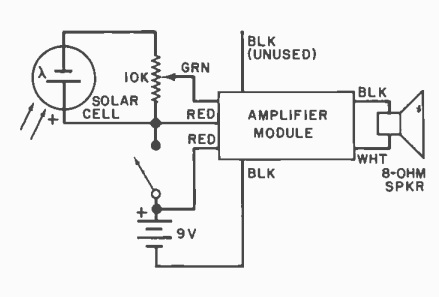
The receiver is essentially identical to the ones we’ve shown in the past. It consists of a photocell fed into an audio amplifier. With the use of a parabolic mirror at the receiver, or a Fresnel lens, ranges of hundreds or even thousands of feet can be achieved.

Students looking for an interesting science fair project couldn’t go wrong duplicating Bell’s early accomplishment.


Early AI Images, 1966

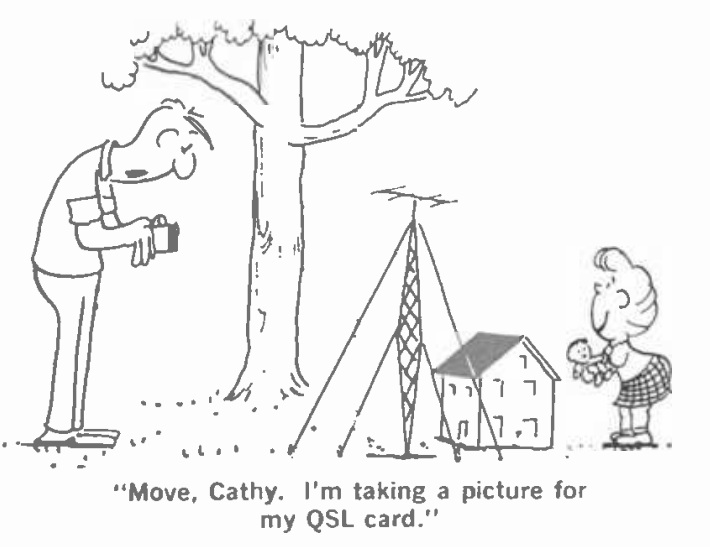
When unusual pictures are posted these days, someone is sure to quickly point out, whether or not it’s true, that they are AI. But many of us have honed our healthy skepticism over the years, since it’s long been possible to make misleading photos.

This cartoon illustrating one such possibility appeared sixty years ago this month in the February 1966 issue of Popular Electronics


1956 One Transistor Audio Amplifier

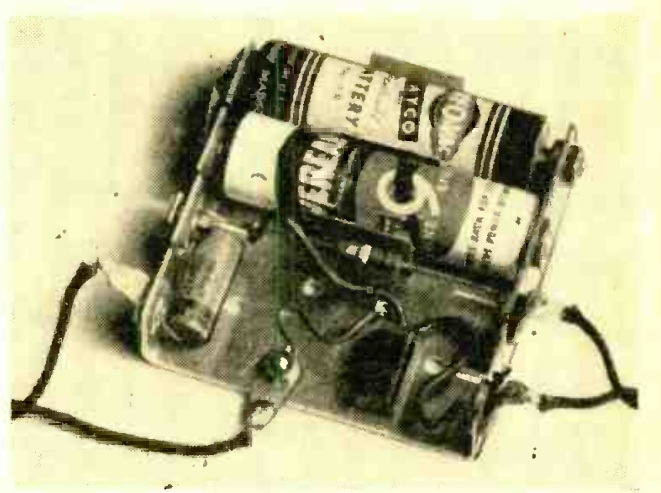
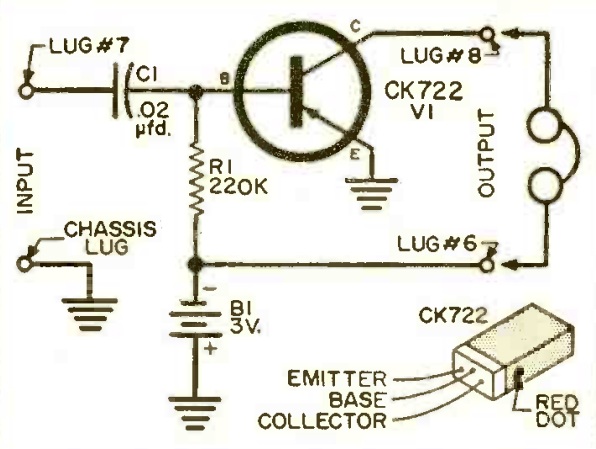
Seventy years ago this month, the February 1956 issue of Popular Electronics showed how to make this little audio amplifier. The problem of finding a chassis to mount the circuit was solved by using an aluminum battery holder. They were readily available in various sizes, including one for four AA cells. The circuit, using the venerable CK722, used only three volts. Therefore, half the holder was available for mounting the other components, and there were four spare solder lugs that could be pressed into service.

The magazine noted that the circuit would come in handy for things such as amplifying the output of a crystal set.

To avoid favoritism (or maybe that’s just what they happened to have handy), the circuit is shown with one Ray-O-Vac and one Eveready cell.