Are you worried that a war or natural disaster might make it impossible for you to get your prescription medicines? Or are you concerned that the United States is dependent upon a potentially hostile nation for prescription drugs? If so, we provide some advice today.
Disclaimer 1: I am not a doctor, so don’t get medical advice from this website, or any other website. If you have medical questions, talk to your doctor. The purpose of this article is to give you advice on the most convenient way to carry out your doctor’s advice.
Disclaimer 2: Not surprisingly, the advice on this page will not work for narcotics or other controlled substances. So if you need narcotics on a regular basis to survive, you have my sympathy, but I’m not able to help. You should definitely talk to your doctor. The most commonly prescribed medicines, however, are not controlled substances. If you’re not sure, you can look them up on the DEA website. From the list at that link, just search for the name of your medicine. If it’s not listed there, then all of these hints will work. If it is listed there, none of them will work. Really, your only option in that situation is to talk to your doctor about your concerns.
Some people require prescription medicines to stay alive, or to maintain their quality of life. Even though it’s popular to bash “big pharma,” sometimes justifiably, the fact remains that there are a certain number of people alive, who would otherwise be dead, if it weren’t for their products. The exact number is debatable, but it’s not zero. If you are one of those people, then you might have thought about how you would get your medicine if there were a disruption to the supply chain.
Coping with Short-Term Disasters
This disruption could come from a war or natural disaster. If it’s a local disaster, where you have to evacuate, then it’s an inconvenience, but not a particularly dire situation. The best way to deal with it is to keep a few days’ supply of your medicine in your car. Even if you are not able to go to your home before evacuating, you won’t have to worry about it immediately. When you are out of the disaster area, you can go to a local pharmacy (ideally, of the same chain as your pharmacy back home) and ask them to transfer the prescription. Or you can go to a local doctor or clinic and ask them for a new prescription. (In fact, a telehealth physician, if you explain the circumstances, will probably be willing to write a short-term prescription.)
One thing to keep in mind is that in most states, pharmacists are authorized to dispense a short-term (usually 72 hours, but possibly longer during an emergency such as a hurricane evacuation) supply of prescription medicine if it is necessary to maintain your health, even if you cannot produce a prescription from your doctor. So if all else fails, and you are out of your prescription medicine, then go to the closest pharmacy and explain your situation. Bring along things such as your empty prescription bottle and/or medical records showing that you do, indeed, have a prescription for this medicine, albeit an expired prescription.
If you do keep medicine in your car, you should keep it in the original bottles. The easiest way to do this is, when your bottle is down to 3 or 4 pills, just put that one in your car, and open the new one. Every time you start a new bottle, finish up the ones in your car first, and then replenish the car supply.
Coping With Long-Term Supply Disruptions

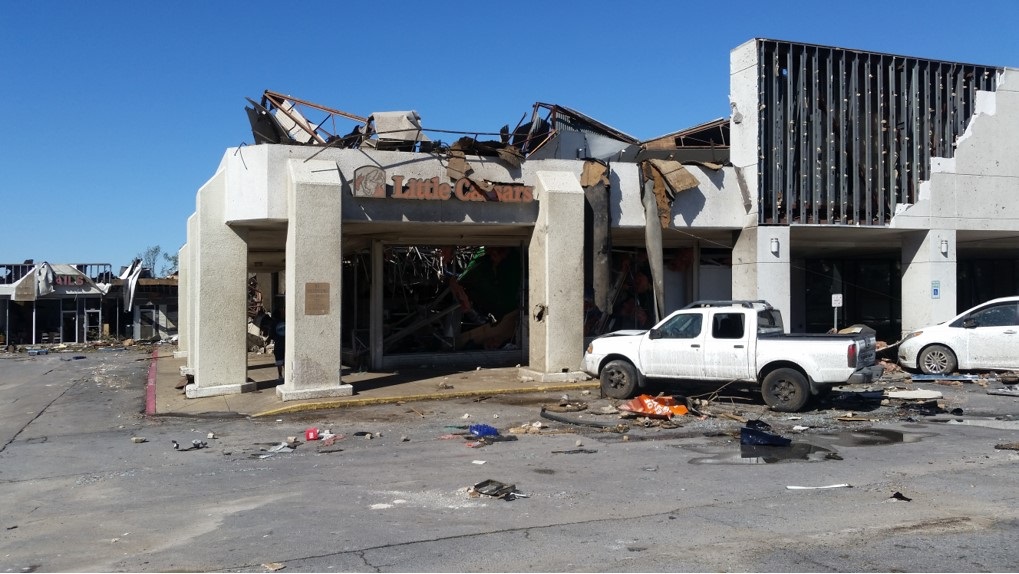
NWS image.
It’s one thing to run out of medicine at a time when most of the pharmacies in the country have it available, and it just takes you a few days to get there. Having a few extra doses in your car will take care of that. But if you depend on prescription drugs, what would you do if no pharmacies had them, or that there were no pharmacies around?

 If you read the book One Second After by William R. Forstchen, you will remember that was one of the main themes of that book. As a result of an EMP attack, virtually all transportation and communication was destroyed. That meant that pharmacies had no more medicine, and people who relied on medicine started dying.
But the event that triggers an acute medicine shortage might be much less dramatic. According to news reports, even though your medicine might be made in the USA, “almost all drug pipelines start in China.” In other words, the manufacturer in the USA (or perhaps India) gets some or all of the raw ingredients from China. I’m a little bit concerned that China is spying on Americans via Tik-Tok. And I’m a little concerned when they send over a spy balloon. But I’m very concerned about what would happen if China decided to stop sending the ingredients we need for lifesaving medicines. A lot of Americans would die, without even a single shot being fired.
You can’t stockpile enough medicine to last the rest of your life. (Of course, whatever amount you stockpile could define the “rest of your life.”) So you need to have some faith that eventually, U.S. industry and government would get its act together and start producing what you need. But that’s not going to happen immediately. If you rely on medicines to keep you alive and healthy, then you do need to stockpile enough to last a few weeks, or a few months, or perhaps a year, until production can be started.
 There is nothing unpatriotic about doing this. If you buy an extra bottle of pills today, then your drug store will immediately re-order. If the manufacturer is running low, then they’ll manufacture that many more pills. And if they have to order more raw materials from China, they’ll do it today when the supply lines are still in place.
If you wait until the disaster strikes and then try to re-order, that is what is unpatriotic. You’ll be competing with millions of other people for limited supplies, and neither the pharmacy nor the manufacturer will be able to get more. If you get your pills, that means that some other person didn’t. If you get them now, you are doing a favor to those who haven’t bothered to prepare.
How To Stockpile Medicines
In an ideal world, after your realized that you wanted to stockpile your medicine, you would just walk in to the pharmacy and buy as many as you thought you needed. So if you take one blue pill per day, you would just go buy 365 blue pills, and know that you’re all set for one year.
Unfortunately, however, this is not an ideal world, and you can’t do that. You need a prescription to buy the medicine, and most doctors seem to be reluctant to write a prescription for more than a few weeks at a time. In normal circumstances, this might be reasonable. Your needs might change, and the doctor is doing you a favor by not letting you buy medicine that you won’t be using.
The easiest way to deal with this situation is to talk to your doctor, and explain your reasons for wanting a longer prescription. If the doctor thinks that you’re doing this simply so that you won’t have to talk to him or her for another year, then your request might be denied. But the doctor isn’t stupid, and they probably also understand the vulnerability of the supply chain. They will probably counsel you about checking in with them regularly, and also warn you to rotate your supplies so that you’re not stuck taking expired medicine. But if they are confident that you will not abuse the privilege, they will probably be happy to write a prescription. If they stubbornly refuse on philosophical grounds, then perhaps you should think about finding a better doctor.
Insurance Companies
Another problem you might run into is your insurance company. Even though your doctor is willing to write a prescription for 365 of your pills, your insurance company might not be willing to pay for it. If that is the case, then you will have to pay for them yourself.
But this might be much less expensive than you think. Let’s say, for example, that you are taking Lisinopril, which is a blood pressure medicine, and the most commonly prescribed medicine. If you just walk into a pharmacy, and tell them you are paying cash, the price can vary wildly. But the cash price might be as much as $50 for a 30 day supply, or about $600 for a one year supply. Normally, your insurance company worries about it, and you just pay a $10 co-pay for the 30 day supply. But they make you go back every month. So do you fork over the $600? In most cases, this is not necessary.
If you shop around to different pharmacies, you will find much lower prices. And the easiest way to shop around is with a website like GoodRx.com In this case, when you search for that medication, you will find that the price varies, from a high of $54, to as low as $4. While $600 is a prohibitive price for a year’s supply, you can probably afford to pay $48 for that 12 month supply. And you are eventually going to take the pills anyway, so it doesn’t really cost you anything. In some cases, with GoodRx, you will need to print a coupon to get the lower price. But the savings can be dramatic. In fact, you might discover that the cash price that you get from GoodRx is actually less than the co-pay you’ve been paying to your insurance company! You might discover that it’s best to stop worrying about using insurance.
Amazon also has a pharmacy, which in some cases might have reasonable prices. But compare prices for every single prescription, since they can vary widely. For more information about pharmacy pricing, see my earlier post on that subject.
Canadian Pharmacies
 For generic medicines, then GoodRx and other similar websites will get you the best prices, often with dramatic savings. But if only a name-brand medicine is available, then you won’t get many savings on that site. In that case, your best option is usually a Canadian pharmacy. You’ll still need a prescription, but the Canadian price for many medicines is dramatically lower than the U.S. price. One reputable pharmacy that I’ve used is CanadianPharmacyStore.com. The site is based in Winnipeg, which is where your doctor will need to fax or mail the prescription. The prescription might be filled by a pharmacy in Canada, or possibly in another country, and will be mailed to you.
If you need a prescription which needs to be refrigerated, such as insulin, then you won’t be able to get it by mail. But it might be worth planning a visit to a retail pharmacy near the border. Your U.S. doctor can fax them the prescription to them, and they will honor it. It’s worth a phone call to check the price.
When you return to the U.S., of course, you need to tell the customs officer that you purchased it. But as long as it is a 90-day supply for your personal use, they will simply wave you through.
If You Don’t Want to Ask Your Doctor
For whatever reason, you might not want to ask your doctor for a longer prescription. If so, you can still maximize the amount of medicine you keep on hand. Don’t wait until you are out of pills before getting a refill. Get your refills as early as possible. If you get a refill once a month, then consistently have it refilled a week early. After six months, you will have a six-week supply on hand.
Keep in mind, though, that the pharmacy will be keeping track of this, and they will eventually figure out that you have an excess supply on hand. If the pharmacist questions you about this, I would just be honest and explain why you are doing it. Just like your doctor, your pharmacist isn’t stupid, and they realize how fragile the supply chain is. They’ll probably commend your for your foresight.
Buying Medications in Mexico
 Many Americans have discovered that buying medicines in Mexico is a safe and convenient option. You might save a little bit of money, but as a practical matter, prices in Mexico are about the same as the prices you will find with the methods described above. But the advantage of buying in Mexico is that (as long as it’s not a controlled substance) you don’t need a prescription. The Mexican system places more trust in the patient. You go to the doctor, and they will prescribe a medicine. In other words, they will tell you what medicine you need, and what dosage. You then go to the pharmacy and buy what your doctor told you to buy. But for most medicines, you don’t need to give the pharmacist the prescription and have them scrutinize it. They’ll take your word for it, because there’s really no good reason why they shouldn’t.
This means that if you need a medicine that your American doctor prescribed, you can walk into a Mexican pharmacy and simply buy it over the counter.
Unlike Canadian pharmacies, however, you can’t do this online or by mail. To buy medicine from a Mexican pharmacy, you need to go there in person. But, as noted above, as long as you are buying a 90 day or less supply for your own personal use, bringing it back into the country is a non-issue. Just tell the officer what you have, and they will wave you through.
If you live near the border, or if you are planning a vacation in Mexico, this is an easy way to boost your supply by 90 days. Medicines are made under the same conditions as American medicines, possibly in the very same factories.
 I suppose there are unscrupulous pharmcies in Mexico, so it’s probably best to stick with a major chain. The largest pharmacy chain in Mexico is Farmacias Benavides. They have modern pharmacies, staffed by professionals. It’s likely that someone will speak English. Even in the unlikely event that they do not, if you write down the name of the medicine and the dose, that should be all the information you need. You can pay with a credit card, and it is a very simple transaction.
Of course, before you go, you will want to get some idea of the price and whether your medicine is available. The Benavides website does not allow you to search for individual medicines online, but it is possible to do that at another pharmacy, Farmacias del Ahorro.
At the top of the screen on their website, there is a search box marked “Qué estás buscando?” Type the name of your medicine in that box, and click the magnifying glass. You should be able to find the name of your medicine and the dose (in mg or mcg), along with the price in Mexican pesos. (The name of many medicines might change slightly and end with the letter “a.” For example, the thyroid medicine levotiroxine will be called levotiroxina in Mexico.) Currently, approximately 17 pesos are equivalent to one dollar, so divide the price shown by 17 to get the price in dollars. If the box contains 30 pills (30 tabletas), then you can buy three of them and bring them home.
If you have any concerns about the potency of the Mexican medicine, then you can use them now, before the emergency arises. Alternate days: Take one of the American pills one day, and a Mexican pill the next day. In the unlikely event that there is a problem, you will know it now, when your doctor is still available. But after you have used up the Mexican pills, you have increased your stockpile of American pills by 90.
Expiration Dates
You will want to keep track of when you bought a particular bottle of medicine, and use it before its expiration date. Most prescription drugs I’ve bought in the U.S. are filled by the pharmacy, and have an expiration date one year after the prescription was filled. Mexican and Canadian medicines will generally have the expiration date printed on the sealed box. Use the oldest ones first, and you’ll be assured of having up to a one year supply on hand.
Rationing Medicine
I am not a doctor, but I do know that you should not ration medicine without first consulting your doctor. But there might come a time when the medicine is unavailable, but your doctor is available. When that time comes, you might want to ask your doctor what to do. If you have a six month supply, then possibly you can make it last twelve months. You’ll need to ask your doctor at that time, but it seems reasonable. For example, if you have a medicine that you take once a day, perhaps it will be OK to take it every 36 hours. If that is the case, then your six month supply would last nine months. But ask your doctor before you start doing things like that.
Conclusion
A disruption of the pharmaceutical supply chain, whether it’s due to an act of war, economic sanctions by a hostile country, or any other reason, could result in many American deaths and suffering. But with a little bit of preparation, the death and suffering could be reduced considerably. But it takes a little bit of planning on your part.
Some links on this site are affiliate links, meaning that this site earns a small commission if you follow the link and make a purchase.

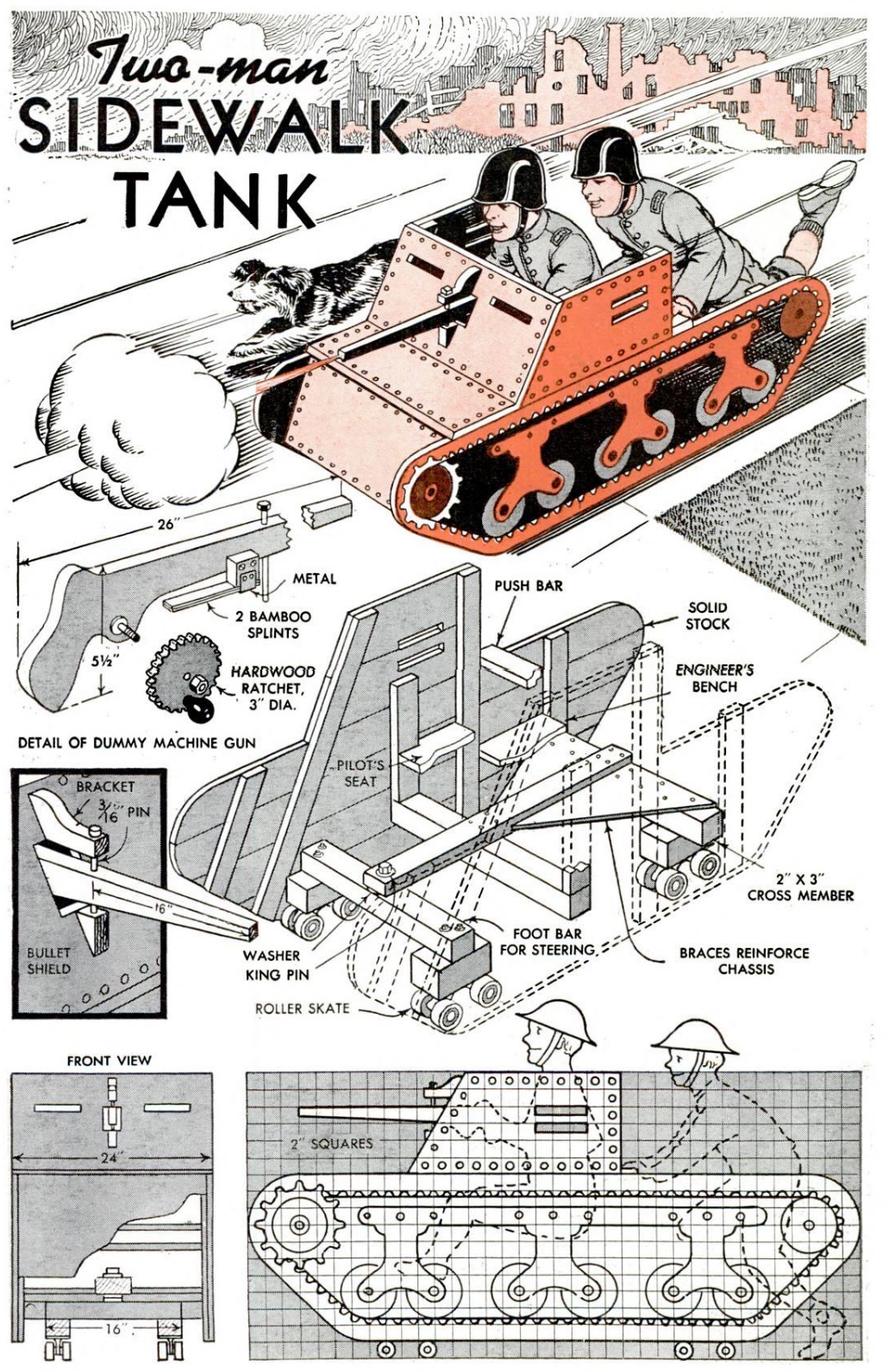 Wartime toy shortages didn’t mean a shortage of war toys 80 years ago. And even if our leaders get us into another war, Junior can still have the coolest (but most politically incorrect) toy on the block, courtesy of this homemade sidewalk tank from the May 1943 issue of Popular Mechanics.