Sinking of the Empress of Ireland: 1914

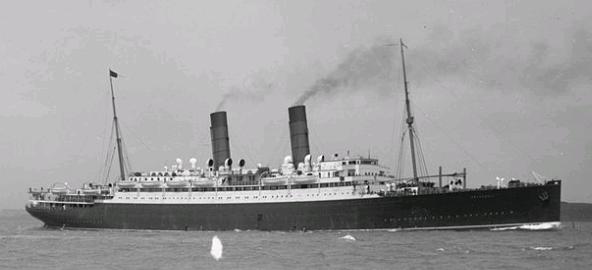
The 1912 edition of Wireless Telegraph Stations of the World  notes that the Canadian steamer RMS Empress of Ireland was equipped with a wireless set capable of 85 nautical miles, operating on 110 and 300 meters. She bore the call sign MPL.

1912EmpressOfIrelandCallbook

Popular Mechanics, July 1914

Popular Mechanics, July 1914

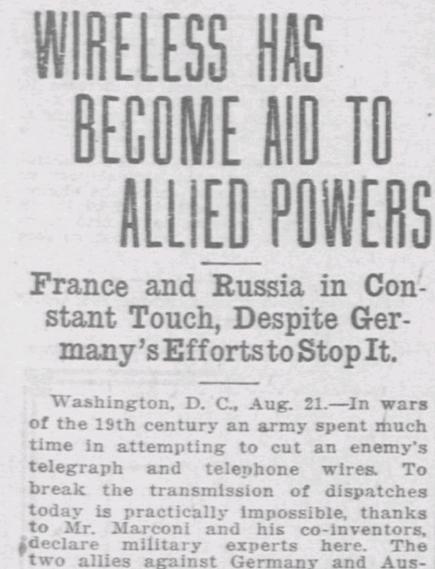
A hundred years ago, the wireless operator Edward Bomford was called upon to send the distress call SOS DE MPL, signalling the greatest peacetime maritime loss in Canadian history. 1012 souls (840 passengers and 172 crew) perished during the early morning hours of May 29, 1914, following a collision with the Norwegian collier SS Storstad. The steamer had just begun her voyage from Quebec City to Liverpool, England. The harbor pilot had just disembarked at Pointe-au-Père, Quebec, and Captain Henry George Kendall was taking the ship on its normal outbound course. He sighted the lights of the Storstad several miles distant, but ultimately lost sight of the coal ship in the fog. At about 2:00 AM, the Storstad crashed into the side of the Empress.

The Storstad was relatively undamaged, but the Empress sunk in the approximate 40 meters of water in about 15 minutes, leaving little time to evacuate the ship of the mostly sleeping passengers.

Bomford, the young wireless operator, had just relieved operator Ronald Ferguson. An officer ran to the wireless house with orders from the Captain, but Bomford was already at the key, calling the station at Pointe-au-Père. He made contact with Pointe-au-Père operator Crawford S. Leslie. Leslie and other operators quickly notified the government boats Eureka and Lady Evelyn. The Eureka had steam up, having just taken the mails to the Empress. The Eureka got under way immediately, followed closely by the Lady Evelyn. They found the surface of the water calm, dotted with a few lifeboats and debris. Some survivors were taken aboard, some of whom succumed to exposure after exposure to the cold waters of the St. Lawrence, the temperatures that night being just a few degrees above freezing.

The survivors were taken to Rimouski, Quebec, a town of about 2000. That town’s doctors scurried from house to house to treat the survivors quartered there. Most of the town’s population, having been alerted by telegraph, was present at the wharf to meet the survivors, eager to provide whatever help that was possible, carrying blankets, hot coffee, food, and medicine. Among those assisting with the relief efforts was John McWilliams, one of the wireless operators from Pointe-au-Père, who had hastily gone to Rimouski to help render aid. According to one account, few gained more praise than was accorded to him for his efforts.

Both of the wireless operators, Bomford and Ferguson, as well as Captain Kendall, were among the survivors. I haven’t been able to find any information about Bomford (whose name is spelled Bamford in some accounts). There was an Edward Bamford born in 1887 who was awarded the Victoria Cross in 1918. This is almost certainly a different person, since this Edward Bamford had enlisted in the Royal Marines in 1905, where he served until his death in 1928.

The chief radio officer Ferguson, was later a licensed ham, G4VF. He was picked up by the Storstad, and later transferred to one of the tugboats assisting in the rescue. Since the tug had left hastily with no wireless  operator aboard, Ferguson was given permission to smash the lock on the tug’s wireless and put it on the air to help coordinate the rescue efforts. Ferguson died in 1985 at the age of 91.

Over a thousand perished that night. Canadian and Norwegian inquiries reached conflicting conclusions as to the blame for the collision. The Canadian inquiry largely placed the blame on the captain of the Storstad, while the Norwegian inquiry largely blamed the Canadian captain.

References:

Read More at Amazon:

Young readers will enjoy the young-adult novel Second Watch by Karen Autio. It is the story of an 11-year-old girl’s dream to visit her grandparents in Finland, and her trip on the Empress.

Canadian readers can find the following books at amazon.ca:

En francais:

Click Here For Today’s Ripley’s Believe It Or Not Cartoon


Decoration Day, 1914

The following editorial appeared a hundred years ago, in the Arizona Republican of May 24, 1914.  In just a few years, there would be many more graves of those who gave their lives for their country.  But we are reminded that the sacrifices of the heroes are not diminished by honoring as well the least among us.

The Potters’ Field

We print this morning a protest presented by members of the Women’s Relief Corps against the purpose to strew flowers on the graves of the Potters’ Field on Decoration Day. We cannot think that the memory of the heroic dead, whose memory we are accustomed to revere on  Memorial Day, would be dishonored by such an act. Nothing would be detracted from the observance of our duty to them. In placing flowers indiscriminately upon the lowly graves of the unknown dead, we should be acting as proxy for many a mother, wife, sister or daughter who does not know where her dead lies, or, knowing, could not perform that office herself.

Decoration Day is made the occasion in ail cemeteries for laying wreaths upon the graves of loved ones, who may not have laid down or offered their lives for their country. If you go into any cemetery in the land next Saturday, you will find little graves covered with flowers. You will find the graves of mothers decorated by loving hands.  You will find remembrances upon the graves of many who were born and have died since the war.

No one would raise a protest against such an expression of love on Decoration Day or any other day. Would we place a stigma instead of flowers upon the graves of those who lie in the Potters’ Field because they died friendless and penniless?

There are among us all. and there must be among these protestants against the decoration of the Potters’ Field, those who believe that there is a life beyond the grave; that there is a heaven not barred  against the souls of those whose only crime was that their bodies found sepulture in a Potters’ Field. Surely, we would not dishonor by scorn the graves of such as these.

There are desecrations of Decoration Day in protests against which we would join. We would protest against the custom of making the day a date for prize fights, and we would protest against turning from the solemnity of the Memorial Day services to merry-making in which is forgotten the purpose of the day, the annual renewal of our loyalty
to the country and our sense of gratitude to those who offered their lives for it.


Click Here For Today’s Ripley’s Believe It Or Not Cartoon


Radio Scouting in 1920

RadioScoutMap1920


Among the many hats I wear is that of counselor for the Radio Merit Badge.  I was also on the staff of K2BSA at the 2013 National Scout Jamboree.

Radio has a long history with scouting. The first edition of the Scout Handbook includes several pages on how to construct an “up-to-date wireless apparatus for stationary use in the home or at the meeting place of each patrol.”  Wireless Merit Badge was originated in 1918 and was renamed Radio in 1923.  And in 1920, scouts were called upon to relay government bulletins to their communities.  This small item appeared in the Ogden (Utah) Standard-Examiner of May 19, 1920.

RadioScouting

It reports that the Naval radio station in New York was sending out a daily message to scouts from the National Council of the BSA, “predicated upon appreciation of the war service of radio operators who learned wireless telegraphy when they were scouts.” It reports that the signals had been received from 42 states, including all on the Pacific coast.

More details, including the illustration shown above, are given in the July 1920 issue of Boys Life.  The message was sent each evening from station NAH at 9:30 PM Eastern time at 25 words per minute, with a 1500 meter (what we would today call 200 kHz) spark signal. The 30-50 word messages “always contain something of interest to boys. Sometimes they are from the Department of Agriculture or some other government department, with a request for each operator to make the message known to the public immediately.” The recipient was expected to have a system of reaching those in his neighborhood, such as “farmers’ telephone, semaphore, Morse flag, blinker or heliograph,” or even a “good horse, a bicycle, motorcycle, automobile, sea-scout cutter or other vehicle.”

The Boys’ Life article concludes by admonishing every scout to have arrangements to receive the daily NAH bulletins, and to do his part when a test message or other urgent communication comes through.

The June 1920 issue of Boys’ Life points out that “neither the army, navy, postal service nor any land telegraph or telephone company can cover the country as quickly, at present, as the scouts will be able to do if they grasp their opportunity and make use of the Navy’s cooperation.” The article also admonishes that “every tenderfoot, second-class and first-class scout should consider signal practice with buzzer sets or radio sets at once” to avail themselves of this opportunity, the value of which to our government would be beyond calculation.


Click Here For Today’s Ripley’s Believe It Or Not Cartoon


Caruso Hits the Airwaves, 1914

carusoradioA hundred years ago, the New York Sun, May 14, 1914, reports that the voice of Enrico Caruso was broadcast from New York to Philadelphia. The broadcast took place from the roof of the Wanamaker Department Store, and was also announced in the advertisement shown here.

CarusoPortraitThe paper reports that “scores of amateur wireless enthusiasts in Greater New York and along the Jersey coast were mystified over hearing through their receivers the voice of Caruso singing.” The “tenor’s phonographic tones were clearly heard by the operator at the wireless station at the Wanamaker store in Philadelphia,” and also that a “commercial message, dealing with ordinary business of the day” was transmitted as well.

Click Here For Today’s Ripley’s Believe It Or Not Cartoon


Mobile Wireless Goes To War: 1914

1914ArmyWirelessTruck

The Army Signal Corps truck-mounted wireless, as shown in Popular Mechanics, October, 1914.

A hundred years ago today, May 10, 1914, mobile wireless was about to become a reality for the U.S. Army, as reported in the Washington Herald of that day:

U. S. WIRELESS STATION
IS MOUNTED ON AUTO

Government Rushing Work on New
Portable Apparatus for Signal
Corps in Mexico.

A new wireless station mounted on a mortortruck. which is being constructed with all haste by the [U.S.] government in Mexico, was given a preliminary trial last night in which the operator was In easy communication with Key West and Philadelphia. The machine is to be used by the Signal Corps of the troops in Mexico.

The idea of a wireless station made portable by mounting on a motortruck, is original with the War Department and this machine which soon will be ready for active service is probably the only one of its kind in existence. The machine is constructed on a new design by Signal Corp engineers and has been assembled by the National Electric Company, work continuing In secret night and day.

A new “rapid transmitting panel” containing the latest improved wireless apparatus has been set about midway in a big six-cylinder White auto-truck, which carries in boxes at each side, a jointed portable aerial reaching 85 feet into the air when fully extended. The electric power for the wireless is furnished by the motor of the truck In direct connection with an electric generator, supplying enough current to light the mounted wireless room and run the instruments at their full capacity. The apparatus has a range of 400 to 800 miles in sending, and of nearly 2,500 miles In  receiving. The machine is for service at the army’s general headquarters giving the commander of forces easy communication with a fleet at sea, or with any of the small portable field instruments carried by sections of the Signal Corps.

In recent preliminary trials the machine was subjected to strict tests. As soon as the work reaches a satisfactory stage of completion field tests will be given and the possibilities of the equipment accurately determined. Quick shipment to Mexico will follow.

Click Here For Today’s Ripley’s Believe It Or Not Cartoon


Doing an FCC Ship Inspection

File:Denis Sullivan.jpg

Schooner Denis Sullivan. Wikipedia image. Michael Pereckas from Milwaukee, WI, USA [CC BY 2.0 

About 30 years ago, I got my FCC Commercial Second-Class Radiotelephone Operator’s License.  A few years later, the FCC consolidated the licenses, and it became the General Radiotelephone Operator’s License (GROL), and I was suddenly on equal footing with those who held the First Class license, for which I never got around to taking the test.  Other than the slight bragging rights associated with having such a license, I never made use of it until yesterday.

Last fall, I decided to post on my website the fact that I was duly licensed and qualified to conduct inspections of certain vessels on the Great Lakes.  I thought it might be an interesting diversion.  I guessed that if anyone called, it would be the owner of a small passenger vessel.

Last week, I got a call, but it wasn’t from the owner of a small vessel.  Instead, it was from the Captain of the Schooner Denis Sullivan, a 98-foot re-creation of a typical 19th century 3-masted Great Lakes schooner, owned and operated by Discovery World, a Milwaukee science museum.  So yesterday, I drove to Milwaukee and tested and signed off the vessel’s radio installation.  It did pass with flying colors, and I can personally attest to the safety of the radio installation.

My inspection was mostly limited to the VHF radio, power supply, and a visual inspection of the EPIRB.  I wasn’t able to do a full inspection of the MF-HF radio and other equipment, so my inspection is valid only for the Great Lakes.  If the ship is taken into international waters, which it has been in the past, it will need a more complete inspection, which is more readily done at a major port.

I encourage you to visit the website of Wisconsin’s official flagship to see this majestic ship.

I had to scrounge together some of the equipment I needed for the inspection, and would like to thank N0AIS and K0NY for graciously supplying some of the required gear.

Click Here For Today’s Ripley’s Believe It Or Not Cartoon


1939 Television: Here at Last and Here to Stay

KresgeTVSeventy-five years ago, television looked like it was ready to take off, but it didn’t become a widespread reality until after the war. There had been experimental transmissions for a few decades, and by 1939, sets were being advertised.  April 30, 1939, marks the day from which TV has been continually broadcast in the United States.

The Newark Sunday Call for that day contains at least three television advertisements. One is this ad for Wilderotter’s, which announces that “television becomes an actuality for the public today!” It announced a special 3-1/2 hour program to be telecast from the World’s Fair by NBC, featuring an address by president Roosevelt. It announces that the store will be open from noon until 1 P.M. on Sunday for the public to hear and see this special program. It also includes the NBC television schedule, which included programming on Wednesday and Friday from 4 P.M. to 9 P.M., “outdoor telecasts of news events” on Wednesday through Friday afternoons, and “film transmissions” on Monday, Tuesday, and Thursday from 11 A.M. to 4 P.M.

The Griffith Piano Company has this ad announcing that it, too was ready to put a television receiver in your home. The advertised prices ranged from $199.50 to $600.

Finally, Kresge’s Department Store announces that television “is here at last–and here to stay!”

Unlike earlier television system, these models were electronic. They used a system similar to postwar television, but were 441 lines. The station, then will the call sign W2XBS, remained on the air only until 1940 or 1941 in the original 441 line format. It received a commercial license in 1941, and became WNBT. But at that time, it began using what is usually call the “postwar” format of 525 lines. Some broadcasting continued during the war, but the station was used mostly by the New York Police Department for civil defense training. The station, now WNBC, does have the distinction of being the nation’s oldest continuously operating TV station.  And it celebrates its 75th birthday on April 30, 2014.

So Kresge’s was correct in saying on April 30, 1939, that television was here to stay. But unfortunately for those who purchased a $600 set in 1939, the device became obsolete in two years with the switch to the 525 line format.


Another 1922 Crystal Set

CrystalSetNewspaper

On this day 92 years ago, The Ashland (Oregon) Weekly Tidings published these instructions for constructing a radio set. As you can see, it’s simply a crystal set. Also shown is a test buzzer, which it describes as being “in reality a miniature radio transmitting station” to test the detector and find the crystal’s sweet spot in the absence of an actual station.

This article bears the dateline of New York, and it’s undoubtedly a news service item that was published in many local papers. The issue also includes a list of broadcast stations in operation. None in Oregon is listed, but there are stations in Seattle, Spokane, Yakima, as well as Los Angeles. The test buzzer would probably be a necessity for the Oregon listener to ensure the radio was ready to pull in one of these distant stations at night.

In this listing, WLAG, the predecessor of WCCO, is not yet listed. Minneapolis is on the map with WLB, the station at the University of Minnesota and predecessor of KUOM.

In retrospect, both of my sets of grandparents were fairly early adopters of radio. My dad’s family had a radio, I’m guessing in the early 1930’s. And I believe this was before the farm was electrified, so this was probably a battery set. My maternal grandfather built an early crystal set, probably about this same time as these plans were published, or shortly thereafter. Unfortunately, I don’t have any details, nor is there any picture of this set. I’m told he took a class during which he built the radio. He knew the trick of placing the headphone in a crystal bowl, which would amplify the sound enough to allow multiple people to listen. Chances are, the sounds of WLB, or perhaps WLAG, were what the assembled group could hear.


Wireless Goes to War: 1914

veracruzflag

The flag being raised at Vera Cruz, 1914. From Wikipedia.

A hundred years ago, the wireless had unquestionably established itself as one of the tools of war. On this day in 1914, the Mexican Port of Veracruz was under American occupation after three days of fierce fighting under the command of Admiral Frank Friday Fletcher.  The invasion was a response to the arrival of arms bound for Mexico City and “El Usurpador”, President Victoriano Huerta, who was subject to a U.S. arms embargo. The arms were originally thought to have been provided by the German government, but actually originated from the Remington Arms Company in the U.S. and had been sourced by American financier John Wesley De Kay.

The episode is an early case of the role that the wireless telegraph was now playing in war. In the early morning hours of April 21, the American Consul in Vera Cruz, William Canada, sent an urgent cable to Washington reporting that the German ship carrying the arms was in the harbor and its arrival was imminent.  The cable reported that approach of the German vessel and the fact that locomotives and cars were ready to rush the arms to Mexico City.  Secretary of State William Jennings Bryan received the cable at 4:00 in the morning and phoned President Wilson’s private secretary, Joseph Tumulty, who decided to awaken the President. Even though the White House servants were reluctant to do so, they agreed and the President came to the telephone.

At the same time, Navy Secretary Josephus Daniels phoned and was put on the same line. Daniels had received a wireless message from Admiral Fletcher that 250 machine guns along with 15 million rounds of ammunition would be landed from the vessel. The President listened in silence until Navy Secretary Daniels asked him “what shall we do?” “Tell Fletcher to seize the customs house” was the President’s reply. A few minutes later, a wireless was dispatched to Fletcher. He received the message at 10:00, and marines were on the ground an hour later.

You can read the wire reports in the Logan (Utah) Republican, where they appeared on April 25, 2014.


An Aeroplane Wedding Via Radio, 1922

RadioWedding

The wedding party (top) and listeners. From the Literary Digest.

92 years ago today, the Washington Herald of April 24, 1922, reports the wedding that same day of Miss Sarah Cockefair and Albert P. Schlafke, both of Brooklyn, N.Y.:

NEW YORK, April 23 – Three hundred thousand radio fans have received cordial invitations to the wedding of Miss Sarah Cockefair, a nurse at the Brooklyn Hospital, and Albert P. Schlafke, of Brooklyn, who will have the ceremony performed in the clouds above Curtiss Flying Field, on Long Island, tomorrow afternoon.

The minister will be Lieut. Melvin W. Maynard, winner of the transcontinental air race, sometimes known as the “Flying Parson,” and the witnesses will be a radio operator and Lieut. Maynard’s mechanician. The guests will include nearly everybody who owns a radio receiving set.

The airplane will take off at Mineola, Long Island, at 2 o’clock. The wedding service will take place immediately afterward, and the bride and bridegroom, with their genuine “sky pilot,” will start for Schenectady and Syracuse on a flying honeymoon.

Sarah Cockefair

This picture of the bride is from the Brooklyn Daily Eagle, April 25, 1922.

The wedding apparently took off without a hitch, and was reported elsewhere, including Aerial Age Weekly and the Literary Digest for May 27, 1922, According to the Brooklyn Daily Eagle,  Mr. Schlafke was the athletic director of the Veterans Mountain Camp at Tupper’s Lake, New York. According to the Literary Digest account, the flight was made under the auspices of the American Legion as part of its campaign on behalf of the proposed Soldiers’ Mountain Home. Flying Parson Lt. Maynard spoke about the home, which would provide care to members suffering from ailments requiring pure mountain air. One of the witnesses was Miss Jeanette Vreeland, who performed a number of vocal solos to the couple and to the radio audience below.

Sadly, there’s a grave in a Brooklyn cemetery for one Sarah Schlafke,who died less than a year later in February 1923. According to the Social Security Death Index, one Albert Schlafke, born on August 21, 1891, with a Social Security Number issued in New York, died in Colorado Springs, Colorado, in 1965.