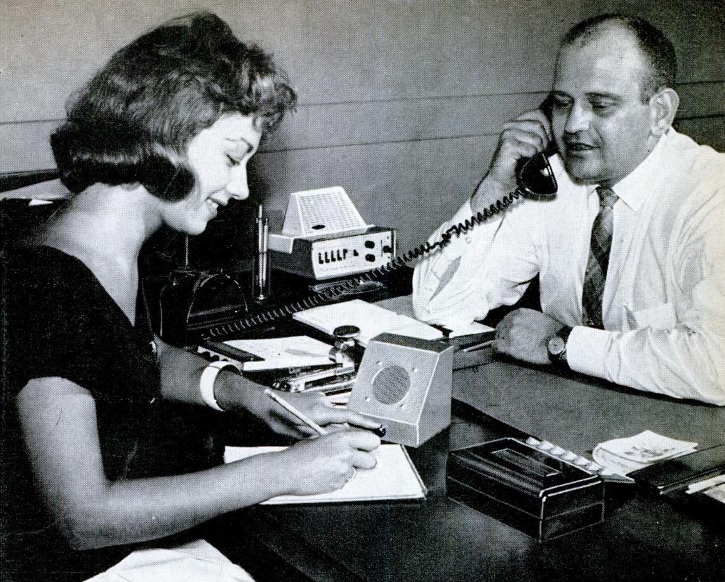
Sixty years ago this month, this stenographer dutifully takes down a verbatim transcript of her boss’s telephone conversation, thanks to a Lafayette telephone amplifier. The amp is connected to the phone through a telephone pickup coil, still readily available today. With it plugged into the amp, she can easily hear both sides of the conversation.
The unit was actually a kit. While it is not specified, we suspect that the secretary put it together herself, since it freed her of the need to use a headphone for such tasks, and probably made her work much easier.
The photo appeared in the December 1960 issue of Popular Mechanics, which highlighted a number of available kits, and pointed out how many, such as this one, could make things run more smoothly at the office.
EIghty years ago today, the December 27, 1940, issue of the Washington Evening Star carried this Sears-Roebuck ad for a radio-phonograph-recorder. The set came complete with microphone and five blank discs for $47.88.
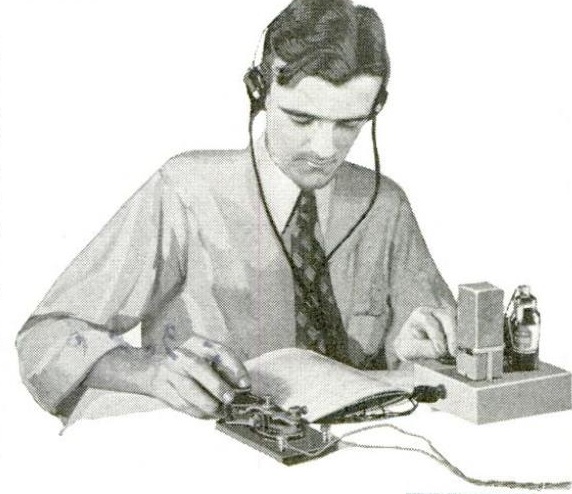
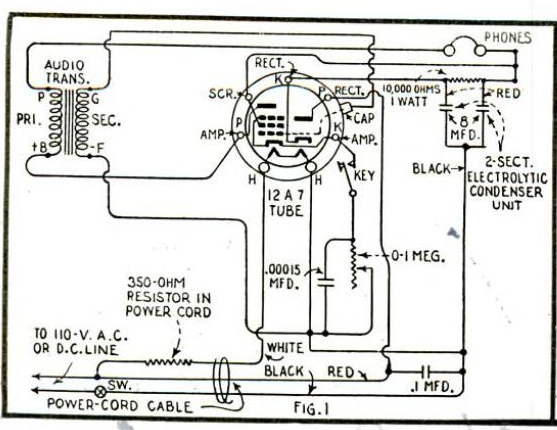
Eighty-five years ago this month, this gentleman was practicing his Morse code with this one-tube code practice oscillator as described in the December 1935 issue of Popular Mechanics.
The set used a 12A7 tube, half of which was used to rectify the household current, with the other half serving as oscillator. A “curtain burner” line cord was used to step down the voltage to light the filament.
The article suggested working in teams to master the code, and pointed out that it was a good idea to start with an experienced operator who could demonstrate the proper formation of the letters.
Because of COVID-related travel restrictions, Santa Claus is required this year to follow a very strict flight plan. To view his progress, we recommend visiting the official NORAD Santa Tracking website. (We previously wrote about the history of this project here.)
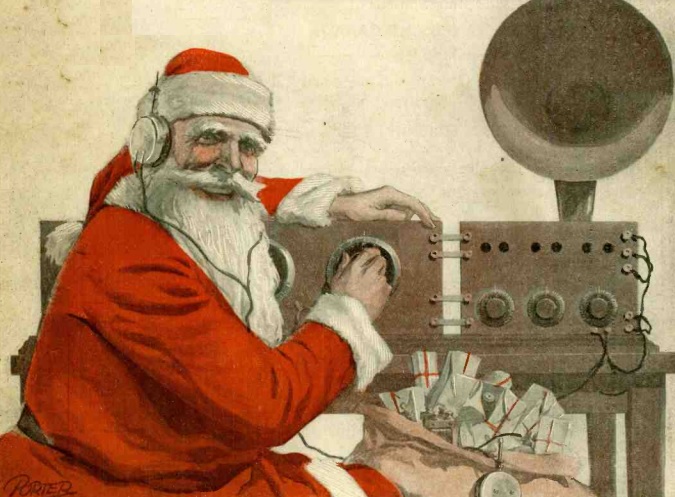
To assist him with precision navigation, Santa Claus has asked OneTubeRadio.com to activate a non-directional beacon (NDB). We will, of course, be complying with this request, and we have activated a beacon on 1610 kHz. Santa will use the automatic direction finding equipment (ADF) installed in his sleigh to home in on the beacon. (He is currently employing equipment more modern than shown above in a picture from the December 9, 1922, issue of Radio World.) We expect that while aloft, Santa will be able to pull in the signal from the North Pole.
At ground level, the signal will have a range of about one mile. If you are located close to the OneTubeRadio.com world headquarters, you can tune in to this special broadcast. If you are further away, you can listen online:
We are transmitting with our InfOspot Talking House transmitter, which I previously reviewed at this link. It is an FCC-certified transmitter for the AM band and operates with 100 milliwatts to a 3-meter antenna. It has fairly solid coverage for about two blocks, and in a few spots, can be heard over a mile away. During COVID-19, I have used this transmitter for drive-in educational programs for my continuing legal education business. It is also suitable for other socially distanced activities, such as church services and meetings of community organizations. It could potentially be an important community resource in emergencies. And tonight, it is assisting Santa Claus in performing his duties.
Reception reports are welcome. You can contact us at como-radio@usa.net.
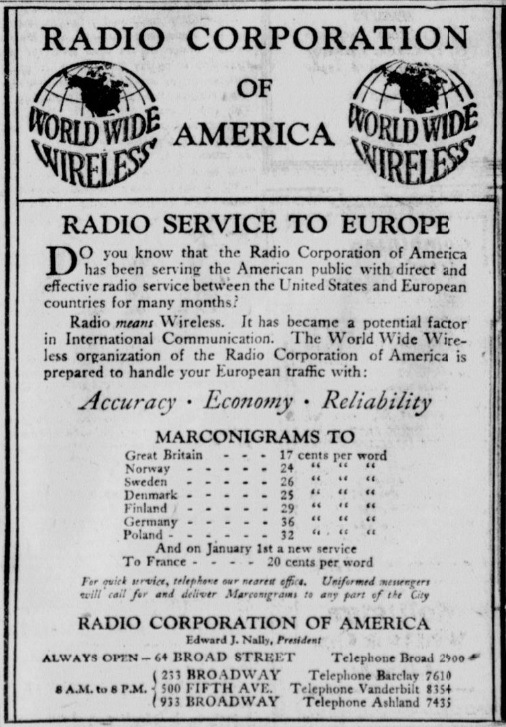
A hundred years ago, if you wanted to send a message to Europe fast, you would use the WWW–that is, RCA’s World Wide Wireless service. You could send Marconigrams at various rates, depending on country. Messages to England were 17 cents a word, up to 36 cents per word to Germany.
You could call and have a uniformed messenger pick up your message, or you could take it in person. Three locations in Manhattan were open 8 AM to 8 PM. The location at 64 Broad Street was always open.
This ad appeared in the New York Herald a hundred years ago today, December 23, 1920.
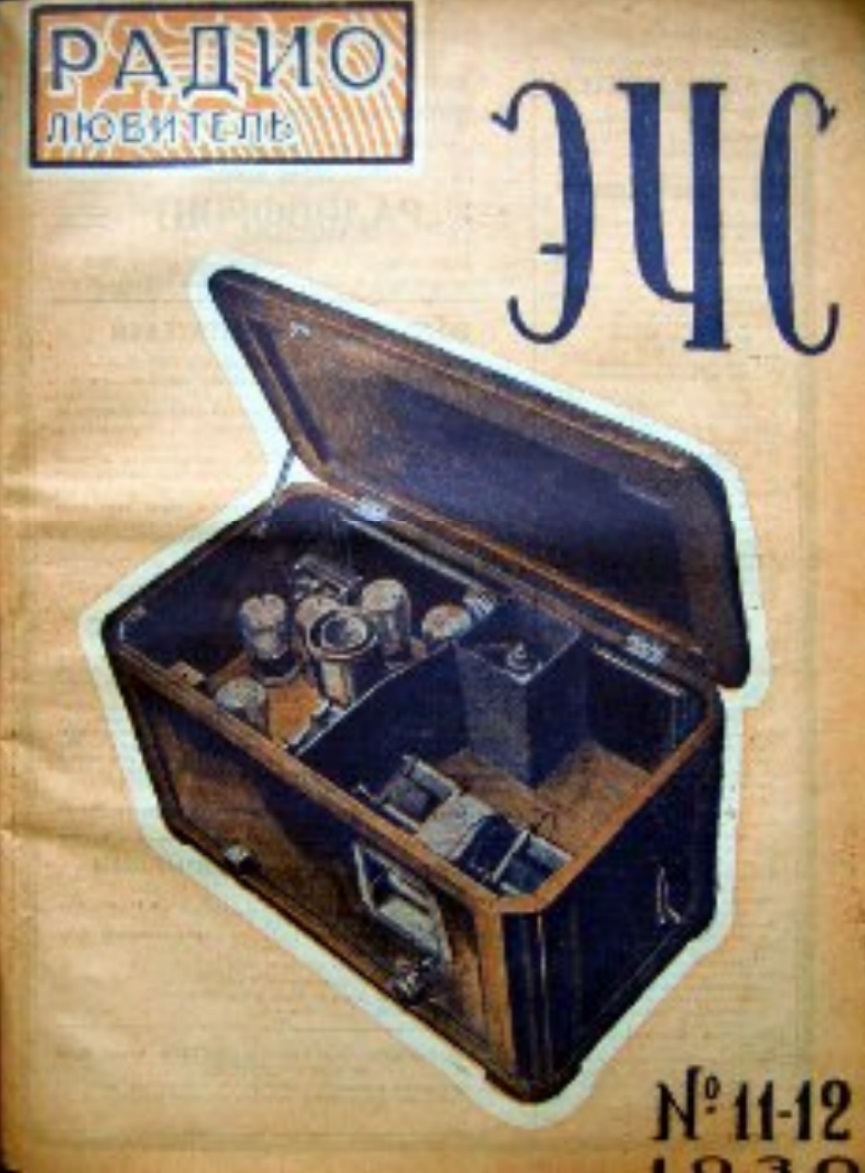
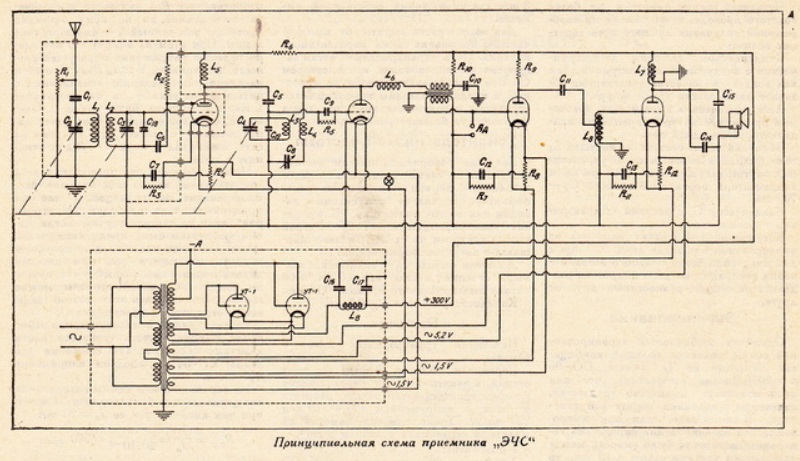
Ninety years ago, the November-December 1930 issue of Радиолюбитель (Radio Amateur) magazine featured this 6-tube receiver named ЭЧС (EChS). While there is a rather long article explaining it, I’m not able to decipher any of it, other than to say that it appears to be a handsome well-built set.
A better scan of the article can be found at this link. For those who can read Russian, I’d be interested in learning more about this interesting looking set.
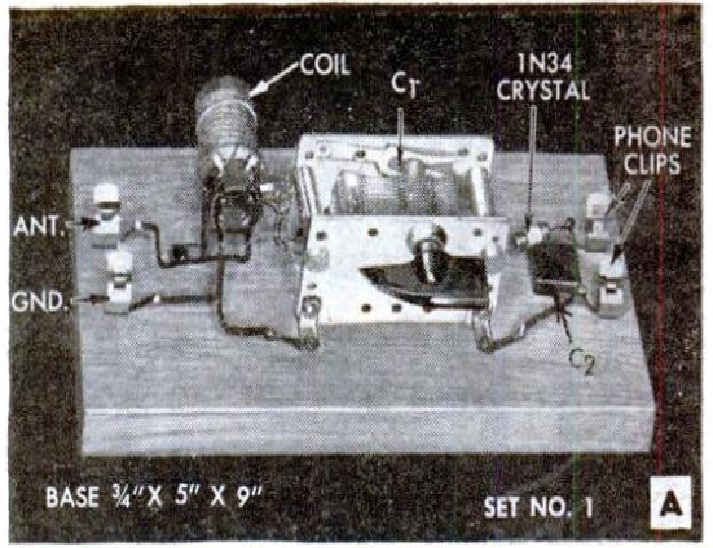
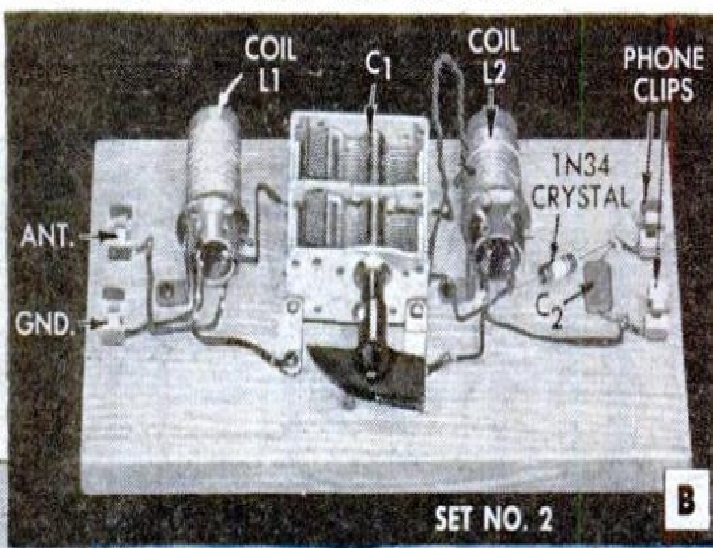
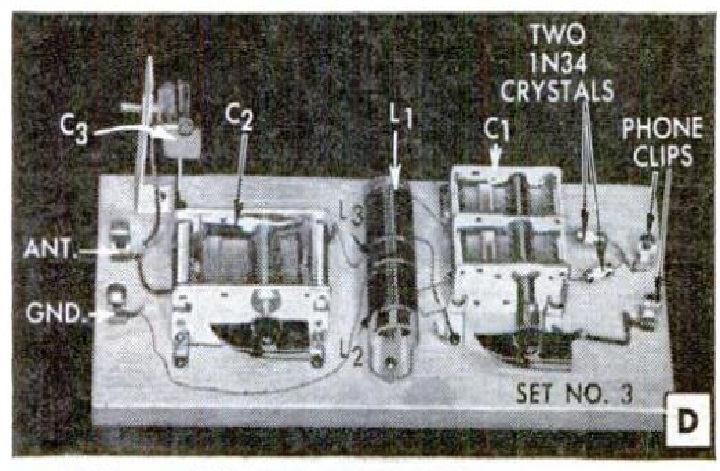
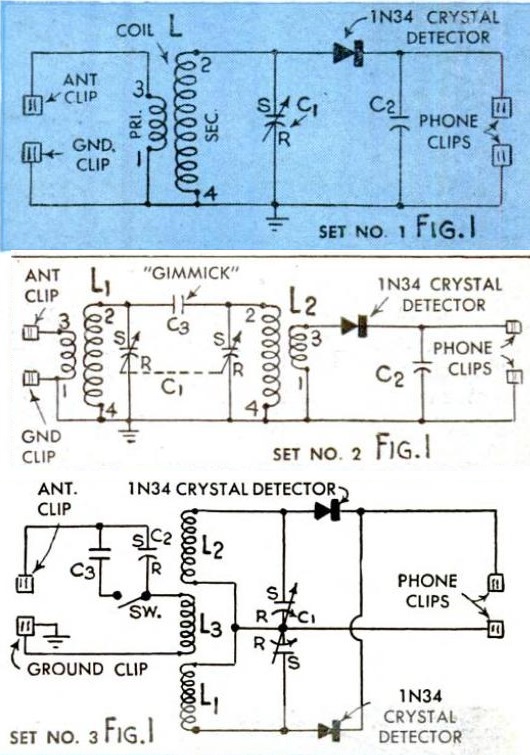
Seventy years ago this month, the December 1950 issue of Popular Mechanic showed how to put together these three crystal sets. All used the venerable (and still available) 1N34 diode. The first was the most basic set, but used a coil and variable capacitor for tuning.
The second featured greater selectivity, since in included two resonant circuits. For convenient tuning, the circuits used a ganged variable capacitor. The two L-C circuits were linked with with a “gimmick” capacitor consisting of two insulated wires twisted together. The article pointed out that a longer capacitor would result in greater volume, but a shorter wire would yield greater selectivity.
The final circuit was optimized for sensitivity, and would pull in the weak stations with two detectors running in a push-pull configuration.
All of the sets were said to have a range of about 40 miles.
If you’re thinking of recreating one of these circuits, see our crystal set parts page for ideas on tracking down the parts.
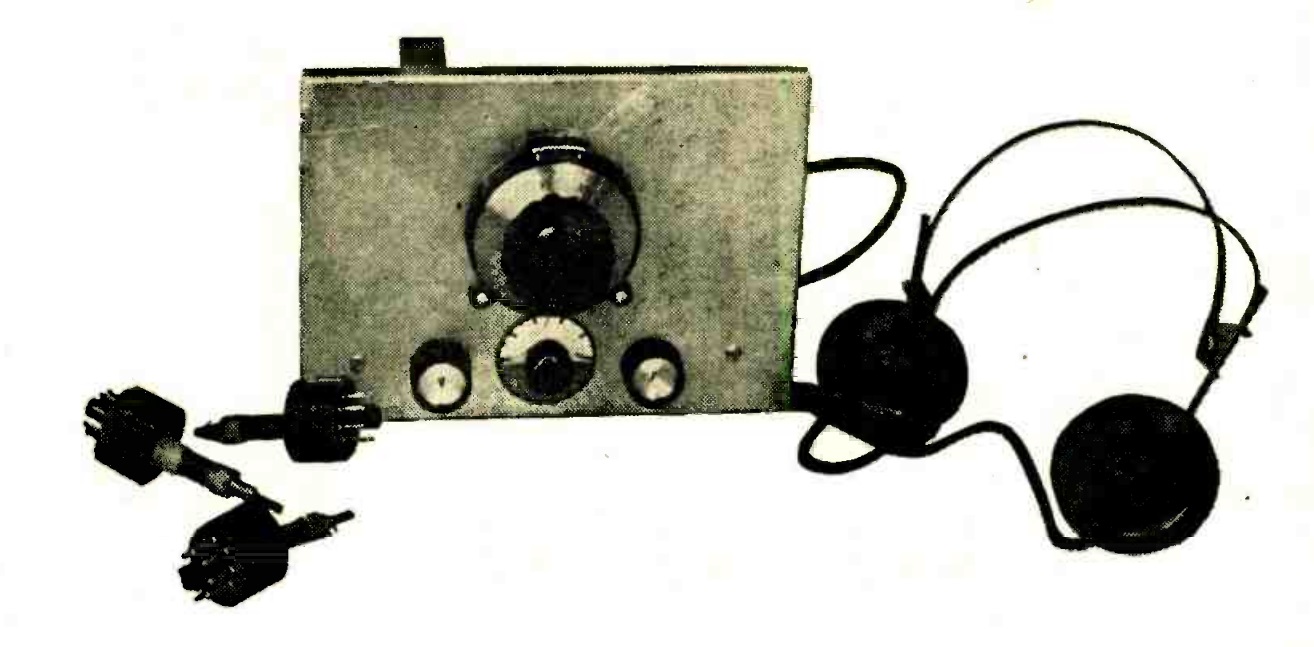
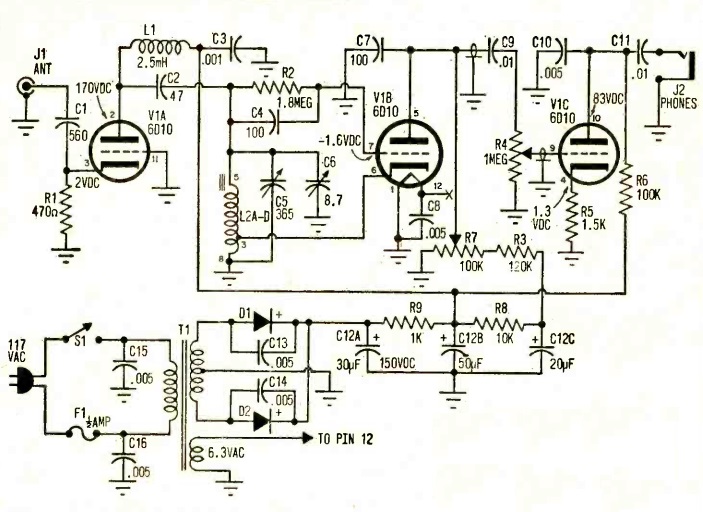
Fifty years ago this month, the December 1970 issue of Science and Electronics carried the plans for this one tube receiver covering most of the broadcast band up through VHF, 600 kHz to 38 MHz.
The set used a single tube, a 6D10 triple triode Compactron. One stage was used as RF amplifier, the second was the regenerative detector, and the third stage served as AF amplifier to power the headphones. Band switching was accomplished through plug-in coils made out of commercial oscillator coils wired into old tube sockets. The front panel featured the main tuning dial and bandspread, as well as volume and regeneration controls. The sensitive circuit was said to be able to pick up anything worth hearing, and could be put to use by the beginning ham or SWL.
According to the magazine, with a little bit of practice, the set would produce around-the-world reception on a daily basis.
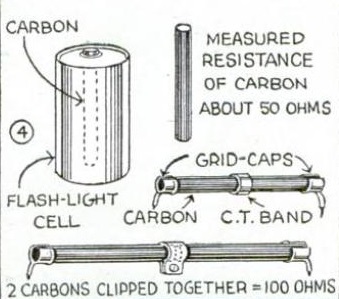
The December 1940 issue of Popular Mechanics showed these plans for making a resistor out of the carbon from an old flashlight battery. After removing the rod from the battery, it was boiled in a strong soda solution and dried. A grid cap, normally used to snap on to the terminal on top of a tube, was the perfect size to clip on to each end. A single carbon rod was about 50 ohms, and two of them could be joined together to form a center-tapped 100 ohm resistor.
Radio Girl® perfume is the official perfume of OneTubeRadio.com. This ad for the product appeared 75 years ago this month in the December 1945 issue of Radio Mirror magazine. As you can see, you can pick up a bottle at the local beauty counter for only a dime. But we recommending splurging and buying a large bottle for a quarter.
As the ad points out, it is a true, captivating perfume that bespeaks romance. Its delicate fragrance is so completely feminine, so appealing, it will tempt his heart.

 Sixty years ago this month, this stenographer dutifully takes down a verbatim transcript of her boss’s telephone conversation, thanks to a Lafayette telephone amplifier. The amp is connected to the phone through a telephone pickup coil, still readily available today. With it plugged into the amp, she can easily hear both sides of the conversation.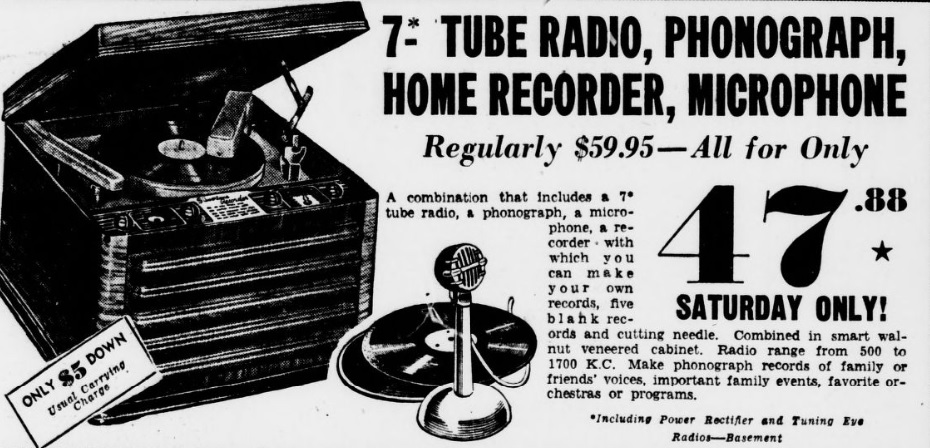

 We are transmitting with our