Category Archives: World War 2

Armin Wegner: Righteous Among the Nations

Armin Wegner. Wikipedia photo.

Armin Wegner. Wikipedia photo.

This month marks the hundredth anniversary of the Armenian Genocide, in which over a million Armenians were killed by the Ottoman Empire and those working on its behalf. The killings were carried out in a variety of ways, and the net result was that the bulk of the Armenian Christian population was eliminated. Most of those who survived were forced from their homes and formed the Armenian Diaspora, with large populations in North America, the Soviet Union, Europe, South America, and Australia.

The “official” start date is generally considered to be April 24, 1915, when about 250 intellectuals and community leaders were rounded up in Constantinople for eventual execution.

One convenient method employed to execute women and children was to simply march them into the Syrian desert where they could die by dehydration and starvation.

Armin Theophil Wegner was born in Elberfeld, Rhineland, in Germany, in 1886. He was trained in law, but didn’t seem to have much direction professionally. At one time, he decided to work as a travel writer. Eventually, deciding to see the world, he joined the Army, and served as a medic. The outbreak of war saw him attached to the Ottoman army and stationed along the Baghdad railway in Syria and Mespopotamia.

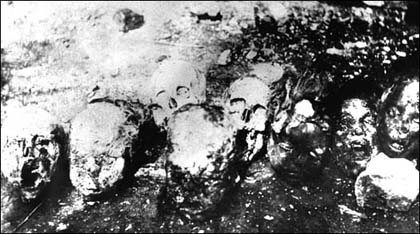
He heard stories of the death marches going on around him, and when he got leave, he took a camera and decided to investigate the stories, despite orders to the contrary. He learned that the stories were true, and the photos he took served as one of the few pieces of documentary evidence of the atrocities.

He was ultimately found out, and sent back to Germany. Many of his photos were seized, but he managed to smuggle out many negatives inside his belt.

The experience was moving for Wegner. In 1933, he wrote an open letter to Hitler denouncing the treatment of the Jews. No newspaper would publish it, and he was arrested and tortured by the Gestapo. He was eventually able to flee to Italy, where he lived until his death in 1978.

In 1967, Wegner was recognized as one of the Righteous Among The Nations by Yad Vashem.

Read More at Amazon

Links

Click Here For Today’s Ripley’s Believe It Or NotCartoon


Bombing of Tokyo, March 9-10, 1945

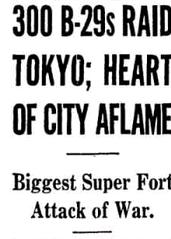
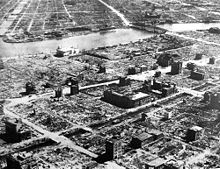
Seventy years ago, the U.S. conducted its most destructive air raid of the Second World War. On the night of March 9-10, 279 American B-29s operating from Guam, Tinian, and Saipan dropped 1,665 tons of bombs on Tokyo. Fourteen of the planes were lost, but the incendiary bombs created a general conflagration that overwhelmed the city’s fire defenses and destoyed 16 square miles of the city. Over 100,000 were killed in the raid, and over a million Tokyo residents lost their homes.

References

Wikipedia, Bombing of Tokyo


Battle of Iwo Jima, Feb. 23, 1945

IwoJima

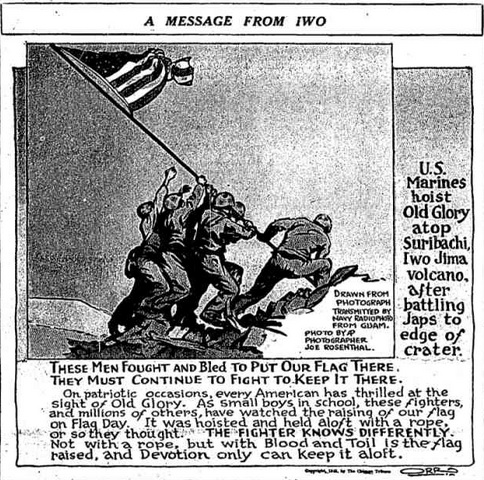
The iconic photo of U.S. Marines hoisting Old Glory on Iwo Jima was taken 70 years ago today, February 23, 1945. It appeared on the front page of the Chicago Tribune, February 28, 1945, as the drawing shown here. As the artist wrote, “Not with a rope, but with Blood and Toil is the flag raised, and Devotion only can keep it aloft.”

Click Here For Today’s Ripley’s Believe It Or Not Cartoon


WW2 Shortwave Broadcasting

CBS Short Wave Listening Station, Long Island. Wikipedia photo.

CBS Short Wave Listening Station, Long Island, 1941. Wikipedia photo.

In earlier posts, I’ve looked at the shortwave broadcast bands, and short wave listening during World War 2.   75 years ago, the Saturday Evening Post carried an interesting look at the war of words that was then filling the short wave bands. It gives a fascinating and detailed look at what the bands must have sounded like for short wave listeners as Europe was at war. The original article is now available at the Saturday Evening Post website.  There is a link to the original 1940 article, “The War of Lies and Laughs: The Story of Radio’s 24-Hour A Day Word Battle,” which was written by freelance writer J.C. Furnas, and appeared in the February 3, 1940, issue of the magazine, at page 16.

In addition to the informative text, it contains a couple of photos of the CBS shortwave listening station on Long Island, New York, complete with at least three National HRO receivers. From the look of the listening station in 1940, it appears that the station was thrown together hastily by CBS. The tables are unfinished wood, and the staff are making use of folding chairs.

Shown operating the receiver at the CBS listening post was one Carl Schutzman, and CBS newsman Elmer Davis is shown combing through the news picked up from the short waves.

Furnas begins his account of the propaganda war with the reaction of a loyal German-American Iowa farmer, who is outraged to hear an old acquaintance, one Fred Kaltenbach–or someone claiming to be him–persoanlly addressing the Iowa farmer on the Berlin radio. The speaker, ostensibly a German immigrant who returned to the old country, mentions the Iowan by name and even mentions the name of his old schoolteacher in an effort to establish his bona fides. He tells the Americans that they shouldn’t fall for the British propaganda cooked up by that liar Winston Churchill, and stay out of Europe’s war. (Kaltenbach was indicted in absentia,  for treason, but died in Soviet custody after the end of the war.)

The scuttling of the Graf Spree in Montevideo harbor was still fresh on the American mind, and Furnas’ article points out the contradictions of the various short wave accounts coming from Europe. The article discusses both broadcasts directed to America, as well as broadcasts directed by the beligerents to the other warring nations. It notes that in neither case is it possible to determine exact numbers of listeners. It points out that listening to foreign radio is a criminal offense in Germany, and notes that a four-year sentence was reportedly handed down recently for that offense.

Furnas does point out that prior to the war, NBC received about 600 letters a month from German listeners, which dropped to six per month after the war began. But he’s quick to concede that the drop in mail volume was probably because the Germans didn’t want to get caught listening–not because they actually stopped listening. And according to Furnas, very few Americans actually listened to German broadcasts, despite the fact that 40% of American receivers tuned the short wave bands. “When crack receivers with expert staffs, working for broadcasting companies, have trouble getting clear reception for days on end, what can the man in the average living room expect?” He answers this question by saying that their likely to revert to Charlie McCarthy.

Lord Hawhaw, 1943 artists' conception. Wikipedia image.

Lord Hawhaw, 1943 artists’ conception. Wikipedia image.

The most interesting part of Furnas’ article, except possibly for the photos, is the accounts of the English-language programs coming from each side. At that time, the identity of Lord Hawhaw was not known, and Furnas speculates that it was Norman Baillie-Stewart.  Baillie-Stewart had actually been connected with the broadcast until 1939, but had been replaced by the time the article was published by William Joyce,
who was executed for treason in 1946.

Despite the fact that few Americans were listening to foreign broadcasts, Furnas points out that the situation was better for the Germans in South America. Many South American newspapers, unable to afford wire services, were said to collect most of their news from foreign broadcasts, and the Germans capitalized. But even before the U.S. entered the war, the Americans made a concerted effort to target South America, with much success, probably for the same reasons that the Germans were successful–it was an easy source of news for small papers. And the American stations came in a lot stronger.

The article details the propaganda styles in use between Germany and Britain. British broadcast contained quite a few recordings of Hitler, in the hopes of pointing him out as a liar with his own words. German broadcasts to England, on the other hand, were heavy with insults such as “England will fight to the last Frenchman,” and various insults against “the old liar” Churchill, whose initials, the German announcers were quick to point out, were the same as those of a Water Closet.

Germans also concentrated on the empire. “Berlin loves to put eminent Hindus on the air,” and broadcasts to South Africa did their best to incite the Boers.

Britain broadcast the names of German prisoners of war, and the Germans followed suit. (For more information on prisoner broadcasts, see my earlier post.)

Of course, in 1940, American SWL’s had no means of making recordings of broadcasts, but Furnas’ descriptions to some extent make up for the paucity of recordings. In the 2015 update to the article on the magazine’s website, there are, however, a handful of recordings, both before and after America entered the war.  But Furnas’ article itself is one of the best I’ve seen to depict what an American SWL might have been able to hear during the war years.

For a look at Japanese shortwave propaganda later in the war, please see my recent post on Japanese propaganda directed toward African Americans.

Click Here For Today’s Ripley’s Believe It Or Not Cartoon


Japanese Short Wave “Negro Propaganda Operations” of WW2

African-American soldiers preparing to fight the Japanese. US Gov't photo.

African-American soldiers preparing to fight the Japanese. US Gov’t photo.

Most Americans believe that Axis propaganda during World War 2 was basically unsuccessful, since America and the Allies relied on truth, whereas the Axis relied on deception. I generally take this same view, but as with many oversimplifications, it is not entirely true. An interesting article detailing a Japanese propaganda campaign that was somewhat successful can be found in a scholarly journal, the Historical Journal of Film, Radio and Television, Volume 19, Number 1, March, 1999. The article, by Sato Masaharu of Shobi University and Barak Kushner of Princeton University, is entitled “Negro Propaganda Operations: Japan’s short-wave radio broadcasts for World War II Black Americans.” It’s not available free anywhere online, but it is available at most University libraries, and your public library should be able to obtain a copy by interlibrary loan. The article is a look at a Japanese propaganda operation that did have a measure of success.

The authors concede that the Japanese campaign was by no means successful in the sense that any appreciable number of African Americans were swayed to the Axis side. But the existence of such propaganda, largely based upon truth, did force the United States Government to confront those realities. Some groups, such as the NAACP, used this propaganda as a tool, even though  quick to concede that it couldn’t simply be accepted at face value.


In addition, the Japanese propaganda was successful to some extent in diverting U.S. Government resources to unproductive use. During the War, almost all African-American newspapers were investigated by the FBI.  FBI Director J. Edgar Hoover, in part because of the existence of the Japanese propaganda, was convinced that these newspapers were disloyal.

Some Americans were also convinced that the Japanese were responsible for racial agitation. An officer stationed in Little Rock complained to the War Department that the “Negroes of Little Rock were being organized and incited by the Japanese.” There was, of course, no evidence that any such Japanese agitation had occurred, but that didn’t stop the belief, which was in part fueled by the Japanese propaganda.

African-Americans, like other Americans, were well aware of what the Japanese had been doing in China. W.E.B. DuBois, for example, who provided a certain amount of overt support for the Japanese propaganda, opined: “It is not that I sympathize with China less but that I hate white European and American propaganda, theft and insult more. I believe in Asia for the Asiatics and despite the hell of war and the fascism of capital, I see in Japan the best agent for this end.”


Black Americans were also cognizant of the fact that Japan had been on our side in the First World War, and had brought to the table at Versailles matters of racial equality. These concerns were quickly brushed aside by President Woodrow Wilson, who was in very many ways a typical Democrat racist, who had segregated the Army. White Americans were generally not cognizant of this, but African Americans were. So there was a certain amount of natural sympathy on which the Japanese could play.

The U.S. military was certainly aware of this image problem, and was doing its best to counter it. For example, in 1944, it released the film, The Negro Soldier, produced by Frank Capra, which is available on YouTube.

The focus of Japanese broadcasts was that only Japanese victory could ensure Blacks of the elimination of racial discrimination. To reach this conclusion, the Japanese broadcast largely true accounts of discrimination, violence, and even lynchings.  In addition, comparisons were frequently made between Japanese leaders and African Americans such as Frederick Douglass and Booker T. Washington.

Throughout the war, Japanese embassies in neutral countries were tasked with researching American news for items of interest regarding discrimination against Blacks, and this news made up much of Tokyo’s propaganda content.

An additional source of program material came in the form of African-American POW’s, and there were plans in place to include them in programs discussing discriminatory conditions in American civilian and military life, reactions to conditions supposedly prevailing in Japan, and the humane manner in which Black POW’s were supposedly treated by the Japanese.

The first POW broadcast took place on December 2, 1943, during the Hi No Maru Hour program, which was beamed to America on short wave. It’s unclear whether any actual POW’s appeared on the program, or whether they were African American. But they were passed off as being POW’s.

POW’s were “encouraged” to take part in these broadcasts, and the Japanese pointed out that “we do not guarantee the life of those who refuse to cooperate.” Some prisoners did cooperate, and were tried after the War for doing so. They were able to point to this portion of the order to demonstrate that they had done so only under duress.

Unfortunately, as might be expected from a scholarly article of this type, the authors do not go into any detail as to the details of the broadcasts or the extent to which they were heard. It does note that the U.S. Government extensively monitored them, but it doesn’t address the critical question of how many Americans–Black or otherwise–actually listened to them.

1944TokyoListingsBut the Axis stations were easy to hear by anyone in the U.S. with a short wave receiver.  I’ve noticed that the short wave listings in many American newspapers stopped carrying listings of Axis stations after the U.S. joined the war.  But the clipping here, from the February 1943 issue of Radio Guide, clearly shows the times and frequencies of English broadcasts from Tokyo.

Despite the lack of information that the SWL historian might like to see, this article is an interesting look at the program content during the war, and it does a good job of refuting the notion that Japanese propaganda was ineffective.  The article is extensively footnoted, and those wishing to learn more about this forgotten chapter in war history will have many sources available.

For more history of radio and short wave listening during the war, please see the following earlier posts:


Click Here For Today’s Ripley’s Believe It Or Not Cartoon


Soviet Deportations of Poles, 1940

Workers constructing the Kolyma highway.  While the nationality of these men is unknown, they very well could have been Polish deportees.  Wikipedia photo.

Workers constructing the Kolyma highway. While the nationality of these men is unknown, they very well could have been Polish deportees. Wikipedia photo.

200px-Herb_Polski.svgIn 1940 and 1941, more than 1.2 million Poles were forcibly deported from Poland to remote areas of the Soviet Union. Those deportations began in earnest 75 years ago today, when more than 220,000 Poles, mostly women and children, were rounded up and sent to northern European Russia. While the USSR never declared war on Poland, at the time of the Nazi invasion, the German-Soviet nonagression pact was still in place. When the invasion began, the Soviets stopped recognizing Polish sovereignty, and started simply dividing up Poland with the Germans.

Many Poles were simply killed, but at least a million were deported, and hundreds of thousands of those deported died. Many of those deported worked on the construction of the Kolyma Highway which extends 1262 miles from Nizhny Bestyakh to Magadan. The road is known as the “Road of Bones,” as most of the thousands of workers who died during its construction are interred within the roadway itself.

The deportations began 75 years ago today.

References


Read More at Amazon

Click Here For Today’s Ripley’s Believe It Or Not Cartoon


1945 War Plant Worker

Ohmite

Seventy years ago, American war production was going strong, as demonstrated by this worker at the Ohmite Manufacturing Company plant in Chicago. This worker, shown here on the cover of the February, 1945, issue of Radio News, is testing transmitter RF chokes for their “Q” factor.

Like virtually all American industry, the company was engaged entirely in war production. The company had been founded in 1925 and, as suggested by its name, primarily engaged in the manufacture of resistors. It’s currently headquartered in the Chicago area, with its production and distribution facilities moved to Matamoros, Mexico and Brownsville, Texas, one of many maquiladoras along the U.S.-Mexico border.

Click Here For Today’s Ripley’s Believe It Or Not Cartoon


End of Civilian Radio Production: April 22, 1942

US-WarProductionBoard-Seal

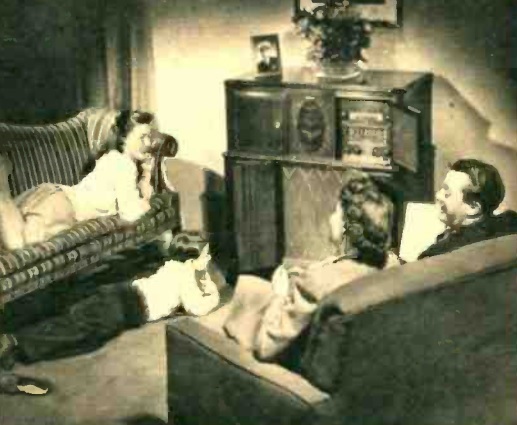
I’ve always been aware that civilian radio sets were not manufactured during World War 2, but I never knew the details. Those details are reported on page 22 of Broadcasting, March 16, 1942.

On March 7, 1942, the War Production Board, which had itself been created by executive order on January 16, 1942, issued its order regarding radio equipment. Under that order, all manufacture of civilian receiving sets was to cease on April 22 in preparation for the conversion of the 55 manufacturers to war production. Sets in production as of that date were allowed to be finished, but only if not more than $500 in materials (not including wooden cabinets) were used.

30,000 were employed by these firms, and they had collectively produced more than 13 million sets prior to the order. They had done $240,000,000 in business during 1941, and all of their resources were now to be turned to war production.

War orders for all of the companies were already in place, and they were to begin gearing up for war production as soon as the manufacture of civilian sets ended.

The War Production Board estimated that the firms would turn out about three million more sets before the deadline, which would increase the total number of civilian sets to about 60 million.

Those sets would need to be kept in good shape, since the Board doubted that even replacement parts would be manufactured for the duration of the war. The Board even hinted that rationing and registration might be required, noting that some homes had more than one good set, and extras could be used in homes having none. But the Board’s chairman believed that the current supply of sets, along with those in production and on retailer’s shelves, would be sufficient for the nation’s needs.

The next month, Hugo Gernsback, editor of Radio Craft magazine, opined in an editorial as to the possibilities this situation presented for America’s youth: “Young men between the ages of 12 and 17 who are not subject to the draft have time on their hands, which they now can turn into cash by building sets not only for their friends and relatives–yes, but even sell them to radio stores. It is certain that if a number of boys gang together and manufacture a few sets every week in their spare time, and providing the sets are made right, they can be sold to the trade.”

Gernsback noted that millions of obsolete sets cluttering up storerooms would be a source of parts, as would automobile junk yards and junk shops, since they were loaded with a goldmine of parts. He pointed out that readers could “perform a patriotic service to conserve whatever substitute materials we have and turn such materials into radio sets.”

SylvaniaCardEarly in the war, manufactured parts were hard to come by. By the end of the war, some common parts were becoming available for civilians, but most were in limited supply, and most could be sold only to those attesting that they would be used to make repairs to existing sets.  But throughout the war, radio service men had to be creative due to the absence of needed parts.  The February 1945 issue of Radio News reported that, barring a miracle, civilian production would not resume until victory over Japan.  That issue also contained an ad by Sylvania, a portion of which is shown here.  When a service man had to make an emergency repair by re-wiring the set to make use of available parts, he could document the change on the card in order to facilitate restoring the set to its original condition when parts became available after the war.

Click Here For Today’s Ripley’s Believe It Or Not Cartoon


US Embassy in Tokyo After Pearl Harbor: The Secret Radio

US Embassy Tokyo, 1931 photo.  (US Gov't photo).

US Embassy Tokyo, 1931 photo. (US Gov’t photo).

The website of the Association for Diplomatic Studies and Training contains a very interesting account of life in the U.S. Embassy in Tokyo after Japan’s attack on Pearl Harbor.  It is the reminiscences of Robaert A. Fearey, who served as personal secretary to Joseph Grew, the U.S. Ambassador to Japan from 1932-41.

Fearey had recently graduated from college, and had a 4-F draft status due to eye problems.  He had been recommended by his college for the assignment, and sailed for Japan in early 1941.  On the morning of December 8, he, along with the rest of the embassy staff, heard of the attack on Pearl Harbor.  Late in the morning, a car from the Foreign Ministry arrived with the official notification.

The staff of the embassy was interned in the embassy compound until June, when they were repatriated on a well-lighted Japanese ship via Mozambique.  The journalists with whom they sailed home had been assumed to be spies and were tortured.  The embassy staff, however, was allowed to remain relatively unmolested on the embassy grounds.  The staff was even able to witness the Doolittle Raid of April 18, 1942.

One condition imposed by the Japanese was that the embassy was not allowed to retain any radio transmitter or receiver.  The embassy didn’t have any transmitter, instead relying on commercial telegraph.  The ambassador protested the seizure of radio receivers, but to little avail.  The Japanese searched the compound for radios and seized them.

But Fearey reports that he kept one radio:

Again demonstrating youthful indiscretion, I went back to my apartment and effectively hid a tiny pocket radio which a college housemate and amateur radio expert had made for me and which I had brought along to Japan. The radio was about five inches long, three inches wide and three-quarters of an inch thick and had what my friend had told me might be two of the smallest tubes ever made. I carried it inside the upper pocket of my jacket, with holes cut in the pocket so I could reach in to turn the control knobs. a thin wire ran
up under the back of my coat to a small, almost invisible ear plug. With this device, I had been able, unbeknownst to anyone, to listen to the radio during classes at college and even when riding my motorcycle. In Japan, I had tried it out a few times and had no
trouble receiving Japanese language stations. In our current predicament, I thought it might be a useful source of information, and in any case, I did not want to lose it. The searchers never found it, and it did prove to be a moderately useful source of information
until the tiny batteries wore out. I brought it back to the States on the repatriation ship.

It seems likely that the radio in question was similar to the one shown here on the cover of the September 1935 issue of Radio Craft magazine.

SmallestRadio1935

The description of Fearey’s clandestine radio seems to match up with the description of the 1935 project.  The 1935 receiver was one tube, and Fearey reports that his contained two tubes.  So chances are, the unnamed builder of Fearey’s set added an extra stage of amplification.  But it seems to be the same general design.

Fearey reports the size of his radio as being about 5 by 3 by 3/4 inch, with “two of the smallest tubes ever made.” The Radio Craft design doesn’t specify the dimensions, but reports that it was built in a bakelite cigarette case designed to hold ten cigarettes. The radio in the article uses an English tube which does appear to be the smallest in production at that time.

And significantly, the construction article notes that crystal earphones are used. While the article shows the set used with a pair of headphones, a crystal earphone was available at that time, as noted in the article. The article calls for 25-30 feet of wire for the antenna, but with a strong station and/or the additional tube, the use of the smaller antenna described by Fearey seems plausible.

The schematic and pictorial diagrams of the Radio Craft set appear below.

SmallestRadio1935Diagram

Fearey’s account is also available as a web page with additional illustrations.


Click Here For Today’s Ripley’s Believe It Or Not Cartoon


Operation Cornflakes: Tampering With the Nazi Mail

Forged envelopes and stamps, courtesy of CIA website.

Forged envelopes and stamps, courtesy of CIA website.

Seventy years ago today, January 5, 1945, Allied bombers engaged in an unusual attack. They bombed a mail train heading for Linz, Austria. The train was derailed, and mail was scattered around the area. More bombers then arrived and dropped mail bags appearing for all the world to be genuine Reichspost bags. Inside were about 3800 letters addressed to Germans, many of whom were the families of German soldiers who had been killed in action.

The plan was known as Operation Cornflakes. The return addresses on the letters were those of German firms, and the letters outwardly appeared to be normal business correspondence. However, the envelopes contained propaganda newspapers prepared by the U.S. Office of Strategic Services (OSS), including issues of Das Neue Deutschland, an example of which is shown below.

DasNeueDeutschland

The stamps, envelopes, and even the mail bags, had to be carefully forged to appear original to the postal workers who would handle them. While the program had no discernible effect, it was successful in that most of the propaganda letters were introduced into the German mails. After the train was bombed, German rail and postal workers dutifully picked up the scattered mail bags and sent them onward to their intended recipients.

The stamps and envelopes shown above are examples of some of the forgeries, courtesy of the CIA website. To ensure that the propaganda would blend in with the normal mail, the OSS consulted German POW’s who had worked for the post office. The details of the cancellations had to match what was in use in the cities from which the mail had purportedly originated, and there had to be some semblance of mail being in the proper train for the town for which it was intended. German POW’s provided most of this information relating to the internal workings of the German mails.

Most of the mail was successfully delivered, but in one case, a sharp-eyed German postal worker noticed that the name of the company was misspelled on the return address. This, of course, resulted in that particular batch not being delivered.

References


Read More at Amazon

Click Here For Today’s Ripley’s Believe It Or Not Cartoon