Category Archives: World War 2

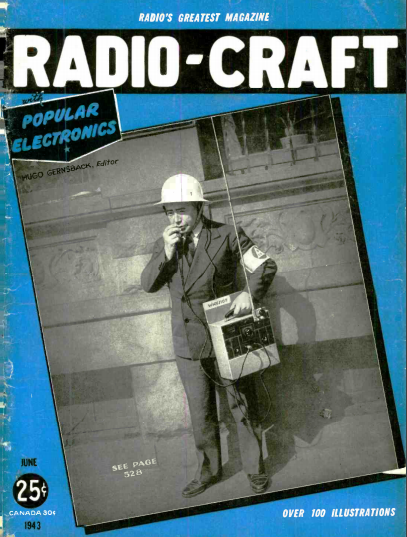
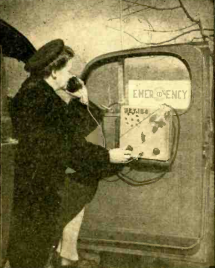
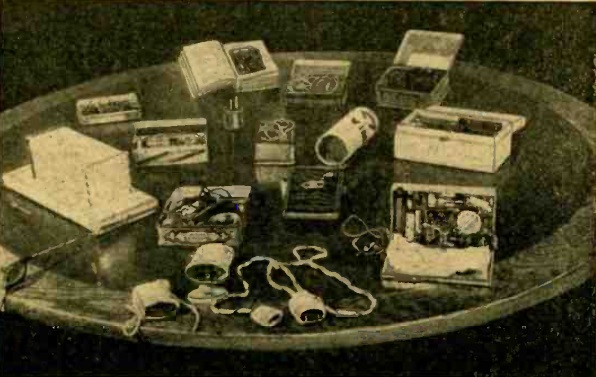
WW2 Clandestine Dutch Receivers

Another collection of clandestine Dutch radios.


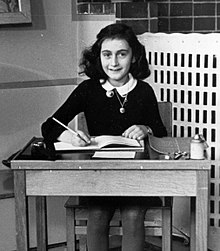
AnneFrank1940 crop.jpg

Anne Frank. Wikipedia image.

On this date seventy-five years ago, June 15, 1943, Anne Frank noted in her diary that everyone in Holland had been directed to turn in their radios.  She noted that throughout Holland, people were scrambling to find old radios to turn in so that they could keep another set, and that those in her group had arranged to get a small secret set.

As we have written previously, some ingenious examples of clandestine Dutch receivers are shown above.


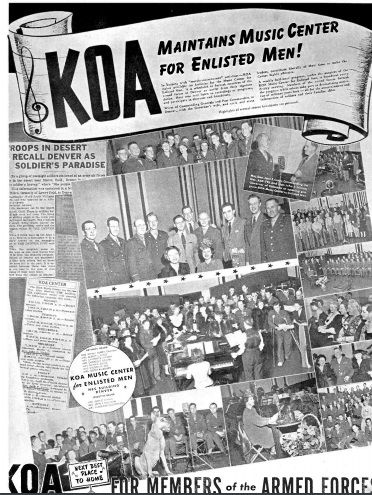
KOA Denver, 1943

1943June14BCSeventy-five years ago today, KOA Denver ran this ad in the June 14, 1943, issue of Broadcasting.

The station ran its weekly “Music Center for Enlisted Men” for the morale of servicemen stationed in the Denver area. The half hour program ran Friday nights, and enlisted men participated in choirs and dramatic presentations. The project was spearheaded by the wifes of commanding generals and post commanders in the area, along with Colorado’s governor and his wife.


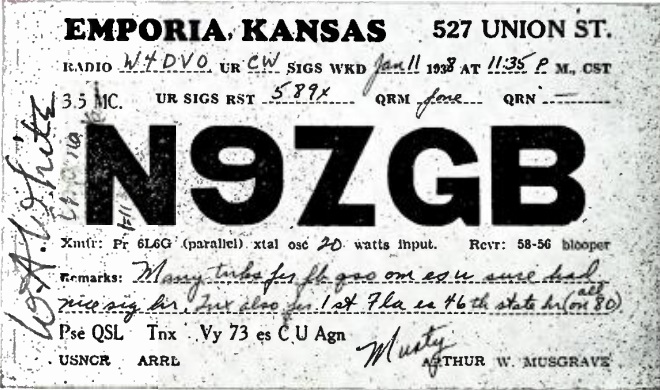
N9ZGB QSL Card, 1938

n9zgbHere’s an unusual example of an “N” amateur call sign from 1938, from the June 1938 issue of All Wave Radio magazine.  The card was actually for a QSO by W9GZB, but the owner of that call, Arthur “Musty” Musgrave, 527 Union St., Emporia, Kansas, was a member of the Naval Communication Reserve, for which the corresponding “N” call sign was used. That service dates back to at least 1929, since there is an editorial in the August 1929 issue of QST encourage amateurs to consider enlistment.

According to an editorial in QST for August 1940, the Naval Communication Reserve was open to men aged 15-35. Former servicemen in any branch of the military were eligible up to the age of 50. Amateur radio operators could enlist as seamen and were immediately eligible to take the examination for the radioman rating. Physical fitness requirements were the same as those for the regular Navy. Experienced radiotelegraph operators were especially desired, since the need for signalmen at the time exceeded the need for radiomen.

Musgrave, the sender of this card, was a linotype operator with the Emporia Gazette newspaper. According to the December 20, 1940, issue of that paper, he was called up to service in 1940 and assigned to the San Diego naval base.  After the war, Musgrave’s call became W0ZGB, which he held until at least 1960.  He died in Kansas in 1971.

The signature on the left-hand margin of the card is the reason why the QSL was shown in the magazine.

This is the signature of William Allen White. W4DVO had sent it to the magazine along with the story of working Musgrave on 80 meter CW. After copying the QTH, the Florida station mentioned that Emporia “owed its place on the map to William Allen White.” To that, Musgrave replied, “you’re telling me!”, and told the Florida contact that he had worked for him for over twenty years. To prove the point, he had his boss autograph the card. According to the magazine, “something tells us that ZGB is going to be a popular station with the autograph hunters.”

WP William Allen White.jpg

William Allen White. Wikipedia image.

William Allen White was, indeed, the owner and editor of the Emporia Gazette, where Musgrave worked as a linotype operator.  White, was regarded as a spokesman for Middle America and was dubbed the “Sage of Emporia.”  Earlier a supporter of Teddy Roosevelt’s run for President on the Bull Moose ticket, he was later tapped by FDR to help generate support for the Allies before America’s entry into the Second World War.


KNX Victory Garden, 1943

1943Jun7BCShown here is the victory garden of KNX, Los Angeles. The picture appeared 75 years ago today in the June 7, 1943, issue of Broadcasting magazine.

According to the ad, the station went to work after the call went out from Washington to raise vegetables. It noted that the soil under glamorous Hollywood had been, just a few years earlier, fertile farm land.

So the station ripped out the terrace in front of its studio, plowed the soil, fertilized and cultivated it. As a model to its listeners, the station grew vegetables to show what California was capable of.

The station’s first crop went to the Los Angeles Orphans’ Home. The practical experience of growing crops went by proxy to many thousands of listeners.


High School Radio Training, 1943

1943JuneQSTShown here in the June 1943 issue of QST are students at Northbridge Senior and Junior High Schools, Whitinsville, Mass., learning Morse Code under the tutelage of assistant principal James Perkins Saunders, W1BDV.

Before the War, there had been some instruction in radio for interested students, but it had consisted mostly of informal coaching of students interested in obtaining their ham licenses. But with war, radio became a vital skill, and the school vigorously undertook pre-induction training in the radio arts, including both theory and Morse Code.

1943JuneQSTKeyTo accommodate code training, the school’s schedule was adjusted. Two minutes were shaved off each of the seven class periods, and the lunch period was reduced by one minute. This allowed the time period from 8:05 to 8:20 AM to be set aside exclusively for code practice. Each day, Saunders manned the key in the school office, as shown here, and code was piped throughout the building. Later, a tape machine was procured, and Army-Navy code training tapes were played. A student assistant monitored the tapes and copied along, and at the end of the session, he read back the text that had been sent.

The code training was intended primarily for students in the high school, but since the P.A. system was shared with the junior high, the younger students were also encouraged to participate.

Participation was optional, and some students used the period as a study hall. Initially, 250 students were participating, but this number dropped to 75 at the end of the term.  Each week, a test was given, and teachers sent the classroom’s copy to the office for scoring.  At the start of the next term, the program again started from scratch, with advanced students moving on to a dedicated 45 minute class.

1943JuneQSTMillThe typing class, shown here, was conducted by Saunders one day a week. Instead of their normal typing lesson, the students listened to code being sent by Saunders, and they learned to copy on the “mill”.

Other typing students were trained to transcribe the paper tapes being used to run the code machines. They intently watched a character of the tape be revealed and typed the corresponding letter. Many students were particular fond of this activity, and expressed disappointment that the fun ended when the bell rang.

Students were also trained to copy by flashing light. After they had mastered copying code by sound, they were instructed to watch a flashing light which flashed along with the aural code. Then, the sound was turned off, and they continued to copy by sight.

Sending practice was also given, with sending stations being set up on old laboratory tables. These were wired up so that students could listen to perfect code from the machine and then listen as they tried to duplicate the sounds with their own fists.

1943JuneQST4Interested students, both boys and girls, also took part in classes in radio theory, largely following ARRL study materials. By rounding up defunct receivers, they were able to scrounge components to build projects such as code oscillators, as the students here demonstrate.

Saunders reported that it had been a lot of work getting the school geared up to study radio, but he and the students were very enthused about it. He reported that the many extra hours spent at school working on it were a suitable substitute for ham radio’s being off the air for the duration. In fact, his wife reported that “it is even worse now than before the war” since he was at least at home–albeit in his shack–in the prewar years.


Memorial Day 1943

1943MemorialDayMemorial Day 75 years ago, 1943, was the second since America had entered the war.  This photo was taken at Arlington National Cemetery by Office of War Information photographer Esther Bubley.  The scout, who was serving as one of the color bearers, listens to the ceremony.


1943 Radio “Service Girl”

1943MayRadioRetailingTodaySeventy five years ago this month, the May 1943 issue of Radio Retailing Today detailed the experiences of Ben De Young, the owner of the De Young Radio & Television Shop, 126 S. Aurora St., Ithaca, NY. The magazine had earlier discussed the possibility of hiring “girls” to do radio repair work, and De Young had commented that the concept was hardly new, since he had been using girls since 1935. Wartime labor shortages were just then showing the wisdom of the veteran repairman’s foresight.

De Young noted that hiring experienced employees was always difficult, and that he often had to take his chances on an inexperienced man by training him. His experience, however, was that if the new man turned out good, then a manufacturer or jobber hired him away and he had to start the process all over again. And if the man turned out to be no good, the he wasn’t of any use to De Young either. Since girls were presumably less likely to be hired away in this manner, De Young found that hiring them was ideal. He noted that a girl had more agile fingers and in general did a neater job.

1943MayRadioRetailingToday3The secret to De Young’s success was having his shop equipped with the best test equipment. He was able to quickly diagnose the problem, and then letting the girl actually replace the components. He had a large bench so that she could get to work while he started diagnosing the next set. In the picture above, his assistant, identified only as a Miss Gould, is soldering in an IF coil that he had previously identified as the culprit.

She was also able to read schematics, and often saved him time by taking1943MayRadioRetailingToday2 care of details such as looking up values of components.  When she wasn’t wielding the soldering iron back in the shop, she worked in the front of the store, as shown here taking in a set for service.


1943: Dealing With Wartime Parts Shortages

1943MayServiceSeventy-five years ago, the radio serviceman had to deal with wartime parts shortages, and this often called for creativity. As with many such magazines of the era, the May 1943 issue of Service magazine gave some pointers.

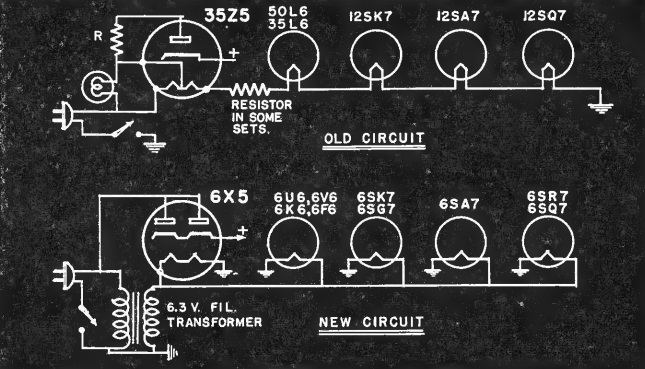
In most areas, the common tubes for “All American Five” receivers had become unobtainium. If a tube went bad, something had to be substituted. The diagram here shows how the serviceman could deal with a shortage of 12SA7 tubes. A 6SA7 might be available, and was identical in all respects other than filament voltage. In these AC-DC sets, the filaments were wired in series, and the filament voltages had to add up to 120 volts. If the 6-volt tube was simply plugged in, the filament would quickly burn out.

The solution is shown above. A resistor (such as a “curtain burner” cord) is placed in series with the filaments, dropping the total voltage in half. The problem, of course, is that the other tubes still required their original voltage. This was solved by pairing up the other tubes, wiring two tubes in parallel, and then putting all of the pairs in series.

Other pointers addressed in the article included making delicate repair of speaker windings and IF coils. In most cases, the break was close to one end, so the patient serviceman could locate it and solder in a new lead. Volume controls were also hard to come by, and the article discussed how to clean and repair them.

The article noted that these kinds of procedures were necessary not just to keep revenue flowing in, but as a public service to keep America’s radios in service to bring in war news and entertainment.


WBOS Boston, 1943: The Truth Shall Make Them Free

1943May17BC75 years ago today, the May 17, 1943, issue of Broadcasting carried this ad by Westinghouse regarding its shortwave outlet, WBOS Boston.

The illustration shows some listeners, presumably clandestine ones, tuned into the station, with the lofty caption that the truth will set them free.

The ad explains that untold millions in occupied Europe might be listening to the short waves bringing them truth, works of hope and promise. Westinghouse had 22 years of shortwave experience, and brought the same crystal-clear and trustworthy programs to domestic audiences on it broadcast stations, WOWO, WGL, WBZ, WBZA, KYW, and KDKA.

More information about WBOS can be found at our earlier post.


SPARS Radioman

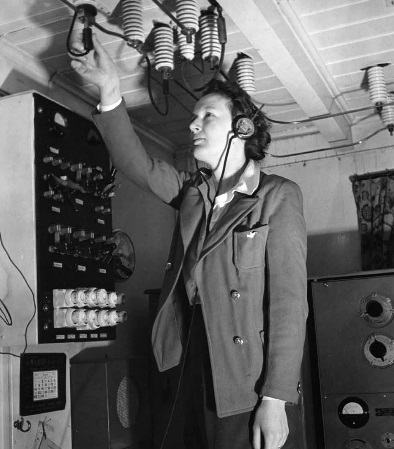
1943AprRadioServiceDealerCover1943AprRadioServiceDealerShown here on the cover of the April 1943 issue of Radio Service Dealer is a SPARS Radioman, a member of the female branch of the Coast Guard. The magazine noted that women were relieving trained radiomen for combat duty, and in the process earning ratings and regular Coast Guard pay and training.

A recruiting ad in the same issue encourages women ages 20-36 to “get into a trim uniform” and put the country one step closer to victory. Those with two years college work and experience were eligible to apply at once for an officer’s commission.