Category Archives: Scouting

1925 Boys’ Life Crystal Set

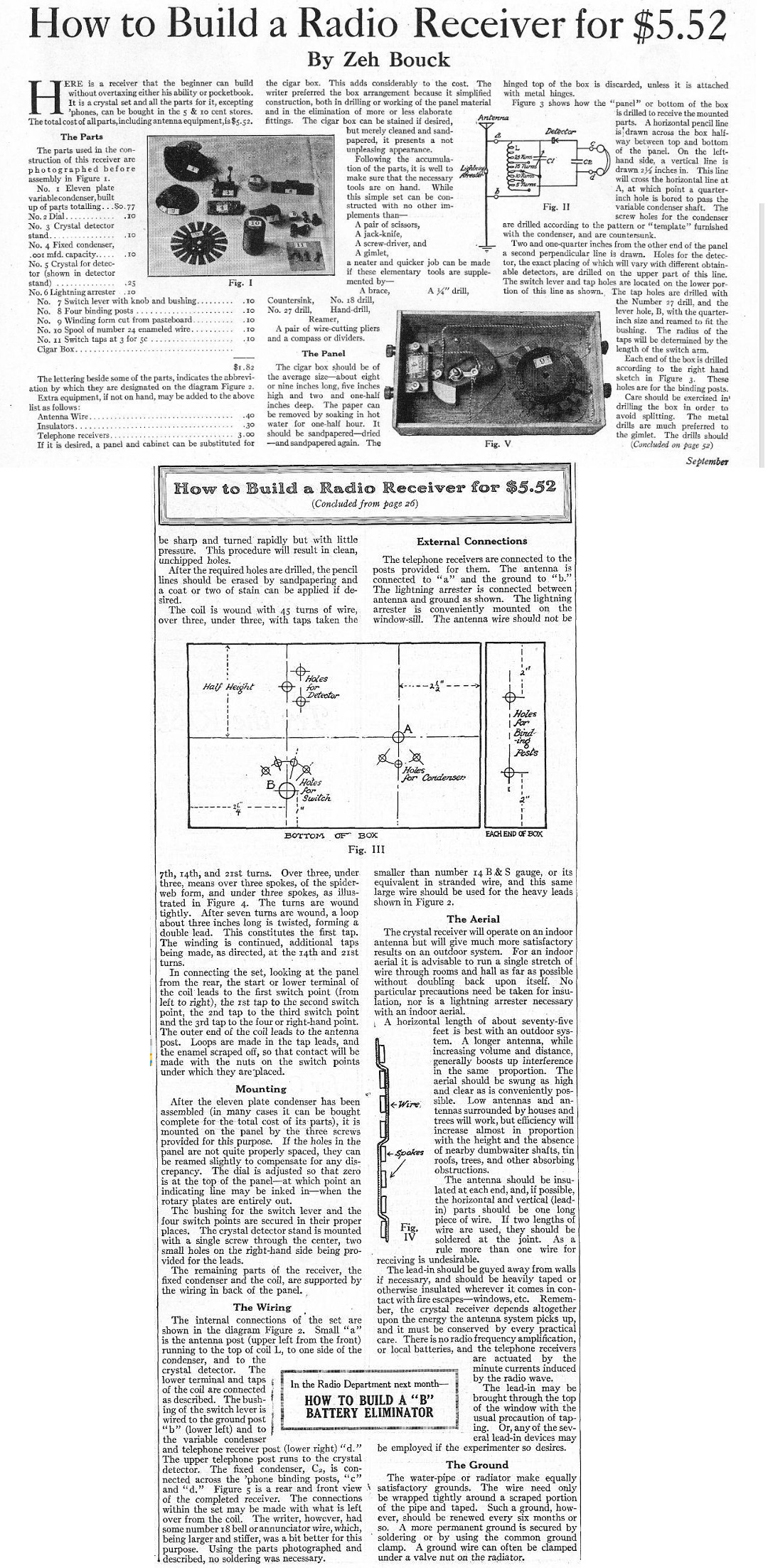
One hundred years ago this month, the September 1925 issue of Boys’ Life showed Scouts how to build this radio receiver for a total outlay of $5.52, including headphone and antenna wire. Of course, that works out to over $100 in 2025 dollars, so the Scout would have to be thrifty and save up his money.

While an indoor antenna might work, for best results, an outdoor antenna of 75 feet was called for. The article was penned by Zeh Bouck, who regularly wrote radio articles for the magazine.

The full plans appear here.  You can click on the image below for the full-size version.


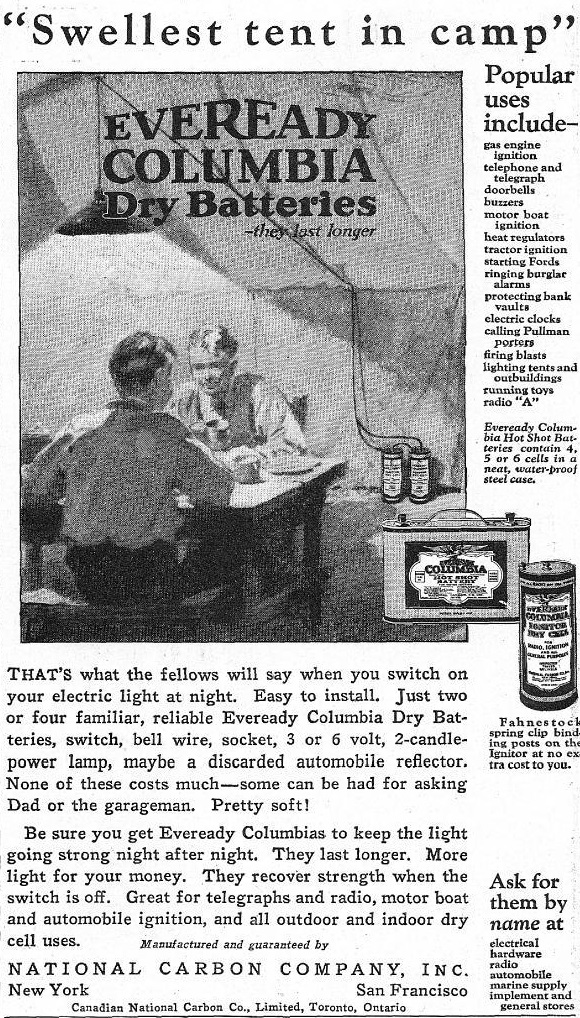
Swellest Tent in Camp: 1925

One hundred years ago, these young men had the swellest tent in camp, that’s to a little bit of ingenuity and some Eveready dry cells.  In addition to the batteries, they just needed a little bit of wire, a switch, a socket, a bulb, and maybe a discarded reflector from a car.

They kept giving reliable light, night after night, and that was swell.  The ad appeared in the August 1925 issue of Boys’ Life.


1945 Scouting

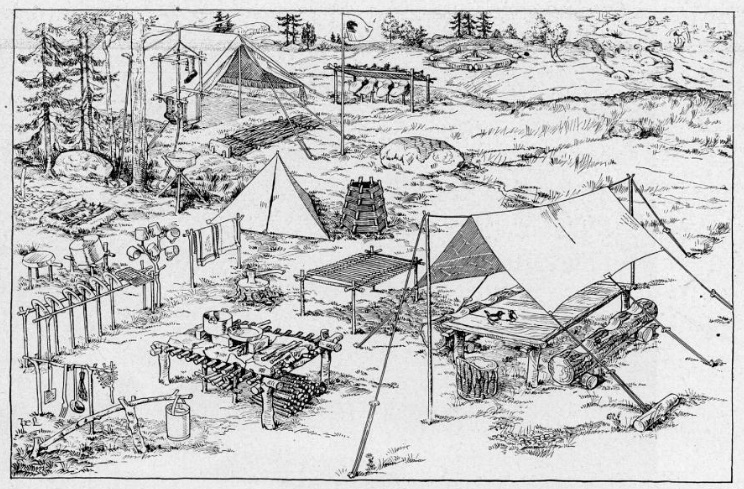
In his column in the July 1945 issue of Boys’ Life, William “Green Bar Bill” Hillcourt offers this illustration of some rustic features and camp gadgets that a scout could use to make himself comfortable in camp. The illustration originally appeared in the Swedish Scout magazine Scouten.


1955 GE Portable

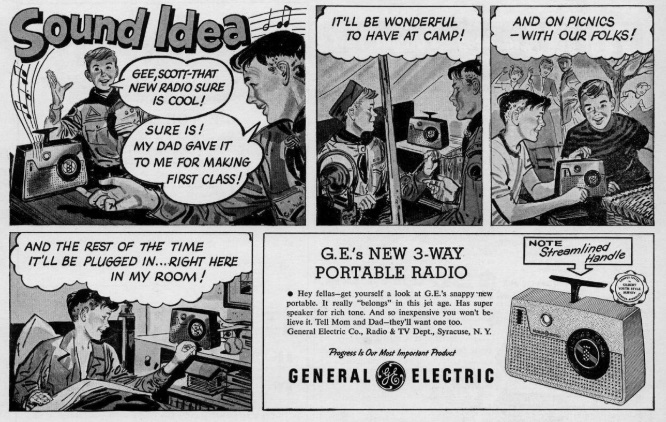
1955MayBLSeventy years ago, this scout, named Scott, had just received his very own portable radio, a gift from his father after earning First Class. It’s the envy of his friend, and Scott recounts how he can listen at camp, on family picnics, or plugged in in his room. The set had three-way power, meaning that it could run on AC, DC, or from the battery.

We don’t recognize the model, but perhaps one of our readers can enlighten us. The ad appeared in the May 1955 issue of Boys’ Life.


1940: Learning Code for Scouts

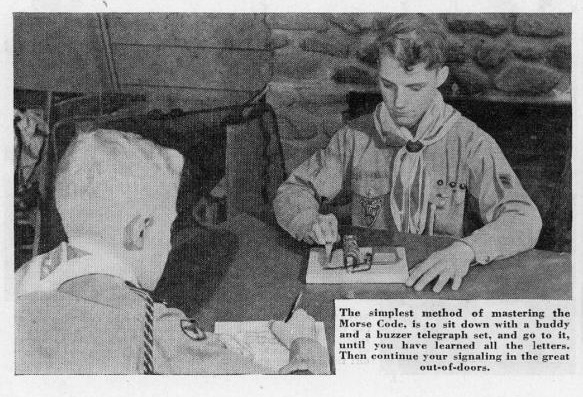
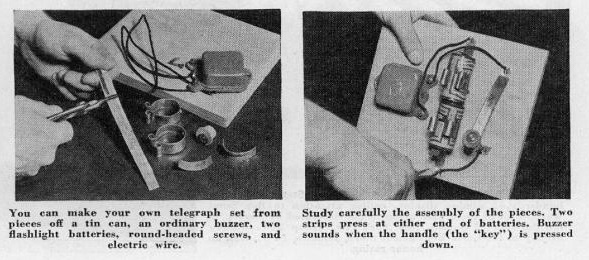
1940AprBLEighty-five years ago this month, the April 1940 issue of Boys’ Life contained some pointers from William “Green Bar Bill” Hillcourt for Scouts to learn the Morse Code, which was then a requirement for First Class.  The best way was to sit down with a buddy and learn the letters with a buzzer telegraph set, and the simple instructions for making such an instrument are shown below.  Then, you could continue your signaling in the great out-of-doors.

1940AprBL2


Telling Directions with the Sun

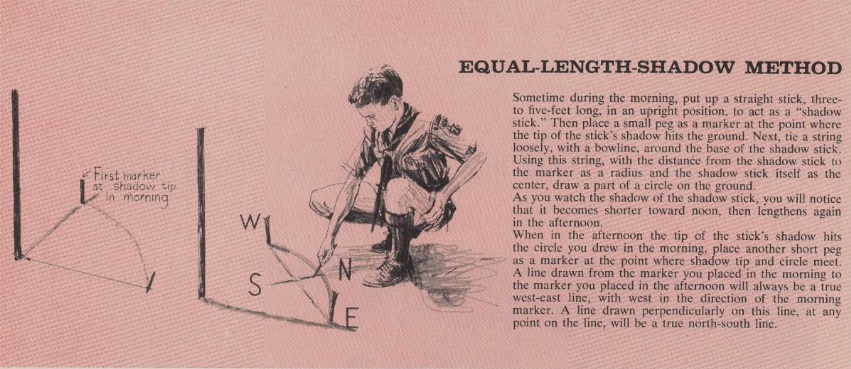
1965MarBLSixty years ago this month, the March 1966 issue of Boys’ Life carried a feature by William “Green Bar Bill” Hillcourt showing a number of methods to determine the points of the compass. The method shown above, if you had the time, was exact.

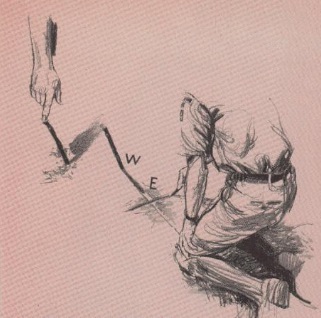
1965MarBL2A faster but less accurate method was shown at the left. You place a straight stick in the ground so that it casts no shadow. You wait, and the inevitable shadow will be pointing approximately west. How close the method worked depended on how close you were to noon, and how close you were to the equinoxes.


Scouts Build Radio, 1925

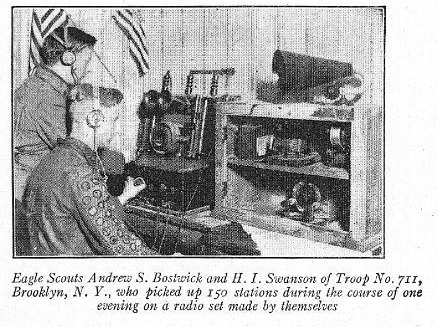
1925MarBLOne hundred years ago this month, the March 1925 issue of Boys’ Life showed Eagle Scouts Andrew S. Bostwick and H.I. Swanson, both of Troop 711, Brooklyn, at the controls of the radio they had built.  The magazine reported that they picked up 150 stations during the course of one evening.

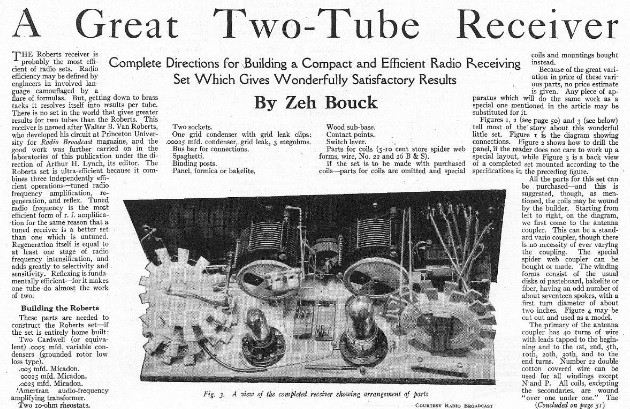
Perhaps the duo inspired some scouts to build the two-tube receiver described in the same issue of the magazine:

1925MarBL2


1925 Emergency Foot Bridge

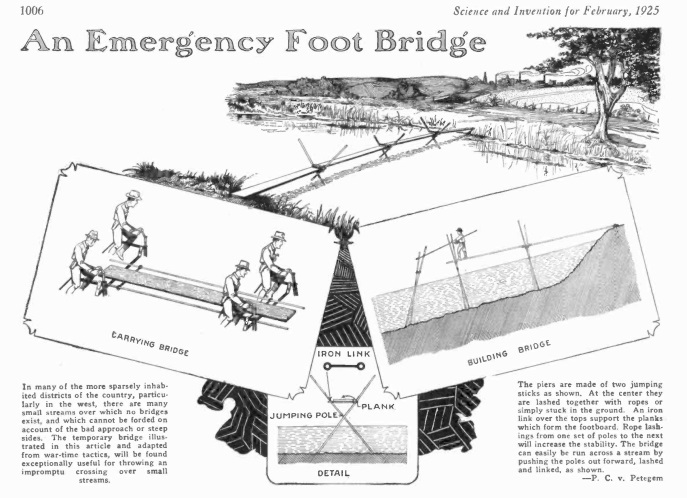
1925FebSciInvBridgeA hundred years ago this month, the February 1925 issue of Science and Invention gave these self-explanatory plans for constructing an emergency foot bridge. It had the advantage of being able to use it as you constructed it, since you pushed each new section into place.

Each support was a pair of jumping poles. You would form them into an “X” shape, and then push them out ahead. Perhaps some student will be inspired to turn this into a science fair project. Or perhaps a scout looking for a good pioneering project might be inspired. (If the water below is deeper than ankle-deep, then the current Guide to Safe Scouting calls for participants to wear a life jacket.)


Some links on this site are affiliate links, meaning that this site earns a small commission if you make a purchase after using the link.

1924 Visual Signaling

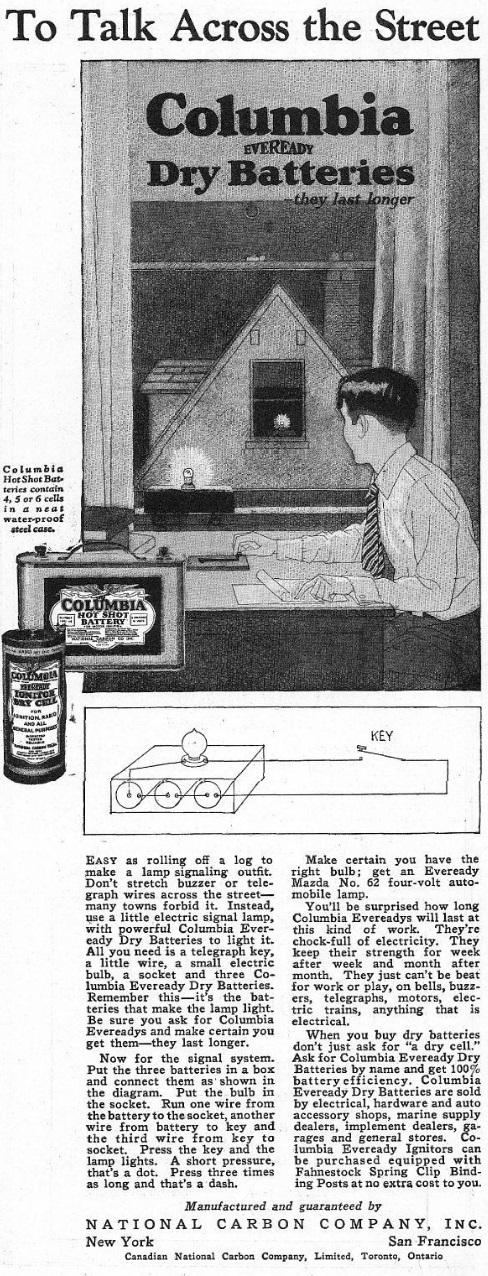
1924NovBLLast month, we showed how young men a hundred years ago could set up a telegraph system to communicate with a friend down the street, using, of course, Eveready batteries. But what if the friend lived across the street?  According to this ad in the November 1924 issue of Boys’ Life, running a wire across the street might not be possible, since many towns forbade it.  But there was still a solution in the form of this lamp signaling outfit.  With three Eveready dry cells, and a four-volt Eveready automotive lamp, your friend across the street could easily copy your code visually.

Of course, before taking the key, it was best to put on a tie.


Some links on this site are affiliate links, meaning that this site earns a small commission if you make a purchase after using the link.

1924 Boys’ Telegraph

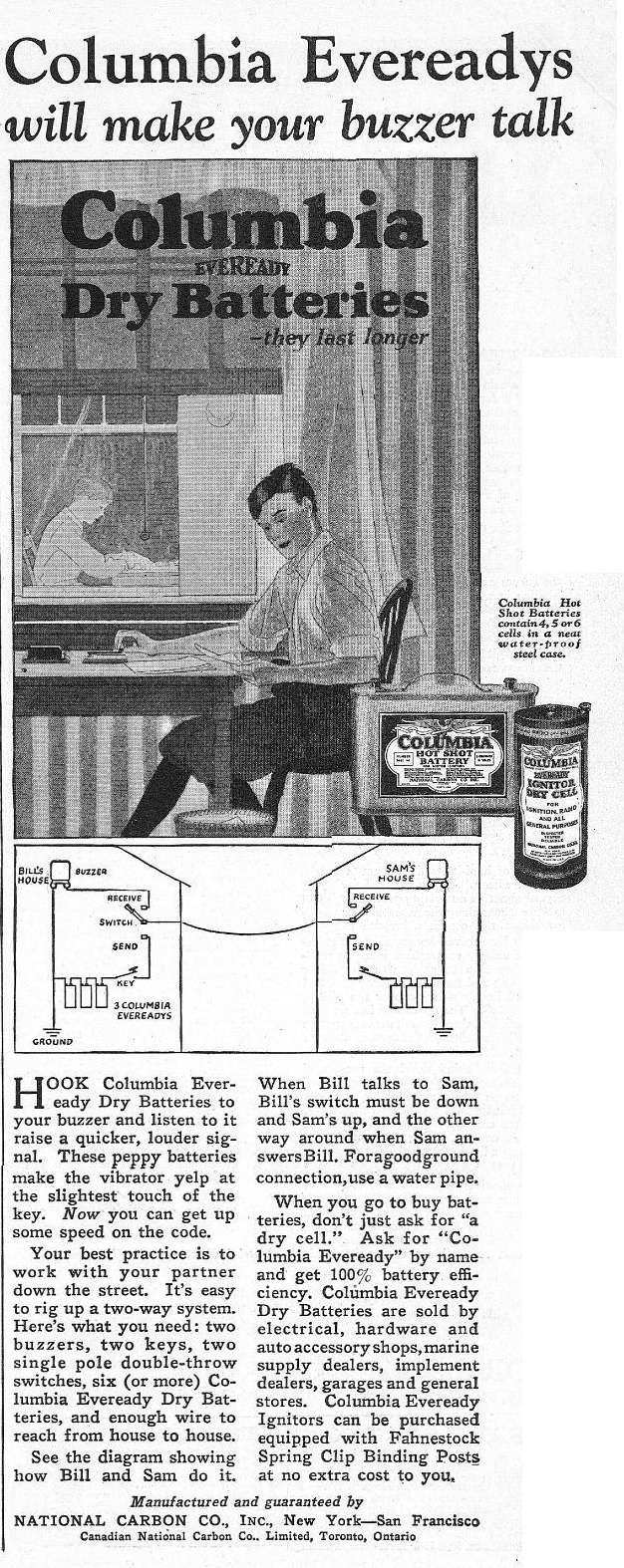
1924OctBLA hundred years ago, these young men (Bill and Sam) kept in touch and built up their code speed with this telegraph system linking their houses. All they needed was two buzzers, two keys, two switches, and enough wire to connect their houses down the street. And, of course, they needed some batteries, but this ad warned them not to just walk into the store and ask for a dry cell. Instead, they were to ask for Columbia Eveready by name. Those peppy batteries made the buzzer yelp at the slightest touch of the key, allowing them to quickly build up their speed. And for easy connections, you could get the batteries with Fahnestock clips.

The ad appeared in the October 1924 issue of Boys’ Life.