Category Archives: Scouting

Merry Christmas Hans: 1939

Dec1939BL

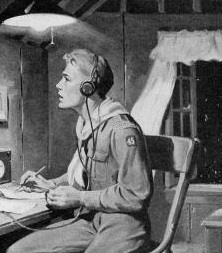
The December 1939 issue of Boys’ Life magazine carries an interesting short story, “Merry Christmas Hans” by Philip Lightfoot Scruggs. It’s full of technical inaccuracies, the author’s unfamiliarity with Amateur Radio, and even countless FCC rule violations. But it’s an interesting look at how Amateur Radio was viewed 75 years ago, and it pretty conclusively puts to rest the assertion that the Boy Scouts are somehow designed to militarize boys.

The hero of the story is Dave Smith, W2KSM. (It looks like the call was really in use, as shown by what looks like a Sweepstakes entry in this 1938 QST. And it was held in 1954 by one Howard M. Ames Jr.)

Young W2KSM, a 17-year-old Eagle Scout, decided to get on the air on Christmas Eve to wish a Merry Christmas to his DX friends in France, England, Belgium, or Holland. Much to his surprise, he heard the voice of Hans Schuler in Germany, where Amateur Radio was not allowed. (Amateur Radio actually did exist in Germany, and even continued somewhat during the war. Germany was one of the few belligerent countries where there were still a few hams on the air, even during the war. For more information, see my earlier post.) The story contains an editor’s note pointing out that the story was written before war was declared. Dave asked Hans what would happen if he was caught, and Hans replied, “the concentration camp at least.”

Still, the two continue their conversation, as Dave tells of freedom, and Hans tells of the repression in Germany, and even explains how he can quickly dismantle the station and antenna if the Gestapo got too close. Another Scout in New York City just happens to be listening to the contact, and alerts his father, a network executive, who spontaneously decides to broadcast the contact nationwide where millions, including Dave’s parents, listen to the boys talk.

Dave tells about Boy Scouts, and Hans tells of his experience preparing for war in the Hitler Youth. Dave concludes the contact by reciting the Scout Oath and Law, “that is our Scout Oath and Law, Hans–what we try to live by,” as Hans prepares to hastily disassemble his clandestine set.

Dave walks downstairs wondering whether his family will believe it, only to hear the end of the broadcast in which he and Hans had a starring role.


Click Here For Today’s Ripley’s Believe It Or Not Cartoon


1914 Boy Scout Human Cannonball

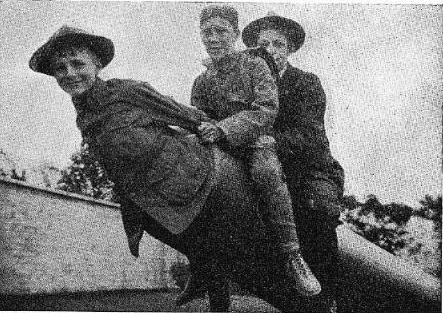
ScoutHumanCanonballI don’t believe that “human cannonball” is currently an approved activity in the BSA Guide to Safe Scouting.  But a hundred years ago, these Scouts were apparently preparing to shoot one of their number (or at least pretending to) from a cannon at Fort Independence, Massachusetts.  The photo appeared in the December 1914 issue of Boys’ Life.


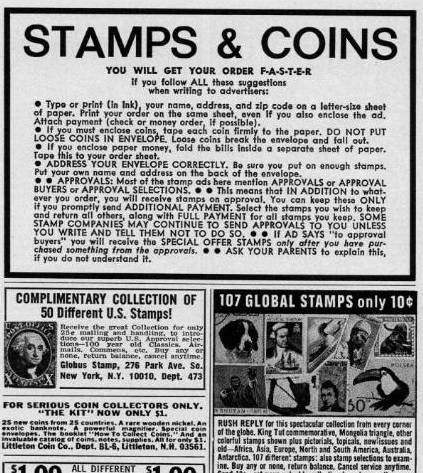
ASK YOUR PARENTS to explain this, if you do not understand it.

StampsAndCoinsI suspect many aspiring young philatelists and numismatists got their start as I did on the pages of Boys’ Life Magazine. This clip comes from the November 1974 issue. I earned my first merit badge, Coin Collecting, about this time, and I’m sure I carefully examined this page when it came out. I was a good customer of many of those advertisers, including the Littleton Coin Company, the Littleton Stamp Company, and the Mystic Stamp Company. It turns out that those companies are very much still in business, but Littleton acquired Mystic along the way. Today, coins are sold under the Littleton name, and stamps are sold under the Mystic name.  The Littleton Coin ad shown here notes that it is for serious coin collectors only, and I certainly fit that description.

I still have many of those treasures tucked away, such as the Hong Kong One Cent Note, and the Japanese Invasion Currency.  (Although it wasn’t until many years later that I learned that the money was never intended for Hawaii, as I think I was led to believe.  It turns out the notes denominated in dollars and cents were actually used in Malaya.)

As was customary, most of these companies sold “on approval.” An offer was advertised at a very reasonable price, and the buyer also received “approvals,” meaning additional coins or stamps that had to be either paid for or sent back. This was undoubtedly the source of great confusion by many young scouts, so each issue of Boys’ Life carried the explanation shown here. In case the explanation wasn’t understood, it concluded with the admonition: “ASK YOUR PARENTS to explain this, if you do not understand it.”

Interestingly, this issue’s cover story is a feature about a sports hero named O.J. Simpson. It details the inspiring story of how he managed (up to that point) to avoid a life in crime, and concludes, “when he still asks, ‘tell me what You want me to do,’ you feel that he already knows the answer and now is searching only for the means.”


Click Here For Today’s Ripley’s Believe It Or Not Cartoon


Eagle Scouts, Class of 1944

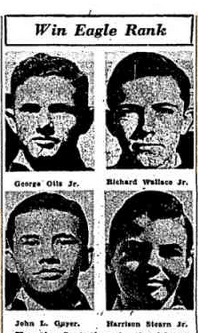
1944EaglesSeventy years ago today, November 19, 1944, these four young men were featured in the Chicago Tribune after having become Eagle Scouts.  For the first time in the history of their community, five Scouts had become Eagle at the same time.

The Scouts were John L. Guyer, George L. Otis Jr., Harrison C. Stearn Jr., Richard Wallace Jr., and John H. Hafner.  Mr. Hafner, who was a student at a military academy at the time, was not pictured.

If you know one of these Scouts, or you are one of them, I would love to hear from you about your reminiscences about Scouting and your experiences over the years.  You can contact me at clem.law@usa.net.


Radio Detector for a Dime

10centdetector

Radio and Boy Scouting share a long history, and in the early days of Scouting, radio played an important role. The October 1914 issue of Boys’ Life magazine shows this detector, guaranteed to bring in stations from 100 to 500 miles away, for only a dime.  All that was needed was a telephone receiver and a wire on the roof.  Even though this seemingly arcane piece of technology (consisting mostly of a lump of galena) would set the aspiring young wireless enthusiast back only a dime, he would probably find that the more familiar telephone receiver would be harder to come by.  But that too was available, for fifty cents.  But for sixty cents, the scout would have a radio that would pull in a strong signal.


1914 Kite Parachute

ParachuteKite


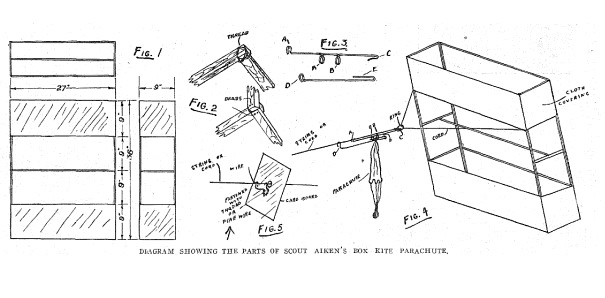
A hundred years ago, the September 1914 issue of Boys’ Life included these plans for constructing a box kite which would release a parachute.  After the kite was aloft, a small runner was released and was blown up the string by the wind.  When it got to the top, the parachute would release.


A 1950-Era One Tube Radio

DSCN2358

Photo, WS1K

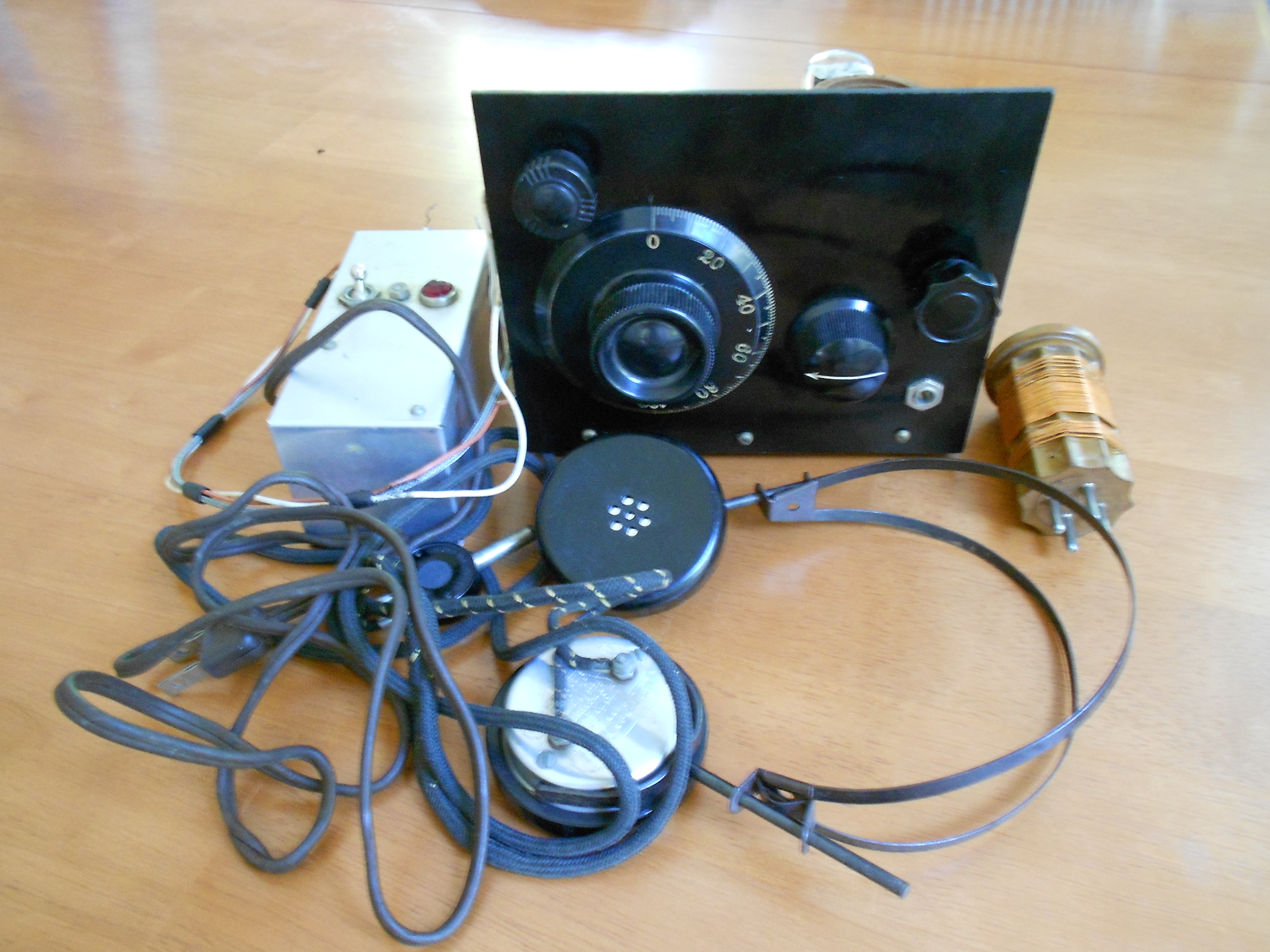
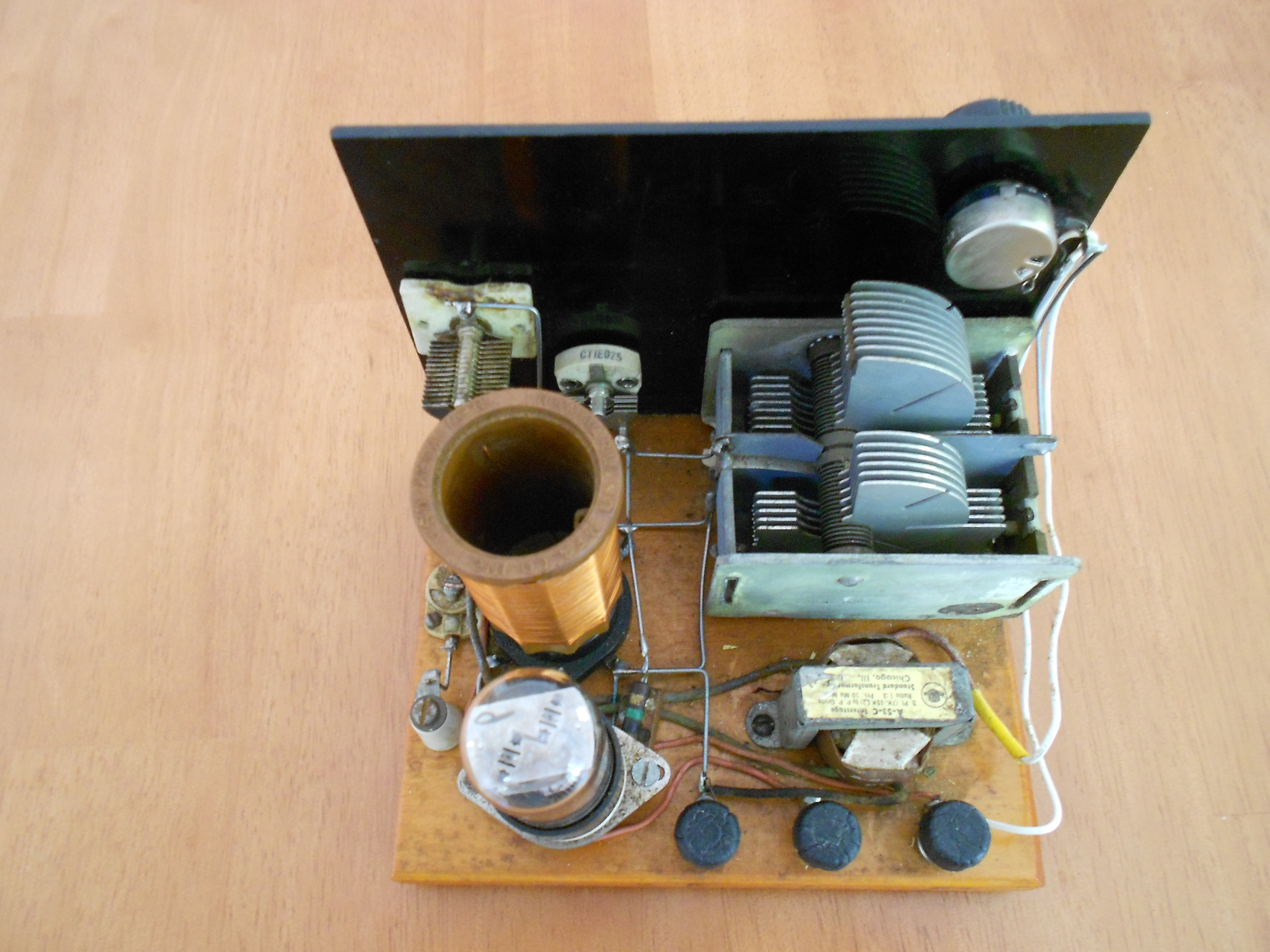
Jon, WS1K, sent me these pictures of a very nice find: A regenerative receiver that he found under a dealer’s table at an antique show in Brimfield, MA. He originally thought it was the receiver from the 1950 ARRL handbook, but after finding this site, he realized that it was closer to the Boys’ Life set that I wrote about earlier.

Photo, WS1K.

Photo, WS1K.

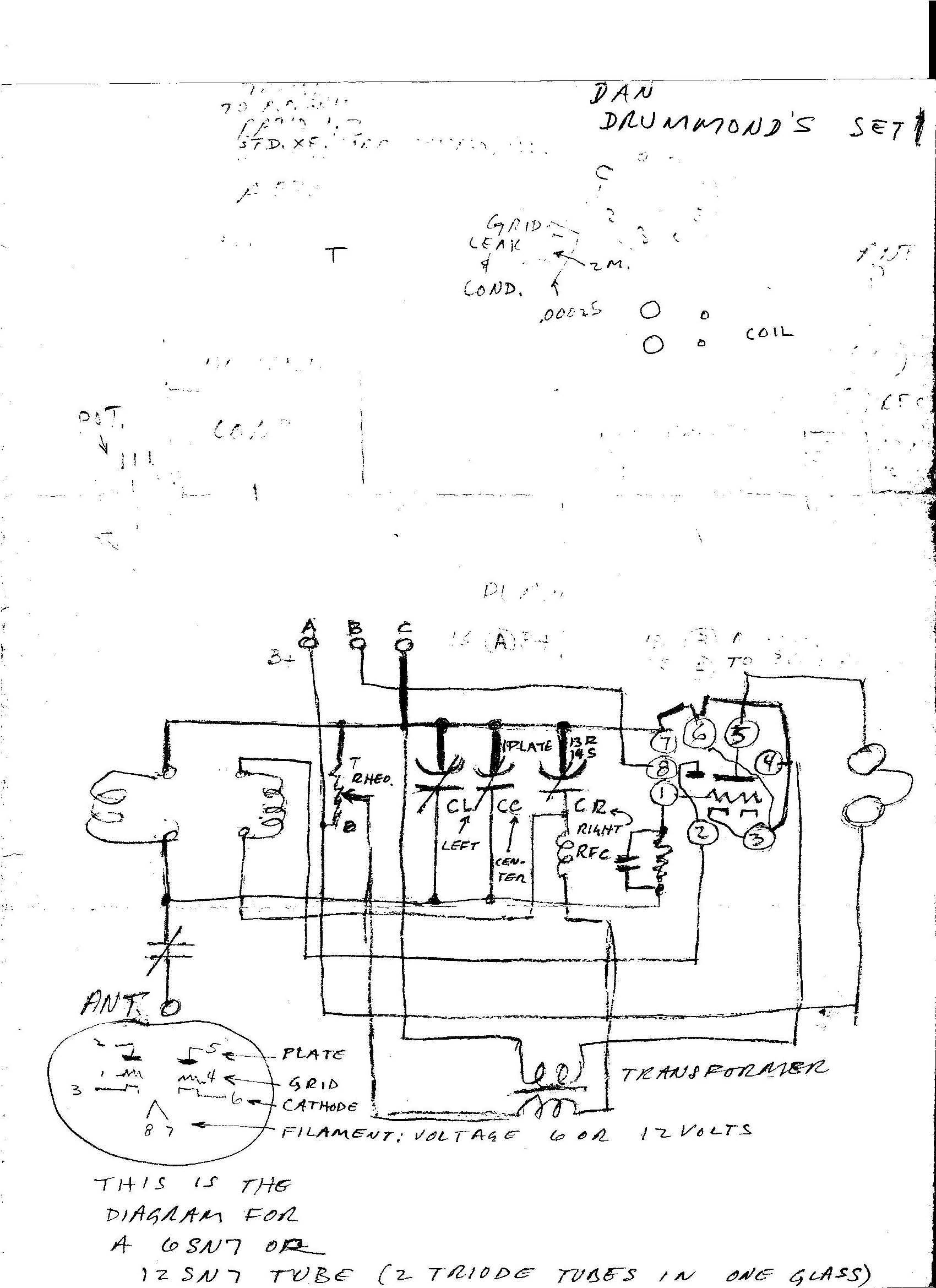
Pictures of his receiver are shown here. In addition to the receiver, he got the AC power supply to replace the A and B batteries. It also came with a schematic diagram, which is shown here:

regen3

From the way this schematic is drawn, it looks like whoever drew it copied it from the actual constructed radio, rather than vice versa. This circuit is very similar to the 1950 Boys’ Life set, but there are a few variations. For example, the component layout is different (it’s basically a mirror image of the BL set). It also has plug-in coils rather than the fixed coil in the BL set. (Jon believes the coils are for the broadcast band and about 5-6 MHz.)

Unlike the Handbook version, this set uses a transformer to couple the two stages, just like the BL version. It does have a few minor differences, however. For example, the BL version uses only two of the terminals on the regeneration control. Jon’s version uses all three. Both circuits have the cathodes of the tube hooked to one filament pin. However, the BL version calls for the connection to be made to pin 8, whereas Jon’s version calls for the connection to be made to pin 7. There’s no electrical difference, but the use of the different pin indicates that the builder probably wasn’t using the BL schematic. Jon’s version also has another variable capacitor, presumably for fine tuning.

As you can see in the schematic, the hand-drawn diagram of Jon’s set is entitled, “Dan Drummond’s Set.” Despite a little bit of sleuthing, neither of us was able to figure out who Dan Drummond was.


1934 Scout’s One Tube Radio

1934SeptRadioNews

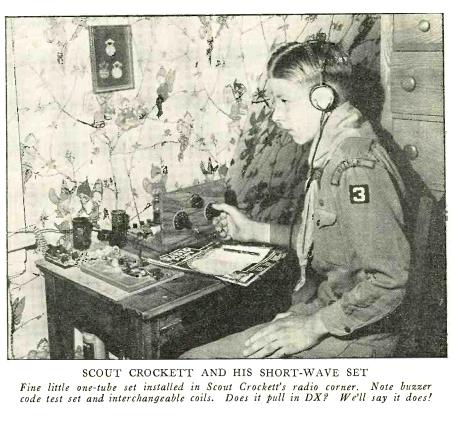
Shown here in the September 1934 issue of Radio News is Scout Robert Crockett of Troop 3 of the BSA Siwanoy Council, Pelham, New York. He is shown operating the receiver that he designed and built, based upon a design in an earlier issue of the magazine. His circuit uses a single type 30 tube and a handful of other components, all of which can be obtained fairly easily today. For ideas on sourcing the components, you can visit my page describing another 1930’s era receiver or my crystal set parts page.  Full construction details are included in the 1934 article.

The author of the article was Robert’s “Scout Radio Examiner,” which presumably means Radio Merit Badge Counselor. According to this 1935 newspaper, Robert did go on to complete the Radio Merit Badge.  The magazine article concludes by pointing out that as his daily Good Turn, the Scout would be glad to help anyone building the set with their problems, and that such letters can be sent in care of the magazine. The article notes that he had logged over 300 shortwave stations with the set.

According to the National Eagle Scout Association database, Mr. Crockett became an Eagle Scout on February 24, 1937. And according to this newspaper and this one, he was serving in the military in 1943 and 1944. According to his sister’s 1943 obituary, his service was as an Ensign in the U.S. Naval Reserve.


Will U. S. Boy Scouts Be Used As Soldiers? A 1914 View

It’s not infrequent that some misguided person believes that Scouting has some sort of military connection, and that Boy Scouts are being trained to be soldiers. Of course, Boy Scouts are being trained to be soldiers. But they’re also being trained to be engineers or doctors or lawyers.

There are a handful of superficial similarities between Boy Scouts and soldiers. Boy Scouts salute, and soldiers salute. Unlike soldiers, Boy Scouts don’t salute one another. All the time I was a Boy Scout, the only thing I ever saluted was the flag.

And just like soldiers, Boy Scouts wear uniforms. Of course, never mind that postal workers, janitors, mechanics, and those of countless other occupations also wear uniforms. In some people’s minds, Boy Scouts look just like young soldiers, even though more of them probably go on to work for the Post Office or other uniformed services.

This misconception is apparently not new. The following editorial, originally from the Tacoma Labor Advocate, appeared in the Tacoma Times a hundred years ago, on August 31, 1914:

BOY SCOUTS ARE SOLDIERS

The Boy Scout movement has been opposed by members of union labor in almost all countries where it has been organized. Labor has claimed that this was simply being done to augment the army and navy and that in time of industrial strife the boy scouts would be used as soldiers wherever and whenever boys could be used. This has been denied, directly and directly, by many who were and are working for the boy scout movement. Now come dispatches to the effect that the boy scouts of some of the foreign countries are being used as soldiers in the war. Is it not plain that the same course will be taken here in the United States, that these boys will be used as soldiers whenever they can be to the advantage of those who profit by the use of the army or navy? Do not be fooled any longer, Mr. Working Man and Woman. The boy scout is merely one branch of the military forces of the country. They are simply being trained as soldiers by those who profit by the soldiery.


Elwood Hannsman: Boy Scout, Inventor, Lawyer

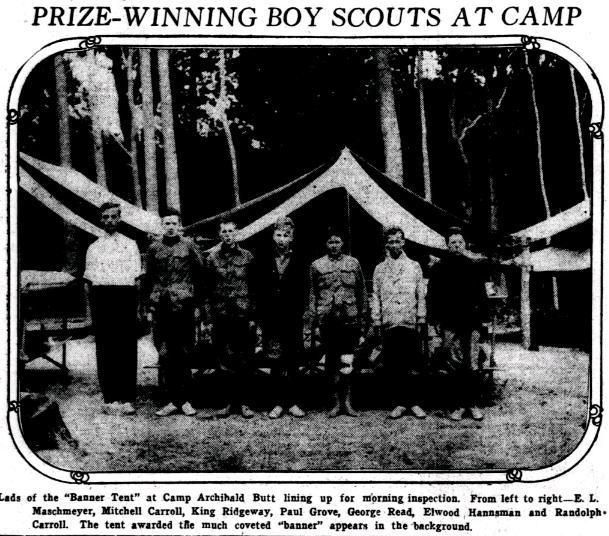
WashTimes23Aug1914A hundred years ago today, the Washington Times of August 23, 1914, shows these scouts at Camp Archibald Butt, a camp operated by the Baltimore and Washington councils of the BSA between 1914 and 1916.

The scouts are identified as E.L. Maschmeyer, Mitchell Carroll, King Ridgeway, Paul Grove, George Read, Elwood Hannsman, and Randolph Carroll.

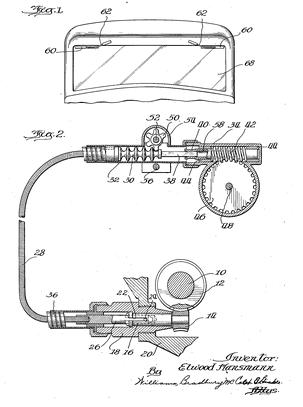
windshieldcleanerThe scout second to the right is presumably the same Elwood Hannsman who went on in 1936 to secure U.S. Patent No. 2031830 for the windshield cleaner shown here. Mr. Hannsman was also issued U.S. Patents 2268072 for a direct reading gauge (1941) and 2100188 (1937) for another windshield cleaner. The assignee of all three patents was the Stewart-Warner Corporation of Chicago, which was presumably Mr. Hannsman’s employer.

And at some point, it would appear that Stewart-Warner sent Mr. Hannsman to law school, since he is listed as one of the attorneys for Stewart-Warner in a number of cases, including
Jiffy Lubricator Co. V. Stewart-Warner Corp., 177 F.2d 360 (4th Cir. 1949).

He was a member of the ABA Section of Patent Trade-Mark and Copyright Law. He was the Chairman of the Patent Sub-Section at the time of his death in 1954.  (ABA Journal, June 1954).