Category Archives: Radio history

Easter 1938

1938EasterOn Easter Sunday 85 years ago, Dr. Norman Vincent Peale preached the sermon at the annual sunrise Easter service at Central Park, New York. He is shown here in the April 23, 1938, issue of Radio Guide.  The service could be heard at 7:00 AM Eastern Time on CBS radio.


1923 Radio Listings

Screenshot 2023-03-29 1.26.42 PM

Screenshot 2023-03-29 1.27.08 PMA hundred years ago today, here’s what you would have heard on the radio in New York and New Jersey. Stations were on the air as early as 11:00 AM, when you could listen to Frau Noemi C. Vetter of Vienna opine about the theater and opera in that city.  Much of the days programming consisted of live music, but at 8:00 PM you could tune in to a talk by Nicholas Thiel Ficker on how to reduce labor turnover in industry.

At 6:15 PM, more distant signals would start rolling in, and you would be able to pull in stations such as KDKA in Pittsburgh, whose Little Symphony Orchestra would be putting on a dinner concert.

This listing was from the Perth Amboy Evening News, April 9, 1923.


1953 Robotic Turtle

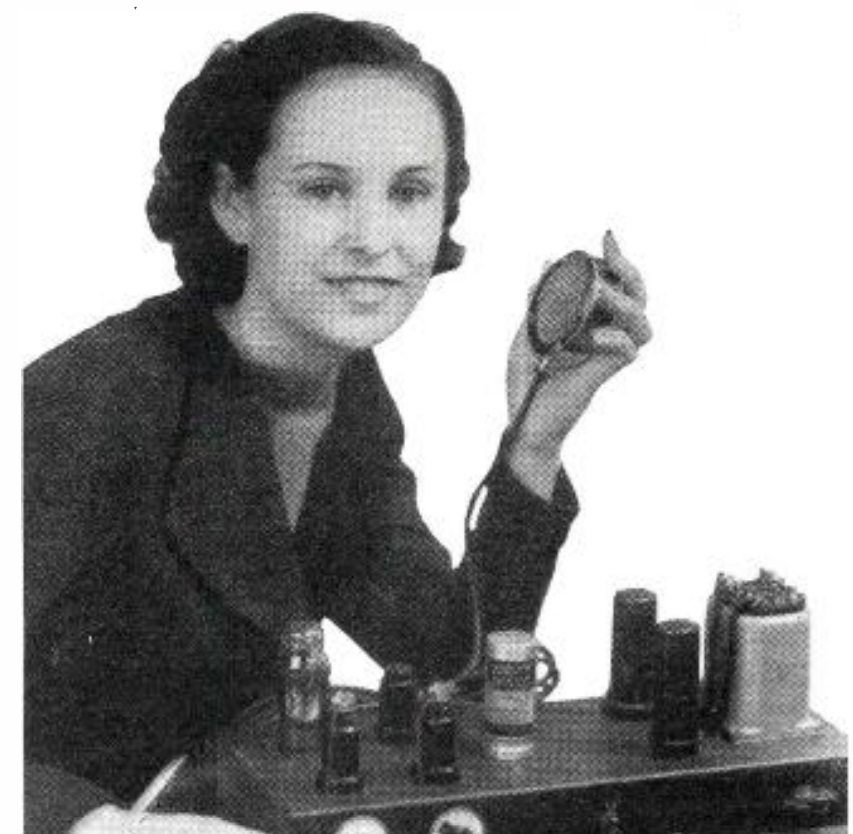
Screenshot 2023-03-22 10.57.13 AMSeventy years ago this month, the April 1953 issue of Radio News shows this young woman playing with her robotic turtle. She looks overjoyed, but we suspect her father, the turtle’s creator and article author Jack Kubanoff, got to play with it more than she did.

The turtle is actually quite sophisticated for its time.  The head (made of a coffee can) contains both eyes(photocell) and tongue (tactile sensor) that allow it to go in search of “food”.  The food is indicated by a flashing light that the robot homes in on.  But the creature has an ability to learn, in that it can determine which sequence of flashing lights leads to the food.  It also has a memory, and can keep heading toward the food, even when the flashing light is behind an obstacle.

The robot has its own entry at the Cybernetic Zoo.  Kids today have more options when it comes to playing with robots.  But the sophisticated models like the ones shown below are direct descendants of pioneers like Timothy the Turtle.


This site uses affiliate links, meaning that this site earns a small commission if you make a purchase after following the link.

1923 One Tube Regenerative Receiver

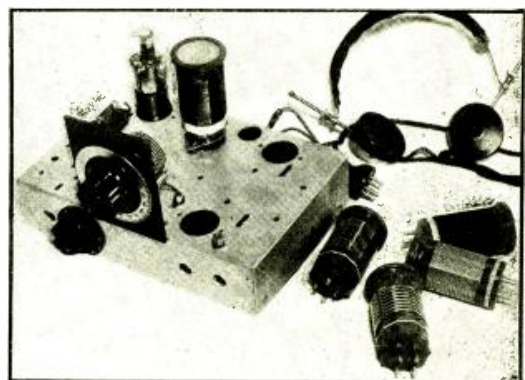
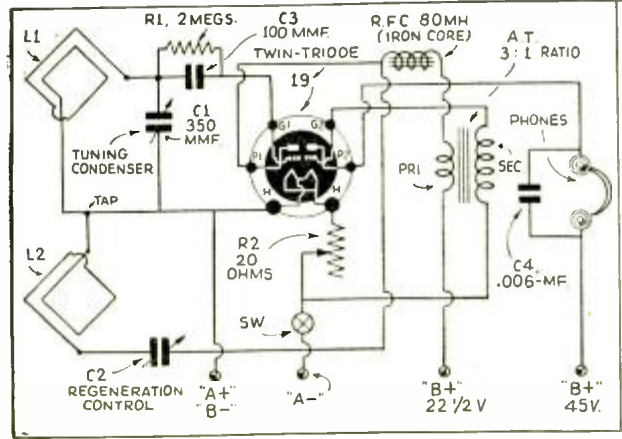
1923AprPS11923AprPS2One hundred years ago this month, the April 1923 issue of Popular Science carried the plans for this one-tube regenerative radio receiver, which was said to be able to pull in concerts from a hundred miles away. The total cost, including headphones, was under twenty dollars. And if the reader already had a crystal set, especially one with a variocoupler, the cost could be further reduced.

And the $20 figure was for store-bought parts. Someone good with tools could make some of the parts themselves, saving even more money. For example, the variocoupler could be home built, as could the condenser and even the tube socket.  The switches shown here are commercially made, but they could also be fabricated at home from brass screws.

Tuning was accomplished with taps on the coil, and regeneration was adjusted by rotating the small coil.

1923AprPS3


1963 Portable Radio in 30 Minutes

1963AprPM1Sixty years ago this month, the April 1963 issue of Popular Mechanics showed how to put together this handsome transistor radio. And miraculously, the magazine proclaimed that you could make it in a half hour, at a cost of less than $25.

The secret was the fact that it included to pre-wired subchasses that you could buy from Lafayette. One of them was the AM tuner module, and the other one was the audio amplifier. It was an easy matter to install both of them in a cabinet (which could also be found in the Lafayette catalog), add a speaker, and wire them together.

1963AprPM2


1953 Six-in-One Project Kit

1953AprPM1953AprPM2The young man shown here is about 80 years old, but he’s shown here in 1953 working with his father on an electronic project using a 6-in-1 kit they constructed themselves, thanks to the plans in the April 1953 issue of Popular Mechanics.

With components mounted on a board, with Fahnestock clips for interconnection and adding additional parts, the kit started out as a simple crystal set, and was then modified to more and more complex receivers. It could also be turned into a code practice oscillator, thanks to the key mounted on the board. It was powered with an isolation transformer, and the article warned to insulate the primary side, and avoid touching any of the connections when the kit was plugged in.

For modern kids wanting the same experience of being able to build multiple electronic circuits, we recommend the kits shown below.


This site uses affiliate links, meaning that this site earns a small commission if you make a purchase after following the link.

1943 Air Raid Tip

1943MarPM1Eighty years ago this month, the March 1943 issue of Popular Mechanics showed this preparedness tip. During an air raid, the first thing you would of course grab would be the radio. This cloth cover fits over the set and contains other items needed during a blackout. As an added bonus, it covered the front and back of the set to keep any light from leaking out.


Eclipse Litigation.

1923 Four-Tube Receiver

Screenshot 2023-02-24 3.06.24 PMThe plans for this handsome instrument were found in the March 1923 issue of Popular Mechanics.  The version shown here contained four tubes, the detector, and three stages of audio amplification to drive the speaker.  Also shown were scaled-down models with one or two stages of audio, for use with headphones.

The set tuned 150-400 meters (750 kHz – 2 MHz) and was said to be a well performing receiver for a reasonable cost.


1953 CD Communications Truck

1953MarRadioNewsThe cover of the March 1953 issue of Radio News showed the new mobile communications unit for Philadelphia’s Civil Defense. According to the magazine, the unit featured complete and flexible facilities for all type of two-way communications, as well as a public adress system. It featured its own 15,000 watt power plant, along with both heating and air conditioning. In addition to police and fire frequencies, the 2, 10, and 75 meter amateur bands could be covered, permitting communications with other cities throughout the United States. And thanks to the Bell System, it included mobile telephone equipment as well as capability of up to 16 phone lines.

1953MarRadioNews2


Hotel Chesterfield, NY, 1953.

HotelChesterfieldIf you were visiting New York 70 years ago, you wouldn’t want to be stuck in a room without a radio. So the Hotel Chesterfield, 130 W. 49th St.,  all rooms with a radio, sounds like a good choice.  A single room was $3 a night, with a double going for $4.  Adjusted for inflation, that works out to $33.80 and $45.07.  I bet you can’t find a room in Manhattan for that price today.

The ad appeared in the Washington Evening Star seventy years ago today, March 24, 1953.  You can read more about the hotel at this link.


Solar eclipse litigation.