Category Archives: Radio history

Scouts Distribute Radios to Blind, 1925

1925ChicagoScouts

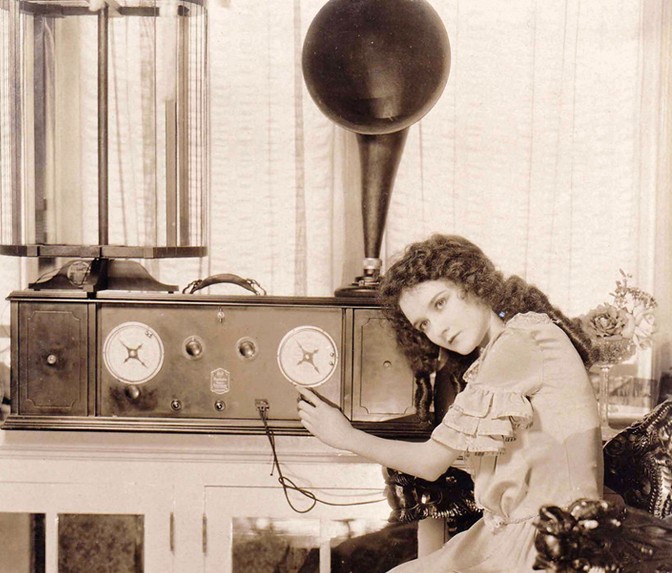
Ninety years ago, Chicago Boy Scouts were busy learning how to hook up and operate the Mohawk radio receiver shown here in this photo from the June 1925 issue of Radio Broadcast.  These scouts had been selected by the Chicago Tribune to distribute the sets to blind persons and instruct the new owners on the sets’ operation.

According to the newspaper’s March 15, 1925, issue, the sets were five-tube models and were distributed to persons whose names were submitted by the Council of Social Agencies.

The set appears to be the Mohawk Model A5, a TRF containing five UX201A tubes.

Click Here For Today’s Ripley’s Believe It Or Not Cartoon


1958 Phoenix Fallout Shelter

w7pyhshelter

The cozy ham shack shown here is actually the fallout shelter of  William A. Rhodes, W7PYH.  (in the 1972 and 1993 call book, his call appears to have changed to W7KLA.) His Phoenix shelter, along with another one in California. appeared in the March 1958 issue of Popular Mechanics.

w7pyhAntennaHe had a well-equipped underground station.  The unit on top is a Heathkit DX-100 transmitter, beneath which sits an HRO Junior receiver.  The presence of the nameplate on the receiver suggests that this was a military surplus version of the HRO.  The station would have covered 160 through 10 meters.  The large unit on the floor appears to be the speaker/power supply for the receiver.  (The other unit on the floor to the right of the radio equipment is apparently a dehumidifier.)  The antenna, shown here, was a vertical mounted on the ventilation pipe, through which power to the shelter ran.

Power was apparently supplied by commercial power, or perhaps a generator mounted above ground.  The shelter’s floor plans, shown below, don’t make any reference to a generator.

Interestingly, the floor plans do show an oxygen cylinder.  While this might have been of limited utility, it is understandable given the owner’s background.

Rhodes was an inventor and founder of Arizona HydroGen Manufacturing, which manufactures an electrolysis unit which generates a mixture of hydrogen and oxygen which is used immediately for purposes such as welding.  The process seems relatively straightforward, and as far as I can tell, Rhodes never made any extraordinary claims as to it.  However, it seems to have received some attention from those who do make extraordinary claims as some sort of free energy source.  Since he was in the business of hydrolyzing, it’s not surprising that the shelter contained a canister of oxygen.

Rhodes seems to have been a prolific inventor in a variety of areas.  Most notably, he was the co-inventor of U.S. Patent 2594740, an electronic light amplifier with applications in astronomy and in television.  Remarkably, Rhodes’ co-inventor was none other than Dr. Lee De Forest, the inventor of the triode vacuum tube.

And Rhodes’ name is also well known in UFO circles, since he photographed a UFO in 1948.

Rhodes died in 2007 at the age of 90.  According to this site, the shelter remained intact as a computer room until his death.

Floor plan of the Rhodes shelter.  Each room is 9 feet in diameter.

Floor plan of the Rhodes shelter. Each room is 9 feet in diameter.


References


Click Here For Today’s Ripley’s Believe It Or Not Cartoon


The Millionth of an Inch Girls: 1943

MillionthOfAnInchGirls

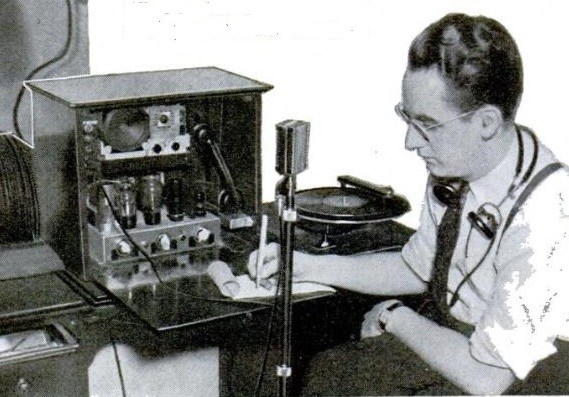
The New York war workers shown here are the “millionth of an inch” girls of Reeves Sound Laboratories. They are etching quartz crystals to set the exact transmitting frequency of the completed crystal.

Prior to World War 2, quartz crystals were not manufactured in large quantities. But wartime needs called for crystals in massive quantities. One of the manufacturers that went to work to fill the need was Reeves Sound Laboratories of New York City. In October 1942, the company procured the equipment and leased a former furniture warehouse at 52 West 47th Street, near Times Square. In the first month of production, the company turned out sixteen crystals. The company had a contract to ship 1600 crystals by the end of December, and actually shipped 2200. By February, it was shipping 8700 per month.

The whole painstaking process of turning raw quartz from Brazil into precisely cut crystals can be seen in the army film in the video below. The purity of the crystal, the angle of the cut, and the exact thickness of the crystal are all critical in determining the crystal’s operating frequency. The “millionth of an inch girls” shown above were the last step in the manufacturing process. They carefully etched the crystal by hand that last millionth of an inch while checking their work with an oscillator showing whether the crystal was on frequency. It was highly skilled, but also highly monotonous, work.

https://www.youtube.com/watch?v=b–FKHCFjOM

References

Read More at Amazon

Click Here For Today’s Ripley’s Believe It Or Not Cartoon


The First CB Transceiver

StonerArticle

In an earlier post, we saw the Heathkit CB-1 CB transceiver.  The CB-1 was actually released before its more famous amateur radio cousins, the Sixer, Twoer, and Tener.  And it turns out that the CB-1 was actually copied from a popular construction article.

Kathi Martin, 1975.

Kathi Martin, 1975.

I was unaware of this until I noticed an item in a 40 year old issue of Elementary Electronics magazine by CB radio editor Kathi Martin, KGK3916.  In her column “Kathi’s CB Carousel” in the May-June 1975 issue, she talked enthusiastically about the FCC’s proposal to establish a “communicator” class of amateur radio license.  The proposal was never adopted by the FCC, but Martin’s enthusiastic embrace of the proposal revealed what most hams believed to be true.  Licenses would be “yours almost for the asking,” and would open up the two meter band to the unwashed code-free masses.  And most tellingly, she admits what most hams already knew:  The FCC proposal for the communicator license, “if read carefully, is CB.”

The proposal never went through, mostly because hams resisted it for exactly that reason.  I’m sure I read her column 40 years ago, and if I did, I’m sure I was outraged by her frankness.

Time must have mellowed me a bit, since reading the article today, it is a good beginner’s look at what two meter FM was like in the 1970’s, and I can understand that CB’ers like Martin would have looked forward to the possibility of migrating from the bedlam that reigned on 11 meters in that era.

But I also noticed a reference that I hadn’t seen before: “If the CB clubs–and individual CB’ers–don’t louse things up with a big mouth [which apparently they did, since the proposal didn’t go through], we CB’ers are going to wind up with the best deal since Don Stoner’s magazine article ‘exposed’ class D CB to the general public–creating a billion-dollar industry.”

Having never heard of Don Stoner or his magazine article, I did some research and found it.  She’s undoubtedly referring to a construction article that appeared in the March 1959 issue of Radio News. (Stoner was licensed as a ham as W6TNS, and was involved in the first OSCAR satellite.)

CB radio took over the former 11 meter ham band (which had only come into being after the war, and was shared with diathermy machines) on September 11, 1958.  None of the major electronics magazines made much fuss about it initially.  It doesn’t seem to be mentioned in Popular Electronics until the March 1959 issue.  That article is a very matter-of-fact look at the new service, and a review of the few pieces of equipment that were then available.  Electronics Illustrated carried a few articles about the new service in the June 1959 issue.  In these articles, Electronics Illustrated went out of its way to stress that CB was not intended as a service for hobbyists nor as any kind of replacement for amateur radio.

Stoner’s article, however, announced the presence of the new bandwagon, and invited everyone to jump aboard.  He enthusiastically starts:

Did you know that now you can build a radiotelephone transceiver and talk on a short-wave band without having to obtain an amateur radio license? The recent FCC decision to open the 11-meter band to Class D Citizens Band operation makes it possible for anyone (except those under 18 and aliens) to own and operate a short-wave transmitting and receiving station.

He then goes on to point out that 11-meter signals “can travel to the far corners of the earth. It is not at all uncommon to hear stations coming in from clear across the country every day during the winter and on most days during the summer.” He even concludes the article by wondering “who will be the first to issue a certificate for ‘Worked All States–Citizens Band (WASCB)?”

Whether or not the FCC intended it, Stoner certainly let the cat out of the bag as to the hobby potential of CB radio.  And in the absence of much commercial equipment, he describes how to construct a 5-tube transceiver which is (with the exception of the power supply) identical to Heathkit’s later CB-1.

Even though the FCC probably didn’t intend it, Stoner was correct in his interpretation of the rules.  Those original rules failed to include a number of provisions that were added in later years.  For example, initially, licensees were allowed to build their own transmitters.  There was no explicit prohibition on hobby use.  And the restriction on maximum distance of communications did not appear in the initial rules.  So Stoner was right, and someone could very well have offered a WAS-CB certificate, and this would have been a perfectly legitimate activity.

Stoner’s design was apparently popular, as evidenced by Heathkit’s wholesale adoption.  In fact, it was so popular that the non-selective superregenerative receiver quickly became useless on the crowded band, and many of the CB-1’s were converted to six or two meters by hams.

(Any hams who are still bitter about the “loss” more than 50 years ago of a ham band that had only been theirs for a little over a decade should take note of one important fact:  Stoner’s transceiver is quite simple.  But it’s probably beyond the construction skills of most hams today.  Yes, the CB’ers of 1959 were probably more technically adept than hams today.)

It appears that Kathi Martin was right in her 1975 column.  The other electronics publications initially took a very cautious view of CB.  But it looks like Stoner’s article really was the one that exposed the unwashed masses to the possibilities of CB.

(The QST announcement of the end of 11 meters for hams can be found in the QST archive.)

Click Here For Today’s Ripley’s Believe It Or Not Cartoon


Art Imitates Life, 1945

CardboardRadio


If the cardboard radio shown here looks vaguely familiar, then you are a faithful follower of this blog. The photo on which this was inspired appeared in Life Magazine on December 11, 1944, and on this blog a few months ago.


The Life photo inspired modern dance students in Westchester County, New York, to compose a ballet based upon the photos in the Life article. This rendition appeared in the same magazine 70 years ago today, May 28, 1945.


Click Here For Today’s Ripley’s Believe It Or Not Cartoon


D-Day Army Radio Link

RadioCraftMay1945

In an earlier post, we looked at a 3-element VHF yagi shown in a historical photo of the Siege of Bastogne in December 1944. It was part of a U.S. Army Signal Corps FM relay which linked the isolated forces to the Army landline telephone network.

A similar setup was used a few months earlier on D-Day, as shown from this diagram in the May 1945 issue of Radio Craft magazine.  The link shown here was operational the second day after the initial Normandy landing and carried facsimile and voice traffic from London to the front. Within a few months, additional stations were added to the network, and the magazine notes that the network thus established covered an area equivalent to that from New York to Chicago and Detroit to Atlanta.

The army primarily relied upon wire communications, but even on the continent, radio links such as these provided an important backup function. On one occasion, the main cable across France had been cut, but nearly 2709 messages were handled during a 24 hour period.

Click Here For Today’s Ripley’s Believe It Or Not Cartoon


1958 Conelrad Monitor

1958PEconelrad

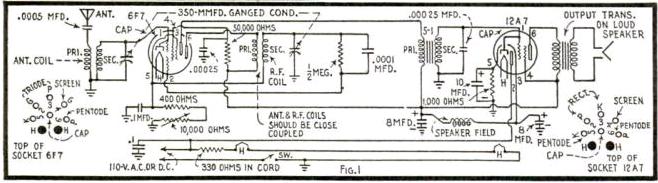
An article in the February 1958 issue of Popular Electronics admonishes that “all of us should use a receiver that warns when the Conelrad alert begins,” and the magazine offered a simple circuit, shown here. The concept was about as simple as possible: The little self-contained receiver monitored continuously. If the carrier of the local station disappeared, then a buzzer would sound.  Since all stations (other than designated stations on 640 and 1240) were required to leave the air during a CONELRAD alert, this would warn the owner of an impending attack.

It would seem that this particular design would be prone to false alarms. Obviously, it would work only with a 24-hour station. Otherwise, when the station signed off each night, the buzzer would sound until morning. And even most 24-hour stations signed off occasionally for transmitter maintenance. These periods often took place early Monday mornings, so someone relying on this receiver would probably get some rude awakenings if the receiver was left on.

And even though the receiver drew minimal current, it would probably go through the three penlight cells quite quickly.

But since hams were then required to monitor Conelrad, the receiver might have served a useful purpose, even though it probably wouldn’t work too well in continuous service.

1958PEconelradSchematicAs can be seen from the circuit here, the CK722 served as detector, and the 2N170 was hooked up to a relay, which would turn off the buzzer when the station left the air. The author, I.C. Chapel, notes that the relay is set to trip at 6 mA. At the conclusion of the article, there is an editor’s note stating that this figure “amazed” them, and concluded that the author must be very close to the broadcast station to get these results with his 10-foot antenna. One editor constructed the unit and tried it about 25 miles from New York City, and none of the stations there was strong enough to make the circuit work. With a more sensitive relay and a 150 foot antenna, though, they were able to get it to work with a 250-watt station 10 miles away.

Click Here For Today’s Ripley’s Believe It Or Not Cartoon


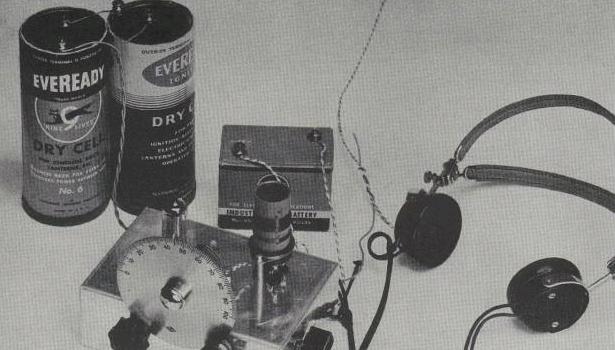
Another 1950 Boys’ Life One Tube Receiver

1950JanBLreceiver

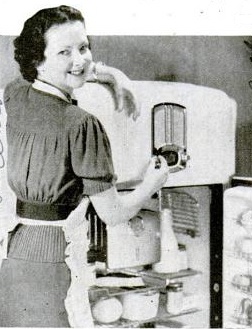
A few months ago, I posted about a one-tube regenerative receiver from the September 1950 issue of Boys’ Life magazine. I was even sent some photos of a very similar receiver discovered by Jon, WS1K. That receiver covered short wave, I’m guessing about 3-6 MHz.

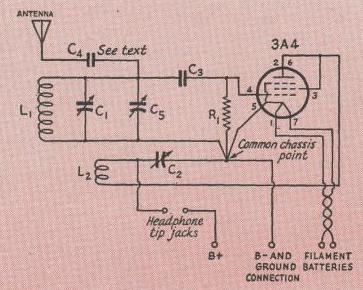
1950JanBLschematicInterestingly, I overlooked this one-tube receiver appearing in the same magazine a few months earlier. In the January 1950 issue of Boys’ Life appeared this one-tube receiver. The article was written by one of the same authors as the September article, Glenn A. Wagner. The January receiver appears to cover the broadcast band, since it calls for a “standard replacement antenna coil” along with a 365 uF variable capacitor. It uses a single 1N5G tube with a 1.5 volt battery for the filament, along with a 45-90 volt B battery. It’s all mounted on a 5×7 pine board.

Click Here For Today’s Ripley’s Believe It Or Not Cartoon


1926 Boys’ Life Crystal Set

1926BLxtalset

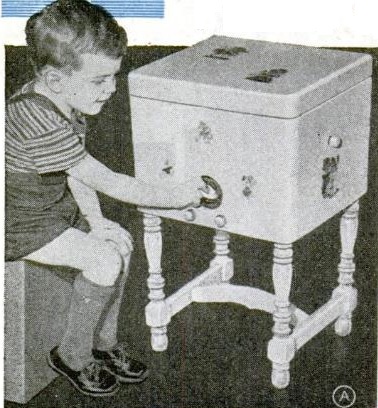
The January 1926 issue of Boys’ Life magazine contains the plans for this simple crystal set. According to the article, the parts would set the Scout back about 80 cents, not counting the headphones, which would cost about $3.00. The parts could be found at “any well-stocked five and ten cent store,” and the receiver was said to pull in stations up to twenty miles.

For those wishing to duplicate this or similar receivers, if your five and ten cent store isn’t sufficiently well stocked, you can get some ideas on locating the parts on my crystal set parts page.

Click Here For Today’s Ripley’s Believe It Or Not Cartoon