Author Archives: clem.law@usa.net

WCCO at 90 Years Old

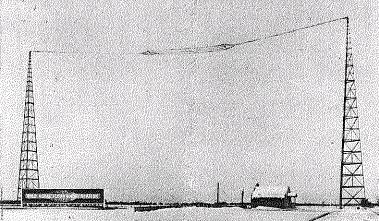
WCCOxmtr1930

WCCO transmitter site near Anoka in 1930. From 1930 station brochure at radiotapes.com

Ninety years ago today (either October 1 or 2, 1924, depending on the source, the call letters WCCO were first heard over the airways. According to Wikipedia, the station came on the air on October 2.  But according to this 1949 station brochure, the actual sign-on date was October 1.
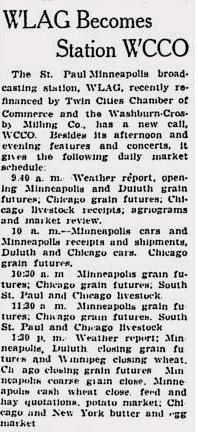
WLAGbecomesWCCOThe new call sign was reported in the radio section of the Milwaukee Journal on October 12.  It reported that WLAG radio had recently been refinanced by the Twin Cities Chamber of Commerce and the Washburn-Crosby Milling Company, and now bore the new call letters WCCO.  The article notes that the station carried the usual afternoon and evening features and concerts, but also noted the schedule of the station’s extensive market reports.

The station originally came on the air in 1922 as WLAG, but closed down in early 1924.  Civic pride demanded that the Twin Cities have a radio station, and a group of investors, primarily the Washburn-Crosby Company (predecessor to General Mills) financed the station, which took the call letters WCCO in honor of its benefactor.

The station originally operated on 720 kilocycles, but in 1928 was granted clear-channel status and moved to 810 kilocycles.  It’s familiar frequency of 8-3-0 is a result of the 1941 North American Radio Broadcasting Agreement, which moved the vast majority of U.S. broadcast stations up the dial slightly to accommodate Mexican clear-channel stations.

References

WCCO history at WCCO website

Historical materials at radiotapes.com

Read More at Amazon
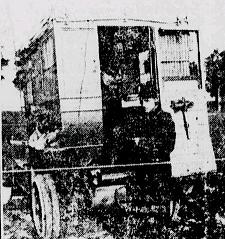


More WW1 Mobile Wireless

WW1RadioCar

French or Belgian army wireless car, 1914.

A hundred years ago today, the October 1, 1914, issue of the Burlington (Vt.) Weekly Free Press carried a feature explaining how the automobile and aeroplane were revolutionizing warfare in the European war. And the article explains how the wireless telegraph was being used in connection with both. It notes that the most advanced practice was found in the use of automobile wireless outfits, which are in wide use by both the Begian and French armies. Those powerful stations had a transmitting radius of 225-250 miles, and were of infinitely more value than pack sets and cart sets, since the conflicting armies were clashing along such far-flung battle lines.

The article notes that the electricity was generated by the motor of the car, and these portable stations “with all the paraphenalia of electrical communication without wires may be speedily whisked from place to place, and as soon as the telescopic mast which is part of the outfit can be extended and erected the operators can go to work sending and receiving messages.”


Giant 1924 Receiver

Giant1924Receiver

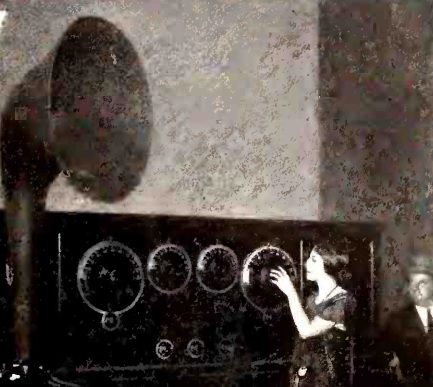
Gertrude Belville is shown here in the November, 1924, issue of Radio Age tuning this giant radio set at the New York Radio World’s Fair. She reports that the volume of the set could be heard for miles around.


We Take You to London: 1939


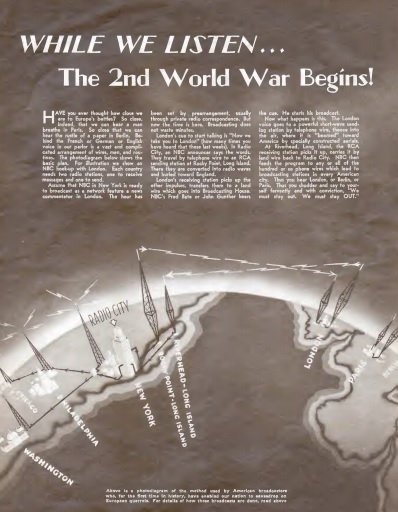
RadioGuide092939Seventy-five years ago, American radio listeners were frequently hearing the phrases, “we take you to London,” “we take you to Paris,” and “we take you to Berlin,” as Americans learned how close they were to Europe’s troubles. As this item from Radio Guide for the week ending September 29, 1939, points out, we were close enough to hear a man breathe in Paris or the rustle of a paper in Berlin.

The diagram shows the example of how NBC would connect to its correspondents in London, Fred Bate or John Gunther. From NBC’s New York studios, the cue would go via telephone to the RCA short wave transmitter at Rocky Point, Long Island. The signal would be picked up by an English receiving station and sent by telephone to Broadcasting House in London. The English broadcast would go by telephone to the English short wave transmitter and picked up by the RCA receiving station at Riverhead, Long Island. From there, the signal would go back to NBC’s Radio City studios for retransmission to the network.

The process concludes when the American listener picks up the broadcase and says to himself “fervently and with conviction,” and alas, in vain, “We must stay out. We must stay OUT.”


1914 Kite Parachute

ParachuteKite


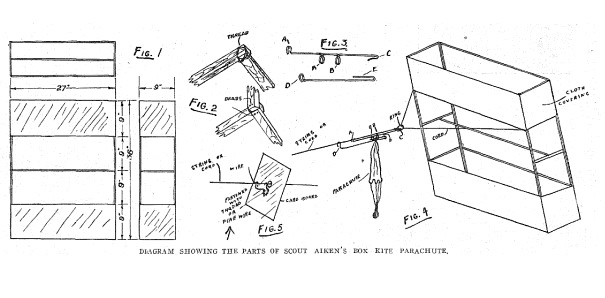
A hundred years ago, the September 1914 issue of Boys’ Life included these plans for constructing a box kite which would release a parachute.  After the kite was aloft, a small runner was released and was blown up the string by the wind.  When it got to the top, the parachute would release.


Bombing of Paris, 1914

ParisBombs

A hundred years ago today, German zeppelins bombed Paris, Warsaw, and other cities.  The map above, from the September 28, 1914 issue of the New York Sun, shows the locations of the Paris bombs, near the Eiffel Tower.  In Paris, three were killed by bombs, one of which landed at a spot the American ambassador had passed only minutes earlier.

In Calais, bombs were dropped but failed to explode.  And the Poles managed to shoot down the zeppelin bombing Warsaw, taking the crew prisoners.

See also:  Fall of Paris, 1940


Night Watch Bear, 1914

BearWatchman

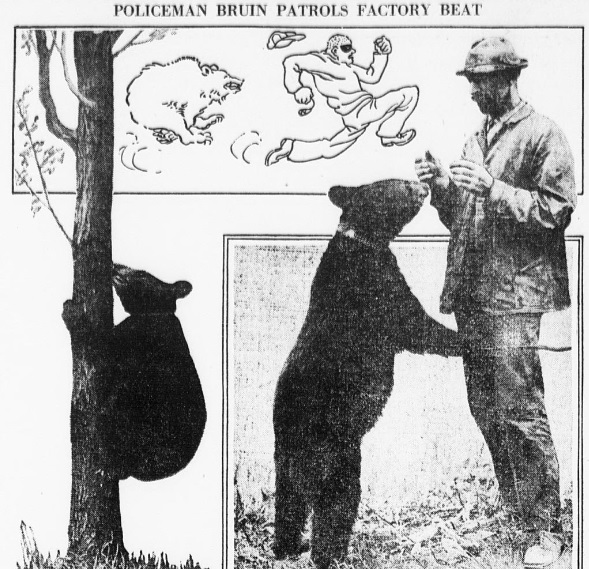
We recently read about a troupe of acting bears that visited Indianapolis 150 years ago. Another working bear made the news 100 years ago today, but not as an actor. “Boss,” a bear native to the woods of Maine, made the pages of the Philadelphia Evening Ledger on September 26, 1914. Boss worked as a night watchman in a Pennsylvania distillery. The photograph on the left illustrates his method for treeing an intruder. There is also an artist’s conception of Boss (left) apprehending a suspect (right).


1964 Console Stereo

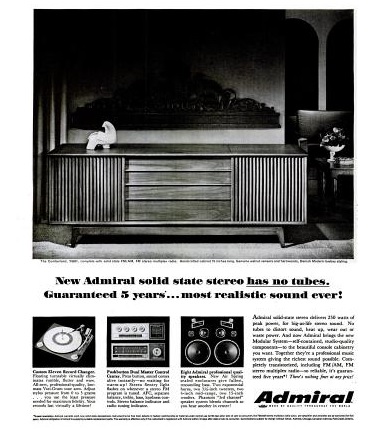
AdmiralStereo

In the 1960’s, most self-respecting American homes would boast a console stereo in a prominent spot in the living room. The position would be second in honor only to that of the television.

And fifty years ago today, September 25, 1964, Life Magazine carried this ad from Admiral featuring this handsome unit. The Danish modern lowboy cabinet, made of genuine walnut veneers and hardwoods, contained an all solid state stereo featuring tuner and phonograph.


100th Anniversary of the Binder Clip

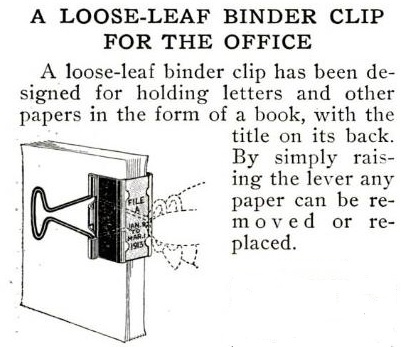
BinderClip

The humble binder clip celebrates its 100th birthday this month. This new innovation is shown here in the September 1914 issue of Popular Mechanics.