Author Archives: clem.law@usa.net

FM Comes to Milwaukee, 1940

W9XAO

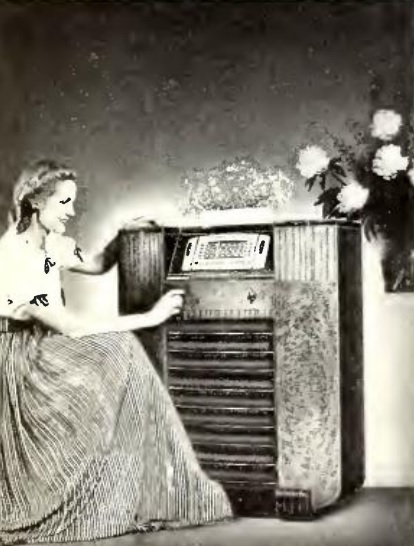
75 years ago today, April 22, 1940, FM radio came to Milwaukee, when W9XAO came on the air at 1:00 PM on 42.6 megacycles. The station was owned by the Milwaukee Journal, and was the sister station of WTMJ, the paper’s standard broadcast station. According to the April 21 issue of the newspaper, the station was “the first FM station west of the Alleghenies.”

The paper used a number of pages touting the advantages of FM radio. Of course, listeners would require a new set to tune in the new band, and a number of manufacturers and retailers advertised their sets. The least expensive model was Stromberg-Carlson model 525-H for $59. This radio was actually a tuner only. It could be plugged in to the phonograph jack of an existing radio.

The station at some point received a commercial license and operated under the call letters W55J. After the war, the station moved to 102.1 on the modern FM dial with the call sign WTMJ-FM, but ceased broadcasting in 1950. WTMJ-FM returned to the air in 1958, on 94.5 MHz. The station is currently still owned by Journal Communications, but now uses the call sign WLWK-FM.

Don Stanley

Don Stanley

The first full-time announcer at W9XAO was Don Stanley, who came to Milwaukee from KGLO in Mason City, Iowa. He went on to become a west coast announcer for NBC radio and television from 1946-1992.

Edit:  See correction in comments below.  Stanley came to Milwaukee from Madison, WI, and not from Mason City.  His daughter has created this Facebook tribute page.

Click Here For Today’s Ripley’s Believe It Or Not Cartoon


Our Facebook Contest!


OneTubeRadio.com is running its first ever contest. The winner will receive a copy of the book U-Boats Against Canada: German Submarines in Canadian Waters by Michael L. Hadley.

During World War II, German subs operated in Canadian waters, as far up the St. Lawrence River as 172 miles from Quebec City. They sank ships, laid mines, and even set up a secret weather station in Labrador. My earlier post about that weather station was based largely upon this book. The book is very well written. It reads like a novel, but is extremely well researched with extensive footnotes.

The book is out of print, but you will receive a used copy (a former library book from Wheaton, Illinois) in excellent condition. To enter, simply follow these two steps:

  1. “Like” us on Facebook. Just click on this link and then click the “Like” button on top of the page.  (If it says “Liked,” then you already have this step taken care of.)
  2. Go to the contest announcement, which appears on that same Facebook page. I’m thinking of a number between 1 and 100. Post your guess as a comment to that Facebook post, and whoever is closest will be the winner. In case of a tie, the first guess wins.

The contest ends at 11:59 PM Central Time on April 25, 2015.

Science Fair Idea: Measuring the Speed of Sound

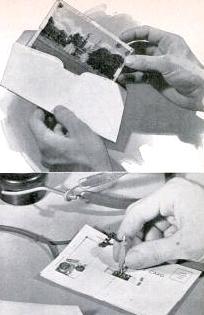
Measuring the speed of sound with an oscilloscope.

Measuring the speed of sound with an oscilloscope.

In an earlier post, I gave some ideas for young mad scientists to employ for science fair projects. Another idea comes from the pages of the April 1966 issue of Radio Constructor, a British electronics magazine. The article explains two methods of experimentally measuring the speed of sound. One of those methods requires an oscilloscope, but the other one requires only an AC voltmeter.

Measuring the speed of sound with an AC voltmeter.

Measuring the speed of sound with an AC voltmeter.

Fortunately, the young experimenter of today can duplicate either of these experiments quite easily. For the version of the experiment requiring an AC voltmeter, most modern digital multitesters would be very suitable, and they are often available for next to nothing. The following examples are currently available at Amazon:


Harbor Freight
often has multitesters on sale, or occasionally for free. They’re also available inexpensively at WalMart.

The oscilloscope is more expensive, but still a lot less expensive than 1966. For example, this USB Oscilloscope can be used with a PC for a reasonable price. And while a bit more do-it-yourself work would be required, this USB oscilloscope is also very inexpensive.

The only other equipment required is an audio signal generator (for which you could easily use your computer’s sound card) and an audio amplifier, such as this one. The other required parts, such as speakers, can easily be scrounged up.

Using either method, it’s fairly simple to measure the wavelength of the audio signal. Since the frequency is known, it’s then an easy matter to calculate the speed of sound, which would be frequency times wavelength. The possibilities for using this as part of a science fair project are unlimited. For example, it would be possible to measure the speed of sound under various conditions, such as with differing barometric pressures or altitudes. By waterproofing the speakers, it would be possible to measure speed of sound in water, and compare it to the value in the air.

In any event, your poor teacher is probably tired of seeing paper mache volcanoes, and will probably be quite impressed at your abilities.

Click Here For Today’s Ripley’s Believe It Or Not Cartoon
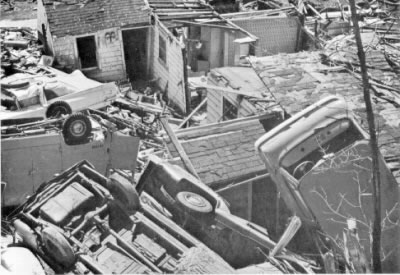


Radio Station WAR, 1945

WARtapemachineSeventy years ago, April 1945, Popular Mechanics carried a feature about the War Department’s Signal Center in Washington and its radio station, which bears the call letters WAR. The article noted that the station at this nerve center of the War Department handled 8-9 million words per day, with direct hookups to forces throughout the world. The WAC operator shown here is overseeing tapes on an automated code sending machine. At the other end of the circuit is the station at Bougainville shown below.


Bougainville

The call sign WAR is heard on the airwaves at least once a year during the annual Armed Forces Day Cross-Band Communication Test when the station, along with other military stations, makes contact with amateur operators.

Click Here For Today’s Ripley’s Believe It Or Not Cartoon


Samaritan Ministries: Our First Opportunity to Share

SamaritanLogoLet us not become weary in doing good, for at the proper time we will reap a harvest if we do not give up. Therefore, as we have opportunity, let us do good to all people, especially to those who belong to the family of believers.

—Galatians 6:9-10 (NIV)

We are relatively new members of Samaritan Ministries.  I’ve written about our experiences previously, and you can find those posts here.  They are an alternative to health insurance. Instead of sending premiums to an insurance company, we instead learn of medical needs experienced by other members and have an opportunity to help them with those needs. In exchange, we know that if we have a need, we have the assurance that other members will help us.

It’s similar to insurance, but it’s really more like how the early Church worked:

All the believers were together and had everything in common. They sold property and possessions to give to anyone who had need. Every day they continued to meet together in the temple courts. They broke bread in their homes and ate together with glad and sincere hearts, praising God and enjoying the favor of all the people. And the Lord added to their number daily those who were being saved.

—Acts 2:44-47 (NIV)

We recently had our first opportunity to experience this through Samaritan. As new members of Samaritan, our first two monthly payments were made to the ministry’s office to cover administrative expenses. Each year, we will make one of our monthly payments to the home office. Making those payments seemed a little bit like insurance.

But this month, we got a taste of what the early Church experienced: Giving to someone who had need. This month, we were asked to make our payment to a woman in the Western U.S. who had broken her hip. We were given her name and a short description of her need. We were asked to send our payment directly to her, which she will use to pay her medical bills.  Presumably, many other members were also asked to send a payment to her this month.  And we were also asked to pray for her.

We didn’t gather with her in the temple courts, nor did we break bread in her home. We couldn’t, because we are far away. Other members of the Body of Christ filled those roles. What we were able to do was bear part of her financial burden, which would have been overwhelming for one person, or one family, or even one congregation.

We were also able to pray for her. I shared her first name with my own congregation, and we all prayed for her. We’re in another part of the country, and we’re probably a different denomination. But we were still able to do what Paul told the Galatians to do: “Carry each other’s burdens, and in this way you will fulfill the law of Christ.” Gal. 6:2 (NIV).  And that is much easier to do with Samaritan than it was with insurance.

If you do decide to join Samaritan Ministries, I would appreciate if you would consider indicating on your application form that I referred you. (Or, of course, if someone else recommended Samaritan, mention their name instead.) There’s a box where you can check how you learned about Samaritan. If my information proved helpful, I would appreciate if you would include my name, Richard Clem. On the first page, you can check the box “Friend/referral (somebody told me)” and/or “Internet,” and write in my name. In the interest of full disclosure, if you do include my name as a referral, then I will receive a credit of $180.

Please also pray for the woman whose need we shared.  It wouldn’t be appropriate for me to give her name, but the giving of your prayers would be appreciated.

Click Here For Today’s Ripley’s Believe It Or Not Cartoon



Kate Smith Gives Advice on Wartime Meals

Kate Smith

Kate Smith

Seventy years ago, rationing was in effect for most meats, dairy products, sugar, and even some canned vegetables. Therefore, meals required careful planning. CBS radio personality and singer Kate Smith took the time in the April 1945 issue of Radio Mirror to explain the rationale behind the rationing rules. For example, she notes that 2 billion less pounds of meat would be produced in 1945 than had been produced in 1944. But the needs of servicemen and commitments to the Allies hadn’t changed. Therefore, those two billion pounds would have to come from the civilian supply.

Despite the seriousness of the situation, she reminds the readers that there was no excuse for preparing a meal that didn’t measure up to pre-war standards. “The trick lies in your own ingenuity–in how well you can learn to plan menus around the foods that, although restricted in variety, are still available to us in sufficient quantity.”

With that in mind, she presents the following menus. As you can see, they lean heavily on eggs. Since she assumes that most of the lunches will be eaten from a lunchbox, most consist of sandwiches, and the dessert is generally left over from the prior evening’s meal.

1945Menu

Click Here For Today’s Ripley’s Believe It Or Not Cartoon


“Hill 60” Belgium, 1915


A hundred years ago today, British and German troops were fighting over a hill near Ypres, Belgium, known simply as “Hill 60.” It was so named because British topographic maps showed its height–60 meters. The hill was artificial, formed when a nearby rail cutting was dug. A hundred years ago, the Germans held the hill.

The hill was captured by the Germans on December 10, 1914. Almost immediately, the British began digging under the German positions. By April 10, 1915, most digging was finished, with a 100 yard tunnel going under the German positions. About 7900 pounds of high explosives were placed in the tunnels, and on April 17, 1915, at 7:05 PM, three British officers hit the plungers. Debris was flung almost 300 feet into the air and scattered 300 yards in all directions. One British soldier who had the misfortune of looking over the parapets was killed by flying debris. After the battle was over, 150 Germans were killed, along with 7 British soldiers.

References

Read More at Amazon

Click Here For Today’s Ripley’s Believe It Or Not Cartoon


Yukona Cameron, WQJ Chicago, 1925

YukonaCameron

Shown here is Miss Yukona Cameron, a singer who appeared nightly on WQJ in Chicago. The caption of this photo from the April 1925 issue of Radio Age notes that she often favored her audience with old-time selections, but that she received the most requests when she presented a popular ditty.

According to an article in the May 17, 1925, Chicago Tribune, the station had come on the air on May 22, 1924. It was owned by Calumet Baking Powder Company and the Rainbo Gardens Ballroom and broadcast from the Rainbo at 4812 North Clark Street.  Interestingly, when the building was finally torn down in 2003, a collection of human bones and tennis shoes were discovered in what had been the building’s basement. The mystery of how those bones ended up there has never been solved.

WQJ shared time at 670 on the dial with WMAQ until it was finally bought out by WMAQ in 1927.

After the station closed, Miss Cameron appeared in two Broadway shows in 1927 and 1930. In 1935, she was back in Chicago, at least for one engagement. According to the Chicago Tribune, August 4, 1935, she was appearing at the Palace, doing a show with comedian Al Trahan, with whom she also appeared in the 1930 short film The Musicale.

Trahan and Cameron, in addition to being Vaudeville partners, were also husband and wife. According to the Palm Beach Daily News, Feb. 20, 1934, the pair had performed before King George, who reportedly remarked, “that American made me laugh.” They had also performed for King Gustav of Sweden and the Prince of Monaco.

Miss Cameron owed her first name to the fact that she was the first White child born in the Yukon, where her parents were prospecting for gold. She was a musical prodigy, and was a concert pianist at the age of 18 with the Chicago symphony.

Click Here For Today’s Ripley’s Believe It Or Not Cartoon


Boy, Girl, and Machinery: 1940

1945LatheSeventy-five years ago today, Life Magazine, April 15, 1940, shows this young man and woman admiring this electric lathe at a National Youth Administration machine shop. Between 1930 and 1940, the number of American youth increased from 22,000,000 to 25,000,000. The NYA was a New Deal program designed to help find a place for those extra three million kids, sparing them of the demoralizing prospect of being out of school and out of work.

The young Romeo here is showing off the machine shop to his awestruck date during an NYA party.

Click Here For Today’s Ripley’s Believe It Or NotCartoon