According to recent news reports on July 4, 2026, about 300,000 customers in the Detroit area are without power. 99 degree temperatures pushed the electric grid to the limits, and when a storm passed through, thousands were left without power.
If you’re able to see the above meme ported in from Facebook, it points out the irony–on Independence Day, all of those residents became independent from electricity.
Of course, for most of our loyal readers, it’s not a matter of irony. You already know that with minimal preparation, you can be independent from the power grid. The air conditioner won’t work without some serious investment upfront. But with a little bit of preparation, life will continue more or less as before, with only a few minor adjustments. For example, the meme suggests that the unprepared might need to abandon their holiday barbecue. But our readers know that the barbecue is the perfect place to cook if the power is out.
There was a time when electric power was properly regarded as a luxury, and something the people could do without if they had to. We believe that most of our readers still remember this.
Are you prepared for a power outage? We suspect that most of our readers are, but it doesn’t hurt to mentally run through your checklist. We have pointers for preparing for a power outage at this link. For the more serious case of a power outage during winter, we have this further advice. Although it has definite limitations, one device that you have can be a godsend (if you’ve done some advance preparations) is your cell phone, and we provide that information at this link.

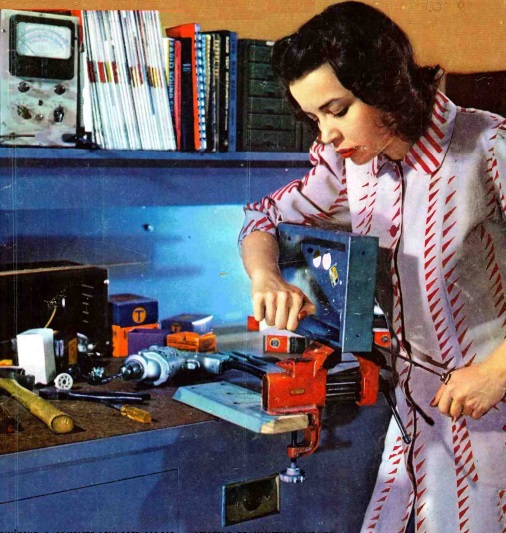 Shown here, 80 years ago, is Radio News staffer Corinne Sullivan. She was working on her amateur license, and to make sure she was able to get on the air as soon as the FCC sent her the license, she is hard at work building a two-meter transmitter and receiver. This image appeared on the cover of the July 1946 issue, and the magazine promised that the design of the rigs would appear in a forthcoming issue.