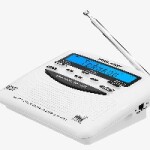
 In what is, in our opinion, a shortsighted decision, Environment Canada announced recently that its VHF weather broadcasts will go dark starting March 16. Like in the United States, Weatheradio Canada broadcasts on 162 MHz frequencies from over 200 locations across Canada. In addition to weather conditions and forecasts in a computer-generated voice (in English and French), it uses SAME technology to activate alerts on radios. If there is a weather warning, your receiver will set off an alarm and wake you up.
For many people, this technology is obsolete, since their cell phone can do the same thing. But, in both the U.S. and Canada, there are many areas where cell phones do not work. But with an inexpensive receiver, the rather primitive technology employed by weather radios can provide a vital service to most of the continent. And weather radio can provide service to deaf persons, which might be problematic with other technologies.
Canada doesn’t seem to have a coverage map, and with 200 stations, the coverage probably isn’t quite as good as in the United States, where only a handful of truly remote places lack coverage. But the vast majority of the population has access to this service, even though many of those people don’t have cell service. And the cost is nominal. Each transmitter needs a few hundred watts of electricity to operate. The weather data is being generated anyway, and the system to broadcast it in two languages is completely automated.
You can read more about how weather radios save lives at our earlier post. And for specific information about how this technology can serve deaf persons, see this post. And Mexico also has its SARMEX network, which also includes earthquake warnings.
Unfortunately, I’m afraid that lives will be lost because of this unfortunate decision. I hope the United States, with its robust network of NOAA weather radio stations, will not make the same bad decision.

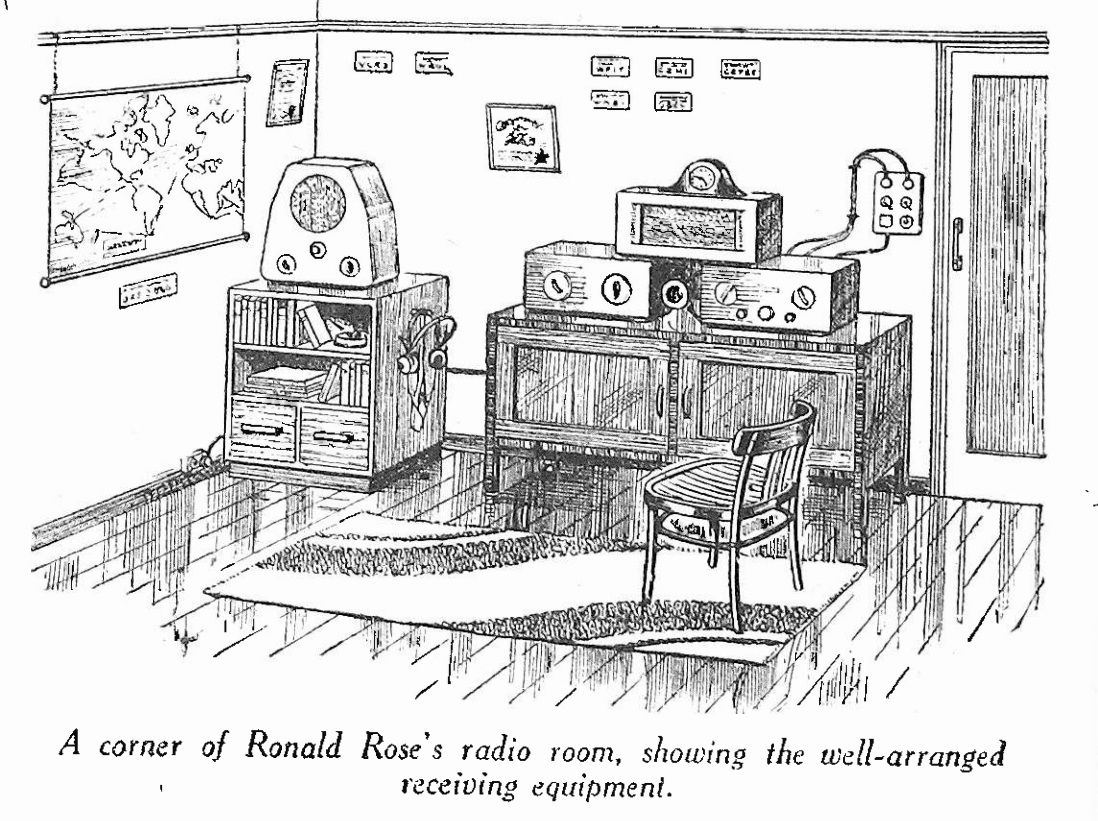 Shown here 85 years ago this month in the February 1941 issue of Practical Wireless is the receiving station of Ronald Rose of Birmingham, England. At the left is a five-tube superhet, and at the right is a four-tube set. It also includes a wavemeter and speaker.