Category Archives: World War 2

KFI “On The Scouting Trail” 1944

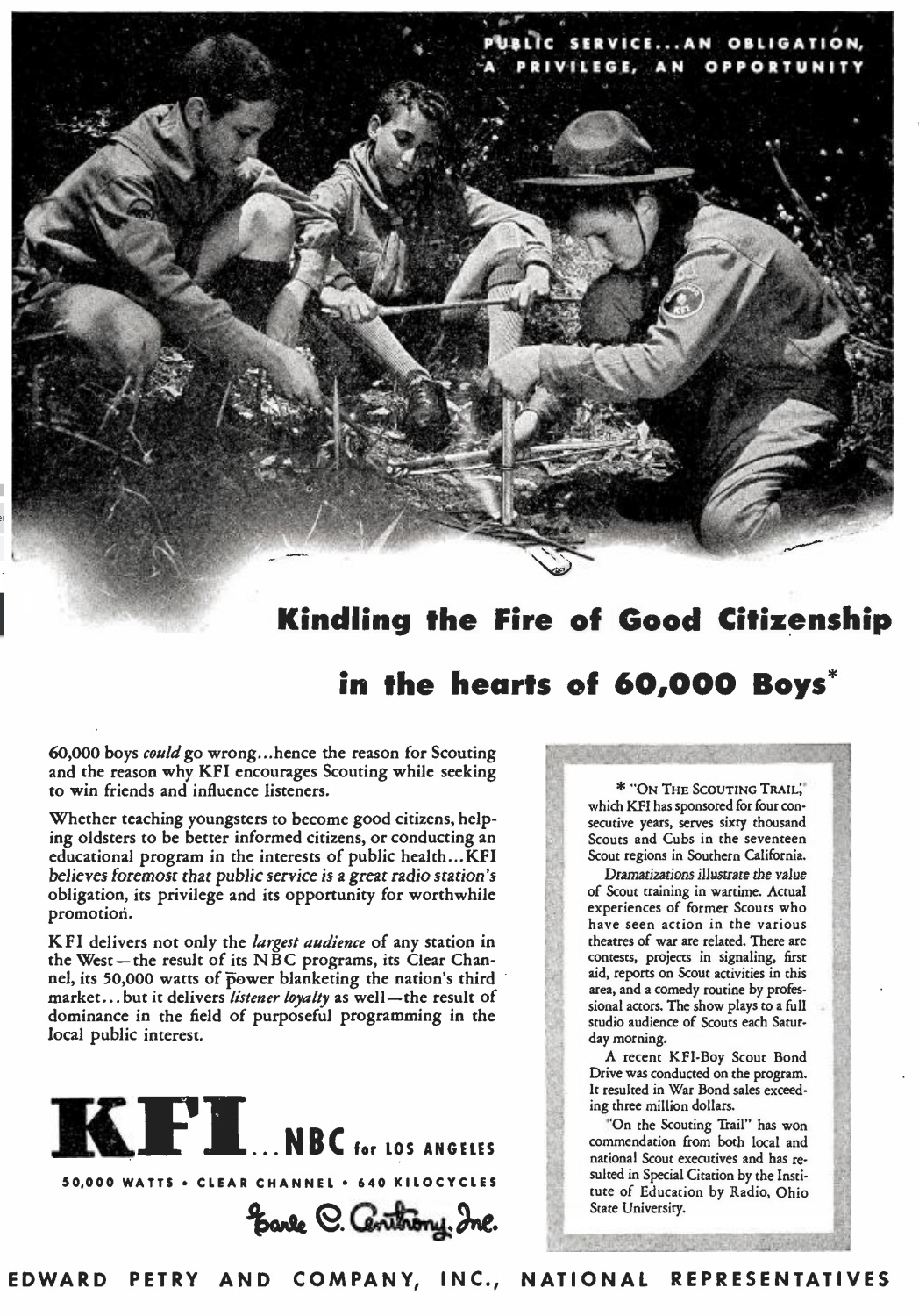
1944Jul17BCSeventy-five years ago today, KFI Los Angeles ran this ad in the July 17, 1944, issue of Broadcasting, touting its public service in the form of the program “On the Scouting Trail.”  The show served the 60,000 Boy Scouts and Cub Scouts in the region by dramatizing experiences of former scouts and how they were relevant in wartime.

If you look carefully at the shoulder of the scout lighting the fire, you’ll see that the patch has the station’s call letters at the bottom.  The text on the top appears to be “COMMANDO.”  This patch was given to scouts appearing in the show’s studio audience each Saturday morning.  You can see specimens of this and other patches at this page on the Crescent Bay Council website.  The scout here appears to be wearing the “late 1940s” version of the patch.


Superior Radio Service, Westfield, MA, 1944

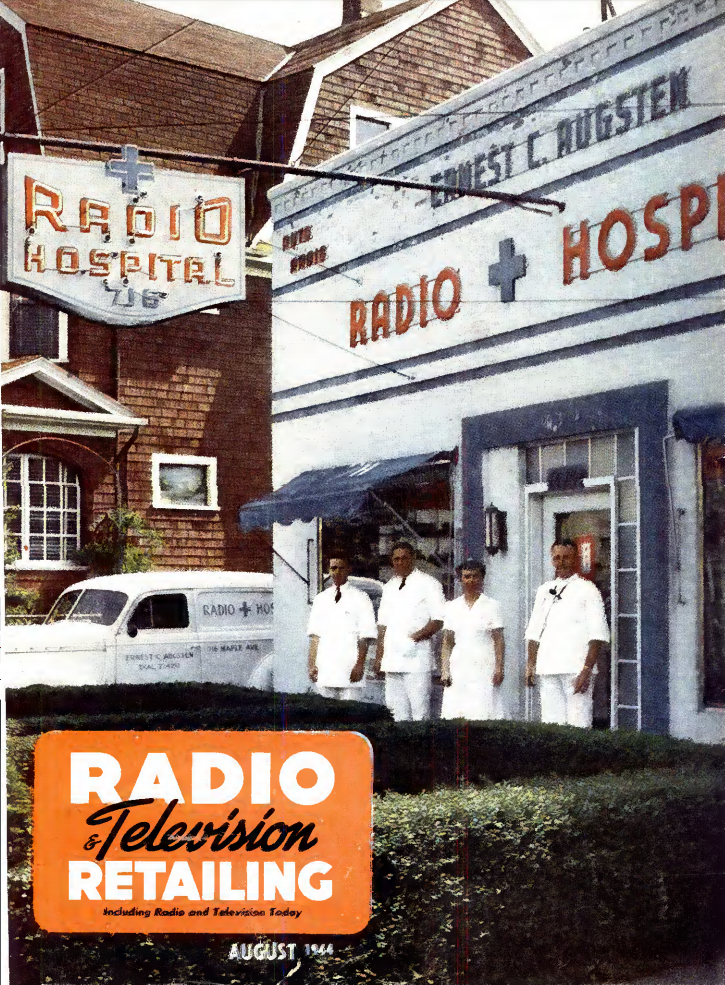
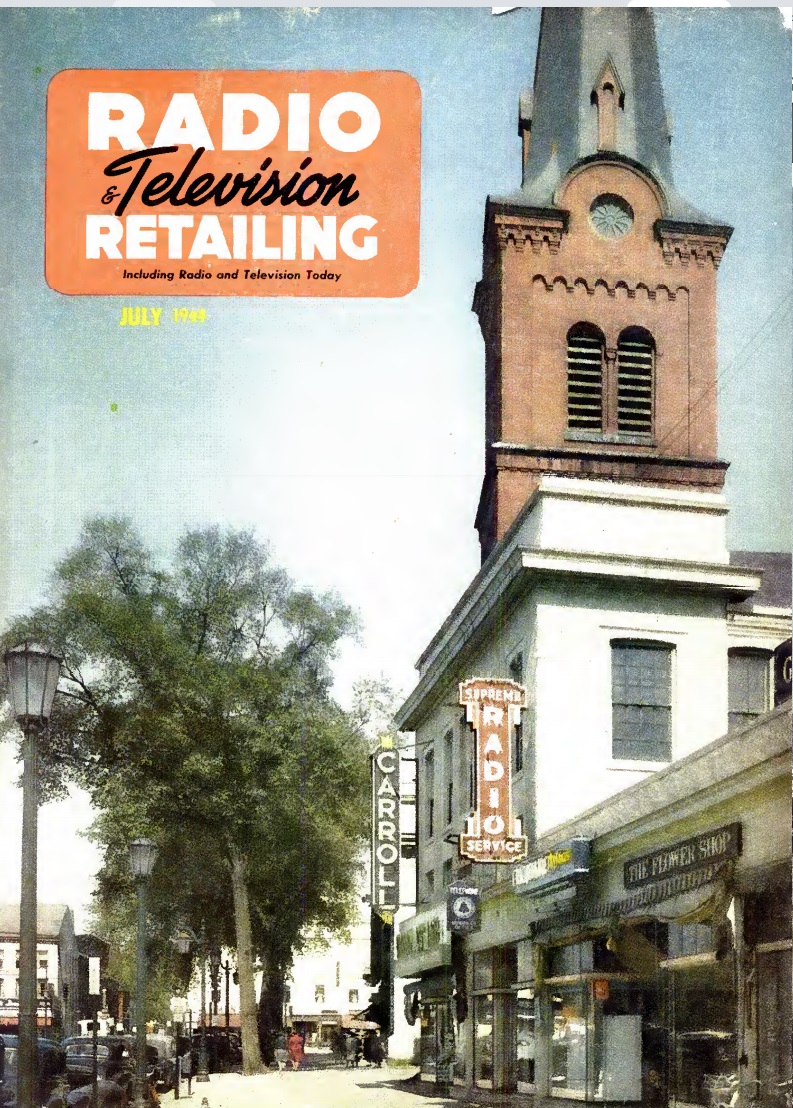
1944JulyradioRetailingSeventy-five years ago this month, the cover of the July 1944 issue of Radio & Television Retailing showed this scene of downtown Westfield, MA, specifically, Supreme Radio Service, 28 Main Street.  The store’s owner was Joseph R. Davich, who had gotten his start in radio at the age of fourteen, when he built sets “using a piece of coal or potato for a detector.” He reportedly also had a spark transmitter with a range of about six miles. He had been in the radio business since 1932, and had expanded into both large and small appliances in 1935.

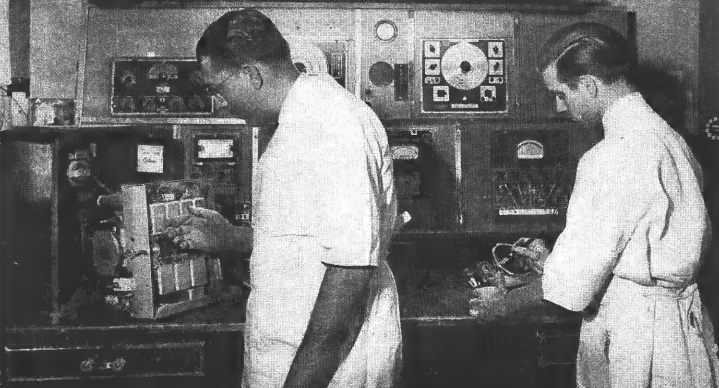
With wartime consumer manufacturing shut down, Davich had sold his last radio in the fall of 1943. Washers and ranges were soon also out of stock for the duration. The service business continued, but all of his regular technicians had departed, four to the armed forces, one to teaching, and one to a war plant. “Not a man of prejudices, but concerned solely with getting the work done, Davich is willing to train women, if they are interested and willing to learn.” His most recent protege was a 17 year old gird who had just graduated from high school.

The store’s record department was holding its own during the war under the management of a young woman. The magazine noted that records were paying the rent, with service completing the volume. Davich also had a government subcontract to produce plastic radio parts for submarine detector radar equipment. This contract employed five to eight men.

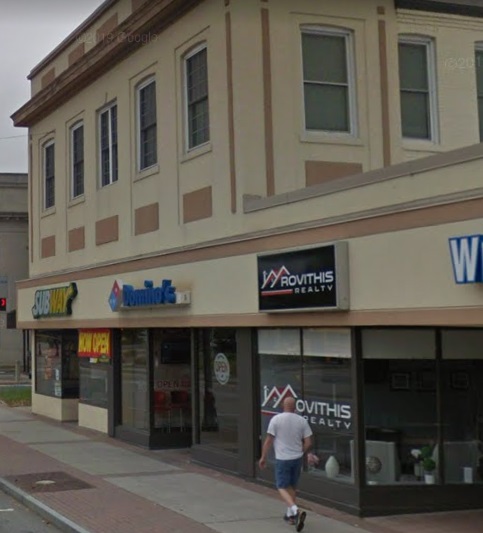
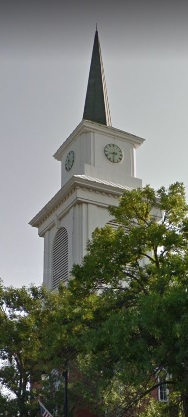
1944JulyradioRetailingGoogleStreetIf the New England church steeple looks slightly out of place in the picture, well, that’s because it is.  A modern view of the shop from Google street view.  The 1944 radio shop is in the spot where the Rovithis Realty sign is, and the building next door is very distinctive.  But there’s no church steeple in the modern view.  But this isn’t because the church isn’t there.  It’s actually located a half block away.  It’s actually the steeple of the First Congregational Church, as shown in the modern image at the right.  Apparently, the magazine editors took a bit of artistic license and “photoshopped” in the nearby steeple.1944JulyradioRetailingGoogleSteeple


1944: Bread Comes First!

1944Jul09MilJourSeventy-five years ago today, the July 9, 1944, issue of the Milwaukee Journal carried this ad showing why America won the war. The secret weapon was bread, and this housewife knew to put it first on her shopping list.

Thanks to your Government, bread was packed with vitamins, minerals, protein, and carbohydrates, and served as the basis for a healthy diet.

A postscript reveals the probable sponsor of the ad, as it notes that most good bread is made with Fleischmann’s yeast.


July 4, 1944

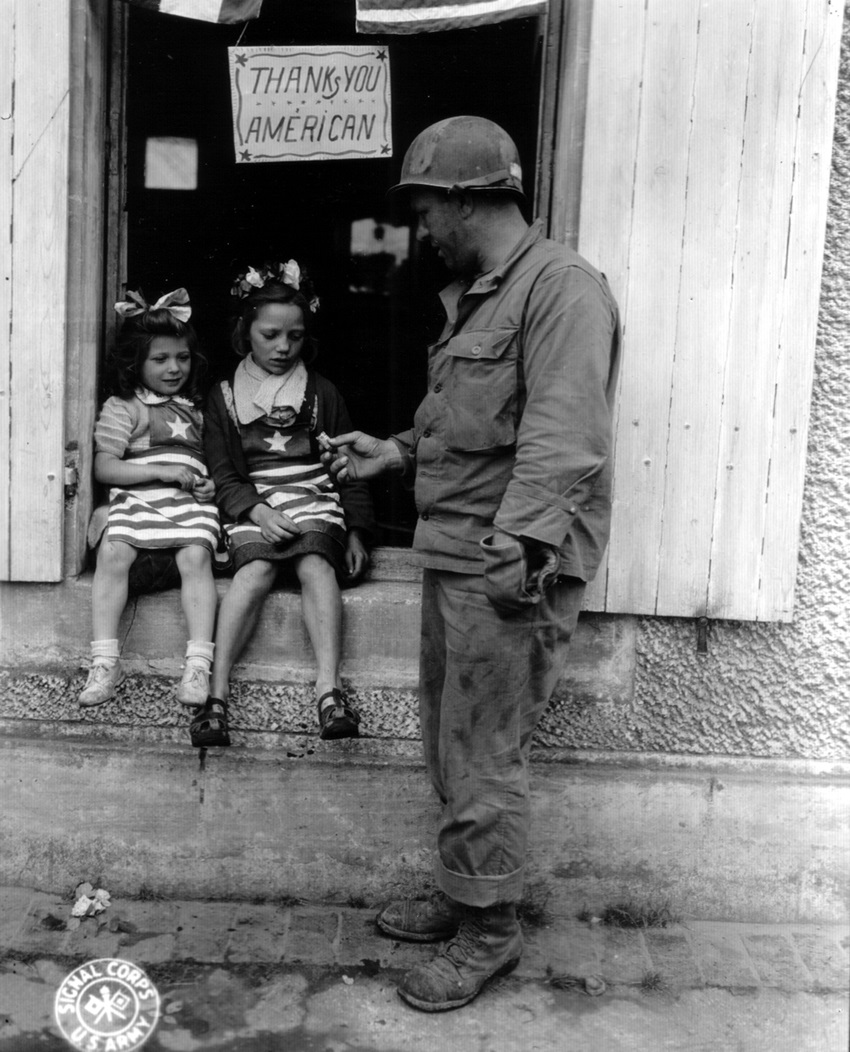
1944July4On July 4, 1944, this American GI celebrates America’s 168th birthday somewhere in France by sharing candy with these grateful but somber girls. According to this website, the soldier is Sgt. Walter Goworek of Jersey City, NJ.


You’re on the Wrong Beach, Zombie!

19440701OttawaCitizen220px-Canada_flag_halifax_9_-04On Dominion Day (now known as Canada Day) 75 years ago today, July 1, 1944, the gentleman on the right is enjoying a nice summer day on a Canadian beach. The gentlemen on the left, however, were busy on Juno Beach in France, and offered a friendly reminder that the first guy was on the wrong beach.

Surprisingly, the guy relaxing on the Canadian beach (with the pretty girls keeping  their distance) was probably also a soldier in the Canadian Army!

After Canada entered the War in 1939, the government of Prime Minister Mackenzie King was eager to avoid violent opposition to the draft, as had happened in 1917.  Conscription was instituted in 1940, but with the condition that drafted soldiers were to be used only in North America, and not overseas. Other than the Aleutian Islands Campaign, there was little need for combat soldiers to serve in North America. It wasn’t until late 1944 that drafted soldiers were sent overseas. In the meantime, soldiers had to volunteer. This ad is part of the persuasion, which of course also came from their comrades who had volunteered. Those who volunteered for overseas service wore the “GS” (General Service) insignia. Those who didn’t volunteer wore distinctive uniforms with a black necktie, to make sure that nobody got the two groups mixed up.

This means, of course, that the 340 Canadian soldiers who died taking Juno Beach on D-Day
were there only because they volunteered to be there. By 1943, the men who declined to ship out as part of the GS were being referred to as “zombies,” neither alive nor dead.  The force came to be called the Zombie Army.  The song “Salute to a Zombie” (sung to the tune of Darling Clementine) became popular throughout Canada.

The song probably hasn’t been performed in almost 75 years, which seemed like a shame.  A 1943 performance of the song at a Calgary military base caused a riot after General Service men sang it to taunt the zombies.  Ironically, the military police who had to break up the fight were probably themselves zombies, as it would be unwise to waste a GS man with that domestic role.We put out a call for volunteers, and loyal reader David Cripe agreed to perform the song.  We are confident that tempers have cooled after 75 years, and no riots will ensue.

ZombieSalute

The ad at the top appeared in the Ottawa Citizen, 1 July 1944.

References


1944 Grocery Prices

1944Jun29MilJourHere’s another snapshot of wartime grocery prices 75 years ago today, June 29, 1944, as shown in this IGA ad in the Milwaukee Journal. In most browsers, you can click on the image, and then click again to enlarge.

If you’re a comparison shopping time traveler, you might be interested in the following links:


Radio Goes to School: 1944

1944JuneTuneIn11944JuneTuneIn2Seventy-five years ago, the over 170,000 students in the Philadelphia schools were getting a good dose of the fourth “R.” In addition to reading, ‘riting, and ‘rithmatic, the schools were taking full advantage of Radio. Thanks to the community spirit of the city’s commercial radio stations, regular lessons were scheduled. For example, for the elementary grades, WFIL carried “Studio Schoolhouse,” an educational program three days a week. The Monday program allowed the students, left, to participate in dramatized scripts about how they could help the war effort.

The pictures and accompanying article appeared in the June 1944 issue of Tune In magazine.


Milwaukee Girls Make Batteries, 1944

1944June18MilwJourSeventy-five years ago, wartime labor shortages meant that critical defense industries had to be creative when it came to staffing their plants. A logical source of labor came in the form of high school students, who eagerly took up the cause of defending the nation, and getting some spending money in the process. Today, there would probably be a great deal of hand wringing if kids were sent in to work with lead and acid, but these Milwaukee teens were eager to lend a hand.

Hundreds of students, both boys and girls, ages 16 and 17, were working for the Signal Battery Co. plant. Shown above cleaning batteries are Midge Wagner (left) of 2471 Fratney St. and Patsy Lee of 3219 N. Bartlett Ave. Both girls were students at Riverside High School. Also shown testing battery current is Mary Lou Burke of 2563 N. Farwell Ave., a student at Holy Angels Academy.

Northern Michigan University has on its website an interesting 1989 oral history interview with another teen worker at the battery plant, Evelyn Cieslick. She recounts:

I worked in a battery factory, in the summer when I was 16 years old, and we filled the acid that went into the batteries to make them work, and there weren’t enough boys around, so the girls took the summer jobs…. We worked in the factory and felt that we were doing our part in, for the war, along with everything else that was involved with giving up sacrifices for the war.

I had to take a bus to get there … in the mornings and, of course, work all day long, it was a summer job, and, like I said, all of us young people felt that we were doing our part by helping out. The name of the company was the Signal Battery Company. I’m sure they were for walkie talkies, and radios … for the war.

These photos appeared 75 years ago today in the June 19, 1944 issue of the Milwaukee Journal.  These young women are about 91 years old today.  We realize that people Google their own names, and we always enjoy hearing from people we have featured.  Please leave a comment below or e-mail me at clem.law@usa.net.  If you are one of the students shown here, thank you for your service to your country!


USS Squalus, 1939

1939JJune16RadioGuide

In drydock after salvage. Wikipedia photo.

This picture above appeared 80 years ago today in the June 16, 1939, issue of Radio Guide. Shown is a Washington, D.C., family gathered around the radio, obviously clinging to every word of the news announcer. They are the family of William Isaacs, who was aboard the Navy submarine U.S.S. Squalus when it sank off the coast of New Hampshire on May 23, 1939, killing 26 crew members. The remaining 33 aboard (32 crew and one civilian) were rescued. The ship was initially in contact with a companion ship by telephone line to a buoy, and the men were rescued from 243 feet of water thanks to the McCann Rescue Chamber.

The ship was eventually salvaged, and went on to serve in the Pacific during World War II as the USS Sailfish.  The ship was scrapped after the War, but the conning tower, shown here, was preserved after the war as a memorial at Portsmouth Naval Shipyard.

The family shown here eventually received good news, as Isaacs was one of the men successfully rescued from the sunken ship.


1944 Tube Substitutions

1944JuneRadiocraftWartime parts shortages often meant that radio servicemen had to be creative, and that often meant tube substitution. If the replacement tube was not available, it was often possible to substitute one that was. The substitute often had similar or even identical electrical characteristics, but had a different size plug or pin configuration.

The June 1944 issue of Radio Craft, like many other radio magazines of the era, carried some pointers. The illustration shows common adapters. The base was made of a burnt out tube (perhaps the one being replaced), and the top was a new socket for the new tube. When tubes became available, the adapter could be removed and the original inserted in the socket.